Fermi, the ambitious artificial intelligence-focused nuclear power firm, has officially appointed Lee McIntire as its new Chief Executive Officer, marking a significant transition more than three months after the departure of co-founder Toby Neugebauer from the top executive position. The announcement, made on August 12, 2026, signals a new phase for the company as it navigates its ambitious "Project Matador" in Amarillo, Texas, a venture aiming to integrate nuclear reactors with data centers powered by AI.
McIntire, an independent member of Fermi’s board of directors, brings a wealth of experience from prominent leadership roles. Previously, he served as the chief executive of CH2M Hill, a global engineering and construction firm, and later led TerraPower, the nuclear power startup founded by technology magnate Bill Gates. His appointment is seen as a strategic move to steer Fermi through its critical next stage, which involves the complex processes of construction and power delivery.
Background and Chronology of Leadership Changes
The leadership vacuum at Fermi was created in April 2026 when Toby Neugebauer, alongside Chief Financial Officer Miles Everson, was removed from their positions. At the time, the company characterized these changes, along with plans for a new corporate headquarters in Dallas, as part of a strategic evolution dubbed "Fermi 2.0." This period of transition has been closely watched by investors and industry observers, given Fermi’s innovative approach to energy generation and data center infrastructure.
Fermi America, co-founded by former U.S. Energy Secretary Rick Perry, has been actively developing Project Matador, an AI campus in Amarillo, Texas. The core of this project involves deploying nuclear reactors designed to provide a consistent and powerful energy source for large-scale data centers, an area where AI development is increasingly demanding significant power resources. The successful integration of nuclear energy with the burgeoning AI sector represents a novel and potentially disruptive approach to energy infrastructure.
The recent appointment of McIntire follows another positive development for the company: the signing of TensorWave as its first binding customer lease for the Project Matador campus on August 10, 2026. This milestone, coupled with the CEO announcement, has provided a considerable boost to Fermi’s stock, which has seen an increase of nearly 23% since Monday. This resurgence offers a welcome contrast to the dip experienced in April following the executive shakeup.
Marius Haas, Fermi’s Chairman of the Board, expressed confidence in McIntire’s ability to lead the company forward. "Fermi’s next chapter is a construction and power delivery story, and we believe Lee is the ideal executive to lead Fermi through that process," Haas stated in a press release. He emphasized the immediate priorities: "The job now is to build on schedule, on budget, and safely. Lee has spent 40 years delivering exactly this kind of large, complex project. He also knows Fermi from the inside, having served on our board through our latest period of growth, and he brings a reputation for integrity that Fermi’s customers, employees, regulators, and neighbors can rely on."
McIntire’s extensive background in managing large-scale infrastructure projects and his prior experience in the nuclear energy sector, particularly with TerraPower, are expected to be invaluable assets as Fermi tackles the complexities of constructing and operating its innovative nuclear-powered AI campus. His tenure at CH2M Hill, a company known for its involvement in major engineering feats, further underscores his suitability for the demanding role of CEO.
Strategic Vision and Project Matador
Project Matador is at the heart of Fermi’s ambitious strategy. The concept of utilizing small modular reactors (SMRs) or advanced nuclear reactor designs to power data centers is a bold one. Data centers are notorious for their high energy consumption, and as AI applications become more sophisticated and widespread, the demand for reliable, high-capacity power sources is escalating. Traditional energy grids often struggle to meet these demands consistently, and renewable sources, while crucial, can face intermittency challenges. Nuclear power, with its low carbon footprint and consistent output, presents a compelling alternative, especially when paired with advanced AI-driven operational management systems developed by Fermi.
The integration of AI into the nuclear power industry itself is also a key component of Fermi’s identity. The company aims to leverage AI not only to power data centers but also to optimize the design, operation, and safety of its nuclear facilities. This dual focus on AI applications and nuclear energy positions Fermi at the intersection of two of the most transformative technological trends of the 21st century.
Industry analysts have noted that the success of Project Matador could serve as a blueprint for future energy infrastructure development, particularly in regions grappling with increasing energy demands and the need for decarbonization. The challenges, however, are substantial, including regulatory hurdles, public perception of nuclear technology, and the immense capital investment required for such projects.
Supporting Data and Industry Context
The global demand for data center capacity is projected to continue its upward trajectory. According to various industry reports, the energy consumption of data centers is expected to rise significantly in the coming years, driven by the proliferation of cloud computing, big data analytics, and artificial intelligence. This increasing demand underscores the urgency for innovative and sustainable power solutions.
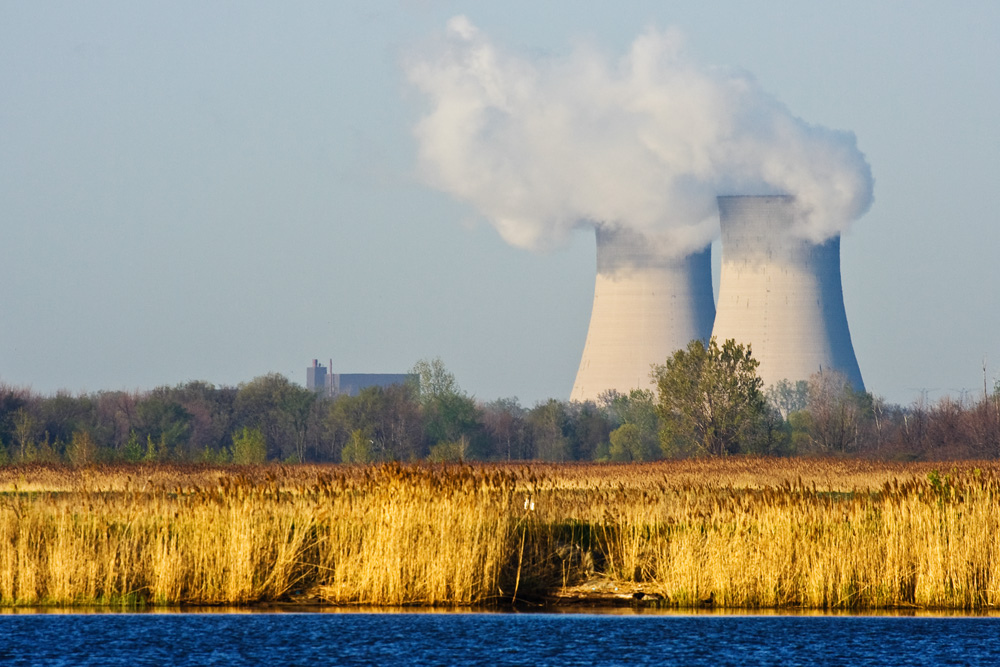
Nuclear energy, despite facing historical challenges related to safety and waste disposal, is experiencing a resurgence of interest as a critical tool for decarbonization. Advanced reactor designs, including SMRs, are being developed to offer enhanced safety features, greater flexibility, and reduced construction times and costs compared to traditional large-scale nuclear power plants. The Enrico Fermi Nuclear Generating Station, pictured in the accompanying image, though a separate entity and a legacy plant, serves as a reminder of the historical significance and ongoing presence of nuclear power in Michigan and across the United States.
The global market for AI is also expanding at an unprecedented rate. The AI market size was valued at USD 150.2 billion in 2023 and is expected to grow at a compound annual growth rate (CAGR) of 37.3% from 2024 to 2030, according to Grand View Research. This explosive growth necessitates a parallel expansion in the energy infrastructure capable of supporting it. Fermi’s strategy directly addresses this convergence of needs.
Reactions and Broader Implications
The appointment of Lee McIntire has been met with cautious optimism within the energy and technology sectors. His track record at TerraPower, a company focused on developing next-generation nuclear reactors, is particularly relevant. TerraPower’s work on advanced reactor designs, such as the traveling wave reactor and the Natrium reactor, aligns with the innovative spirit driving Fermi.
Rick Perry, a co-founder of Fermi America and former U.S. Secretary of Energy, has previously voiced strong support for advanced nuclear technologies as a means to ensure American energy independence and economic competitiveness. His continued involvement with the company suggests a commitment to its long-term vision.
The successful securing of TensorWave as a customer is a significant validation of Fermi’s business model. As a "binding customer lease," it signifies a concrete commitment and revenue stream, moving the project beyond conceptualization into a tangible development phase. The details of the lease agreement, such as the duration and the specific power requirements, would provide further insight into the scale of TensorWave’s AI operations and their reliance on Fermi’s unique energy solution.
The broader implications of Fermi’s approach are substantial. If successful, Project Matador could:
- Pioneer a new energy paradigm: Demonstrate the viability of nuclear power as a primary energy source for AI-intensive industries, potentially reshaping the future of data center development and energy infrastructure.
- Accelerate AI adoption: By providing a reliable and scalable power source, Fermi could remove a significant bottleneck for the expansion of AI technologies globally.
- Promote advanced nuclear technology: Success in this venture could spur further investment and development in advanced nuclear reactor designs, contributing to global decarbonization efforts.
- Address energy security concerns: Offer a stable and domestically sourced energy solution, reducing reliance on volatile international energy markets.
However, significant challenges remain. Regulatory approvals for new nuclear facilities are complex and time-consuming. Public perception and acceptance of nuclear power, even advanced designs, can be a hurdle. Furthermore, the financial risks associated with large-scale infrastructure projects of this nature are considerable. The company’s ability to manage these risks effectively under McIntire’s leadership will be crucial.
Fermi’s journey represents a bold attempt to bridge the gap between the urgent need for clean, abundant energy and the rapidly expanding demands of the artificial intelligence revolution. The appointment of Lee McIntire marks a pivotal moment, signaling the company’s readiness to confront the engineering, operational, and strategic challenges that lie ahead in this groundbreaking endeavor. The coming years will be critical in determining whether Fermi can indeed deliver on its promise of powering the future of AI with nuclear energy.
About the Author