The digital landscape is currently undergoing a fundamental transformation in how information is indexed, retrieved, and presented to users. For over two decades, the primary gateway to the internet has been the traditional search engine, characterized by the "ten blue links" model popularized by Google. However, the rapid ascent of generative artificial intelligence (AI) models, including OpenAI’s ChatGPT, Anthropic’s Claude, and Perplexity AI, has introduced a new paradigm known as AI Optimization (AIO). This emerging discipline focuses on ensuring content is cited and recommended by large language models (LLMs) rather than merely ranking on a search engine results page (SERP). As user behavior shifts toward conversational queries, the ability to appear in AI-generated responses is becoming a critical metric for digital publishers, marketers, and software-as-a-service (SaaS) providers.
The Chronology of the Generative Search Revolution
The transition from traditional search to AI-driven discovery has occurred with unprecedented speed. The timeline of this shift began in earnest in late 2022 with the public release of ChatGPT, which reached 100 million monthly active users in just two months—the fastest growth for a consumer application in history. By mid-2023, the industry saw the emergence of "answer engines" like Perplexity, which combine the crawling capabilities of traditional search with the synthesis capabilities of LLMs.
In early 2024, Google responded to this competitive pressure by integrating AI-generated summaries directly into its search interface, initially through the Search Generative Experience (SGE), later rebranded as AI Overviews. By early 2025, Google’s AI Mode had expanded to over 180 countries, signaling a permanent shift in the company’s core product. This evolution reflects a broader trend: the move from a "link-based" economy to a "citation-based" economy, where the value of content is determined by its ability to inform an AI’s synthesized response.
Market Dynamics and Supporting Data
The shift toward AI search is supported by significant financial and behavioral data. In its Q1 2025 earnings report, Google noted that AI-enhanced search features contributed to a 10% increase in search revenue, which reached $50.7 billion for the quarter. This growth suggests that despite concerns regarding "zero-click" searches—where users find answers on the search page without clicking through to a website—AI integration is driving higher user engagement and higher-value interactions.
Industry analysis indicates that ChatGPT alone processes over 10 million web-browsing queries daily. Furthermore, surveys of digital behavior show that younger demographics are increasingly likely to use social media or AI tools as their primary search starting point. For instance, recent market research suggests that nearly 40% of users under the age of 25 prefer using AI or social platforms over traditional Google search for discovering recommendations and educational content. This shift necessitates a new approach to visibility, as content that ranks highly on traditional SERPs may remain invisible to AI models if it lacks the specific markers required for LLM synthesis.
Understanding the Mechanics of AI Optimization
AIO differs from traditional Search Engine Optimization (SEO) in its underlying logic. While SEO focuses on signals such as backlink profiles, domain authority, and keyword density to satisfy a ranking algorithm, AIO focuses on the semantic clarity and factual density required for a language model to extract information. AI models do not "rank" websites in the traditional sense; instead, they retrieve the most relevant and credible information fragments to construct a coherent answer.
To be cited by an AI, content must demonstrate high levels of "retrievability." This involves providing direct answers to natural language questions, maintaining a high density of verifiable facts, and ensuring the content is structured in a way that machines can easily parse. When an AI model cites a source, it acts as a pre-vetted endorsement. Unlike a traditional link, an AI citation often includes a summary of the source’s value, which can lead to higher-quality traffic and better conversion rates once the user eventually clicks through to the site.
Seven Strategic Pillars of AI Optimization
Industry experts have identified several specific tactics that have a demonstrable impact on AI citation rates. These strategies are designed to align with the training data preferences and real-time retrieval mechanisms of modern LLMs.
1. High-Density Verifiable Data
AI models exhibit a strong preference for factual, data-backed information. Content that includes specific statistics, percentages, and verifiable numbers is more likely to be cited than content consisting of generalities. For example, a guide that cites "a 15% increase in efficiency across 3,000 tested cases" provides a stronger signal of authority to an AI than a guide that simply claims a tool is "highly efficient."
2. Community-Based Authority Signals
LLMs are heavily trained on community discussions from platforms such as Reddit, Quora, and specialized industry forums. Authentic engagement on these platforms creates a distributed network of references. When a brand or resource is frequently mentioned in a helpful, non-spammy context within these communities, AI models recognize it as a trusted authority during the retrieval phase.
3. Natural Language Query Alignment
Traditional SEO often relies on "keyword-ese"—stilted phrasing designed to match search terms. AIO requires a shift toward conversational, natural language. Content should be structured to answer the specific, long-form questions that users ask AI assistants, such as "What are the most cost-effective ways to scale a WordPress site?" rather than just targeting the keyword "WordPress scaling."
4. Structured Information and Comparison Tables
Language models excel at processing structured data. The use of comparison tables, numbered lists, and clear step-by-step instructions makes it significantly easier for an AI to extract and present information. Research shows that content featuring well-formatted tables has a higher probability of being featured in "comparison" style AI responses.
5. Cross-Platform Consistency
Consistency across multiple digital touchpoints reinforces a source’s credibility. When an AI model finds the same core facts and expertise reflected on a primary website, social media profiles, and third-party publications, it validates the information’s accuracy. This multi-platform presence is essential for building a "knowledge graph" that AI models can rely on.
6. Explicit Freshness Signals
AI models with real-time web access prioritize current information. Explicitly stating "Last Updated" dates and referencing recent events or current-year statistics signals to the AI that the content is relevant. Older content that is not periodically refreshed risks being overlooked in favor of newer, though potentially less comprehensive, sources.
7. Technical Markup and JSON-LD
The implementation of schema markup (JSON-LD) remains a critical bridge between traditional SEO and AIO. This machine-readable code helps AI models understand the context of the content—whether it is a product review, a how-to guide, or a news article—thereby improving the accuracy of how the information is categorized and cited.
Industry Reactions and Official Responses
The rise of AIO has prompted a variety of reactions from major tech institutions and the broader publishing industry. Google’s leadership has consistently defended the move toward AI search, with CEO Sundar Pichai stating that the technology allows the engine to handle "entirely new types of questions" and provides more value to users. However, many publishers have expressed concern over the potential for "content cannibalization," where the AI provides enough information in its summary that the user never feels the need to visit the original source.
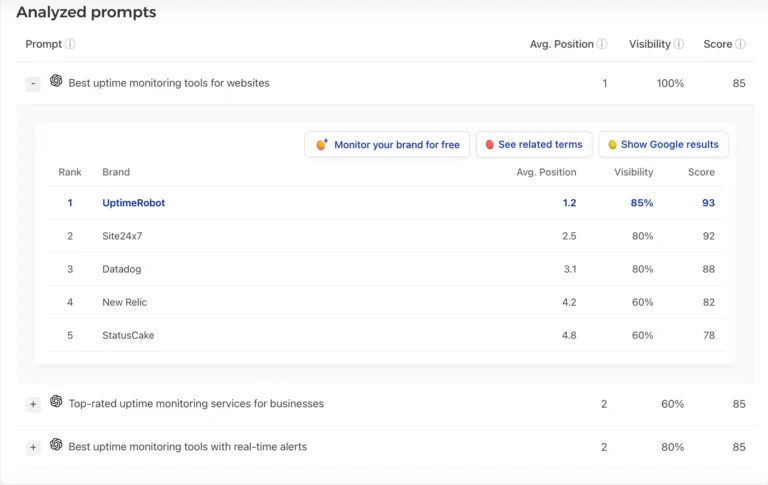
In response to these concerns, platforms like Perplexity and OpenAI have begun experimenting with "publisher programs" and revenue-sharing models. These initiatives aim to compensate creators for the use of their content in AI training and real-time responses. Meanwhile, the SEO software industry is rapidly pivoting, with major players like Ahrefs and SE Ranking introducing tools specifically designed to track "AI Visibility" and citation frequency, reflecting the growing commercial demand for AIO metrics.
Broader Impact and Future Implications
The long-term implications of AIO extend beyond simple traffic metrics. As AI assistants become more integrated into operating systems and hardware—such as AI-integrated smartphones and wearable tech—the discovery process will become even more detached from the traditional browser. This suggests a future where "brand authority" is synonymous with "AI citation frequency."
Furthermore, the shift toward AIO may lead to a "flight to quality" in content production. Because AI models are increasingly capable of identifying thin or AI-generated "filler" content, human-centric, high-value, and data-rich reporting will likely become more valuable. The competitive advantage will belong to those who can provide unique insights and primary data that cannot be easily replicated by an algorithm.
In conclusion, AI Optimization is not a replacement for traditional SEO, but rather a necessary evolution of it. As the search landscape becomes a hybrid of traditional links and generative answers, digital strategy must account for both. The window of opportunity for early adopters remains open, as the majority of content creators continue to focus exclusively on legacy search metrics. Those who successfully integrate AIO tactics into their workflow will be best positioned to capture traffic in an era where the AI model is the primary curator of the world’s information.
About the Author