The global digital economy has entered a transformative phase in 2025, characterized by the deep integration of generative artificial intelligence across all sectors of media production. As the total market valuation for AI in creative industries surpasses $1.3 trillion, the distinction between professional studios and individual creators has blurred. The emergence of sophisticated, multimodal AI tools has transitioned from a novelty to a fundamental infrastructure requirement for businesses, marketers, and influencers. This evolution is driven by the necessity for high-velocity output and hyper-personalized audience engagement, which traditional manual workflows can no longer sustain. In this landscape, ten specific platforms have emerged as the definitive leaders in redefining the creative process.
The Evolution of AI in Content Creation: A Three-Year Chronology
The journey to the current 2025 AI landscape was marked by several pivotal milestones. In 2022, the "Generative Spring" began with the public release of ChatGPT and Stable Diffusion, introducing the masses to Large Language Models (LLMs) and latent diffusion images. By 2023, the industry shifted toward "Enterprise Integration," as major software suites like Adobe and Microsoft embedded AI "Copilots" into their existing ecosystems.
The year 2024 was defined by "Multimodality," where models began to process and generate text, image, audio, and video simultaneously. This set the stage for 2025, the "Year of Agency." Modern AI tools are no longer passive responders to prompts; they are proactive agents capable of executing complex workflows, maintaining consistent brand identities across platforms, and providing real-time data-driven optimizations.
1. ChatGPT: The Nexus of Strategic Ideation and Scriptwriting
ChatGPT remains the foundational tool for content strategy in 2025. Developed by OpenAI, the platform has evolved from a simple chatbot into a sophisticated reasoning engine. Its current iterations excel in "long-context" processing, allowing creators to upload entire brand archives to ensure that every script, article, or social post aligns with established tone and factual history.
Key Capabilities:
The platform now features advanced "Agentic Workflows," enabling it to conduct autonomous web research, fact-check its own output against primary sources, and generate multi-platform content calendars in a single session. Its "Voice Mode" allows for real-time collaborative brainstorming, mimicking a human creative partner.
Pricing Structure:
While a free tier remains available for casual use, the "Plus" and "Team" tiers (ranging from $20 to $30 per user monthly) provide access to the latest reasoning models and priority processing. Enterprise solutions offer bespoke security for proprietary data.
2. Canva Magic Studio: Democratizing High-End Visual Design
Canva Magic Studio has solidified its position as the primary design hub for non-designers and marketing teams. In 2025, Canva’s AI suite has moved beyond simple image generation to "Design Intelligence," where the software understands the underlying hierarchy and psychology of a layout.
Key Capabilities:
The "Magic Switch" feature allows users to transform a single presentation into a blog post, an Instagram Reel, and a professional whitepaper instantly. Its AI-driven "Brand Shield" ensures that any generated content automatically adheres to the company’s color palettes, font restrictions, and logo usage policies, mitigating the risk of brand dilution.
Pricing Structure:
Canva Pro is priced at approximately $120 per year for individuals, while Canva for Teams offers scalable pricing starting at $100 per year per user, including advanced administrative controls and collaboration tools.
3. RunwayML: The Frontier of AI-Generated Cinematography
RunwayML has revolutionized the video production industry by providing cinematic-quality tools to the general public. With the maturation of its Gen-3 Alpha and subsequent video-to-video models, the platform has become a staple in both independent filmmaking and corporate advertising.
Key Capabilities:
RunwayML’s "Director Mode" allows users to control camera movement, lighting, and weather conditions within an AI-generated scene with granular precision. Its "Motion Brush" enables creators to add movement to static images by simply painting over the areas they wish to animate, significantly reducing the time required for motion graphics.
Pricing Structure:
Subscription tiers range from a "Standard" plan at $15/month to "Unlimited" plans at $95/month, which are essential for high-volume video creators who require significant GPU rendering time.
4. Midjourney: The Standard for High-Fidelity Artistic Generation
In 2025, Midjourney continues to lead the market in aesthetic quality. Midjourney V7 has largely solved the historical challenges of AI art, such as anatomical accuracy and text rendering within images, making it the preferred choice for editorial illustrators and concept artists.
Key Capabilities:
The platform now offers a dedicated web interface, moving away from its original Discord-only model. Its "Character Consistency" and "Style Reference" features allow creators to maintain the exact same character or visual aesthetic across hundreds of different images, a critical requirement for graphic novels and long-term marketing campaigns.
Pricing Structure:
Plans start at $10/month for basic use, with "Pro" and "Mega" plans costing $60 to $120/month, offering "Relaxed" generation modes that allow for unlimited image creation.
5. Synthesia: Scalable Video Production via Digital Avatars
Synthesia has addressed the bottleneck of human-led video production. By using high-fidelity AI avatars, companies can produce "talking head" videos without the need for cameras, actors, or recording studios.
Key Capabilities:
The 2025 version of Synthesia features "Expressive Avatars" capable of conveying complex emotions like empathy or excitement, synchronized with its text-to-speech engine. The platform’s "Auto-Translate" feature allows a single video to be localized into over 120 languages with perfect lip-syncing, making it the premier tool for global corporate training.
Pricing Structure:
The "Starter" plan is priced at $22/month, while "Creator" and "Enterprise" plans are customized based on the number of "video credits" or seats required.
6. Descript: The Text-Based Revolution in Audio and Video Editing
Descript has transformed the post-production workflow by treating video and audio files like text documents. Its "Underlord" AI assistant acts as an automated editor that handles the tedious aspects of production.
Key Capabilities:
The "Overdub" feature allows creators to fix audio mistakes by typing new text, which the AI then speaks in the creator’s cloned voice. Its "Studio Sound" feature uses generative AI to remove background noise and enhance low-quality recordings to professional studio standards.
Pricing Structure:
Descript offers a "Hobbyist" plan at $15/month and a "Pro" plan at $30/month, which includes unlimited transcription and high-resolution video exports.
7. ElevenLabs: Advanced Voice Synthesis and Emotional Range
ElevenLabs has set the industry benchmark for "Speech-to-Speech" and "Text-to-Speech" technology. In 2025, its voices are virtually indistinguishable from human narration, finding widespread use in audiobooks, gaming, and dubbing.
Key Capabilities:
The platform’s "Professional Voice Cloning" requires only a few minutes of audio to create a perfect digital twin. Its "Dubbing Studio" allows for the automatic translation of videos while preserving the original speaker’s voice, emotion, and cadence, effectively removing the language barrier in global media consumption.
Pricing Structure:
Tiers range from a "Starter" plan at $5/month to "Pro" and "Scale" plans (up to $330/month) for businesses requiring high-character volumes and commercial rights.
8. Tribescaler: Optimizing for Algorithmic Virality
Tribescaler focuses on the "hook" of content, using AI to analyze the patterns of viral social media posts. It is a specialized tool for creators looking to maximize their reach on platforms like X (formerly Twitter), LinkedIn, and Threads.
Key Capabilities:
The tool uses a "Refiner" engine to iterate on headlines and opening hooks, testing them against a database of millions of high-performing posts. It helps creators overcome "blank page syndrome" by generating thousands of viral-ready templates tailored to specific niches.
Pricing Structure:
Tribescaler operates on a subscription model starting at approximately $49/month, providing unlimited "hook" generations and access to its library of viral frameworks.
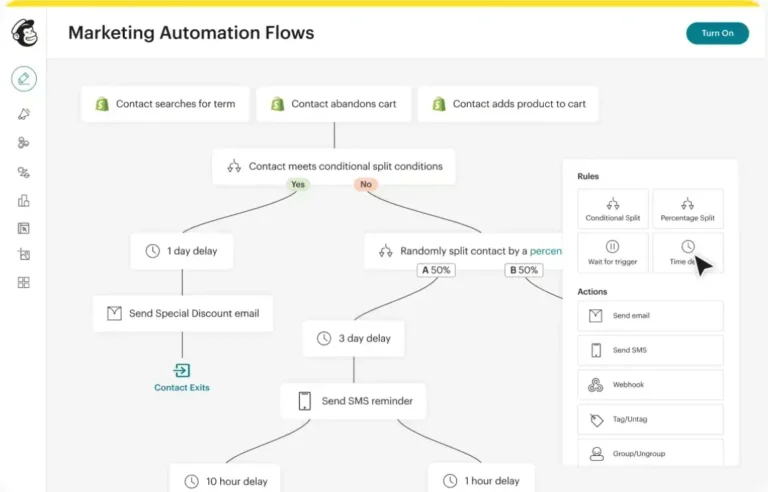
9. Clickable: The Automation of Performance Marketing
Clickable addresses the demand for high-converting visual advertisements. By integrating with real-time ad performance data, Clickable’s AI generates ad creatives that are mathematically more likely to drive clicks.
Key Capabilities:
The platform can ingest a brand’s URL and automatically generate hundreds of ad variations for Instagram, Facebook, and Google Ads. Its "Creative Intelligence" dashboard tells users exactly why an ad is performing well, citing specific colors, layouts, or copy choices.
Pricing Structure:
Clickable typically offers customized pricing for agencies and marketing teams, focusing on a "pay-per-creative" or monthly subscription model that scales with ad spend.
10. Copy AI: The Enterprise Standard for Marketing Copy
Copy AI has evolved into an "AI Marketing OS." While ChatGPT is a generalist, Copy AI is built specifically for the needs of marketing departments, emphasizing "Workflows" that automate entire content cycles.
Key Capabilities:
The "Workflows" feature allows users to automate tasks such as "Transforming a product brief into 50 social media posts, 5 emails, and 3 landing pages" in seconds. Its "Brand Voice" feature ensures that the AI never deviates from the company’s specific linguistic style.
Pricing Structure:
The "Pro" plan is $36/month, while "Team" and "Enterprise" plans offer expanded seat counts and advanced workflow automation features starting at $186/month.
Supporting Data and Market Analysis
Recent data from McKinsey & Company indicates that AI integration in content creation has resulted in a 40% reduction in production time and a 25% increase in content ROI for early adopters. A 2024 survey of 5,000 digital marketers revealed that 82% now consider AI tools "indispensable" to their daily operations.
Furthermore, investment in the "Generative Video" sector specifically saw a 200% year-over-year increase between 2023 and 2025. This surge is attributed to the lowering of technical barriers; a production that would have cost $50,000 and taken three weeks in 2022 can now be executed for less than $500 in under 48 hours using the tools listed above.
Industry Responses and Ethical Implications
The rapid adoption of these tools has not been without controversy. Labor unions, including SAG-AFTRA and the Writers Guild of America, have secured landmark agreements regarding the "digital replicas" of human performers and the use of AI in scriptwriting. These contracts generally require "informed consent and fair compensation" for the use of a human’s likeness or voice in AI training.
Legal experts also point to the ongoing "Copyright Wars." As of early 2025, several high-profile lawsuits regarding the "fair use" of training data remain in the appellate courts. In response, platforms like Adobe and Canva have developed "Ethical AI" models trained exclusively on licensed or public-domain imagery, providing "indemnification" for enterprise clients against copyright claims.
Broader Impact and Future Outlook
The broader implication of these ten tools is the shift from "creation" to "curation." In 2025, the value of a content creator is no longer measured by their ability to operate a camera or write a basic sentence, but by their "taste," "strategic vision," and "prompt engineering" skills.
As AI tools become more autonomous, the industry is moving toward "Hyper-Personalization." Analysts predict that by 2026, we will see the rise of "Dynamic Content" that changes its visual style and tone in real-time based on the specific viewer’s preferences and past behavior. The tools mentioned in this guide are the precursors to this individualized media future.
In conclusion, the AI tools of 2025 represent a fundamental shift in human expression. They serve as "force multipliers" that allow small teams to compete with global conglomerates. For creators, the challenge is no longer the "how" of production, but the "what" and "why." As these technologies continue to mature, the only true constraint on content creation will be the limits of the human imagination.
About the Author