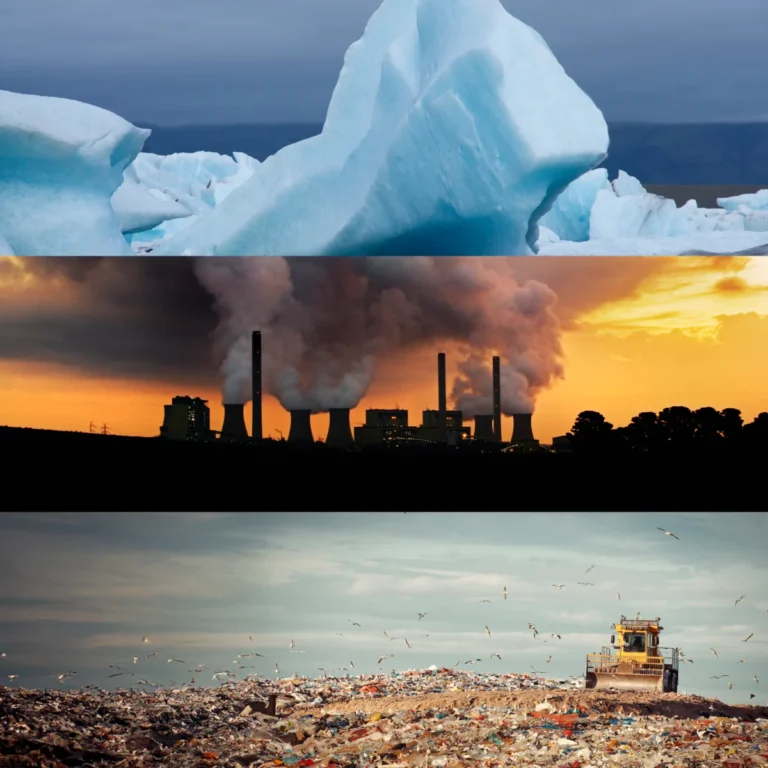
The global manufacturing landscape is currently navigating a pivotal transition as the era of voluntary sustainability reporting gives way to a period of rigorous, data-driven regulatory enforcement. At the heart of this shift is the challenge of packaging—a sector where decisions made months or years before a product reaches a retail shelf determine the ultimate environmental footprint of consumer goods. As multinational corporations grapple with a fragmented landscape of plastic taxes, extended producer responsibility (EPR) schemes, and shifting consumer expectations, the role of integrated digital infrastructure has moved from a back-office function to a strategic necessity.
Historically, the data required to make sustainable packaging decisions has been siloed across disparate corporate departments. Engineering teams define material specifications, procurement departments manage vendor relationships, sustainability officers track carbon footprints, and finance teams calculate the growing burden of environmental fees. According to research from SAP, this fragmentation has left many of the world’s largest organizations reliant on manual spreadsheets and disconnected legacy systems. This lack of a "single version of the truth" prevents businesses from performing basic comparative analyses, such as modeling the financial and environmental consequences of switching from virgin plastic to recycled polymers or assessing how a design change in one market will impact compliance costs in another.
The Technological Response to Data Fragmentation
In response to these systemic inefficiencies, SAP has introduced its Responsible Design and Production (RDP) platform. The system is designed to act as a central nervous system for packaging data, pulling information from across the enterprise to provide a comprehensive view of material composition, recyclability, and environmental performance. By integrating these metrics into a single interface, the platform allows packaging engineers to evaluate design alternatives in a fraction of the time previously required.
Sarah Gillespie, Product Marketing Manager for SAP Responsible Design and Production, emphasizes that the primary barrier to circularity is often a lack of visibility. "You cannot improve what you cannot understand," Gillespie noted during a recent industry review. "When businesses have reliable packaging data in one place, they can move beyond reporting and make better-informed decisions that improve both sustainability and business performance."
The platform’s utility lies in its ability to facilitate "sustainability-by-design." Rather than treating environmental compliance as an after-the-fact reporting exercise, the digital tool allows teams to benchmark potential designs against the Consumer Goods Forum’s Golden Design Rules—a set of industry-led principles aimed at increasing the value of plastic in the recycling stream. This proactive approach enables companies to identify where circularity gains are available long before a prototype is even manufactured.
A Chronology of Increasing Regulatory Pressure
The urgency for such digital tools is driven by an accelerating timeline of global regulations. The landscape has shifted rapidly over the last five years, creating a complex web of requirements that vary significantly by jurisdiction.
In 2022, the United Kingdom introduced its Plastic Packaging Tax, charging companies for packaging that contains less than 30% recycled plastic. This was followed by similar moves in Spain and Italy. However, the most significant regulatory milestone is the European Union’s Packaging and Packaging Waste Regulation (PPWR). Approved by the European Parliament in early 2024, the PPWR sets ambitious targets for packaging reduction (5% by 2030 and 15% by 2040) and mandates that all packaging in the EU market be recyclable by 2030.
Crucially, from August 2026, the PPWR will require a live, system-verifiable Document of Compliance for products sold within the EU. This mandate effectively outlaws the use of static, manual reporting, as companies will need to prove the veracity of their packaging claims through audited, real-time data. Beyond the EU, the United Nations Environment Programme (UNEP) is currently facilitating negotiations for a Global Plastics Treaty. The Intergovernmental Negotiating Committee (INC) is working toward a legally binding international instrument that could standardize design requirements and waste management protocols globally.
Industry analysts predict that by 2030, the number of global packaging regulations will triple. This "regulatory explosion" means that companies operating in multiple markets must manage dozens of different reporting formats and fee structures simultaneously.
The Economic Reality: Costs, Penalties, and Eco-Modulation
While the environmental imperatives are clear, the shift toward digital packaging management is also a matter of financial survival. Darren West, SAP’s Global Head of Circular Economy Solutions, highlights the significant risks of maintaining the status quo. "Companies need to pay attention now," West warned. "The downside is significant: inaccurate reporting can lead to financial penalties, while under the EU PPWR, non-compliant packaging could ultimately face market access restrictions."
The financial implications are further complicated by the concept of "eco-modulation." This is a system where EPR fees are adjusted based on the environmental impact of the packaging. A bottle that is easy to recycle and contains high levels of post-consumer recycled (PCR) content will incur lower fees than a multi-material laminate that is destined for a landfill. Without granular data, companies cannot optimize their designs to take advantage of these lower fee tiers.
According to SAP’s internal modeling and client feedback, the transition to an integrated digital platform can reduce compliance operating costs by as much as 70%. These savings are realized through the automation of data collection and the elimination of manual errors that often lead to overpayment of fees or the incurrence of late-filing penalties. In an era of tightening margins, the ability to lower EPR fees through smarter design represents a significant competitive advantage.
Advocacy for Global Harmonization and the Role of the ICC
The International Chamber of Commerce (ICC) has been a vocal advocate for businesses during the UN Plastics Treaty negotiations. The ICC’s stance aligns closely with the need for digital transparency. The organization is calling for negotiators to establish harmonized principles and standards for product design. The goal is to provide businesses with the regulatory certainty needed to invest in long-term innovations, such as refillable packaging systems or advanced chemical recycling technologies.
The ICC argues that while implementation pathways must respect local contexts, a fragmented global regulatory environment hinders the circular economy. If a company has to design different packaging for 50 different countries, the economies of scale required for sustainable materials are lost. Digital tools like SAP’s RDP platform help bridge this gap by mapping a single set of packaging data against multiple regulatory regimes simultaneously, allowing for a consistent design approach despite varying local obligations.
Analysis of Implications: Beyond the Digital Dashboard
While the advancement of digital platforms is a critical step, experts caution that data alone is not a panacea for the plastic pollution crisis. A digital dashboard can identify that a wrapper is non-recyclable, but it cannot build the physical infrastructure needed to collect and process that waste. The success of these tools depends on a broader systemic change across the entire value chain—from chemical producers and packaging converters to waste management firms and municipal governments.
The real power of digital transformation in this sector lies in its ability to shift the corporate mindset. By quantifying the environmental and financial cost of every gram of plastic, these platforms make the "hidden" costs of waste visible to executive leadership. This visibility is likely to accelerate the move away from single-use plastics and toward more durable, reusable, and truly recyclable alternatives.
Furthermore, the integration of Artificial Intelligence (AI) into these platforms is expected to play a transformative role. Future iterations of packaging software will likely include predictive modeling that can suggest the most sustainable material for a specific product category based on real-time commodity prices for recycled resins and the latest changes in global tax laws.
Conclusion: Turning Ambition into Implementation
As the 2026 deadline for the EU’s Document of Compliance approaches, the window for manual data management is closing. The transition to a circular economy requires a fundamental redesign of how products are delivered to consumers, and that redesign must be built on a foundation of verifiable data.
The interviews with Sarah Gillespie and Darren West underscore a broader trend in the corporate world: sustainability is no longer a peripheral "green" initiative but a core business function. By connecting packaging data to the central ERP (Enterprise Resource Planning) system, companies are finally treating plastic as a resource to be managed rather than a waste product to be discarded.
The ongoing negotiations for the Global Plastics Treaty will determine the rules of the game for decades to come. In the meantime, tools that improve transparency and support sustainability-by-design are providing the practical means for businesses to navigate an increasingly complex policy landscape. The ultimate goal is a world where packaging never becomes waste, and while the journey is far from over, the digital infrastructure to make it possible is finally being built.
About the Author