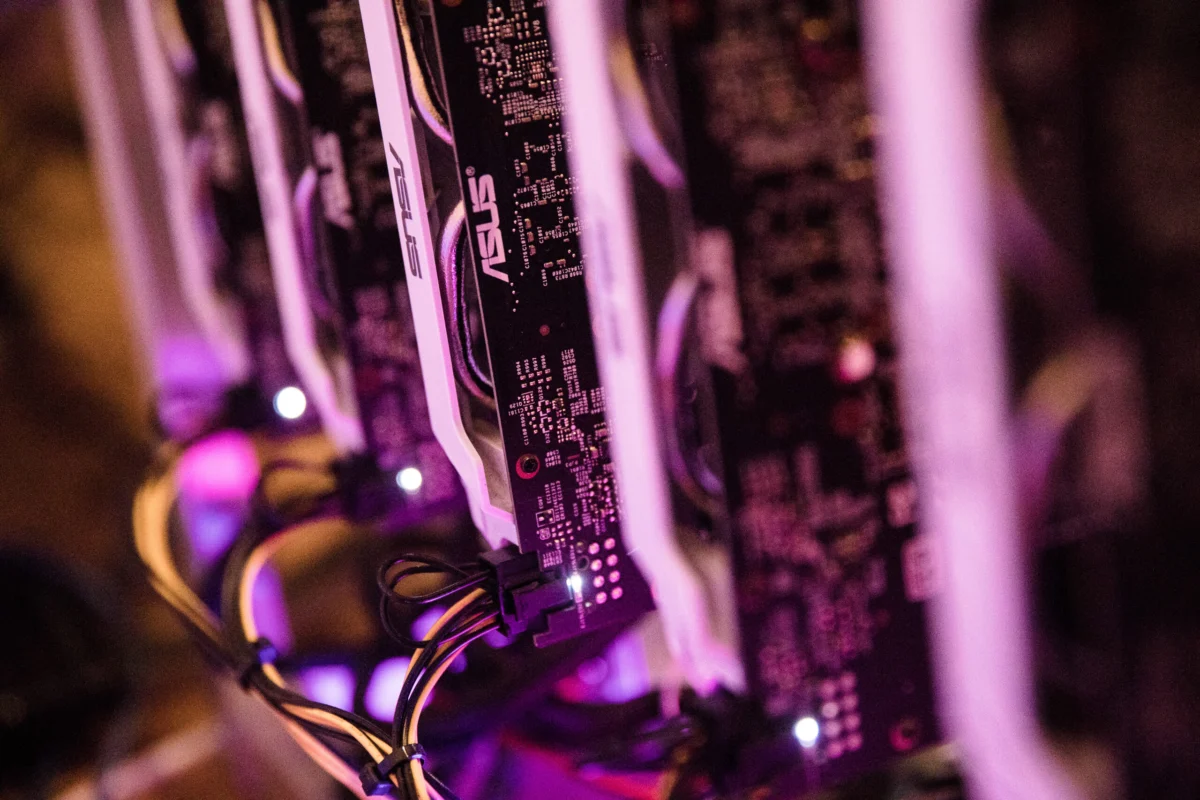
The relentless pace of the artificial intelligence buildout shows no signs of abatement, with hundreds of billions of dollars annually channeled into advanced data centers and high-performance Graphics Processing Units (GPUs). This colossal investment has firmly established compute power as the single largest expenditure for entities engaged in developing AI products and services. Paradoxically, despite this massive financial commitment, the industry has long grappled with a fundamental void: the absence of a standardized, transparent mechanism for pricing compute resources and, crucially, for firms to effectively hedge their exposure against the inherent volatility of these critical assets. This market inefficiency introduces significant risk and unpredictability into the burgeoning AI economy, hindering strategic planning and capital allocation for both providers and consumers of computational power.
Addressing a Critical Market Inefficiency
A significant development poised to reshape this landscape comes from Silicon Data, a startup that recently concluded a $30 million Series A funding round. The company’s ambitious mission is to become the definitive reference price for GPU rental, establishing a universally recognized index against which Wall Street futures contracts could ultimately settle. This innovative approach aims to inject much-needed transparency and stability into the opaque compute market. Silicon Data has already announced its intention to launch its compute futures trading platform on the CME Group, one of the world’s leading derivatives marketplaces, on October 5th, pending the necessary regulatory approvals. This move signals a profound shift, potentially transforming compute from a variable operational expense into a tradeable commodity with predictable pricing mechanisms.
The urgency for such a solution stems directly from the exponential growth of AI. The demand for specialized hardware, particularly high-end GPUs from manufacturers like Nvidia, has skyrocketed, creating bottlenecks and price fluctuations. Companies building large language models, training complex neural networks, or deploying intricate AI applications often face unpredictable costs for the computational infrastructure required. Without a clear market price and hedging tools, budgeting for AI projects becomes a complex exercise fraught with uncertainty, potentially stifling innovation and delaying market entry for smaller players.
The Unpriced Frontier: The Compute Conundrum
For years, the acquisition of compute resources has largely operated through direct procurement, cloud provider agreements, or spot markets, each presenting its own set of challenges. Direct hardware purchases involve substantial upfront capital expenditure, rapid depreciation concerns, and the complexities of managing physical infrastructure. Cloud-based solutions offer flexibility but often come with dynamic pricing structures that can change based on demand, region, and specific service configurations, making long-term cost forecasting difficult. Spot markets, while offering potentially lower prices, lack guaranteed availability and stability, making them unsuitable for mission-critical, continuous AI workloads.
This fragmented and opaque market stands in stark contrast to mature commodity markets, where prices for everything from crude oil and natural gas to agricultural products and precious metals are established through robust, liquid futures exchanges. These exchanges provide price discovery, facilitate risk transfer through hedging, and enable efficient capital allocation. The absence of such a mechanism for compute has meant that AI developers, from fledgling startups to multinational corporations, have been exposed to unmitigated price risk, impacting their profitability and strategic planning. The sheer scale of investment—hundreds of billions annually—underscores the economic imperative for a more sophisticated financial framework. Industry estimates suggest the global data center market alone could exceed $300 billion annually by the mid-2020s, with a significant portion dedicated to AI-specific infrastructure.
Silicon Data’s Vision: A New Financial Instrument for AI
Silicon Data’s strategic move to establish a reference price for GPU rental is foundational. By aggregating data from various sources—including cloud providers, specialized GPU rental platforms, and direct market transactions—they aim to create a transparent, reliable, and real-time benchmark. This benchmark would then serve as the underlying asset for a compute futures contract. A futures contract is a standardized legal agreement to buy or sell something at a predetermined price at a specified time in the future. For compute, this would allow participants to lock in future compute costs or revenues, effectively hedging against price fluctuations.
The partnership with CME Group is pivotal. As a global leader in derivatives trading, CME provides the necessary infrastructure, regulatory oversight, and market liquidity to ensure the success and credibility of compute futures. Launching on such a reputable exchange lends immediate legitimacy to Silicon Data’s initiative, inviting participation from institutional investors, financial traders, and, crucially, the AI industry itself. The target launch date of October 5th signifies a clear timeline for this transformative market innovation, pending the crucial hurdle of regulatory approval, which will involve thorough scrutiny by financial authorities to ensure market integrity, fairness, and investor protection.
Investment and Market Confidence
The successful closing of a $30 million Series A round speaks volumes about investor confidence in Silicon Data’s vision and the perceived need for such a market solution. While specific investors were not detailed in the initial report, a Series A round of this magnitude typically attracts a consortium of venture capital firms specializing in fintech, deep tech, and AI infrastructure. These investors recognize the enormous market opportunity presented by bringing financial sophistication to the core engine of the AI revolution. The capital infusion will undoubtedly be used to further develop Silicon Data’s data aggregation and indexing technology, expand its team, and navigate the complex regulatory landscape associated with launching a new derivatives product. It underscores a belief that the compute market is mature enough and sufficiently large to warrant its own financial instruments. This investment reflects a broader trend of financial innovation seeking to de-risk and optimize critical components of the digital economy.
Challenging the Narrative: AI’s Enduring Buildout
Amidst discussions surrounding the health of the AI buildout, Steve Hou, head of research at Silicon Data, offered a nuanced perspective during an episode of TechCrunch’s Equity podcast. Hou’s insights notably push back against prevailing "doom and gloom" headlines that have periodically surfaced, suggesting potential market saturation, depreciating chip values, or stalled data center constructions. Such headlines often stem from concerns about oversupply in specific segments, temporary market corrections, or regional regulatory hurdles that temporarily halt new data center projects, such as those reported in Texas and New York.
Hou’s data, however, appears to tell a different story, one characterized by robust underlying demand and a sustained, long-term growth trajectory for AI infrastructure. This perspective likely factors in several key dynamics:
- Continuous Innovation: The rapid evolution of AI models (e.g., multimodal AI, specialized large language models) consistently requires more advanced and specialized compute, preventing a simple "oversupply" scenario for leading-edge hardware.
- Expanding Applications: AI is not confined to a few tech giants; its adoption is broadening across industries—healthcare, finance, manufacturing, logistics, and entertainment—each driving incremental demand for compute.
- Efficiency and Optimization: While newer chips are more efficient, the sheer scale of problems AI is tackling means that overall compute consumption continues to rise. Companies are constantly seeking to optimize existing infrastructure and invest in next-generation solutions.
- Geopolitical and Supply Chain Dynamics: The strategic importance of AI has led nations and corporations to invest heavily in domestic compute capabilities, creating diverse demand centers resilient to localized slowdowns.
Hou’s analysis suggests that while short-term market fluctuations and localized issues are inevitable in a rapidly expanding sector, the fundamental drivers of AI growth—data proliferation, algorithmic advancements, and expanding use cases—remain strong, ensuring sustained demand for computational resources. This long-term bullish outlook is crucial for the viability and success of a compute futures market, as it relies on a consistent and growing underlying asset.
Broader Implications for the AI Ecosystem
The introduction of compute futures could have profound implications across the entire AI ecosystem:
- For AI Developers and Startups: The ability to lock in compute prices for future periods would enable more accurate budgeting and financial planning, reducing one of the most significant operational risks. This predictability could free up capital and allow developers to focus more on innovation rather than constantly managing cost volatility. It democratizes access to advanced compute by making its future cost more transparent and manageable.
- For GPU Providers and Data Center Operators: These entities could use futures contracts to hedge against potential declines in rental rates or to secure future revenue streams, allowing for more stable business models and better capacity planning. For example, a data center operator building a new facility could hedge against future GPU rental price drops, ensuring a certain return on their multi-billion-dollar investment.
- For Investors and Financial Markets: Compute futures would create an entirely new asset class, attracting diverse forms of capital. It would offer new avenues for speculation, arbitrage, and portfolio diversification, expanding the scope of financial engineering into the digital infrastructure domain. This could also lead to the development of other derivatives products linked to compute, further deepening market liquidity and sophistication.
- Economic Efficiency: By creating a transparent price discovery mechanism, compute resources can be allocated more efficiently. Market signals from futures prices can inform investment decisions for hardware manufacturers and data center builders, ensuring supply better matches demand over time. This reduces waste and optimizes resource utilization within the AI supply chain.
- Standardization and Transparency: The very act of creating a futures market requires a high degree of standardization in the underlying asset. This could drive common metrics and definitions for "compute power," benefiting the entire industry by providing clear benchmarks for performance and cost.
Regulatory Oversight and Market Development
The launch of compute futures on the CME Group is contingent on regulatory approval, a critical step that underscores the importance of robust oversight for new financial instruments. Regulators will scrutinize the proposed contract specifications, market surveillance mechanisms, and safeguards against manipulation to ensure a fair and orderly market. Given the novelty of compute as a financial commodity, regulators will likely approach this with careful consideration, balancing innovation with the imperative of investor protection and market integrity. The process of obtaining approval will involve detailed discussions and potentially adjustments to Silicon Data’s initial proposals, ensuring that the market is designed to be resilient and transparent from its inception.
Furthermore, the initial liquidity and adoption of compute futures will be key indicators of its long-term success. Education and outreach to both the AI and financial communities will be crucial to drive participation. As with any nascent market, it will take time for participants to become comfortable with the new instruments and for liquidity to build. However, the foundational need for hedging and price discovery in the compute market, coupled with the immense capital flowing into AI, suggests a strong potential for rapid adoption once the platform is live and proven reliable.
Conclusion: Towards a More Predictable AI Future
Silicon Data’s $30 million Series A funding and its imminent launch of compute futures on the CME Group mark a pivotal moment in the financial evolution of the artificial intelligence industry. By introducing a standardized pricing mechanism and robust hedging tools, the company aims to de-risk one of the most significant cost centers for AI development, fostering greater predictability, efficiency, and innovation. The move represents a significant step towards treating compute not just as a technological utility but as a fundamental economic commodity, deserving of the sophisticated financial instruments that underpin other critical sectors of the global economy. As the AI buildout continues its relentless expansion, the ability to manage compute costs effectively will become an increasingly critical competitive advantage, and Silicon Data is positioning itself at the forefront of this transformative financial frontier.
About the Author