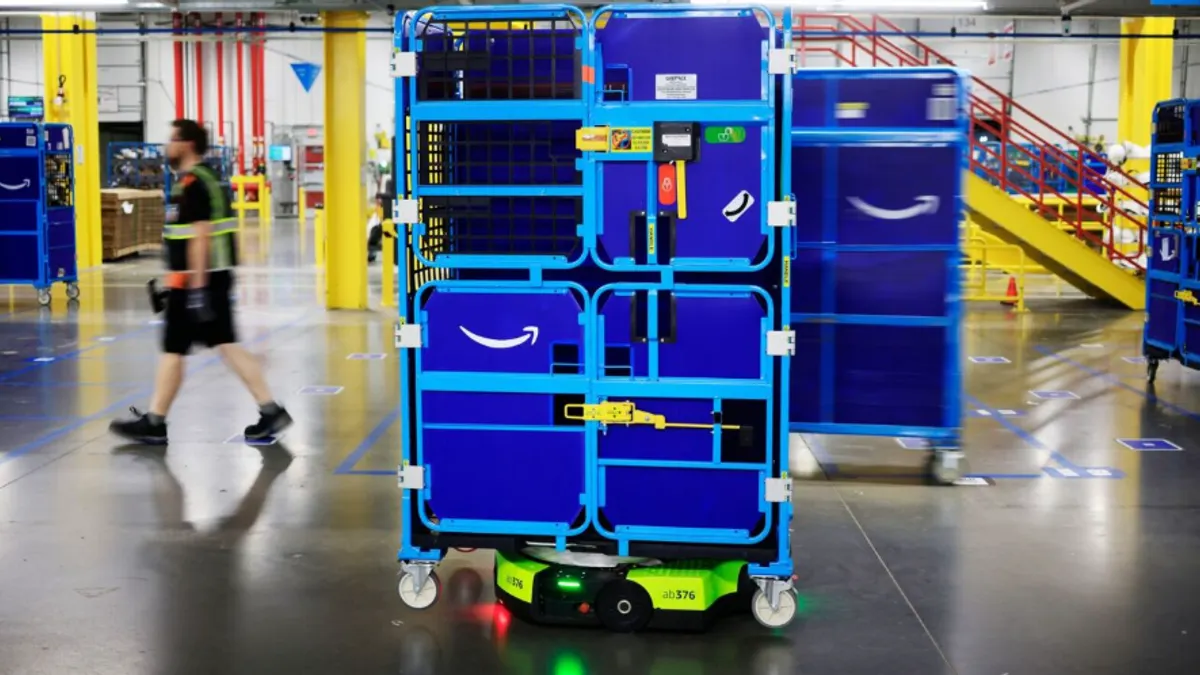
Amazon has announced a significant increase in hourly wages for its full-time employees in core operations, coupled with the introduction of new grocery discounts, signaling a strategic move to bolster its workforce and mitigate the effects of rising consumer costs. This initiative, set to roll out broadly by 2027, will see an additional $1 per hour added to the paychecks of eligible employees, effectively raising the average starting wage to approximately $24 per hour, according to company statements. This development arrives at a critical juncture for the U.S. economy, where consumers are increasingly feeling the pinch of persistent inflation, particularly in essential goods like groceries and fuel.
The e-commerce giant’s latest compensation adjustments are not limited to direct wage increases. A new financial benefit package, slated for a phased rollout, will offer employees access to a banking service that requires no credit history for account opening, along with competitive rates for auto and home loans. This service aims to complement Amazon’s existing Brightside Financial Care program, which provides employees with access to financial advisors. Furthermore, the new grocery discounts are designed to be additive to existing Prime member benefits, offering eligible employees enhanced purchasing power on everyday necessities. This multifaceted approach underscores Amazon’s commitment to supporting its vast operational workforce through a period of economic uncertainty, recognizing the direct impact of inflation on household budgets.
Background: A Shifting Economic Landscape for Retail Workers
The timing of Amazon’s announcement is particularly noteworthy, occurring as economists express growing concerns about consumer spending patterns. While retail sales have demonstrated resilience thus far, a growing consensus suggests that a slowdown is on the horizon. This prediction is largely driven by the erosion of real incomes for many households, as inflation has begun to outpace wage growth for the first time in three years. The sharp increases in the cost of groceries and fuel have disproportionately affected lower and middle-income families, forcing them to re-evaluate their spending habits.
Heather Long, Chief Economist at Navy Federal Credit Union, has articulated this concern, stating, "A consumer spending slowdown is likely later this year and into early 2027 as middle-income and lower-income households feel the pinch from higher gas and grocery prices. Real incomes are flat or declining for many and they will have to cut back on something." This economic backdrop provides a clear rationale for Amazon’s proactive stance in enhancing its employee compensation and benefits. By offering more competitive wages and targeted financial support, Amazon aims to retain its workforce, attract new talent, and demonstrate a commitment to employee well-being in a challenging economic climate.
Chronology of Employee Benefits and Economic Factors
Amazon’s history of adjusting its compensation and benefits reflects a dynamic response to market conditions and workforce needs. While the specifics of the latest announcements are new, the company has previously implemented significant wage hikes. For instance, in October 2018, Amazon raised its minimum wage to $15 per hour for all U.S. employees. This move was widely seen as a response to growing public and political pressure regarding worker pay in the retail and logistics sectors, as well as a strategic effort to attract and retain a large hourly workforce.
The current announcement, made on September 17, 2026, builds upon this foundation, pushing the average starting wage significantly higher. The gradual rollout of the new banking and grocery benefits suggests a carefully planned integration into the existing employee support infrastructure. The commitment to making these benefits broadly available by 2027 indicates a long-term investment in employee financial health.
Concurrently, the economic narrative has been dominated by the persistent challenge of inflation. Data from early 2026 indicated a concerning trend where inflation rates began to exceed wage growth, a situation that has not been observed for several years. This divergence has a direct impact on the purchasing power of wages, leading to a de facto reduction in take-home pay for many workers, even if their nominal wages have increased. The subsequent rise in prices for essential goods has further exacerbated this pressure.

Supporting Data and Economic Indicators
The impact of inflation on consumer spending can be quantified through various economic indicators. Retail sales figures, while showing some resilience, have masked underlying shifts in consumer behavior. As inflation erodes disposable income, consumers often prioritize essential purchases over discretionary spending. This trend is particularly evident in the grocery sector, where price increases have been substantial.
According to recent reports from the U.S. Bureau of Labor Statistics, the Consumer Price Index (CPI) for food has seen consistent upward movement throughout the preceding year. For example, a hypothetical increase of 5-8% in grocery prices over a 12-month period, coupled with a similar or higher rise in fuel costs, can translate into hundreds of dollars in additional annual expenses for an average household. When these increases are compared against modest wage gains, the net effect is a reduction in real income.
The Federal Reserve’s monetary policy, aimed at curbing inflation through interest rate adjustments, has also played a role in the economic environment. While intended to stabilize prices, higher interest rates can also impact borrowing costs for consumers and businesses, potentially slowing economic activity. This complex interplay of factors creates a challenging environment for both employers and employees.
Analysis of Implications for Amazon and its Workforce
Amazon’s strategic investment in its employees through increased wages and enhanced benefits carries significant implications. For the company, these measures are likely to yield several positive outcomes:

- Improved Employee Retention and Attraction: In a competitive labor market, offering above-average compensation and robust benefits can significantly reduce employee turnover. This is particularly crucial for a company like Amazon, which relies heavily on its operational workforce for the smooth functioning of its e-commerce and logistics networks. A stable workforce translates to reduced recruitment and training costs, as well as improved operational efficiency.
- Enhanced Productivity and Morale: When employees feel valued and financially secure, their morale and productivity tend to increase. The added financial benefits, especially those directly addressing the cost of living, can alleviate stress and allow employees to focus more effectively on their tasks.
- Positive Brand Image and Corporate Social Responsibility: By taking proactive steps to support its employees during an economically challenging period, Amazon can bolster its reputation as a responsible employer. This can be beneficial for its public image, attracting not only talent but also customers who increasingly consider a company’s ethical practices.
- Mitigation of Labor Relations Challenges: The retail and logistics sectors have seen increased unionization efforts and labor activism in recent years. By addressing worker concerns proactively through improved compensation and benefits, Amazon may be able to preempt some of these labor relations challenges and foster a more cooperative environment.
For the employees, the benefits are direct and substantial. The $1 per hour increase translates to a tangible boost in take-home pay, while the new grocery discounts and financial services offer practical support for managing household budgets. This comprehensive approach recognizes the multifaceted financial pressures faced by many workers today.
Broader Impact on the Retail and Logistics Sectors
Amazon’s moves are likely to set a precedent for other major players in the retail and logistics industries. As a market leader, its compensation and benefits adjustments can influence industry standards. Competitors may feel compelled to match or exceed Amazon’s offerings to remain competitive in attracting and retaining talent. This could lead to a broader uplift in wages and benefits across the sector, ultimately benefiting a larger segment of the hourly workforce.
Furthermore, the focus on financial well-being through banking services and discounts highlights a growing trend in employer-provided benefits. Companies are increasingly recognizing that employee welfare extends beyond basic compensation to encompass financial literacy, access to affordable financial products, and tools to manage everyday expenses.
The long-term implications of these investments will be closely watched. While the immediate impact is positive for Amazon’s employees, the sustained success of these initiatives will depend on their effective implementation and their ability to genuinely improve the financial security and well-being of the workforce in the face of ongoing economic volatility. As the U.S. consumer navigates the complexities of inflation and potential economic slowdowns, Amazon’s strategic decisions offer a glimpse into how large corporations are adapting to support their most vital asset: their people.
About the Author