
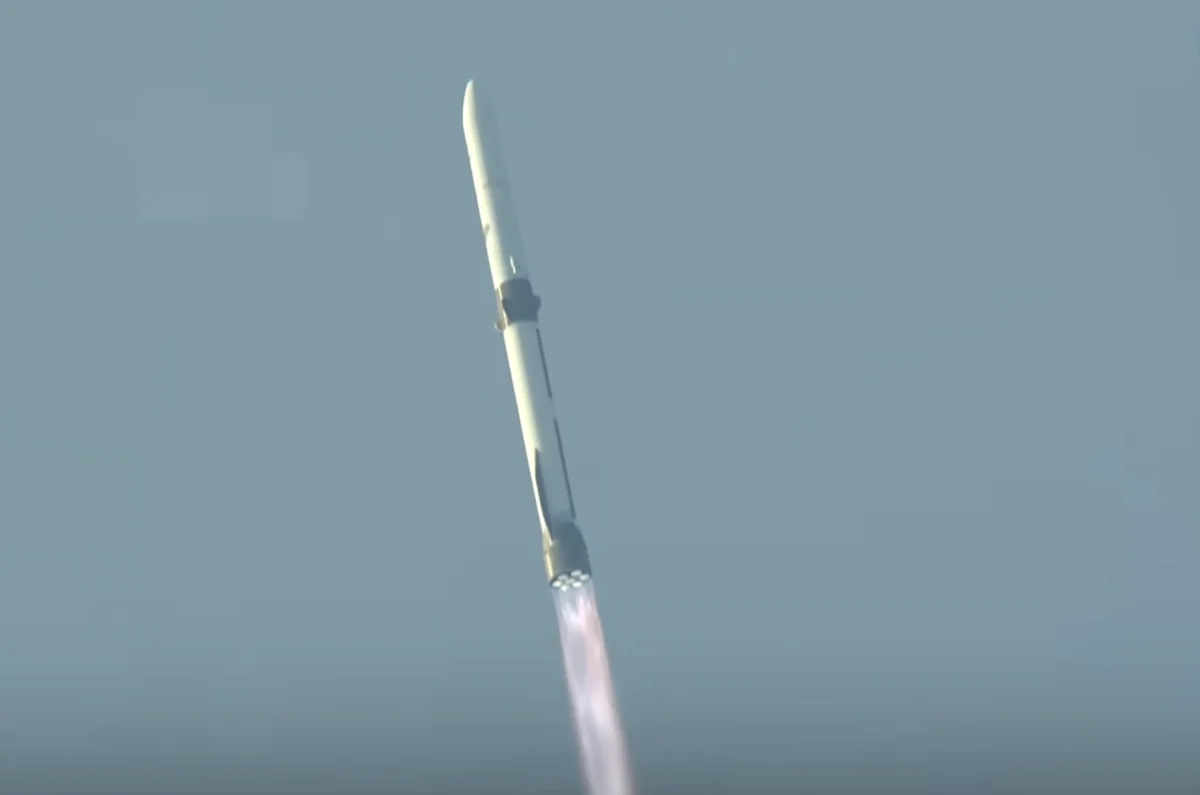
Blue Origin achieved a significant milestone in its ambitious space program on Sunday, April 19, 2026, successfully reusing one of its New Glenn heavy-lift rockets for the first time. This accomplishment, marking the third launch for the New Glenn system, positions the company founded by Jeff Bezos as a more formidable competitor in the increasingly vital orbital launch market, directly challenging the established dominance of SpaceX. The successful recovery and subsequent reflight of a New Glenn booster underscore Blue Origin’s commitment to reducing launch costs through reusability, a strategy proven critical by competitors.
A New Dawn for New Glenn: The Significance of Reusability
The ability to reuse rocket components is not merely an operational upgrade; it is a fundamental shift in the economics of space access. For years, the astronomical cost of single-use rockets has been a significant barrier to widespread space exploration and commercialization. SpaceX, under the leadership of Elon Musk, pioneered this approach with its Falcon 9 and Falcon Heavy rockets, demonstrating that boosters could be recovered, refurbished, and relaunched, dramatically lowering the per-launch cost. This economic advantage has allowed SpaceX to secure a vast majority of the global commercial launch market, including a significant portion of NASA’s critical cargo and crew missions.
Blue Origin’s successful reuse of a New Glenn booster directly addresses this economic imperative. The New Glenn rocket, a colossal vehicle standing 98 meters (322 feet) tall with a 7-meter (23-foot) diameter, is designed for heavy payloads. Its ability to carry substantial payloads into orbit is crucial for a variety of applications, from deploying large satellite constellations to facilitating ambitious lunar and deep-space missions. By making New Glenn reusable, Blue Origin aims to offer a more cost-effective solution for these high-demand services, potentially unlocking new opportunities in space.
The Chronology of a Milestone
The successful reuse mission on Sunday occurred just over a year after the maiden flight of the New Glenn rocket system on March 11, 2025. The development of New Glenn has been a protracted and complex undertaking, spanning more than a decade, with Blue Origin investing heavily in its design, manufacturing, and testing.
The specific booster that achieved this historic reuse was the same one utilized in the second New Glenn mission, which took place in November 2025. During that inaugural mission, the booster successfully delivered two robotic NASA spacecraft to space on a trajectory for Mars. Following its primary mission, the booster executed a controlled descent and was recovered by a drone ship stationed in the ocean, a critical step in validating Blue Origin’s reusability technology.
Sunday’s mission, designated as the third flight of New Glenn, saw the reusable booster lift off once more. Approximately 10 minutes after ignition, the booster once again performed a precision landing onto a drone ship, marking its second successful recovery. This repeated success is a strong indicator of the robustness and reliability of Blue Origin’s recovery and refurbishment processes.
Mission Objectives and Future Aspirations
While the primary focus of Sunday’s launch was the demonstration of reusability, the mission also carried a significant commercial payload. The New Glenn upper stage was tasked with deploying a communications satellite for AST SpaceMobile, a company working to build the first and only space-based cellular broadband network. As of the time of publication, the upper stage was still in the process of delivering the satellite to its designated orbit, with ongoing monitoring by Blue Origin and AST SpaceMobile.
Beyond commercial satellite deployments, New Glenn is envisioned as a cornerstone for a range of ambitious space endeavors. Blue Origin has explicitly stated its intention to leverage the heavy-lift capabilities of New Glenn for NASA’s Artemis program, which aims to return humans to the Moon. The rocket is also slated to play a vital role in supporting Amazon’s burgeoning satellite internet constellation, Project Kuiper, and in Blue Origin’s own lunar exploration initiatives. The company is currently finalizing preparations for the launch of its first robotic moon lander later this year, further underscoring its commitment to lunar access.
Supporting Data and Technical Achievements
The New Glenn rocket is a testament to advanced aerospace engineering. Its first stage is powered by nine BE-4 engines, which are capable of producing over 5.3 million pounds of thrust at liftoff. These engines, fueled by liquefied natural gas (LNG) and liquid oxygen (LOX), are designed for high performance and efficiency. The second stage is powered by two vacuum-optimized BE-4 engines. The rocket’s payload fairing has a diameter of 7 meters, allowing for the accommodation of large and complex payloads.
The successful recovery of the New Glenn booster on Sunday involved a series of complex maneuvers, including aerodynamic deceleration, parachute deployment, and precise engine burns to ensure a soft landing on the autonomous drone ship. This feat requires meticulous control over the vehicle’s trajectory and engine performance. The ability to achieve this twice with the same booster demonstrates a high degree of confidence in the system’s design and operational procedures.
Inferred Reactions and Broader Impact
While official statements from competing entities like SpaceX were not immediately available, the aerospace industry is undoubtedly paying close attention to Blue Origin’s progress. Industry analysts and observers have long predicted that the reusability of heavy-lift rockets would be a key differentiator in the coming years.
A spokesperson for a leading aerospace consulting firm, who requested anonymity due to ongoing client relationships, stated, "Blue Origin’s successful reuse of New Glenn is a pivotal moment. It validates their long-term investment in this technology and significantly alters the competitive landscape. We can expect to see intensified competition in the heavy-lift market, which should ultimately benefit customers through increased payload capacity and potentially more competitive pricing."
The implications of this milestone extend beyond immediate market competition. A more accessible and affordable heavy-lift capability is fundamental to the expansion of human activities in space. This includes the potential for larger and more sophisticated space telescopes, the assembly of in-orbit infrastructure, and the facilitation of more ambitious scientific missions to the outer solar system. For Blue Origin, this success is a critical step in realizing its vision of enabling a future where millions of people live and work in space.
Blue Origin’s Vision and the Road Ahead
Jeff Bezos, the founder of Blue Origin, has consistently articulated a long-term vision for humanity’s presence in space, often referred to as "O’Neill cylinders" or orbital habitats. The development of reusable launch vehicles like New Glenn is a foundational element of this grand ambition, providing the necessary access to space to build and sustain such future endeavors.
The successful reuse of the New Glenn booster is not just a technical achievement; it is a strategic victory for Blue Origin. It signals their ability to execute complex engineering and operational challenges, putting them on a stronger footing to compete for lucrative government and commercial launch contracts. As Blue Origin continues to refine its reusability processes and expand the capabilities of New Glenn, the company is poised to play an increasingly significant role in shaping the future of space exploration and commerce. The coming years will likely see a more dynamic and competitive orbital launch market, driven by the advancements made by companies like Blue Origin.
About the Author





