The global crisis of plastic pollution is frequently framed as a failure of waste management—a logistical breakdown characterized by insufficient collection bins, inadequate sorting facilities, and a lack of public awareness regarding recycling. However, for Linka Geustyn, a Packaging Circularity Specialist at OMNI GSS and the founder of Catalynx (Pty) Ltd, this perspective addresses only the symptoms of the problem rather than its systemic roots. In a burgeoning circular economy venture in South Africa, Geustyn and her partners are demonstrating that the true bottleneck to environmental sustainability is not the absence of waste collection, but the absence of a robust market for the materials recovered. Without a clear commercial demand for recycled plastics, the infrastructure of circularity remains a fragile skeleton. By transforming recycled polypropylene (rPP) waste into high-value consumer products, this South African coalition is providing a blueprint for how the proposed Global Plastics Treaty can bridge the gap between environmental ambition and economic reality.
The Demand-Side Revolution in Circularity
At the heart of the circular economy is a simple but often overlooked economic principle: supply does not create its own demand in the world of waste. For decades, environmental policy has focused on the "push" factor—encouraging households and businesses to recycle more. While essential, this approach often leads to stockpiles of low-value materials that have nowhere to go, eventually finding their way back into landfills or the ocean when market prices for virgin plastics drop. Geustyn’s work suggests that the "pull" factor is the missing link. When manufacturers and retailers commit to using recycled content, they create a vacuum that pulls demand through the entire value chain, providing the financial incentive for better sorting, more efficient collection, and increased capital investment.
This market-driven approach is currently being tested through a strategic partnership in South Africa involving several key players: Catalynx, OMNI GSS, the recycler Reproplast, the material manufacturer Wang On Fibres, and the bag producer Umhlaba Bags. Together, these entities have stitched together a localized polypropylene value chain that connects waste pickers and collectors to major retail outlets. By ensuring that there is a buyer for the end product—in this case, recycled polypropylene shopping bags—the partnership has stabilized a commercial system that previously struggled with volatility and fragmentation.
The Global Plastics Treaty: A Context of Urgency
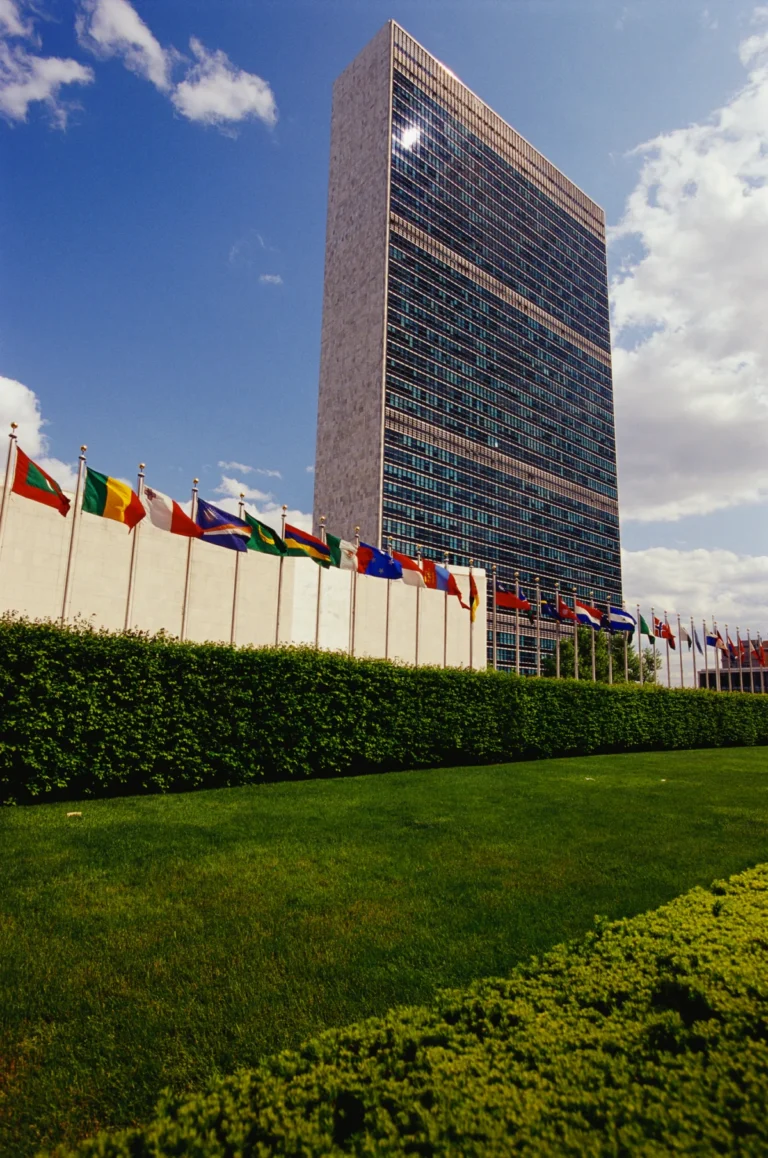
The South African model arrives at a critical juncture in international environmental law. The United Nations is currently in the process of negotiating a legally binding instrument on plastic pollution, often referred to as the Global Plastics Treaty. The Intergovernmental Negotiating Committee (INC) has been tasked with finalizing this treaty, with the fifth session (INC-5) in Busan, Republic of Korea, serving as a pivotal moment for global policy.
The International Chamber of Commerce (ICC) has been a vocal advocate for a treaty that is both ambitious and workable. The ICC argues that for a global agreement to succeed, it must move beyond bans and restrictions to create enabling policy frameworks that encourage innovation. The South African polypropylene venture embodies the ICC’s recommendations by demonstrating how local industries and the informal sector can be integrated into a global circularity framework. A successful treaty must set a clear direction while recognizing that implementation will vary based on national infrastructure, industrial capacity, and economic conditions.
Building a Localized Value Chain: From Waste to Retail
The South African initiative focuses specifically on polypropylene (PP), a versatile thermoplastic used in everything from food packaging to automotive parts. Despite its ubiquity, PP has historically had lower recycling rates than Polyethylene Terephthalate (PET). To solve this, the partnership created a closed-loop system that keeps value onshore.
- Collection and Sorting: The process begins with the informal sector—waste pickers and small-to-medium enterprises (SMEs) who recover post-consumer waste (PCW) from the streets and landfills.
- Processing: Reproplast, a specialist recycler, processes this waste into high-quality rPP pellets.
- Manufacturing: Wang On Fibres, led by Director Muriel Huang, utilizes these pellets to produce rPP spunbond material. This material serves as a durable, recyclable alternative to virgin plastic or imported non-recyclable textiles.
- Product Creation: Umhlaba Bags converts the spunbond material into reusable shopping bags.
- Retail Integration: Major South African retailers, including SPAR, Mr Price, and PEP, have transitioned to these bags, replacing virgin plastic or imported equivalents.
By processing and manufacturing within South Africa, the venture avoids the carbon footprint and economic loss associated with exporting raw waste. This "onshoring" of value supports the domestic job market and makes the circular economy a pillar of national industrial strategy rather than just an environmental initiative.
Data and the Economic Case for Polypropylene Circularity
The scale of the plastic challenge is underscored by global production figures. According to industry data, global plastic production has reached nearly 400 million tonnes annually, with polypropylene accounting for approximately 16% of that total. In South Africa, the plastics industry contributes significantly to the GDP, but recycling rates have historically hovered around 43% for all plastics, with significant room for growth in the polypropylene sector.
The transition to rPP shopping bags by retailers like SPAR and PEP represents a massive shift in volume. By replacing millions of virgin plastic bags with recycled alternatives, these retailers are providing the "anchor demand" necessary for Wang On Fibres and Reproplast to invest in advanced machinery and technology. This investment, in turn, lowers the cost of recycled materials over time, making them more competitive with virgin plastics, which are often subject to the price fluctuations of the global oil market.
The Human Element: Integrating the Informal Sector
A critical component of the South African model is its explicit recognition of the informal sector. In many developing economies, waste pickers are the primary engine of the recycling supply chain, yet they often operate on the margins of the economy with little protection or recognition. The ICC maintains that any credible transition to a circular economy must be a "just transition" that does not leave these workers behind.
In the polypropylene value chain established by Catalynx and its partners, waste pickers are viewed as essential service providers. By creating a stable demand for rPP, the partnership ensures more consistent pricing for the materials these individuals collect. Furthermore, by involving SMEs in the management and transport of waste, the model fosters entrepreneurship at the local level. This social dimension is a key selling point for the Global Plastics Treaty, as it demonstrates that circularity can drive poverty Alleviation and social inclusion alongside environmental protection.
Overcoming Structural Barriers and Fostering Trust
Transitioning to a circular economy is not without its challenges. Linka Geustyn notes that one of the primary hurdles is the traditional "silo" mentality of business. In a linear economy, companies often protect their individual interests and supply chain data with high levels of secrecy. However, circularity requires an unprecedented level of collaboration and transparency.
"Circularity only becomes sustainable when every participant in the value chain creates value," Geustyn explains. "When demand exists for recycled materials, the entire system begins to sustain itself."
This requires manufacturers, recyclers, and retailers to share technical challenges and constraints. For example, the technical specifications for rPP spunbond material had to meet the rigorous durability standards of retailers like Mr Price. Achieving this required a collaborative feedback loop between Wang On Fibres and the recyclers to ensure the purity and consistency of the recycled feedstock. This level of trust-based collaboration is a prerequisite for the systemic change envisioned by the Global Plastics Treaty.
Policy Certainty as a Prerequisite for Capital Investment
For the circular economy to scale globally, it requires massive infusions of capital. Investors, however, are notoriously risk-averse when it comes to emerging markets and new technologies. This is where policy plays its most vital role. Clear standards, credible implementation pathways, and long-term policy certainty are essential to lower the risk profile of circular infrastructure projects.
In South Africa, the government’s move toward Extended Producer Responsibility (EPR) regulations has provided a regulatory nudge, but it is the commercial success of ventures like the rPP value chain that provides the proof of concept for investors. The Global Plastics Treaty should, therefore, focus on creating harmonized principles that allow for flexibility in national implementation. By establishing a "level playing field" globally, the treaty can encourage multi-national corporations to invest in circularity across all their markets, rather than just in regions with stringent local laws.
Analysis: Implications for the Future of Business
The success of the South African polypropylene model suggests that the future of business lies in the ability to decouple growth from resource consumption. As the negotiations for the Global Plastics Treaty continue, the focus is shifting toward how these high-level diplomatic goals can be translated into shop-floor realities.
The implications are clear: businesses that fail to integrate circularity into their core strategy will face increasing regulatory pressure, supply chain volatility, and reputational risk. Conversely, those that follow the lead of the Catalynx-OMNI partnership—by building connected, transparent, and demand-driven value chains—will be well-positioned to lead the next industrial revolution.
Addressing plastic pollution will undoubtedly require improvements in product design and waste management. But as the South African experience proves, circularity must pay for itself to last. When commercial incentives are aligned with environmental objectives, a market begins to build. As the world watches the finalization of the Global Plastics Treaty, the lesson from South Africa is that with the right enabling conditions, circularity is not just a moral imperative—it is a competitive business advantage. The market for waste is no longer a peripheral concern; it is the cornerstone of a sustainable global economy.
About the Author