The landscape of international dispute resolution in the Middle East is undergoing a period of rapid transformation, driven by the expansion of global trade hubs and the increasing complexity of cross-border commercial agreements. At the center of this evolution is the International Chamber of Commerce (ICC) and its International Court of Arbitration, which recently strengthened its presence in the region. Among the key figures facilitating this transition is Samy, an Egyptian-born legal professional who joined the ICC’s Abu Dhabi office as Deputy Counsel in 2024. His journey from a prominent legal family in Cairo to the high-stakes world of institutional arbitration in the United Arab Emirates provides a compelling look at the professional standards and personal dedication required to maintain the integrity of global commerce.
A Heritage Defined by the Rule of Law
For many legal professionals, the law is a chosen career path; for Samy, it was an environment he was born into. Growing up in Egypt, a country with a long-standing and influential legal tradition in the Arab world, he was surrounded by the mechanics of justice from a young age. His family’s involvement in the legal system is extensive and spans multiple generations and jurisdictions. His mother has been a practicing lawyer for over four decades, providing a foundational example of professional longevity and dedication. His late father served as the President of the Criminal Circuit of the Giza Court, one of the most significant judicial positions in the country. This legacy of public service and legal scholarship extends to his brother, who currently serves as legal counsel for the International Monetary Fund (IMF) in Washington, D.C.
“Litigation is really something I’ve witnessed my whole life,” Samy noted when reflecting on his upbringing. “It really runs in the blood.” Despite this deep-seated connection to the courtroom, Samy’s early ambitions were not focused on the bench or private litigation, but rather on the world of international diplomacy. He initially sought a career that would allow him to navigate the intersections of different cultures, political systems, and global interests. However, as he progressed through his academic training, he discovered that international arbitration offered a unique synthesis of law and diplomacy, providing a structured framework for resolving disputes that transcend national borders.
Academic Foundation and the Path to Specialization
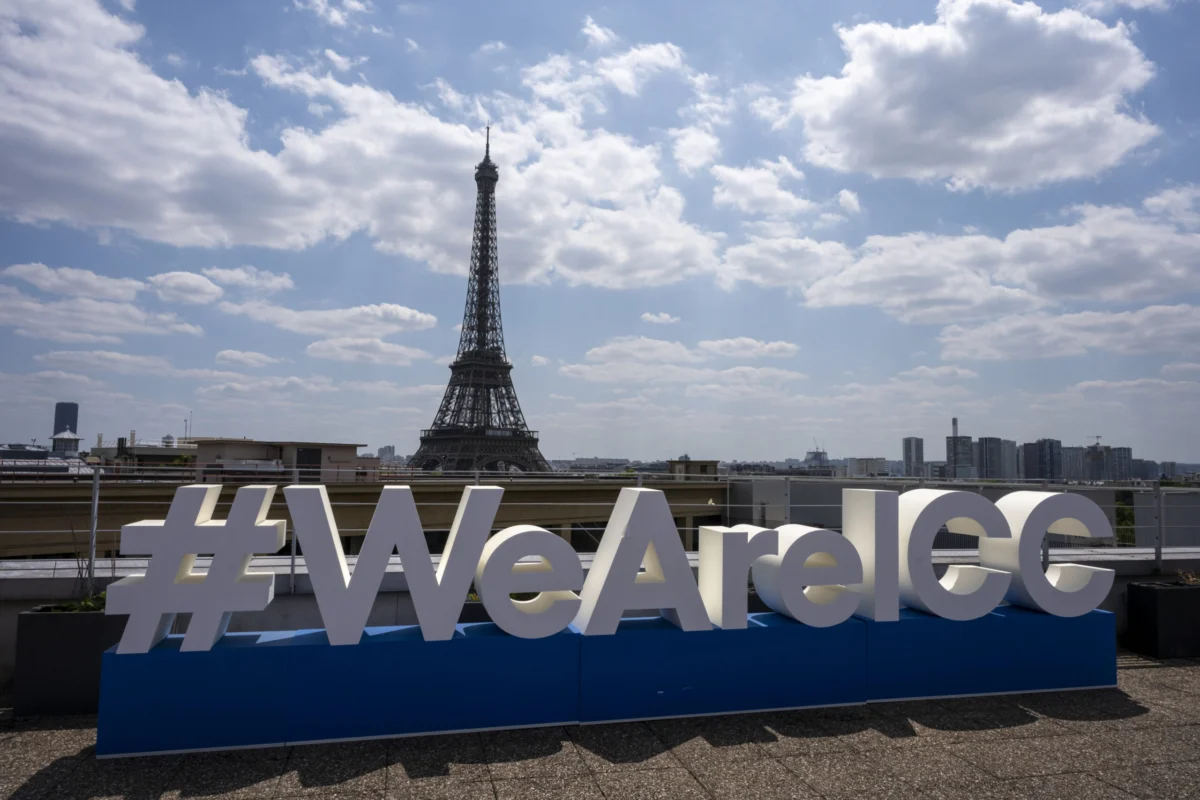
Samy’s professional trajectory was shaped by a rigorous and diverse educational background that prepared him for the multi-jurisdictional nature of modern arbitration. He completed a dual degree in French and Egyptian law, a curriculum designed to bridge the gap between different legal traditions. This was followed by a Master’s degree in Common Law and Comparative Law in Paris, a city widely regarded as the historical birthplace of modern international arbitration and the headquarters of the ICC.
This educational path allowed Samy to develop a sophisticated understanding of both Civil Law systems—prevalent in much of the Middle East and Europe—and Common Law systems, which govern many of the world’s most significant financial markets. This dual fluency is a critical asset in the Abu Dhabi Global Market (ADGM), where the ICC’s office is located, as the jurisdiction operates on a Common Law framework within the broader Civil Law context of the United Arab Emirates.
After completing his studies, Samy gained practical experience through a series of prestigious internships in France before moving into private practice in Dubai. It was during his time in the UAE’s private sector that he became fully immersed in the nuances of arbitration. He observed that unlike traditional litigation, which is often confined to the rigid structures of a single national court, arbitration requires a holistic understanding of the global landscape.
“While practicing arbitration, I couldn’t help but notice that it is a field that requires an understanding of not only the law but also politics, trade, and business,” he explained. “One field of law can capture all of this. This is really intellectually stimulating; it was definitely what I wanted to do.”
The Move to the ICC: From Practitioner to Institutional Guardian
In 2024, Samy transitioned from private practice to the International Chamber of Commerce, a move that marked a significant shift from representing individual clients to overseeing the administration of the arbitral process itself. Joining the ICC’s Abu Dhabi office represented an opportunity to gain institutional experience within the world’s most preferred arbitral institution.
The ICC International Court of Arbitration, established in 1923, celebrated its centenary in 2023. Over the last century, it has administered more than 28,000 cases, involving parties and arbitrators from virtually every country in the world. The opening of the Abu Dhabi office in 2021 was a strategic response to the growing demand for dispute resolution services in the Middle East and North Africa (MENA) region. For Samy, the move to the ICC was a natural progression in his quest for intellectual growth and professional impact.
As Deputy Counsel, Samy’s responsibilities are multifaceted. He is part of a specialized team that manages a significant caseload, ensuring that each proceeding adheres to the ICC Rules of Arbitration. This role involves everything from the initial filing of a request for arbitration to the final scrutiny of the award. One of the most critical aspects of his work is supporting the ICC Court in the appointment of arbitrators and managing the financial aspects of the cases, such as the fixing of administrative expenses and arbitrator fees.
Operational Excellence in a High-Volume Environment
The workload at the ICC’s Abu Dhabi office is demanding, requiring a high level of precision and organizational skill. Samy and his colleagues manage upwards of 100 active cases at any given time. This volume necessitates a disciplined approach to time management and a proactive attitude toward case administration.
“I’m twice as organized as I was before, simply because there’s no other alternative,” Samy said. “You’re managing a significant caseload, and you have to keep track of everything that’s happening.”
Beyond the administrative tasks, Samy finds the most fulfillment in the collaborative and educational aspects of his role. He frequently interacts with arbitrators and legal counsel from diverse backgrounds, providing guidance on procedural issues and ensuring that the process remains efficient. He expressed a particular passion for assisting new arbitrators who may be navigating their first ICC cases. By helping them manage disputes effectively and issue awards that are enforceable under the New York Convention, Samy contributes to the overall stability of the international legal order.
“What I really love about what I do is when I get to assist new arbitrators in managing a dispute efficiently and issuing an enforceable award,” he remarked. This focus on enforceability is central to the ICC’s value proposition; an arbitration award is only as good as the party’s ability to have it recognized and enforced by national courts.
Supporting Global Trade through Predictability and Stability
The role of an institution like the ICC extends beyond the resolution of individual disputes; it provides a framework of predictability that is essential for international investment. Businesses operating in foreign jurisdictions often face risks related to legal uncertainty and the potential for bias in local courts. International arbitration offers a neutral forum and a standardized set of rules that mitigate these risks.
Samy emphasizes that the longevity of the ICC system is one of its greatest strengths. “ICC Arbitration truly offers predictability. You can do business knowing that if anything goes wrong, you’re going to fall back on a system that is solid and a system that’s been in place for over 100 years.”
Data from the ICC’s 2023 Dispute Resolution Statistics supports this view. The report highlighted a continued increase in the number of parties from the UAE and the wider MENA region choosing ICC arbitration. As the UAE continues to diversify its economy and attract foreign direct investment (FDI) in sectors like technology, renewable energy, and infrastructure, the presence of a robust legal infrastructure becomes a primary competitive advantage.
A Culture of Collaboration and Intellectual Growth
The internal culture of the ICC is another factor that Samy credits for his successful transition into institutional work. The Abu Dhabi office operates as a tight-knit team where communication and coordination are paramount. The complexity of international cases—often involving multiple parties, various languages, and conflicting legal principles—requires a collaborative environment where knowledge is shared freely.
“Everyone here is willing to help because we’re all working towards the same objective,” Samy said. “That is what allows new joiners to succeed. It gives them the environment that allows them to succeed.”
When asked to summarize his experience at the ICC in a few words, Samy chose “intellectual growth.” The exposure to a vast array of legal issues and the opportunity to witness how different legal minds approach complex problems provides a continuous learning curve that few other roles can offer.
Beyond the Office: A Commitment to Community and Personal Growth
Despite the intense nature of his professional life, Samy maintains a diverse range of interests that provide balance and perspective. He is actively involved with organizations that support underprivileged children in Egypt, maintaining a connection to his roots and a commitment to social responsibility.
His personal pursuits also reflect his interest in continuous learning and precision. He is currently learning Italian, adding another layer to his linguistic repertoire, and enjoys the discipline of clay shooting. However, even in his leisure time, his passion for the law is never far away. He admits to reading arbitration awards like novels, driven by a genuine curiosity about the outcome of complex disputes.
“To me, it’s not a 9 to 5. It’s really a job that I enjoy,” he said with a laugh. “If I’ve been on top of a case and then an award is issued, even if I’m not expected to, or I have no substantive input to add, I’m still going to read it. It’s like a story. I want to know the ending.”
The Broader Implications for Regional Legal Infrastructure
Samy’s role at the ICC Abu Dhabi office is a microcosm of a larger trend: the professionalization and internationalization of the Middle Eastern legal sector. By attracting talent that possesses both local cultural understanding and global legal expertise, the region is positioning itself as a primary hub for international commerce.
The presence of professionals like Samy ensures that the ICC can provide tailored support to regional users while maintaining the rigorous global standards that have made the institution a leader for over a century. As the MENA region continues to play an increasingly central role in global trade routes, the work performed in the Abu Dhabi office will remain a cornerstone of the regional business environment, providing the "predictability" that Samy identifies as the hallmark of the ICC.
In conclusion, Samy’s journey is a testament to the power of combining a strong heritage with a global outlook. Through his work as Deputy Counsel, he is not only managing cases but also contributing to a legacy of justice and stability that began in the courtrooms of Giza and now extends to the forefront of international commercial law in Abu Dhabi. His story underscores the vital role that dedicated individuals play in the machinery of global trade, ensuring that when disputes arise, there is a clear, fair, and efficient path to resolution.
About the Author