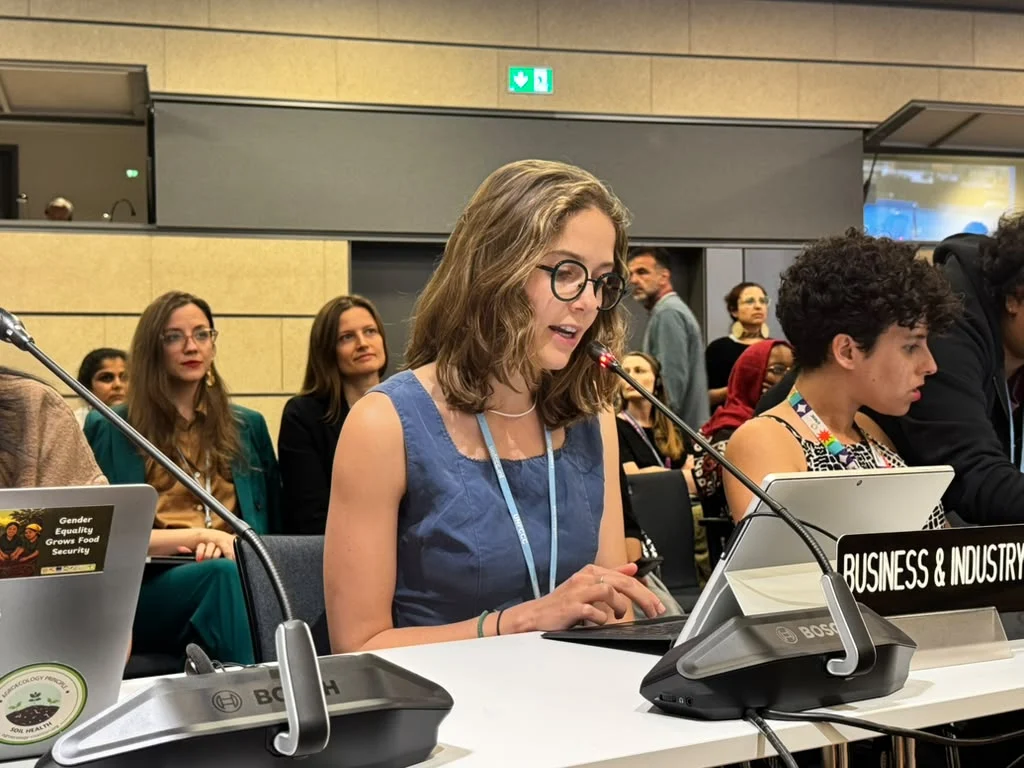
The mid-year climate negotiations in Bonn, Germany, concluded with a stark warning from the international business community regarding the sluggish pace of progress on critical pillars of the Paris Agreement, specifically the Mitigation Work Programme and the establishment of a New Collective Quantified Goal on climate finance. As delegates from nearly 200 nations gathered for the 60th sessions of the Subsidiary Bodies of the United Nations Framework Convention on Climate Change, a prominent coalition of private sector representatives expressed deep concern over the "significant divergent views" that continue to stall global climate action. The business delegation emphasized that without clear policy signals and a fundamental restructuring of the investment climate in emerging markets, the ambitious goals set during the first Global Stocktake at COP28 in Dubai remain at risk of becoming unreachable.
Stagnation in the Mitigation Work Programme and the Global Stocktake
The primary focus of the Bonn sessions was to translate the high-level commitments made at COP28 into actionable technical frameworks. Central to this is the Mitigation Work Programme (MWP), designed to scale up mitigation ambition and implementation in this critical decade. However, business observers noted a troubling lack of progress in Bonn, as geopolitical tensions and disagreements over the scope of the MWP hindered substantive outcomes. The private sector views the MWP not merely as a bureaucratic exercise, but as an essential platform to identify specific barriers to decarbonization and to showcase scalable solutions.
From a business perspective, the implementation of the first Global Stocktake (GST) outcome—which called for a transition away from fossil fuels and a tripling of renewable energy capacity by 2030—requires sustained and predictable policy signals. Corporate leaders argue that capital allocation follows policy certainty. When international negotiations stall on the technicalities of mitigation, it sends a signal of indecision to global markets, potentially delaying the multi-trillion-dollar investments required for the green transition. The business community has urged Parties to move beyond rhetoric and utilize the MWP as a vehicle for real-world impact, bridging the gap between national climate pledges (Nationally Determined Contributions) and private sector execution.
The Finance Challenge: Defining the New Collective Quantified Goal
A recurring theme throughout the Bonn talks was the urgent need for a successor to the $100 billion annual climate finance goal, which was originally set in 2009. The New Collective Quantified Goal (NCQG) is intended to reflect the actual financial needs of developing nations, which are estimated to be in the trillions of dollars. Business representatives at the conference were clear: while the private sector is prepared to play a leading role in scaling up climate finance, it cannot do so in a vacuum.
The "investment climate" in emerging and developing economies remains a significant hurdle. High-risk premiums, currency fluctuations, and inconsistent regulatory frameworks often deter private capital from flowing into the regions where it is needed most. According to data from the International Energy Agency (IEA), while global clean energy investment is rising, the vast majority of this capital remains concentrated in advanced economies and China. To address this, business leaders in Bonn called for a serious debate on "enabling environments." This involves domestic policy reforms in recipient countries to reduce risk, alongside international support to provide blended finance mechanisms that can de-risk private investments.
Technical Barriers and the Role of Article 6
Beyond high-level finance and mitigation, the business community highlighted the necessity of finalizing the rules for Article 6 of the Paris Agreement. Article 6 governs international carbon markets, providing a framework for countries and companies to trade carbon credits and cooperate on emissions reductions. For the private sector, a fully operational and transparent Article 6 is a prerequisite for a cost-effective global transition.
In Bonn, progress on Article 6.2 (bilateral trades) and Article 6.4 (a centralized UN mechanism) remained incremental. Business groups expressed that the lack of clarity on accounting standards and registry linkages creates "market paralysis." Without a functional carbon market, many corporations find it difficult to hedge their long-term climate risks or invest in large-scale carbon removal technologies. The delegation urged negotiators to prioritize these technicalities ahead of COP29, noting that trade, just transition pathways, and agricultural resilience are all intrinsically linked to the financial architecture provided by Article 6.
Chronology of Climate Negotiations: From Dubai to Baku
The discussions in Bonn serve as a critical waypoint in the 2024-2025 climate calendar. Following the conclusion of COP28 in December 2023, where the "UAE Consensus" was reached, the international community entered a period of technical refinement.
- December 2023: COP28 concludes with the first Global Stocktake, calling for a transition away from fossil fuels.
- March-May 2024: Regional climate weeks and ministerial meetings attempt to set the agenda for the NCQG.
- June 2024: The Bonn Climate Change Conference (SB 60) reveals deep divisions between the Global North and Global South over finance responsibilities and mitigation mandates.
- September 2024: The UN General Assembly and Climate Week NYC are expected to see a push for higher ambition in the next round of NDCs (due in 2025).
- November 2024: COP29 in Baku, Azerbaijan, often referred to as the "Finance COP," where the final NCQG figure and structure must be agreed upon.
- 2025: COP30 in Brazil will be the deadline for countries to submit enhanced NDCs, which the business community insists must be "bankable" and "investable."
Supporting Data: The Scale of the Investment Gap
To understand the urgency expressed by business leaders in Bonn, one must look at the current financial data. The United Nations’ Standing Committee on Finance has noted that the needs of developing countries for implementing their NDCs amount to nearly $6 trillion cumulatively up to 2030. Currently, global climate finance flows are nowhere near this level.
Furthermore, a report by the Independent High-Level Expert Group on Climate Finance suggests that emerging markets (excluding China) require approximately $2.4 trillion in annual investment by 2030 to meet climate and nature goals. Of this, roughly $1 trillion must come from external sources, including private capital. The divergence in Bonn reflects a fundamental disagreement over how much of this should be provided by public grants versus private loans and equity. The business sector’s insistence on "enabling environments" is a direct response to the fact that public funds alone cannot bridge this multi-trillion-dollar gap.
Official Responses and Diplomatic Friction
The reaction to the slow progress in Bonn has been mixed. While the UNFCCC Executive Secretary Simon Stiell called for "fewer loopholes and more loopholes closed" in his closing remarks, various negotiating blocs remained entrenched. The G77 and China group emphasized that mitigation ambition cannot be divorced from "means of implementation" (finance and technology transfer). Conversely, many developed nations argued that the MWP must be strengthened regardless of the finance negotiations to ensure the 1.5°C goal remains within reach.
Business organizations, acting as official observers, have attempted to play a mediatory role. By framing climate action as an opportunity for "peace, stability, and prosperity," the private sector is attempting to depoliticize the technical barriers. However, the frustration among business delegates was palpable. One representative noted that "business action depends on sustained signals," and the current lack of consensus in the SB 60 sessions provides the opposite.
Broader Impact and the Road to COP31
The implications of the Bonn impasse extend far beyond the walls of the World Conference Center. The failure to align on mitigation and finance has direct consequences for global trade. As countries implement domestic policies like the EU’s Carbon Border Adjustment Mechanism (CBAM), the lack of a unified international framework creates trade tensions and "green protectionism" concerns.
Looking further ahead, the transition toward COP31—which is expected to be hosted by Australia in partnership with Pacific Island nations—represents a unique opportunity to focus on the "Just Transition." Business leaders in Bonn underscored that the move to a low-carbon economy must be inclusive, ensuring that workers in traditional energy sectors are not left behind and that the benefits of the green economy are distributed equitably.
The private sector has signaled its readiness to work with the incoming presidencies of COP29 and COP30, as well as the prospective COP31 organizers. The message from the business community is clear: the era of "voluntary" corporate action is transitioning into an era of "regulated" climate integration. For this transition to be successful, the intergovernmental process must provide the structural foundation—the rules, the markets, and the finance—necessary for the private sector to deploy capital at the required scale and speed.
As the international community leaves Bonn, the pressure shifts to Baku. The "divergent views" noted this month must be reconciled into a coherent financial and mitigation roadmap. For global business, the stakes are not just environmental, but foundational to the future of global economic stability. The call for "united nations, cities, businesses, and people" is a plea for a cohesive strategy to replace the fragmented progress seen in the mid-year talks. Without such unity, the path to prosperity for all may remain obscured by the very barriers the Bonn sessions failed to dismantle.
About the Author