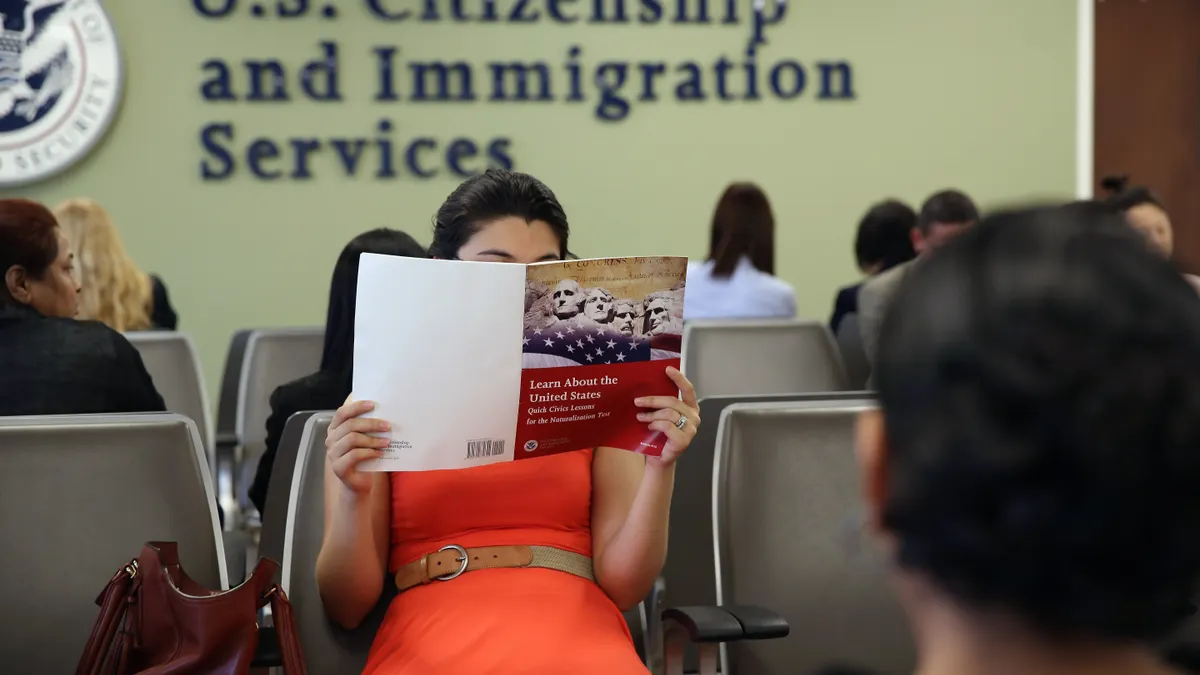
The H-1B visa program, a crucial pathway for U.S. employers to hire foreign workers in specialized fields, has officially reached its annual cap for fiscal year 2027, the U.S. Citizenship and Immigration Services (USCIS) announced on Friday, July 21, 2026. This milestone, occurring well before the end of the fiscal year, underscores the persistent demand for skilled international talent despite ongoing policy adjustments and increased scrutiny from the second Trump administration.
USCIS confirmed that it has received the maximum number of petitions allowable under the program’s regular cap, which stands at 65,000. Additionally, the program’s exemption for individuals with advanced U.S. degrees, often referred to as the "master’s cap," has also been fully utilized, accounting for an additional 20,000 petitions. It is important to note that not all H-1B visas are subject to these annual numerical limits. Certain categories, such as those employed in the Commonwealth of the Northern Mariana Islands and Guam, are exempt from the cap, reflecting specific economic or strategic considerations for those regions.
A History of Demand and Policy Flux
The H-1B visa program has long been a cornerstone of the U.S. economy, particularly in sectors like technology, engineering, and healthcare, where there is a recognized shortage of domestic skilled labor. Established to allow American companies to hire foreign professionals in occupations that require theoretical or technical expertise, the program has consistently seen high demand, often exceeding the available visas.
The announcement of the fiscal year 2027 cap being reached on July 21, 2026, indicates a swift utilization of the available slots. This has been a recurring pattern in recent years, with the cap often being met within weeks of the petition filing period opening. For instance, in fiscal year 2023, USCIS announced it had received enough petitions to reach the H-1B regular and master’s cap by March 2023, underscoring the sustained and robust demand. The speed at which the cap is met each year is a significant indicator of the ongoing need for foreign talent in specialized U.S. industries.
Administration’s Efforts to Reshape the Program
The second Trump administration has signaled a clear intent to reform and, in some aspects, restrict the H-1B visa program, aiming to prioritize American workers and potentially curb the influx of foreign labor. These efforts have manifested in several key policy changes and proposals, some of which have faced legal challenges.
In September 2025, the U.S. Department of Homeland Security (DHS) put forth a proposal to significantly alter the H-1B visa petition selection process. The core of this proposal was to introduce a wage-based lottery system. Under this new framework, employers offering higher salaries to H-1B visa applicants would receive more entries into the lottery. The stated objective was to incentivize employers to offer more competitive wages and to favor candidates with demonstrably higher skill sets. DHS argued that this approach would better align the program with its intended purpose of filling critical labor needs with highly skilled individuals.
This wage-based selection proposal was introduced alongside another significant initiative: a proposed $100,000 fee attached to H-1B visa petitions. This substantial fee, intended to be levied on employers, aimed to generate revenue that could be used to train American workers and potentially discourage the overuse of the H-1B program. However, this fee proposal quickly ignited strong opposition from the business community. The U.S. Chamber of Commerce and other industry groups argued that such a fee would place an undue financial burden on companies, particularly smaller businesses and startups, and could stifle innovation and economic growth. This opposition led to immediate legal challenges, with the business community filing lawsuits against the White House to block the implementation of the fee.
In a significant development, the proposed $100,000 fee was ultimately struck down by a federal judge in June 2026. The judge ruled that the Trump administration lacked the statutory authority to unilaterally impose such a substantial tax-like fee on the H-1B program without explicit congressional approval. This judicial decision represented a setback for the administration’s efforts to overhaul the program through executive action concerning fees.
Concurrent with these policy shifts, the U.S. Department of Labor (DOL) launched an enforcement initiative known as "Project Firewall" in September 2025. This initiative was designed to bolster the protection of U.S. workers’ rights and wages. A primary focus of Project Firewall is to ensure maximum compliance with the H-1B visa program’s regulations. The program includes a directive to prioritize investigations into situations where there is a suspicion that American workers might be displaced or overlooked in favor of H-1B visa beneficiaries. This signals a heightened level of oversight aimed at safeguarding the domestic workforce.

Continued Reliance by Top Employers
Despite the administration’s attempts to tighten controls and introduce new hurdles for the H-1B program, data from USCIS reveals that many of the nation’s largest employers continue to rely heavily on it. This sustained reliance suggests that the demand for specialized foreign talent remains robust and that these companies find the program essential for their operational needs and competitive edge.
According to the latest available USCIS data, Amazon stands out as the top approved petitioner for H-1B visas, with nearly 5,000 beneficiaries. This figure highlights the e-commerce and cloud computing giant’s significant investment in global talent. Beyond Amazon, a cadre of leading technology and financial firms consistently ranks among the top companies utilizing the H-1B program. Apple, Google, Meta (formerly Facebook), and JPMorgan Chase are all consistently found within the top 10 list of companies with the most approved H-1B petitions. This demonstrates a broad-based dependence on the program across critical sectors of the U.S. economy.
The presence of these major corporations at the forefront of H-1B visa utilization points to several key implications:
- Talent Shortages: The persistent demand from these large employers suggests that there are genuine shortages of specialized skills within the domestic workforce that the H-1B program helps to address. These companies operate in fields that are rapidly evolving and require a deep pool of expertise.
- Global Competition: For multinational corporations, the ability to attract and retain top global talent is a strategic imperative. The H-1B program serves as a vital mechanism for them to compete on a global scale for skilled professionals.
- Economic Impact: The H-1B program facilitates the growth and innovation of these major companies, which in turn contribute significantly to the U.S. economy through job creation, investment, and technological advancement.
Analysis and Future Outlook
The swift closure of the H-1B visa cap for fiscal year 2027, coupled with the continued heavy reliance by major U.S. employers, paints a complex picture of the program’s role in the contemporary economy. While the Trump administration has actively sought to introduce more stringent regulations and financial barriers, the underlying demand for specialized foreign labor has not diminished.
The legal challenges that have successfully curtailed some of the administration’s more aggressive fee-based proposals indicate a potential balancing act between executive policy goals and the established legal framework governing immigration and labor. The judicial ruling against the $100,000 fee, for instance, suggests that significant changes to the program’s financial structure may require legislative action rather than executive fiat.

The continued dominance of tech giants and financial institutions among H-1B petitioners suggests that the program remains critical for industries at the forefront of innovation and economic activity. Their ability to access a global talent pool directly impacts their capacity to develop new products, services, and technologies. The ongoing debate surrounding the H-1B program is therefore not just about immigration policy but also about the future competitiveness of key U.S. industries.
Moving forward, employers will likely continue to navigate the evolving landscape of H-1B regulations. The focus on wage levels and the prioritization of investigations under Project Firewall suggest that compliance and the demonstration of genuine need for foreign workers will become even more paramount. For the administration, the persistent high demand for H-1B visas presents a challenge to its stated goal of prioritizing American workers, potentially leading to further policy debates and adjustments. The fiscal year 2027 cap reaching its limit so quickly serves as a stark reminder of the intricate balance the United States must strike between fostering domestic talent and leveraging the global pool of skilled professionals to maintain its economic leadership.
About the Author