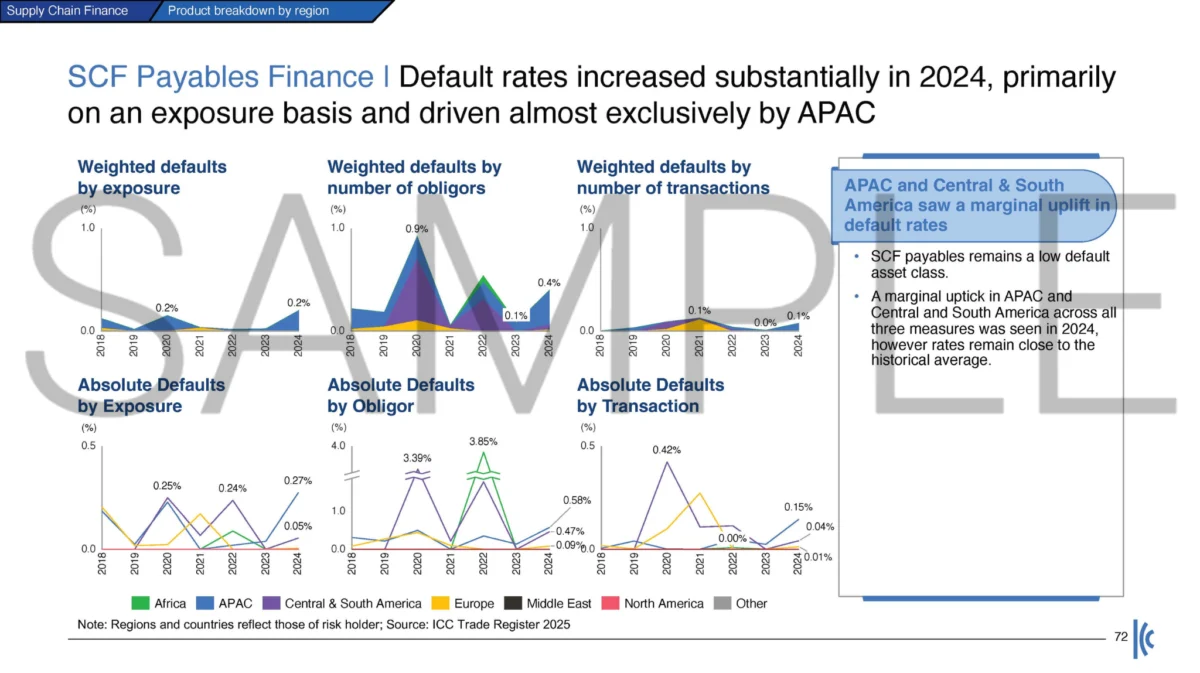
The International Chamber of Commerce (ICC) has officially signaled the upcoming release of the 2026 ICC Global Trade Intelligence Report, a comprehensive analytical tool that has become the definitive benchmark for the global trade and supply chain finance industry. Formerly known as the ICC Trade Register, the rebranded report represents the culmination of more than a decade of rigorous data collection, aggregating proprietary information from 22 of the world’s leading global financial institutions. With a database covering over $25.7 trillion in transactions, the report is designed to provide actionable insights into risk performance, default rates, and loss-given-default metrics, offering a critical resource for banks, credit insurers, and regulatory bodies worldwide.
As the global economy navigates a period of significant volatility characterized by shifting geopolitical alliances, inflationary pressures, and the rapid digitalization of trade, the 2026 report arrives at a pivotal moment. The intelligence contained within the report serves as a strategic asset for financial institutions, allowing them to make more informed decisions regarding capital allocation, risk appetite, and market expansion. By providing a granular view of the performance of trade finance products—such as Letters of Credit (L/Cs), guarantees, and supply chain finance—the ICC enables the industry to advocate for fair regulatory treatment and to demonstrate the inherent safety and resilience of trade finance as an asset class.
The Evolution of the ICC Global Trade Intelligence Report
The origins of this initiative date back to the aftermath of the 2008 global financial crisis. At that time, the banking industry faced a wave of new regulations, most notably the Basel Accords, which sought to increase capital requirements to prevent future systemic collapses. However, many in the trade finance sector argued that the proposed regulations did not accurately reflect the low-risk nature of trade-related lending. Unlike general corporate loans, trade finance is typically short-term, self-liquidating, and backed by the movement of physical goods.
To provide empirical evidence for these claims, the ICC established the Trade Register in 2009. What began as a modest effort to collect default data from a handful of banks has evolved over 15 years into the Global Trade Intelligence Report. This evolution reflects a broader shift in the industry from simple data collection to sophisticated "intelligence." The rebranding signifies the report’s expanded scope, which now includes deep-dive regional analyses, product-specific performance metrics, and forward-looking trends that help institutions identify emerging opportunities in developing markets.
Throughout its history, the report has played a crucial role in shaping the regulatory landscape. By consistently demonstrating that trade finance default rates are significantly lower than those of traditional corporate lending, the ICC has successfully lobbied for more favorable risk-weighting treatments under Basel III and Basel IV. This, in turn, has helped ensure that trade finance remains affordable and accessible for businesses of all sizes, particularly Small and Medium-sized Enterprises (SMEs) that form the backbone of global supply chains.
Methodology and the Power of Aggregated Data
The strength of the ICC Global Trade Intelligence Report lies in its methodology and the sheer volume of data it encompasses. The report is the product of a strategic partnership between the ICC, the Boston Consulting Group (BCG), and Global Credit Data (GCD). BCG provides the strategic framework and market analysis, while GCD contributes its expertise in credit risk data standards and validation.
The data is contributed voluntarily by 22 member banks, including many of the largest trade finance providers in the world. These institutions submit anonymized data on their trade finance portfolios, which is then scrubbed, validated, and aggregated to ensure confidentiality and accuracy. This collaborative model is unique in the financial world; it requires a high level of trust and a shared commitment to the long-term health of the industry.
By analyzing $25.7 trillion in transactions, the report offers a statistically significant view of the market. It breaks down performance by product type, including:
- Import/Export Letters of Credit: Traditional instruments that mitigate payment risk between buyers and sellers.
- Loans for Import/Export: Short-term financing provided to facilitate the purchase or sale of goods.
- Performance Guarantees and Standby Letters of Credit: Instruments that ensure contractual obligations are met.
- Supply Chain Finance (SCF): Modern, technology-driven solutions like payables finance that optimize working capital.
The 2026 report will continue this tradition of excellence, offering updated default and loss rates that reflect the most recent economic cycles. This data allows banks to benchmark their own internal portfolios against the global average, identifying areas where they may be over-exposed or where they have the potential to grow.
Strategic Impact on Regulatory Compliance and Capital Management
One of the most significant applications of the ICC Global Trade Intelligence Report is in the realm of regulatory compliance. Under the Basel framework, banks must hold a certain amount of capital against their risk-weighted assets (RWA). If a product is perceived as high-risk, the bank must hold more capital, which increases the cost of lending to the end user.
The ICC report provides the "hard data" needed to prove that trade finance is a low-risk activity. For example, historical data from the report has shown that the probability of default (PD) for Letters of Credit is often a fraction of that for general corporate loans. Furthermore, the loss given default (LGD)—the amount a bank actually loses if a default occurs—is also typically lower due to the collateralized nature of trade transactions.
With the implementation of Basel III "Endgame" and the transition toward Basel IV, the 2026 report will be an essential tool for Chief Risk Officers and Regulatory Affairs teams. It provides the empirical basis for internal ratings-based (IRB) models and standardized approaches to risk. By utilizing this data, financial institutions can optimize their capital structures, potentially freeing up billions of dollars in liquidity that can be reinvested into the global economy.
Beyond capital requirements, the report also assists in "Know Your Customer" (KYC) and Anti-Money Laundering (AML) efforts. While it does not track individual transactions for compliance purposes, the high-level intelligence it provides on regional risk trends helps banks calibrate their monitoring systems to focus on high-risk corridors while streamlining trade in lower-risk areas.
What to Expect in the 2026 Report: Regional and Product Insights
The 2026 edition of the report is expected to be the most comprehensive to date, featuring a Global Overview Report supplemented by specialized regional and product-specific modules. This modular approach allows users to tailor the insights to their specific business needs, whether they are focused on emerging markets in Africa or sophisticated SCF structures in Western Europe.
Key areas of focus for the 2026 report include:
- The Rise of Digital Trade: As more countries adopt the UNCITRAL Model Law on Electronic Transferable Records (MLETR), the report will begin to reflect the impact of digitalization on risk profiles. Digital documents reduce the risk of fraud and clerical errors, potentially leading to even lower default rates.
- Sustainability and ESG in Trade Finance: There is growing pressure on banks to report on the environmental and social impact of their trade portfolios. The 2026 report is expected to explore how ESG (Environmental, Social, and Governance) factors are being integrated into trade finance risk assessments and whether "green" trade finance exhibits different risk characteristics than traditional trade.
- Supply Chain Resilience: In the wake of the pandemic and ongoing geopolitical tensions, many corporations are shifting from "just-in-time" to "just-in-case" supply chain models. The report will analyze how these shifts are affecting the demand for various trade finance products and the credit performance of different industry sectors.
- Regional Deep Dives: Specific attention will be paid to the Asia-Pacific region, which remains the engine of global trade, as well as the impact of the African Continental Free Trade Area (AfCFTA) on intra-African trade finance risk.
Industry Reactions and Inferred Implications
While official statements from the 22 member banks are typically reserved for the report’s formal launch, industry experts and trade finance practitioners have already expressed anticipation for the 2026 findings. Analysts suggest that the report will likely confirm a continued trend of resilience in trade finance, despite the "polycrisis" environment of the last few years.
For non-bank corporations, the report serves as an indirect but vital resource. By ensuring that banks have a clear understanding of trade risk, the report helps stabilize the pricing of trade finance products. If the data continues to show low risk, corporations—particularly those in the export sector—can expect more competitive rates and greater availability of credit.
Sponsorship opportunities for the report also allow non-bank entities, such as technology providers and logistics firms, to increase their visibility within the banking sector. This highlights the report’s role not just as a data set, but as a platform for industry-wide collaboration and networking.
Bridging the $2.5 Trillion Trade Finance Gap
Perhaps the most significant broader implication of the ICC Global Trade Intelligence Report is its role in addressing the global trade finance gap. The Asian Development Bank (ADB) has estimated that the gap between the demand for trade finance and its supply stands at approximately $2.5 trillion. This gap disproportionately affects SMEs and businesses in emerging economies, preventing them from participating fully in global value chains.
The ICC report is a primary tool in the fight to close this gap. By de-risking trade finance through data transparency, the report encourages new players—such as institutional investors and alternative credit providers—to enter the market. When investors can see a 15-year track record of low default rates and stable returns, trade finance becomes a much more attractive asset class.
Furthermore, by providing regional data, the report helps banks overcome the "information asymmetry" that often leads them to withdraw from certain markets. If a bank can see that the actual default rates in a specific emerging market are lower than perceived, they are more likely to maintain their presence and support local businesses.
Conclusion: A Seat at the Table for Global Trade
As the ICC prepares for the full release of the 2026 Global Trade Intelligence Report, the message to the financial community is clear: data is the most effective tool for navigating uncertainty. The partnership between the ICC, BCG, and GCD continues to set the gold standard for industry transparency and analytical rigor.
Membership in the ICC Global Trade Intelligence initiative offers banks more than just a copy of the report; it provides a seat at the table where the future of trade finance is being shaped. Members gain access to a community of experts, proprietary benchmarking tools, and the opportunity to contribute to the industry’s leading source of intelligence.
For the global economy, the report is a testament to the stability of the mechanisms that move goods across borders. In an era of change, the ICC Global Trade Intelligence Report remains a constant, providing the factual foundation upon which the world’s trade is built. Stakeholders are encouraged to stay tuned for the official release, which promises to redefine the industry’s understanding of risk and opportunity in the mid-2020s.
About the Author