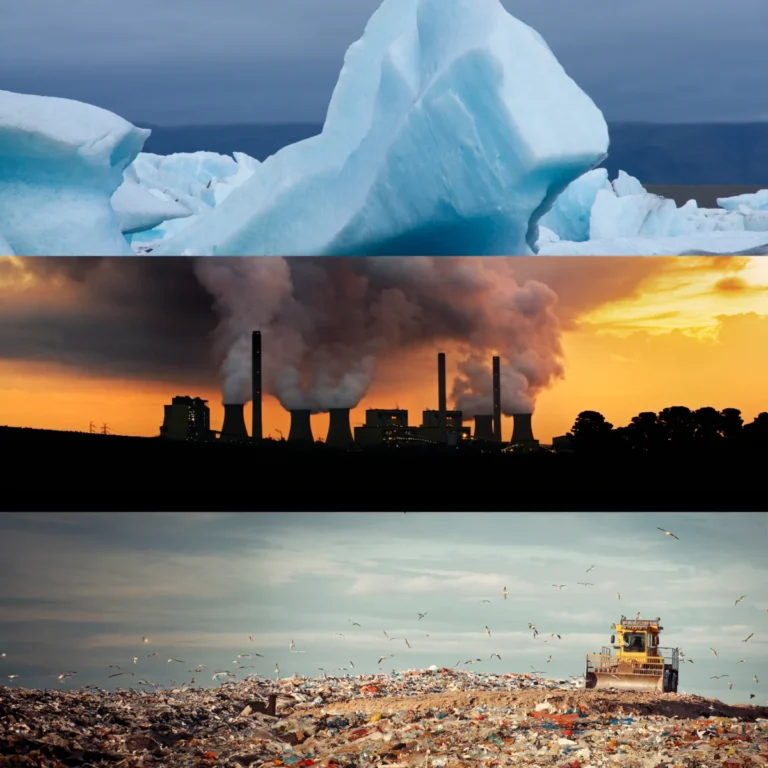
The global business community, represented by the International Chamber of Commerce (ICC), is signaling a paradigm shift in how the private sector values the natural world, moving beyond corporate social responsibility toward the full integration of biodiversity into core commercial strategy. As preparations intensify for the 17th Conference of the Parties (COP17) to the Convention on Biological Diversity (CBD), the ICC is emphasizing that while businesses are increasingly folding nature into governance, financial risk assessment, and supply-chain due diligence, the speed of this transition remains tethered to government action. Without clear policy certainty and the establishment of robust implementation pathways, the private sector warns that it cannot mobilize at the scale necessary to halt and reverse the accelerating loss of global biodiversity.
At the heart of the ICC’s mission for COP17 is a call for parties to move from the high-level ambition of framework-setting to the delivery of tangible results for the real economy. The organization argues that for a nature-positive transition to succeed, governments must provide the enabling conditions—including financing mechanisms and regulatory clarity—that allow companies to innovate and invest with confidence. The upcoming summit is viewed as a critical juncture where the promises made under the Kunming-Montreal Global Biodiversity Framework (GBF) must be translated into actionable national policies that align with the operational realities of global trade and investment.
The Historical Context: From Rio to the Kunming-Montreal Framework
To understand the stakes of COP17, it is essential to trace the trajectory of international biodiversity governance. The Convention on Biological Diversity was first adopted at the 1992 Earth Summit in Rio de Janeiro, establishing three main goals: the conservation of biological diversity, the sustainable use of its components, and the fair and equitable sharing of benefits arising from genetic resources. For decades, however, global efforts struggled to gain the same political and economic traction as climate change initiatives.
The 2010 Aichi Biodiversity Targets were a notable attempt to set a decadal strategy, yet by 2020, none of the 20 targets had been fully met globally. This failure underscored the need for a more rigorous, "Paris Agreement-style" framework for nature. This was achieved in December 2022 at COP15 with the adoption of the Kunming-Montreal Global Biodiversity Framework (GBF). The GBF set 23 targets for 2030, including the "30 by 30" goal—protecting 30% of the world’s land and oceans.
COP17 represents the first global review of collective progress under this framework. It is intended to function as a "stocktake" moment, similar to the climate cycles, where the international community assesses whether current actions are sufficient to meet the 2030 and 2050 goals. For the ICC and its members, this review must be more than a diplomatic exercise; it must be the catalyst for "delivery at scale."
Quantifying the Economic Imperative: Why Nature Matters to the Bottom Line
The push for biodiversity action is increasingly driven by economic pragmatism rather than purely ethical considerations. Data from the World Economic Forum (WEF) suggests that more than $44 trillion of economic value generation—over half of the world’s total GDP—is moderately or highly dependent on nature and its services. From the pollination of crops and the provision of clean water to the discovery of new medicines and the protection against natural disasters, the global economy is inextricably linked to healthy ecosystems.
As these ecosystems degrade, businesses face escalating material risks. Supply chains in the food and beverage, apparel, and pharmaceutical sectors are particularly vulnerable to the collapse of local biodiversity. Furthermore, infrastructure projects and long-term investment portfolios are exposed to physical risks from land degradation and transition risks as regulations tighten and consumer preferences shift toward sustainable products.
Despite these risks, the "finance gap" remains one of the most significant hurdles to achieving the 2030 targets. The United Nations Environment Programme (UNEP) estimates that the world needs to bridge a gap of approximately $700 billion per year in biodiversity funding. Some estimates, such as those provided by Bloomberg, suggest the requirement could be as high as $942 billion annually to fully reverse nature loss. Currently, many National Biodiversity Strategies and Action Plans (NBSAPs)—the primary vehicles through which countries implement the GBF—remain either delayed or severely under-resourced, leaving a vacuum that the private sector is hesitant to fill without clearer market signals.
The Corporate Pivot: Integrating Biodiversity into Governance
In response to these mounting pressures, a growing cohort of businesses is no longer viewing biodiversity as an external factor. Instead, it is being integrated into internal governance structures. Large-scale enterprises are adopting frameworks such as the Taskforce on Nature-related Financial Disclosures (TNFD), which provides a standardized way for companies to report and act on evolving nature-related risks.
Innovation spending is also being redirected toward nature-positive solutions. This includes the development of regenerative agricultural practices, the implementation of "circular economy" models that reduce resource extraction, and the use of satellite technology to monitor supply chain impacts on deforestation in real-time. However, the ICC points out that while the "front-runners" are taking these steps, the broader "real economy"—including small and medium-sized enterprises (SMEs)—requires a more level playing field. Without coherent international standards and national policies, there is a risk of market fragmentation where only the largest companies can afford to comply with a patchwork of different biodiversity regulations.
Strategic Recommendations from the ICC for COP17
To bridge the gap between corporate intent and systemic change, the ICC has outlined several key recommendations for the parties attending COP17. These recommendations focus on creating a policy environment where nature-positive actions are economically viable and scalable:
- Alignment and Coherence of National Policies: The ICC calls for governments to ensure that their NBSAPs are not developed in isolation. They must be integrated with national economic, trade, and climate policies to ensure that businesses do not face conflicting mandates.
- Harmonized Disclosure Standards: To facilitate investment, the ICC advocates for the adoption of global, interoperable standards for nature-related reporting. This would reduce the administrative burden on businesses and provide investors with the comparable data needed to allocate capital toward nature-positive outcomes.
- Incentivizing Private Finance: Governments are urged to develop innovative financial instruments, such as biodiversity credits and green bonds, and to reform harmful subsidies. According to the GBF, at least $500 billion per year in subsidies that harm biodiversity must be phased out or repurposed by 2030.
- Digital Sequence Information (DSI) Clarity: A major point of contention in biodiversity talks is the fair and equitable sharing of benefits from Digital Sequence Information on genetic resources. The ICC is seeking a practical, multilateral solution that supports innovation in the biotech and pharmaceutical sectors while ensuring that benefits are shared with provider countries and indigenous communities.
- Support for SMEs: Recognizing that SMEs make up the bulk of the global economy, the ICC emphasizes the need for technical assistance and simplified compliance pathways to ensure these businesses can contribute to biodiversity goals without being marginalized by high costs.
Analysis of Implications: The Cost of Inaction
The transition to a nature-positive economy is not merely an environmental necessity but a strategy for long-term economic resilience. If COP17 fails to move the needle on implementation, the implications for the global economy could be severe. Continued biodiversity loss is expected to lead to higher commodity prices, increased insurance premiums for climate-related disasters, and potential systemic shocks to the global financial system.
Conversely, the transition presents a massive opportunity for growth. The "nature-positive" economy is estimated to generate up to $10.1 trillion in annual business value and create 395 million jobs by 2030. By fostering partnerships between the public and private sectors, COP17 has the potential to unlock this value.
The ICC’s stance reflects a broader trend: the private sector is no longer waiting for the science to be settled, but it is waiting for the rules of the game to be defined. The "real economy" requires a predictable regulatory environment where sustainable practices are rewarded and the true cost of nature degradation is accounted for in financial statements.
Conclusion: A Turning Point for Global Policy
As the world looks toward COP17, the message from the International Chamber of Commerce is clear: the era of setting targets must give way to the era of delivery. The framework established in Montreal provides the roadmap, but the actual journey requires the participation of the millions of businesses that drive global productivity and innovation.
Success at COP17 will be measured by the ability of governments to provide the "enabling conditions" that the ICC describes. This means moving beyond rhetoric and into the difficult work of legislative reform, financial mobilization, and international cooperation. For businesses, the stakes involve the security of their supply chains and the longevity of their investments. For governments, the stakes involve the stability of their economies and the health of the natural systems that sustain their citizens. COP17 must serve as the turning point where biodiversity policy becomes a central pillar of global economic strategy, ensuring that the 2030 goal to reverse nature loss remains within reach.
About the Author