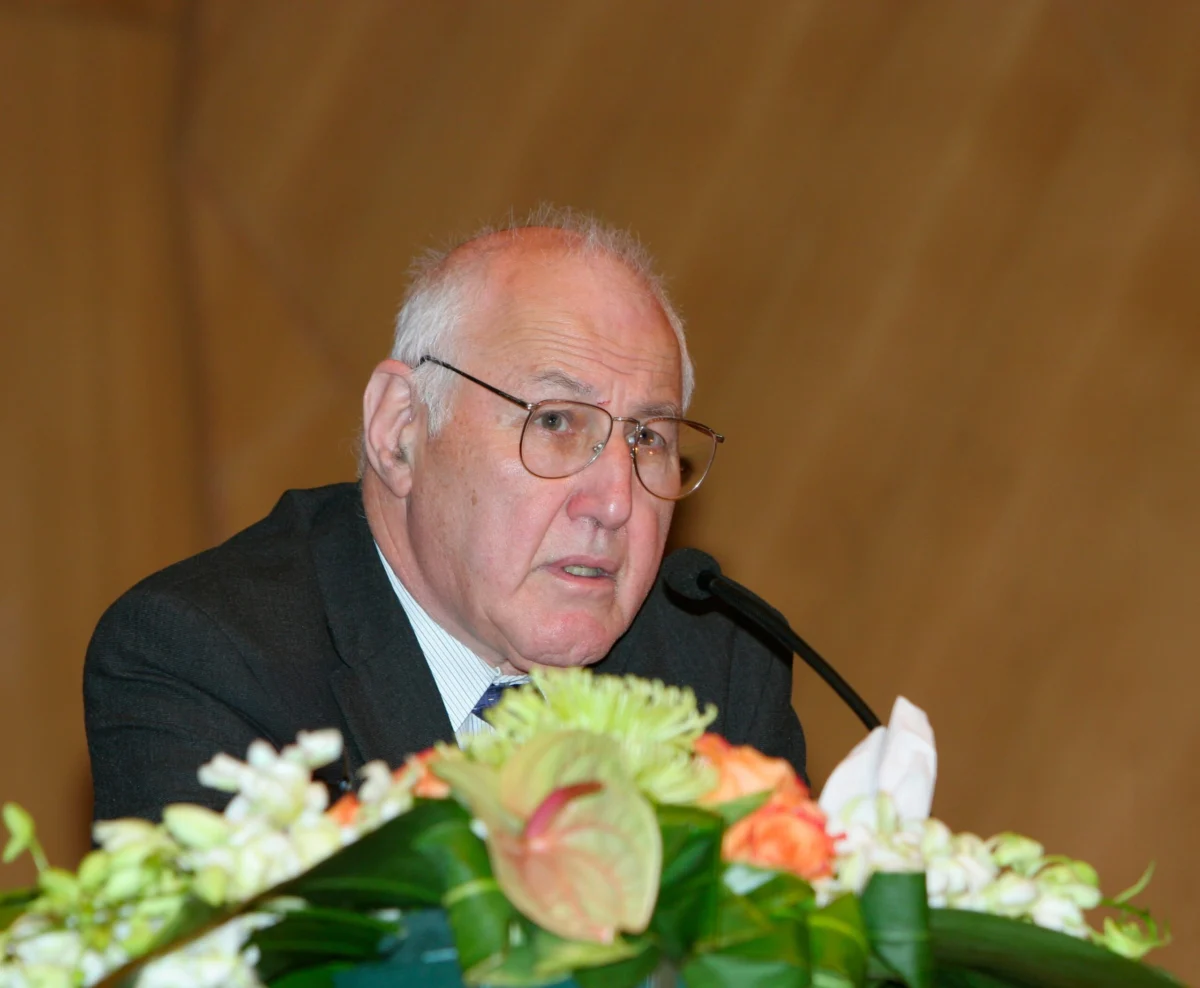
The international legal community is mourning the loss of Sir Roy Goode, an Emeritus Professor of Law at the University of Oxford and a Fellow of the British Academy, whose intellectual contributions fundamentally reshaped the landscape of global commercial law. Recognized as one of the most influential jurists of the 20th and 21st centuries, Sir Roy’s work provided the foundational architecture for modern trade finance, international banking rules, and the harmonization of commercial practices across disparate legal jurisdictions. His passing marks the end of an era for the International Chamber of Commerce (ICC), where his leadership as Chair of the ICC Global Commercial Law and Practice Commission and his role in the ICC Task Force on Guarantees set the gold standard for industry regulations.
Sir Roy’s career was defined by a rare ability to bridge the gap between abstract legal theory and the pragmatic requirements of international commerce. As a leading contributor to the development of the ICC’s banking rules, he was instrumental in ensuring that the mechanisms of global trade remained robust, predictable, and efficient. His scholarship did not merely observe the law; it created the frameworks through which billions of dollars in international transactions are secured and executed daily.
A Legacy of Institutional Leadership and Global Standards
At the heart of Sir Roy’s professional life was a deep-seated commitment to the International Chamber of Commerce. His tenure as Chair of the ICC Global Commercial Law and Practice Commission was marked by a period of intense modernization in trade law. He was a founding member of the ICC Task Force on Guarantees, a body that has been essential in stabilizing the risks associated with cross-border construction, infrastructure, and commodity projects.
Perhaps his most enduring technical contribution was his work on the Uniform Rules for Demand Guarantees (URDG). Sir Roy was the pre-eminent author and co-author of the "Guide to the Uniform Rules for Demand Guarantees (URDG 758)," a publication that remains the authoritative text for practitioners worldwide. He famously described demand guarantees as "abstract payment undertakings," a definition that underscored their independence from the underlying contract. This conceptual clarity allowed demand guarantees to become a cornerstone of international trade, providing sellers and contractors with the financial certainty needed to operate in high-risk environments.
Beyond the ICC, Sir Roy was a fixture at the International Institute for the Unification of Private Law (UNIDROIT) and the United Nations Commission on International Trade Law (UNCITRAL). His ability to synthesize common law and civil law traditions into a unified "commercial common sense" allowed for the creation of international instruments that were adopted by dozens of nations, facilitating a more integrated global economy.
Chronology of a Distinguished Career
The trajectory of Sir Roy Goode’s career reflects the evolution of commercial law itself. Born in 1933, his journey from a practicing solicitor to one of the world’s most respected academics was marked by a series of landmark achievements.
- 1950s–1960s: Sir Roy began his career in legal practice as a solicitor, gaining the hands-on experience that would later inform his pragmatic approach to academic theory. During this time, he developed a keen interest in credit and security law.
- 1971: He made the transition to academia, becoming the Crowther Professor of Credit and Commercial Law at Queen Mary College, University of London. This role allowed him to found the Centre for Commercial Law Studies (CCLS) in 1980, which remains a premier institution for legal research.
- 1990: Sir Roy was appointed the Norton Rose Professor of English Law at the University of Oxford, a position he held with distinction until his retirement, after which he became Emeritus Professor and a Fellow of St John’s College.
- 2000: In recognition of his monumental services to academic law and the legal profession, he was awarded a knighthood (CBE in 1994, followed by Knight Bachelor in 2000).
- 2001: He played a decisive role in the diplomatic conference that led to the Cape Town Convention on International Interests in Mobile Equipment. This treaty revolutionized the financing of high-value assets like aircraft and satellites.
- 2010: The publication of the URDG 758 represented a crowning achievement in his collaboration with the ICC, providing a clear, modern framework for demand guarantees that is now utilized by banks and corporates in over 100 countries.
Technical Contributions and Supporting Data
Sir Roy Goode’s impact can be measured not just in words, but in the economic stability his frameworks provided. The URDG 758, which he championed, is currently incorporated into hundreds of billions of dollars worth of guarantees annually. According to industry data, demand guarantees are a vital component of the $5 trillion global trade finance market. By standardizing the language of these "abstract payment undertakings," Sir Roy reduced the incidence of litigation and increased the speed of capital flow in international markets.
His work on the "Cape Town Convention" is equally significant in terms of economic data. The Aviation Working Group has noted that the convention has helped reduce the cost of credit for aircraft operators in developing nations by providing a secure international registry for security interests. To date, over 80 countries have ratified the Cape Town Convention, a testament to Sir Roy’s vision of a harmonized international legal order.
Furthermore, his seminal textbook, Goode on Commercial Law, now in its fifth edition, is regarded as the "bible" of the field. It is cited more frequently in UK and Commonwealth courts than perhaps any other contemporary commercial law text. His analysis of "proprietary rights in insolvencies" and "the nature of credit" has provided the intellectual scaffolding for decades of judicial decisions.
Tributes from the Global Legal Community
The news of Sir Roy’s passing has elicited a wave of tributes from the highest levels of the legal and financial sectors. Tomasch Kubiak, ICC Policy Manager, highlighted the personal qualities that accompanied Sir Roy’s immense intellect. "Sir Roy will be remembered not only for his unparalleled expertise, but also for his generosity, intellectual rigour and steadfast commitment to excellence," Kubiak stated. "His legacy will continue to shape ICC’s work and the global trade finance community for years to come."
Georges Affaki, Chair of the ICC Banking Commission Legal Committee and a long-time collaborator, described Sir Roy as a "towering legal mind." Affaki noted the unique skill Sir Roy possessed in unifying different legal cultures. "For more than 35 years, we worked together on ICC, UNIDROIT and UNCITRAL projects. I never ceased to admire his gift for making all legal traditions speak the same language of commercial common sense."
These sentiments are echoed by practitioners who viewed Sir Roy as a mentor. His lectures at Oxford and his leadership at the CCLS influenced generations of lawyers, many of whom now hold senior positions in international law firms, central banks, and supreme courts.
Analysis of Implications for the Future of Trade Law
The passing of Sir Roy Goode occurs at a critical juncture for international trade. As the global economy shifts toward digitalization and blockchain-based trade finance, the principles of "commercial common sense" that Sir Roy advocated are more relevant than ever. His work on the independence of guarantees provides a conceptual model for "smart contracts" in the digital age—where payments are triggered by data rather than manual intervention.
However, his absence leaves a void in the leadership of international standard-setting bodies. Sir Roy was a rare figure who could command the respect of both the academic world and the banking industry. As the ICC moves forward with the digitalization of trade documents (such as the eURDG), it will need to rely on the foundations Sir Roy built to ensure that technological progress does not come at the expense of legal certainty.
The legal community now faces the challenge of maintaining the momentum of harmonization that Sir Roy initiated. His work demonstrated that international trade is most successful when the rules are clear, neutral, and universally understood. In an era of increasing geopolitical fragmentation, the "Goode" approach—prioritizing the efficiency of the transaction over local legal idiosyncrasies—remains the most viable path for global prosperity.
Conclusion and Condolences
Sir Roy Goode’s contribution to the world was not merely academic; it was foundational to the functioning of the modern world. Every time an aircraft is financed, a power plant is built under a demand guarantee, or a cross-border shipment is secured by banking rules, Sir Roy’s intellectual fingerprints are present. He transformed the "Lex Mercatoria" from a collection of disparate customs into a coherent, sophisticated, and global legal system.
The International Chamber of Commerce has expressed its deepest condolences to Sir Roy’s family, friends, and colleagues. While the legal world has lost a giant, the frameworks he authored will remain the bedrock of international commerce for decades to come. His life’s work stands as a testament to the power of the law to facilitate cooperation, reduce conflict, and drive the global economy forward.
About the Author