The digital landscape is witnessing a significant transformation as LimeWire, a name once synonymous with the early 2000s peer-to-peer file-sharing era, completes its transition into a sophisticated generative artificial intelligence (AI) and blockchain-integrated content ecosystem. No longer a controversial tool for decentralized file transfers, the modern LimeWire operates as a comprehensive AI Studio designed to empower creators through automated content generation, blockchain-based ownership, and a multifaceted revenue-sharing model. This strategic pivot reflects a broader trend in the technology sector where legacy brands are being repurposed to address the burgeoning demands of the creator economy and the rapid advancement of machine learning technologies.
The Evolution of LimeWire: From Litigation to Innovation
To understand the current state of LimeWire, one must examine its historical trajectory. Founded in 2000 by Mark Gorton, the original LimeWire was a cornerstone of the Gnutella network, facilitating the exchange of music and software. However, following a protracted legal battle with the Recording Industry Association of America (RIAA), the platform was shut down by a federal court injunction in 2010. For over a decade, the brand remained dormant until its intellectual property was acquired in 2022 by entrepreneurs Paul and Julian Zehetmayr.
The Zehetmayr brothers envisioned a platform that would rectify the copyright issues of the past by utilizing blockchain technology to ensure creators were fairly compensated. Initially launched as an NFT marketplace, the platform quickly pivoted in 2023 to include generative AI, recognizing that the future of digital content lies at the intersection of automated creation and decentralized ownership. This transition marks a 180-degree turn from a platform that once struggled with copyright infringement to one that now provides the infrastructure for verifiable digital scarcity and intellectual property management.
Technical Infrastructure of the LimeWire AI Studio
The core of the current LimeWire offering is the AI Studio, a centralized hub where users can generate high-fidelity digital assets using industry-leading machine learning models. Currently, the platform focuses heavily on image generation, providing an interface for both novice users and professional designers.
The technical backbone of the studio incorporates several prominent models:
- Stable Diffusion 2.1 and XL: These open-source models allow for high-resolution image synthesis with a deep understanding of artistic styles and complex prompts.
- DALL-E 2: Developed by OpenAI, this model is integrated to provide users with a different aesthetic approach, particularly in understanding spatial relationships within generated images.
- Proprietary Models: LimeWire has signaled that it is in the process of developing its own native AI models to further differentiate its output and provide unique stylistic options that cannot be found on competing platforms.
The interface allows for a high degree of customization. Users can select from various "styles," including cinematic, digital art, pixel art, anime, and analog film. Advanced settings such as "samplers" and quality adjustment tools provide creators with the ability to fine-tune the granularity and artistic direction of their work, moving beyond simple text-to-image prompts into a more deliberate design process.
Blockchain Integration and Automated NFT Minting
A distinguishing feature of the LimeWire ecosystem is its seamless integration with blockchain protocols, specifically Polygon and Algorand. These networks were chosen for their low transaction costs (gas fees) and high throughput, making them ideal for the high-volume creation of digital assets.
When a creator finishes an image in the AI Studio, the platform offers an automated "minting" process. This converts the digital file into a Non-Fungible Token (NFT) on the chosen blockchain. This process serves several critical functions:
- Provenance: It establishes a clear, immutable record of when the content was created and by whom.
- Ownership: It grants the creator a digital deed to the asset, which can be held in a private wallet.
- Tradability: Once minted, these assets can be bought, sold, or traded within the LimeWire marketplace or on secondary NFT exchanges.
Creators have the autonomy to determine the visibility of their minted assets. They can choose to make their work public, allowing any user on the platform to view and potentially trade the NFT, or they can restrict access to "Subscriber Only" mode. This latter option allows creators to build a gated community where fans pay a recurring fee for exclusive access to the artist’s output, mirroring the successful models of platforms like Patreon but with the added value of digital asset ownership.
The LMWR Token and the Economic Model
Central to the platform’s financial operations is the LMWR token, an ERC-20 utility token that facilitates transactions within the ecosystem. The introduction of a native cryptocurrency allows LimeWire to automate rewards and internationalize its payment systems without the friction of traditional banking.
The economic structure is built on a 70/30 split in favor of the creator for ad revenue. When users view content on the LimeWire platform, the system generates advertising revenue, 70% of which is distributed back to the original creator in the form of LMWR tokens. This creates a passive income stream for designers, incentivizing them to produce high-quality, engaging content that attracts views.
Furthermore, LimeWire implements a secondary market royalty system. Every time an NFT created on the platform is resold, the original creator receives a 2.5% royalty fee. This ensures that artists continue to benefit from the appreciating value of their work long after the initial sale. The LMWR tokens earned through these various streams can be traded on major global exchanges, including Kraken, ByBit, and UniSwap, or reused within the platform to purchase additional "credits" for AI generation.
Subscription Tiers and Resource Allocation
To accommodate a wide range of users, from casual hobbyists to professional agencies, LimeWire has implemented a tiered subscription model. This allows the platform to manage the significant computational costs associated with running high-end AI models while providing value to its user base.
- Free Plan: Designed for entry-level exploration, providing 10 credits (approximately 20 image generations) per day and a 50% ad revenue share.
- Basic Plan ($9.99/mo): Targets enthusiasts, offering 1,000 credits per month and early access to new AI models.
- Advanced Plan ($29/mo): Increases the monthly allocation to 3,750 credits and boosts the ad revenue share to 60%.
- Pro Plan ($49/mo): Provides 5,000 credits per month and the maximum 70% ad revenue share.
- Pro Plus Plan ($99/mo): Aimed at heavy users and professional studios, offering 11,250 credits per month, supporting up to 22,500 image generations.
All premium tiers remove advertisements for the user, provide a "Pro" profile badge to enhance social proof within the community, and offer faster processing speeds for image generation.
Market Context and Industry Implications
The pivot of LimeWire occurs at a time when the generative AI market is projected to reach a valuation of over $100 billion by 2030. Simultaneously, the creator economy—valued at approximately $250 billion—is seeking more equitable ways to monetize content outside of the traditional "Big Tech" advertising models.
Industry analysts suggest that LimeWire’s approach addresses two of the biggest hurdles in the AI art world: monetization and ownership. While tools like Midjourney or DALL-E offer powerful generation capabilities, they often lack a built-in marketplace or a clear path for creators to earn a living directly from the platform. By combining the generation tool with a social feed and a blockchain marketplace, LimeWire is positioning itself as a "verticalized" solution for digital artists.
However, the platform faces challenges. The association with its previous iteration as a file-sharing site remains a double-edged sword; while it provides instant brand recognition, it also requires the company to constantly prove its commitment to legal and ethical content standards. Furthermore, the volatility of the cryptocurrency market and the cooling of the NFT "hype" cycle mean that LimeWire must rely on the utility of its AI tools rather than just the speculative value of its digital assets.
Future Outlook: Expansion into Music and Video
The current focus on image generation is merely the first phase of a broader roadmap. LimeWire has officially announced plans to integrate AI-driven music and video generation tools. This is a logical progression given the brand’s history with the music industry. The upcoming tools are expected to allow musicians to generate beats, melodies, or full compositions, which can then be minted as audio NFTs.
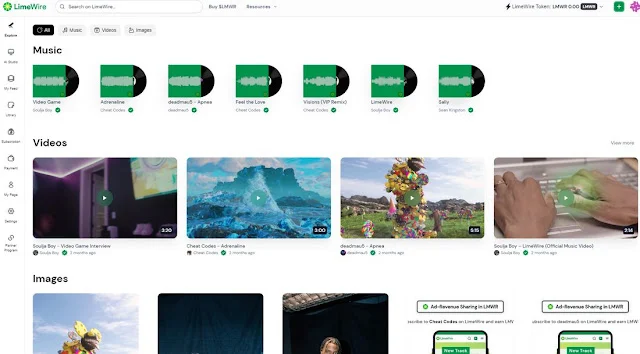
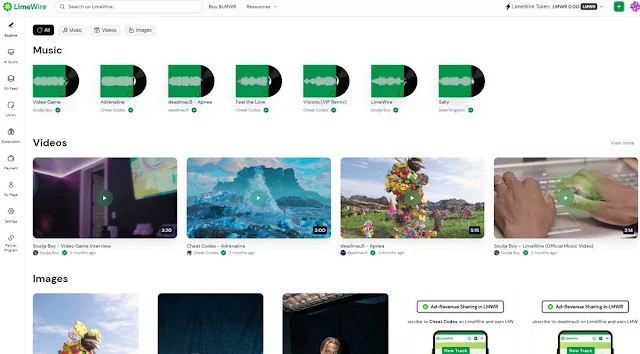
Collaborations with high-profile artists like Deadmau5 and Sean Kingston indicate that the platform is successfully attracting established talent to pilot these new formats. As AI technology continues to evolve from static images to temporal media like video and sound, LimeWire’s integrated "generate-publish-monetize" workflow could provide a significant template for how digital media is produced and consumed in the mid-2020s.
In summary, the re-emergence of LimeWire represents more than just a brand revival; it is a case study in the convergence of AI, blockchain, and the creator economy. By lowering the barrier to entry for content creation and providing a transparent, automated path to revenue, the platform is attempting to democratize digital artistry for a global audience. Whether it can maintain this momentum in a highly competitive AI landscape remains to be seen, but its current infrastructure offers one of the most comprehensive ecosystems for the modern digital creator.
About the Author