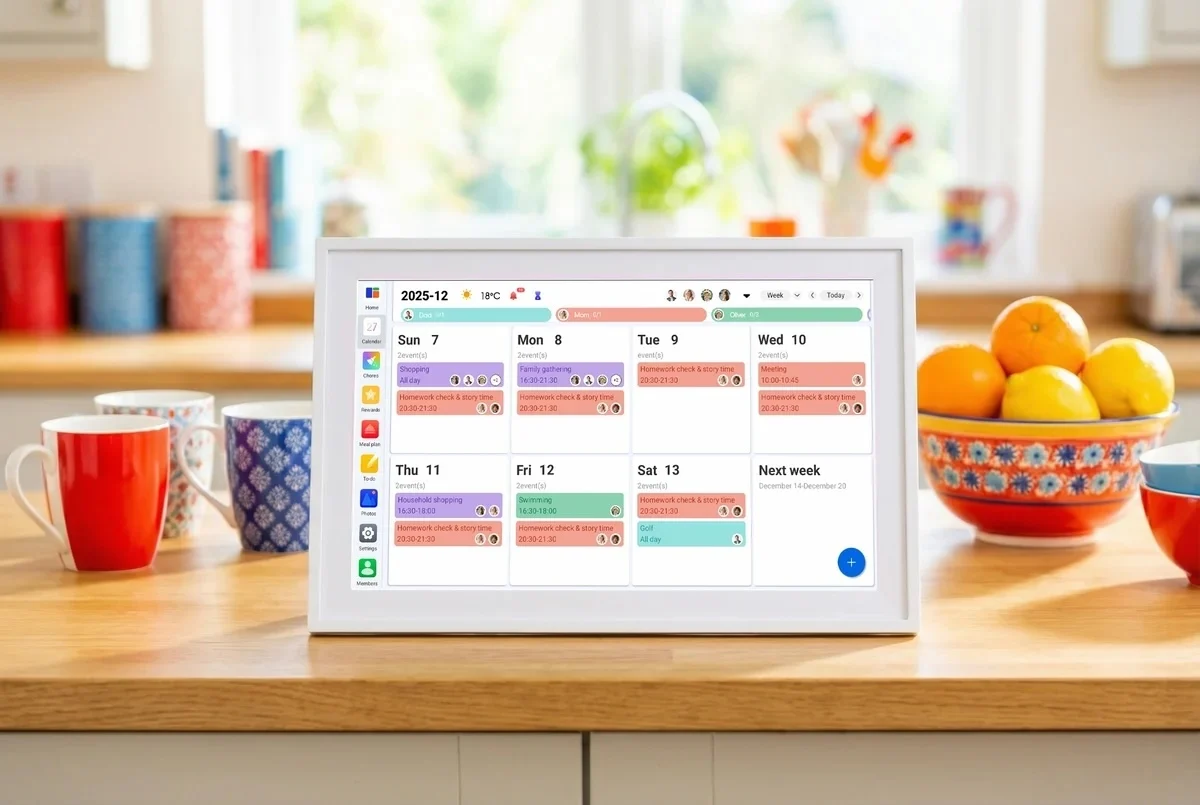
As the back-to-school season intensifies, or in many households, has already begun, the logistical challenge of managing multiple schedules can quickly escalate into a state of organized chaos. The demands of work, school commitments, extracurricular activities, medical appointments, household chores, and myriad other daily responsibilities often render traditional paper calendars insufficient for modern family life. Addressing this pervasive need for enhanced household coordination, Linkdaze has introduced a smart digital calendar, a touchscreen tablet meticulously designed not for individual productivity, but for the holistic organization of an entire household. Launched in December of the previous year, Linkdaze offers a compelling alternative to fragmented digital scheduling, aiming to consolidate the diverse calendaring needs of families into a single, accessible hub.
Centralizing Family Schedules: The Power of Integration
One of Linkdaze’s most significant advantages lies in its robust calendar compatibility. The system is engineered to seamlessly synchronize with a wide array of popular digital calendar services, including Google Calendar, Apple’s iCloud, Microsoft Outlook, Yahoo Calendar, and Cozi, a platform specifically developed for family organization. This multi-platform integration is particularly invaluable for families where individual members may utilize different scheduling applications based on their personal preferences or professional requirements. Instead of mandating a switch to a singular calendar app, Linkdaze acts as a unifying force, aggregating multiple schedules into one coherent view. The platform employs a sophisticated color-coding system, allowing for the immediate and intuitive identification of which family member is associated with each event or appointment, thereby reducing confusion and potential scheduling conflicts.
The current landscape of digital organization tools reveals a growing trend towards integrated solutions. A 2023 report by Statista indicated that the global digital calendar market is projected to reach a valuation of over $5 billion by 2028, driven by increased adoption of smart devices and cloud-based services. This growth underscores the demand for tools that simplify complex scheduling, a need that Linkdaze directly addresses. The fragmentation of digital tools often leads to inefficiencies, with families reporting an average of 30 minutes per week spent trying to coordinate schedules across different apps. Linkdaze’s approach, by consolidating these disparate streams, promises to reclaim that lost time and reduce household friction.
Beyond the Calendar: A Multifaceted Organizational Hub
Available in two distinct models, a larger 15.6-inch display and a more compact 10.1-inch version, Linkdaze offers users flexibility in selecting a device that best suits their available wall space and aesthetic preferences. The utility of the Linkdaze calendar extends far beyond mere appointment tracking. It is envisioned as a comprehensive household management system, capable of facilitating chore assignments and reward tracking for children, streamlining meal planning, generating and managing shopping lists, and supporting a multitude of other family organization tasks. Furthermore, the device can effortlessly transition into a digital photo frame, allowing families to display cherished memories and personalize their living spaces.
The development of Linkdaze appears to have been influenced by the growing recognition of the "digital home" concept, where interconnected devices manage various aspects of domestic life. As smart home technology proliferates, with projections suggesting that over 80% of households will have at least one smart device by 2025, products like Linkdaze are positioned to become central hubs for family coordination. The demand for such integrated solutions is fueled by the increasing complexity of modern family structures and the desire for greater efficiency in managing daily life.
Innovative AI for Effortless Meal Planning: The "Snap-to-Sync" Feature
Perhaps the most innovative and distinctive feature of Linkdaze is its AI-powered meal planner, which incorporates a groundbreaking "Snap-to-Sync" functionality. This intelligent system dramatically simplifies the often-tedious process of meal planning and grocery list generation. Instead of manually inputting every ingredient and meal detail into a digital app, users can simply take a photograph of a handwritten recipe, a page from a cookbook, or even a child’s school lunch menu. Linkdaze’s AI then intelligently interprets this visual information, transforming it into a structured digital meal plan. Crucially, it can also automatically generate a corresponding shopping list based on the identified ingredients, further streamlining the grocery shopping experience.
While the concept of using optical character recognition (OCR) for data input is not entirely novel, Linkdaze’s application within a dedicated family organization context, specifically for meal planning and grocery lists, offers a significant practical advantage. This feature directly addresses a common pain point for busy parents and caregivers who struggle to find the time to plan meals and compile comprehensive shopping lists. The ability to quickly capture and digitize recipes from various sources eliminates a significant barrier to consistent meal planning, promoting healthier eating habits and reducing food waste.
Industry analysts have noted that the integration of AI into everyday household management tools is a key differentiator. A recent study on consumer technology adoption found that AI-powered features that save time and reduce cognitive load are among the most sought-after functionalities in smart home devices. Linkdaze’s "Snap-to-Sync" feature aligns perfectly with this trend, offering a tangible benefit that sets it apart from basic digital calendars and standard productivity apps.
A Differentiated Business Model: No Subscription Fees for Core Functionality
In a market increasingly dominated by subscription-based revenue models, Linkdaze has made a deliberate and potentially game-changing decision: its core organizational features are available without any recurring monthly fees. This contrasts sharply with some competitors, such as Skylight, another prominent smart calendar brand, which offers enhanced functionalities through an annual subscription of approximately $79. For a hardware company venturing into the competitive smart display market, this approach could serve as a significant differentiator, appealing to consumers wary of ongoing costs.

The decision to forgo a subscription for core features presents a unique strategic choice. On one hand, it can attract a broader customer base seeking a one-time purchase solution, thereby potentially capturing market share from subscription-reliant competitors. On the other hand, it means foregoing a consistent stream of recurring revenue, which is often a critical component of sustained growth for technology companies. The long-term success of this model will depend on its ability to drive sufficient upfront hardware sales and potentially monetize through other avenues, such as premium add-on features or partnerships, without alienating its user base.
Price Point and Market Positioning
Further enhancing its appeal, Linkdaze is positioned at a competitive price point. The 10.1-inch model is available for $119.99, while the larger 15.6-inch version offers more screen real estate for those who need it. This pricing strategy appears to be a direct challenge to competitors. For comparison, Skylight’s 10-inch model begins at $149.99, and this price point often implies the necessity of an additional subscription for full functionality. This upfront cost advantage, coupled with the absence of subscription fees for essential features, makes Linkdaze an economically attractive option for many households.
The smart display market has seen significant growth, with major tech companies offering their own iterations. However, many of these devices are primarily geared towards individual use or general smart home control. Linkdaze carves out a specific niche by focusing intently on the unique organizational needs of families and households, a segment that may be underserved by broader consumer electronics.
Broad Applicability: From Busy Parents to Roommates
The versatility of the Linkdaze smart digital calendar makes it a practical gift for a wide range of users. It is particularly well-suited for busy parents who are constantly striving to keep all family members’ schedules synchronized and accessible in one central location. The ease of use and comprehensive features aim to alleviate the mental load associated with juggling multiple commitments.
Beyond the traditional family unit, the device could also find a strong foothold in shared living situations, such as college apartments or houses with multiple roommates. In these environments, Linkdaze can serve as an effective tool for coordinating chores, managing shared study schedules, planning communal meals, and overseeing other collective household responsibilities. The shared visibility and collaborative features can foster better communication and reduce interpersonal friction that often arises from uncoordinated living arrangements.
Furthermore, for individuals navigating demanding professional lives, such as freelancers, entrepreneurs, or those in roles with frequent deadlines and appointments, Linkdaze can offer a centralized command center for managing personal and professional commitments. The ability to integrate various calendars and manage tasks efficiently can be a significant asset in maintaining work-life balance.
Broader Impact and Future Implications
The introduction of Linkdaze signals a continuing evolution in how households manage their daily lives. As technology becomes more integrated into our homes, devices that specifically address complex coordination challenges are likely to gain traction. The success of Linkdaze could inspire further innovation in the smart home organization sector, potentially leading to more specialized devices or enhanced functionalities within existing platforms.
The decision to eschew subscription fees for core features, while potentially impacting immediate revenue, could prove to be a strategic masterstroke in building customer loyalty and market share. In an era of subscription fatigue, a one-time purchase with enduring value may resonate strongly with consumers. The long-term implications of this business model will be closely watched by industry observers and competitors alike, as it could set a new precedent for pricing and value propositions in the smart home device market.
Linkdaze’s approach, combining intuitive design with powerful AI features and a consumer-friendly pricing structure, positions it as a significant contender in the quest to bring order to the modern household’s ever-increasing complexity. The device’s ability to bridge the gap between individual digital tools and collective household needs suggests a promising future for integrated, user-centric organizational technology.
About the Author