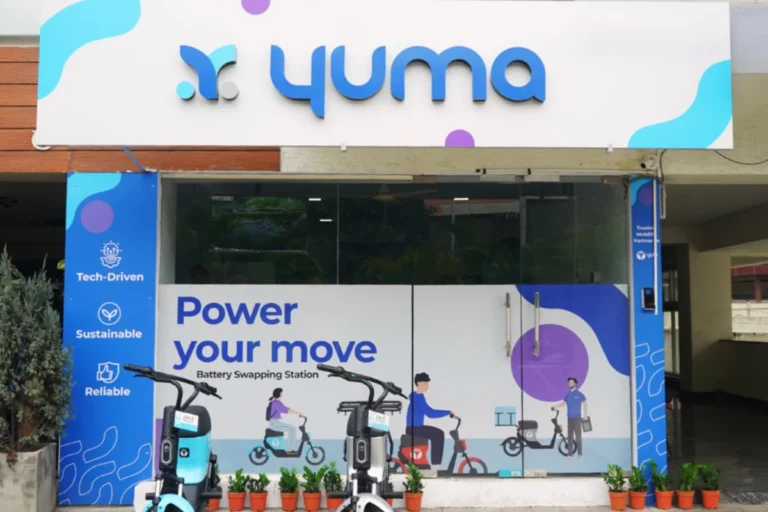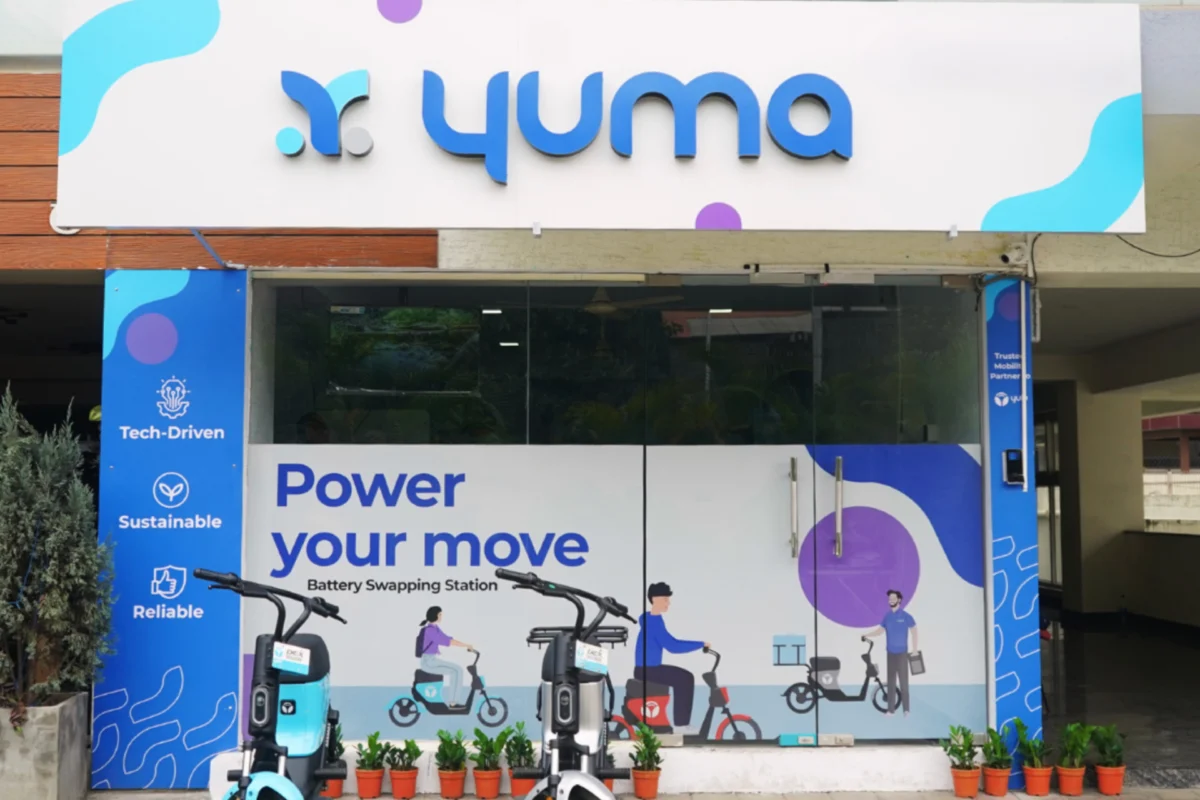
Canadian auto parts titan Magna International is significantly increasing its investment in Yuma Energy, a burgeoning Indian firm specializing in battery-swapping solutions for electric two- and three-wheelers. This strategic move underscores Magna’s conviction that the battery-swapping model, which has faced global adoption challenges, possesses substantial potential for success within India’s unique economic landscape. The decision is heavily influenced by the nation’s rapidly expanding delivery economy and the immense volume of electric two- and three-wheelers already in operation.
The latest infusion of capital amounts to $35 million, further solidifying Magna’s majority stake in the Bengaluru-based company. Previously, Magna had acquired a 51% ownership in Yuma Energy when the joint venture was established. This new investment will dilute the existing 49% stake held by Yulu, an Indian mobility startup from which Yuma Energy originated in early 2023. While the precise new ownership breakdown remains undisclosed, the move signifies a deepening commitment from the global automotive supplier.
Magna’s engagement with Yuma Energy and its parent company, Yulu, represents its sole investments in the Indian market to date. In 2022, Magna had already committed a substantial sum of $77 million across both ventures. Of this, $25 million was allocated to Yulu, and $52 million was directed towards the battery-swapping joint venture that is now Yuma Energy. This historical investment pattern highlights Magna’s early and strategic focus on India’s electric mobility sector.
A Strategic Bet on India’s Exploding Gig Economy
Magna’s increased financial backing for Yuma Energy is intrinsically linked to the robust growth of India’s gig economy. This segment of the workforce, characterized by flexible, often short-term employment, relies heavily on efficient and cost-effective transportation. For delivery riders, a critical component of this economy, the time spent recharging electric vehicles (EVs) directly translates into lost revenue and reduced operational efficiency.
Muthu Subramanian, Managing Director of Yuma Energy, estimates that currently, only 10% to 15% of vehicles utilized by gig workers in India are electric. This statistic points to a significant untapped market opportunity. As more gig economy participants transition from traditional gasoline-powered vehicles to EVs, the demand for convenient and rapid charging solutions, such as battery swapping, is poised to surge.
"With Indian gig workers’ high runtime on a daily basis, an EV makes absolute sense in terms of cost of ownership," Subramanian stated in a recent interview. "Uptime is important." This sentiment directly addresses the core challenge faced by gig workers: maximizing their productive hours on the road.
The Case for Battery Swapping Over Fast Charging
Yuma Energy’s strategic advantage lies in its focus on high-mileage riders, for whom battery swapping offers a more practical and time-efficient alternative to traditional fast charging. Subramanian elaborated on this point, noting that a battery can be exchanged in under two minutes. In stark contrast, even a 20- to 30-minute fast charge significantly disrupts a rider’s workflow, requiring them to be stationary and demanding substantial infrastructure to accommodate multiple vehicles simultaneously.
The inherent convenience of battery swapping, however, comes with significant upfront capital investment. Yuma must maintain a ready supply of charged batteries and operational swapping infrastructure, often ahead of peak demand. "It’s a capital-intensive business, and the unit economics will play out at scale," Subramanian acknowledged. This business model necessitates substantial investment to achieve profitability.
Despite the capital demands, Yuma Energy is demonstrating progress towards financial viability. While the company is not yet profitable overall, Subramanian indicated that some of its older swapping stations have already achieved EBITDA (Earnings Before Interest, Taxes, Depreciation, and Amortization) positive status. As of the end of the financial year in March 2026, Yuma reported a revenue of approximately ₹1 billion (around $10.5 million) and operated more than 400 stations with over 2,500 charging units. The company has set an ambitious target of reaching EBITDA break-even within the next two fiscal quarters.
Scaling Up to Meet Demand
The substantial investment from Magna International is earmarked for critical expansion initiatives. A significant portion of the $35 million will be deployed to bolster Yuma’s battery-swapping infrastructure and to double its current fleet of approximately 100,000 batteries over the next 12 to 18 months. This aggressive scaling strategy is designed to preemptively meet the anticipated surge in demand.
Historically, Yulu has been the primary driver of Yuma’s operations, accounting for the vast majority of the over 60 million battery swaps completed to date. However, this dependency is gradually diminishing. In the most recent quarter, approximately 15% to 20% of swaps were conducted for customers other than Yulu, signaling a diversification of Yuma’s client base.
Beyond its foundational relationship with Yulu, Yuma has successfully expanded its reach. The company now serves over five distinct fleets and has integrated its swappable batteries with more than 10 different vehicle platforms. These include models from prominent manufacturers such as Kinetic Green, Motovolt, BGauss, and Quantum Energy. Yuma projects that non-Yulu customers will contribute around 25% of its total swaps within the next two years.
This strategic expansion is occurring in tandem with Yulu’s own growth trajectory. Earlier in August 2026, Yulu secured $93 million in funding to augment its electric two-wheeler fleet. Yuma’s network expansion is therefore crucial not only to keep pace with its largest existing customer but also to accommodate the growing number of independent fleets adopting its battery technology.
Geographic Footprint and Future Ambitions
Yuma Energy currently operates its battery-swapping network across 18 major Indian cities. Its presence spans metropolitan hubs like Bengaluru, Hyderabad, Mumbai, and the Delhi National Capital Region, as well as significant Tier-2 cities including Jaipur, Lucknow, Indore, Coimbatore, Kochi, and Kolkata. The newly acquired capital will facilitate further expansion into key markets such as Chennai and Pune in the coming quarters, alongside increasing the density of stations in existing operational cities.
While India remains Yuma’s primary focus for at least the next 12 to 18 months, the company harbors long-term international expansion plans. Subramanian indicated that Southeast Asian markets, specifically Vietnam and Thailand, as well as parts of Africa, are being considered for future growth. These regions present attractive opportunities due to their substantial two-wheeler markets, mirroring the conditions that have driven Yuma’s success in India. However, formal discussions regarding entry into these international markets have not yet commenced.
A key differentiator for Yuma Energy is its end-to-end approach to battery swapping. Unlike some competitors who solely manage swapping networks, Yuma designs and manufactures its own battery packs and charging units. The company’s battery packs are produced at its facility in Chennai, and its charging units are manufactured in Bengaluru. This vertical integration provides Yuma with comprehensive control over both the hardware components and the network management systems, ensuring quality and facilitating rapid innovation.
Broader Implications for India’s EV Ecosystem
Magna International’s substantial investment in Yuma Energy signifies a major vote of confidence in India’s electric mobility future and, more specifically, in the battery-swapping model. This infusion of capital is expected to accelerate the adoption of electric two- and three-wheelers by addressing a critical pain point for commercial riders: range anxiety and charging downtime.
The growth of the gig economy, fueled by the rise of e-commerce and quick-commerce platforms, has created a persistent demand for efficient logistics. By making EVs a more viable and profitable option for delivery personnel, Yuma’s battery-swapping network can contribute to reducing the carbon footprint of India’s transportation sector. Each gasoline-powered vehicle replaced by an electric counterpart, powered by a conveniently swapped battery, represents a tangible step towards cleaner urban air and a more sustainable transportation ecosystem.
Furthermore, Yuma’s strategy of designing and manufacturing its own hardware positions it as a comprehensive solutions provider. This control over the supply chain can lead to greater cost efficiencies, improved product quality, and faster adaptation to evolving battery technologies and vehicle requirements. As Yuma expands its network and diversifies its customer base beyond Yulu, its success could serve as a blueprint for other companies looking to implement similar battery-swapping solutions in emerging markets.
The implications of this investment extend beyond Yuma and Magna. It signals to the broader automotive and energy industries that India is a fertile ground for innovative mobility solutions. The ongoing commitment from a major global player like Magna suggests a long-term vision for the electrification of India’s vast two- and three-wheeler segments, which are crucial for both personal mobility and the burgeoning delivery economy. As Yuma scales its operations and moves towards profitability, its journey will be closely watched as an indicator of the viability and scalability of battery swapping as a mainstream solution for electric vehicle adoption in high-usage urban environments.
About the Author