The intricate dance of modern business often involves a cast of characters spread across vast geographical distances, each operating under the rhythm of their local clock. This reality, while enabling global connectivity and remote workforces, introduces a significant challenge: time zone fatigue. For businesses with employees, clients, or partners in different states, understanding and effectively managing these temporal divides is not merely a matter of convenience, but a critical component of operational efficiency and successful communication. This comprehensive guide delves into the complexities of U.S. time zones, the impact of Daylight Saving Time, and practical strategies for businesses to navigate this ever-present factor in their daily operations.
The pervasive nature of remote work, amplified by the events of recent years, has solidified the need for businesses to develop robust strategies for managing distributed teams. According to a 2023 report by Upwork, approximately 40% of the U.S. workforce operates remotely, a figure that underscores the widespread adoption of flexible work arrangements. This shift means that a company might have a sales representative in New York, a development team in California, and a customer support center in Texas, all interacting in real-time. The implications of these time zone differences extend beyond simple scheduling inconveniences. Miscommunications regarding deadlines, missed client calls, and inefficient meeting planning can lead to lost productivity, frustrated employees, and damaged business relationships.
Understanding the Temporal Landscape: U.S. Time Zones Demystified
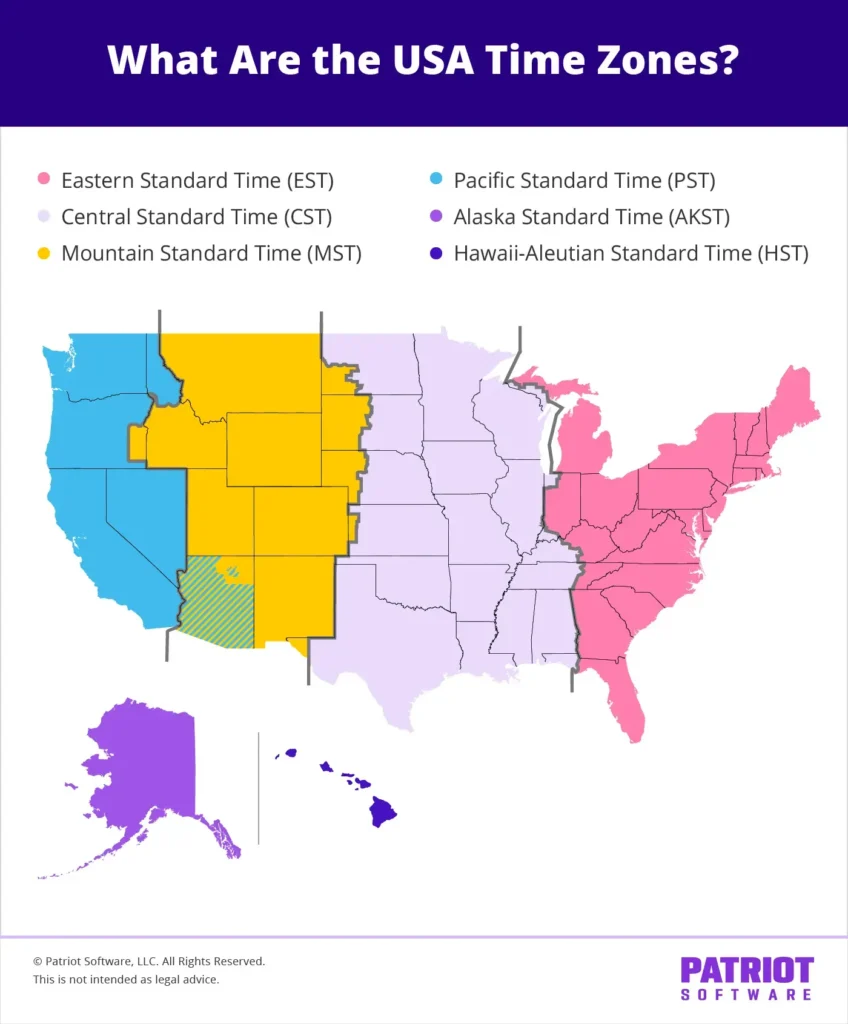
The United States, with its continental expanse, is divided into several standard time zones, each meticulously defined to synchronize daily life with the sun’s position. These zones are not arbitrary lines on a map but reflect the historical need to standardize time across regions to facilitate communication, transportation, and commerce.
The primary time zones, moving westward, are:
-
Eastern Standard Time (EST): This zone encompasses the most populous region of the United States, including the Eastern Seaboard and extending inland. It is UTC-5. States primarily in EST include Maine, Vermont, New Hampshire, Massachusetts, Rhode Island, Connecticut, New York, New Jersey, Pennsylvania, Delaware, Maryland, Virginia, West Virginia, North Carolina, South Carolina, Georgia, and most of Florida. The District of Columbia also observes EST.
-
Central Standard Time (CST): Stretching westward from the Eastern time zone, CST covers a broad swathe of the Midwest and parts of the South. It is UTC-6. States predominantly in CST include Alabama, Arkansas, Illinois, Iowa, Louisiana, Minnesota, Mississippi, Missouri, Wisconsin, and most of Oklahoma, Kansas, Nebraska, North Dakota, South Dakota, and Texas. Parts of Florida also observe CST.
-
Mountain Standard Time (MST): This zone primarily covers the Rocky Mountain region and extends into parts of the Southwest. It is UTC-7. States largely within MST include Arizona (though it does not observe DST, remaining on MST year-round, except for the Navajo Nation), Colorado, Montana, New Mexico, Utah, and Wyoming. Parts of Idaho, Kansas, Nebraska, North Dakota, Oregon, South Dakota, and Texas also fall within MST.
-
Pacific Standard Time (PST): This is the westernmost contiguous U.S. time zone, encompassing the Pacific coast. It is UTC-8. States in PST include California, Washington, and most of Oregon and Nevada. Parts of Idaho also observe PST.
-
Alaska Standard Time (AKST): This zone covers the vast majority of Alaska and is UTC-9.
-
Hawaii-Aleutian Standard Time (HST): This zone includes Hawaii and a portion of the Aleutian Islands in Alaska. It is UTC-10.
It is important to note that some states, due to their geographical expanse, are divided between two time zones. For instance, Texas spans both Central and Mountain time, while Florida has counties that observe both Eastern and Central time. This geographical complexity necessitates a precise understanding for businesses operating within these states.
The Variable Factor: Daylight Saving Time (DST)
Compounding the inherent differences in standard time zones is the practice of Daylight Saving Time (DST). Officially enacted nationwide in 1918 and re-established in 1966, DST is a system where clocks are advanced by one hour during warmer months to maximize daylight in the evenings. The rationale behind DST has historically been to conserve energy, increase opportunities for outdoor activities, and potentially reduce crime rates.
DST typically begins on the second Sunday in March, when clocks "spring forward" by one hour, and ends on the first Sunday in November, when clocks "fall back" by one hour. This biannual shift means that the actual time difference between time zones can fluctuate throughout the year, adding another layer of complexity for businesses to manage. For example, during standard time, Arizona (which does not observe DST) is three hours behind New York (which observes EST and DST). However, when New York springs forward for DST, the time difference shrinks to two hours.
However, the observance of DST is not universal across the United States. Hawaii and most of Arizona (excluding the Navajo Nation) famously do not participate in DST, remaining on their respective standard times year-round. This exception creates unique chronological relationships with other states that do observe DST. For instance, during DST, the time difference between Phoenix, Arizona (MST), and Los Angeles, California (PST), is two hours. When California observes DST, it shifts to Pacific Daylight Time (PDT), making it UTC-7, while Arizona remains on MST (UTC-7). This results in a zero-hour difference during DST periods.
The debate surrounding DST is ongoing, with various legislative efforts aiming to make it permanent or abolish it altogether. As of early 2026, federal legislation to enact permanent DST has not been passed, leaving the current system in place. The potential for future changes necessitates ongoing vigilance for businesses that rely on precise time calculations.
Data-Driven Insights: The Scope of Time Zone Challenges
The impact of time zone differences on business operations is substantial. A survey conducted by ChronoTech Solutions found that 65% of remote teams report experiencing challenges due to time zone disparities, with the most common issues being scheduling conflicts (48%), communication delays (35%), and reduced team cohesion (22%). These figures highlight the tangible costs associated with unmanaged time zone differences, ranging from decreased productivity to employee dissatisfaction.
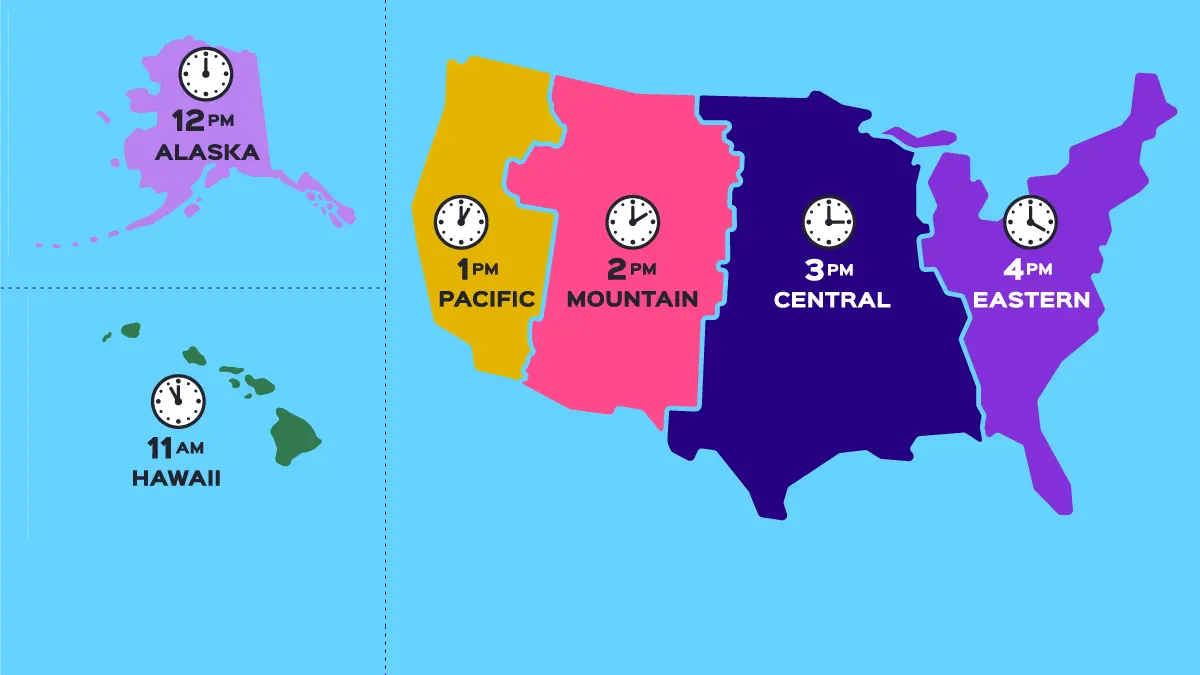
Consider a scenario where a company headquarters in New York (EST) needs to coordinate a product launch with its marketing team in Los Angeles (PST). If the launch is scheduled for 10:00 AM EST, this translates to a 7:00 AM PST start for the West Coast team. While feasible, this requires careful planning to ensure adequate rest and preparation for employees on the earlier side of the time difference. Conversely, a client call scheduled for 3:00 PM PST might fall after business hours for a partner in Eastern Standard Time, requiring a compromise or alternative scheduling.
Navigating the Chronological Currents: Strategies for Business Success
Effectively managing time zone differences requires a proactive and systematic approach. Businesses can adopt several strategies to mitigate confusion and ensure seamless operations:
-
Standardized Communication Protocols: Establish clear guidelines for when communications should occur. This might involve designating specific "core hours" when all team members are expected to be available, regardless of their local time. For instance, a company might define core hours as 10:00 AM to 3:00 PM EST, which would translate to 7:00 AM to 12:00 PM PST, 8:00 AM to 1:00 PM MST, and 9:00 AM to 2:00 PM CST.
-
Centralized Scheduling Tools: Utilize calendaring and project management software that automatically displays team members’ local times or allows for easy conversion. Tools like Google Calendar, Outlook Calendar, and Asana can be configured to show multiple time zones, making it easier to find mutually convenient meeting times.
-
Explicit Time Zone Notation: When scheduling meetings, sending out deadlines, or issuing instructions, always specify the time zone. Instead of "Meeting at 2 PM," use "Meeting at 2 PM EST" or "2 PM Eastern Time." For broader communication, consider providing equivalent times for all major time zones involved. For example, "The deadline is Friday at 5:00 PM PST (8:00 PM EST, 7:00 PM CST, 4:00 PM MST)."
-
Time Zone Converters and Apps: Encourage employees to use readily available time zone converter tools and apps. Many mobile devices and web browsers have built-in or downloadable applications that can quickly calculate time differences.
-
Cross-Cultural Temporal Awareness Training: For businesses with a truly global reach, providing training on temporal etiquette and cultural nuances related to time can be beneficial. This includes understanding when it is appropriate to contact colleagues in different regions and respecting their local working hours.
-
Asynchronous Communication Strategies: Leverage asynchronous communication tools such as email, instant messaging platforms with message threading, and shared document repositories. This allows team members to contribute and access information without needing to be online simultaneously.
-
Dedicated Time Zone Management Software: For larger organizations with complex distributed workforces, specialized time and attendance software or workforce management platforms can offer advanced features for tracking employee locations and managing schedules across multiple time zones. These tools can automate complex calculations and provide real-time visibility into team availability.
Broader Implications and Future Outlook
The increasing prevalence of remote and hybrid work models suggests that mastering time zone management will remain a critical skill for businesses. As companies continue to tap into a global talent pool, the ability to bridge geographical divides through effective temporal coordination will become a significant competitive advantage.
The ongoing discussions surrounding Daylight Saving Time also warrant attention. Should the U.S. adopt permanent DST, it would simplify some calculations by eliminating the biannual clock changes. However, it would also create new time zone differentials with regions that do not observe DST, such as Arizona and Hawaii, requiring businesses to recalibrate their strategies. Conversely, a return to permanent standard time would also necessitate adjustments. Regardless of the outcome, adaptability and a commitment to clear communication will be paramount.
Conclusion
In the interconnected landscape of modern business, time zones are more than just a chronological inconvenience; they are a fundamental operational consideration. By understanding the intricacies of U.S. time zones, acknowledging the impact of Daylight Saving Time, and implementing strategic management practices, businesses can transform potential challenges into opportunities for enhanced productivity, stronger team collaboration, and more robust client relationships. The ability to effectively navigate these temporal currents is not just about keeping pace with the clock, but about staying ahead in a dynamic and geographically diverse business world.
About the Author