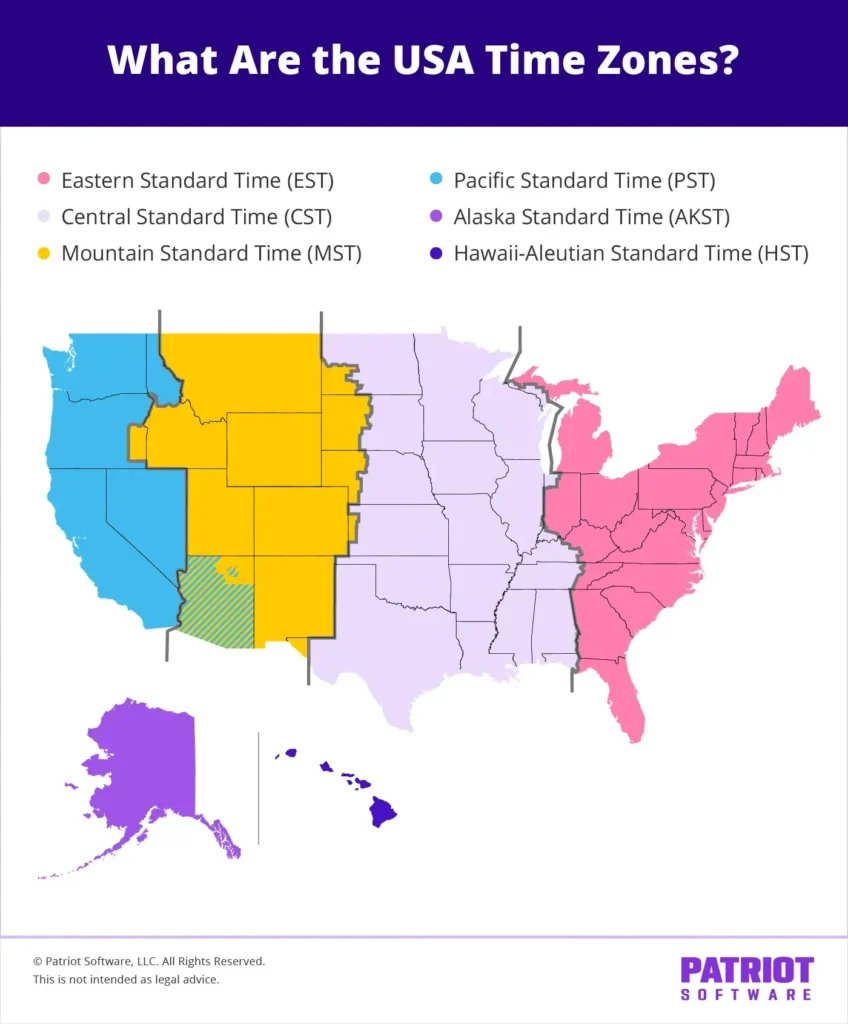
The complexities of coordinating business operations across the United States are amplified by the nation’s diverse time zones, a challenge that has become increasingly pronounced with the rise of remote work and dispersed teams. For businesses with employees, clients, or partners spanning states from coast to coast, understanding and effectively managing these temporal differences is not merely a logistical consideration but a fundamental business imperative. This article delves into the significance of time zones in the contemporary business landscape, outlines the various time zones observed across the U.S., explores the impact of Daylight Saving Time, and offers practical strategies for navigating these temporal divides.
The Growing Importance of Time Zone Management in Business
In an era defined by interconnectedness and the pervasive adoption of remote work models, the ability to manage operations across different time zones has transitioned from a niche concern to a core competency for businesses of all sizes. The U.S. alone is divided into six distinct time zones, each with its own temporal rhythm. This geographical spread means that a simple task like scheduling a team meeting, placing an order with a supplier, or responding to a customer inquiry can become an intricate puzzle if not approached with careful consideration of local times.
The rise of the distributed workforce, accelerated by events like the COVID-19 pandemic, has further underscored this reality. According to a 2023 report by Gallup, a significant portion of American full-time employees continue to work from home, with many companies embracing hybrid or fully remote models. This decentralization means that a company might have employees in New York, Chicago, Denver, and Los Angeles, each operating under a different time standard. Failure to account for these differences can lead to missed deadlines, communication breakdowns, reduced productivity, and even strained client relationships. For instance, a sales representative in the Eastern Time Zone attempting to contact a potential client in the Pacific Time Zone at 5 p.m. EST might find their prospect has already concluded their workday hours earlier, leading to a lost opportunity. Similarly, project deadlines that do not explicitly state the originating time zone can cause significant confusion and delays for teams spread across the country.
Understanding the Six U.S. Time Zones
The United States, including its territories and the District of Columbia, is divided into six primary time zones. These zones are designed to align with solar time, ensuring that noon generally occurs when the sun is at its highest point in the sky.
- Eastern Standard Time (EST): This is the easternmost time zone in the contiguous United States and observes UTC-5. It covers states such as New York, Florida, and Maine. During Daylight Saving Time, it becomes Eastern Daylight Time (EDT), observing UTC-4.
- Central Standard Time (CST): Located west of EST, CST observes UTC-6. States like Texas, Illinois, and Wisconsin fall within this zone. It shifts to Central Daylight Time (CDT), observing UTC-5, during DST.
- Mountain Standard Time (MST): This zone observes UTC-7 and is primarily located in the western interior of the contiguous U.S. States like Colorado, Utah, and Arizona (with exceptions) are in this zone. It typically observes Mountain Daylight Time (MDT), UTC-6, during DST, though Arizona is a notable exception.
- Pacific Standard Time (PST): The westernmost contiguous time zone, PST observes UTC-8. California, Washington, and Oregon are major states in this zone. It transitions to Pacific Daylight Time (PDT), UTC-7, during DST.
- Alaska Standard Time (AKST): This zone covers the majority of Alaska and observes UTC-9. During DST, it becomes Alaska Daylight Time (AKDT), UTC-8.
- Hawaii-Aleutian Standard Time (HST): This zone observes UTC-10 and includes Hawaii and the western Aleutian Islands of Alaska. Hawaii does not observe Daylight Saving Time, remaining on HST year-round.
The time difference between the easternmost and westernmost contiguous zones (EST and PST) is three hours. For example, when it is 12:00 PM EST, it is 9:00 AM PST. This considerable gap necessitates careful planning for any business interactions that require synchronous communication or operations.
The Complicating Factor: Daylight Saving Time (DST)
Adding another layer of complexity to the U.S. time zone landscape is Daylight Saving Time (DST). This practice involves advancing clocks by one hour during warmer months, typically from the second Sunday in March to the first Sunday in November. The primary objective of DST is to make better use of daylight, allowing for an extra hour of daylight in the evening during spring and summer.
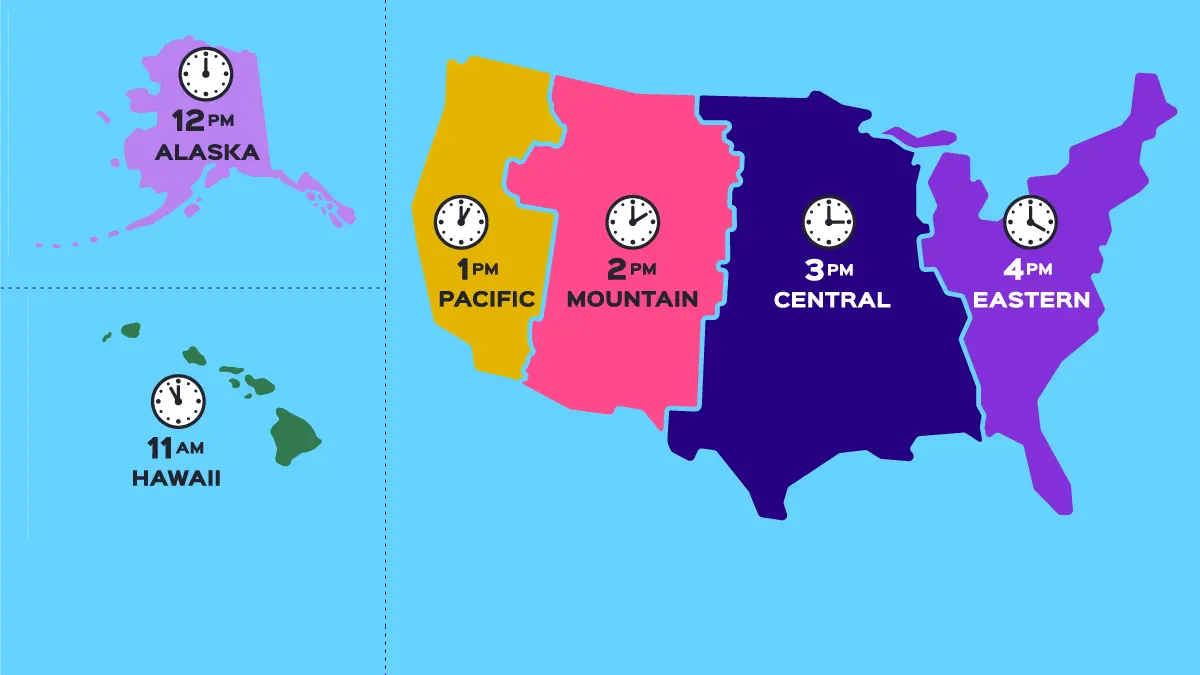
The shift to DST means that the actual time difference between zones can fluctuate throughout the year. For instance, during standard time, MST is two hours behind EST. However, when DST is in effect, and most states observe it, the difference between MST and EST can become three hours, as both zones adjust their clocks. This can create confusion if not properly accounted for, particularly in business communications where specific times are critical.
A significant point of divergence is the non-observance of DST by certain states and territories. Hawaii and most of Arizona (excluding the Navajo Nation) remain on their standard time year-round. This means that during DST, the time difference between these regions and states observing DST can deviate from the standard differences. For example, when DST is active, Arizona (MST) will be three hours behind New York (EDT), a difference that shrinks to two hours when both are on standard time.
Legislation to make DST permanent has been a recurring topic in U.S. Congress, with several bills proposed to standardize time across the nation. However, as of early 2026, these efforts remain stalled. The debate over DST involves arguments about potential economic benefits, impacts on public health, and consumer convenience, with no clear consensus yet reached.
Navigating Time Zone Differences: Strategies for Success
Effective management of time zone differences is crucial for operational efficiency and team cohesion. Businesses can implement several strategies to mitigate confusion and ensure seamless operations:
- Establish a Universal Standard: When communicating deadlines, scheduling meetings, or issuing directives, it is best practice to specify the time zone. For internal communications, designating a primary time zone for the company (e.g., the headquarters’ time zone, or a central time zone like CST) and consistently using it can simplify planning.
- Utilize Scheduling Tools: Modern calendaring and scheduling software often have built-in features that automatically convert meeting times to the recipient’s local time zone. Platforms like Google Calendar, Microsoft Outlook, and specialized project management tools can be invaluable in this regard.
- Create Visual Aids: For teams with members spread across multiple zones, visual aids can be extremely helpful. A simple chart or a digital dashboard displaying the current time in each team member’s location can prevent miscommunications. The infographic provided in the original article, illustrating the U.S. time zones, serves as a good example of such a visual tool.
- Communicate Clearly and Explicitly: When setting up appointments or deadlines, always confirm the time and time zone with all parties involved. A verbal confirmation or a follow-up email reiterating the agreed-upon time and zone can prevent misunderstandings.
- Be Mindful of Business Hours: Always consider the typical business hours in the relevant time zone when reaching out to clients, vendors, or partners. Contacting someone in PST at 9 a.m. EST means it’s only 6 a.m. for them, potentially before their workday has officially begun.
- Leverage Asynchronous Communication: For tasks that do not require immediate real-time interaction, asynchronous communication methods like email, project management platforms, and shared documentation can be highly effective. This allows individuals to respond at their convenience within their own time zone.
- Educate Your Team: Ensure all employees understand the time zones in which their colleagues, clients, or partners are located. Regular training or a readily accessible guide on time zone differences can empower the team to manage their schedules more effectively.
Broader Implications and Future Considerations
The management of time zones is not just an operational challenge but also has implications for workforce engagement and company culture. A well-managed approach to time zone differences fosters an inclusive environment where all employees feel their working hours are respected. Conversely, poor management can lead to feelings of being overlooked or disadvantaged, particularly for those in later time zones who might feel pressured to respond outside their standard working hours.
The ongoing discussion about Daylight Saving Time’s future also presents a potential shift that businesses will need to adapt to. Should DST become permanent, the current annual fluctuations in time differences would be eliminated, simplifying some aspects of scheduling. However, the states that currently do not observe DST would then align with a permanently shifted standard time, creating a new, fixed temporal relationship.
In conclusion, the temporal diversity of the United States is a significant factor for any business operating beyond a single geographical location. By understanding the nuances of each time zone, accounting for the impact of Daylight Saving Time, and implementing robust communication and scheduling strategies, businesses can effectively navigate these challenges, ensuring smooth operations, fostering stronger relationships, and ultimately driving greater success in an increasingly interconnected world. The ability to master the clockwork of different regions is no longer a mere convenience but a critical component of modern business strategy.
About the Author