The core mission of Prentis revolves around pioneering advanced computer use models. The company is actively training sophisticated AI models to intricately understand and replicate how office professionals navigate their daily, routine workflows across a myriad of digital documents and diverse software systems. The ultimate objective is to engineer autonomous AI agents capable of taking direct control of computers to not only automate these mundane tasks but also to execute complex processes with minimal human intervention. This vision represents a profound shift in enterprise automation, moving beyond simple robotic process automation (RPA) to truly intelligent, adaptive agents that can learn and operate within dynamic digital environments.
The Vision: Automating the Digital Workforce
Prentis is stepping into a realm poised to redefine productivity for businesses globally. The concept of AI agents controlling computers to automate tasks is a significant leap from current automation solutions, which often require extensive pre-programming and lack adaptability. Prentis aims to create agents that can intuitively interact with graphical user interfaces, understand context, and make decisions akin to a human operator. This capability extends to complex, multi-step workflows that span disparate applications, from email clients and word processors to enterprise resource planning (ERP) systems and customer relationship management (CRM) platforms.
The practical applications Prentis envisions are expansive and impactful. For instance, the company plans to develop specialized agents tailored to specific customer needs. These could include handling the intricate processes involved in insurance claims, from initial submission and documentation review to communication with stakeholders and final processing. Another critical area highlighted is the automation of customs duty refund exceptions, a task often bogged down by manual paperwork, cross-referencing, and human error. By eliminating the need for a human to painstakingly hunt down and verify documents, Prentis’s agents promise to accelerate processing times, reduce operational costs, and enhance accuracy, thereby unlocking substantial efficiencies for businesses operating in global supply chains. The potential for such solutions to transform back-office operations, customer service, and financial processing across industries is immense, offering a glimpse into a future where digital assistants handle the drudgery, freeing human talent for more strategic and creative endeavors.
A Powerhouse of Founders and Funding Ambitions
The reported $100 million funding round at a $1 billion valuation underscores not only the perceived potential of Prentis’s technology but also the extraordinary pedigree of its co-founders. Achieving unicorn status—a private company valued at $1 billion or more—so early in its lifecycle is a rare feat, signaling strong investor confidence in the team, the technology, and the vast market opportunity. Such a substantial capital injection would provide Prentis with the resources necessary to aggressively pursue research and development, scale its operations, attract top-tier talent, and accelerate market penetration in a rapidly evolving sector.
Ritankar Das: A Prodigy’s Trajectory
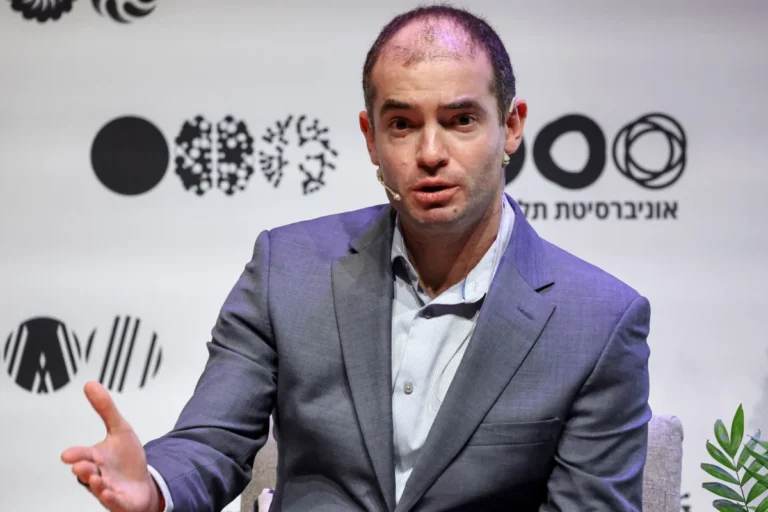
At the helm of Prentis as CEO is Ritankar Das, a figure whose career trajectory has been nothing short of remarkable. Now 31, Das made headlines as the youngest University Medalist at UC Berkeley in over a century, graduating at the tender age of 18 with dual degrees in bioengineering and chemical biology. His academic prowess continued at Oxford, where he earned a master’s in biomedical engineering, before embarking on a Gates Cambridge Scholarship for an AI PhD program at Cambridge. It was from this prestigious program that Das famously dropped out in 2014 to found Titan, a holding company conceived to build and operate a portfolio of AI-centric ventures.
Das has described Titan as a deliberate homage to an older, more self-sufficient holding company model, drawing parallels to the likes of Berkshire Hathaway. Distinctively, Titan aims to fund its growth through the successes and exits of its own ventures, rather than relying solely on external limited partners. This self-sustaining approach reflects a long-term vision and a deep conviction in the transformative power of AI across various domains. Under Titan’s umbrella, Das has launched and nurtured several successful enterprises. Tala Health, an AI-powered virtual care provider, notably secured a $100 million seed round last year, demonstrating significant investor appetite for its innovative approach to healthcare delivery. Forta Health, another Titan-founded startup focused on autism care, raised a substantial $55 million Series A round in 2024, led by Insight Partners, highlighting the potential for AI to improve access to and quality of specialized medical care. Furthermore, Dascena, a disease prediction company also launched by Titan, was successfully acquired by CirrusDx in 2022, providing a tangible example of the holding company’s strategic exits and value creation. Das’s consistent track record of identifying critical needs and leveraging AI to build scalable solutions positions him as a visionary leader well-equipped to guide Prentis in its ambitious quest.
Reid Hoffman & Mark Pincus: Serial Innovators Backing the Next Wave
Prentis also benefits from the profound experience and strategic insights of its other two co-founders, Reid Hoffman and Mark Pincus, both of whom are legendary figures in the technology world. For Hoffman, the co-founder of LinkedIn and a prominent partner at Greylock Partners, Prentis represents another strategic investment in the burgeoning field of AI. Last month, Hoffman announced his decision to step down from Microsoft’s board after nearly a decade, signaling a return to what he termed "founder mode." This shift is partly driven by his increased involvement with Manas AI, an AI drug-discovery startup he is also backing. Hoffman’s extensive engagement in the AI sector is well-documented; he was an early investor in OpenAI and co-founded Inflection AI with Mustafa Suleyman before its team was largely absorbed by Microsoft in 2024. His involvement with Prentis underscores his belief in the transformative potential of AI agents for computer use, positioning it as a key pillar in the next wave of AI innovation. Hoffman’s strategic acumen, vast network, and deep understanding of scaling technology companies provide an invaluable asset to Prentis.
Mark Pincus, the visionary founder of the social gaming giant Zynga, brings a different but equally critical perspective. Currently, Pincus co-runs the investment firm Reinvent Capital with Hoffman serving as a senior adviser. His recent publication of a memoir, "Life at the Speed of Play," offers insights into his entrepreneurial journey and philosophy. Pincus’s experience in building consumer-facing platforms and understanding user behavior, combined with his investment expertise, can provide Prentis with unique guidance on product development, market fit, and scaling strategies. The collective wisdom and financial backing from these three diverse yet equally accomplished entrepreneurs create a formidable foundation for Prentis, suggesting a long-term strategic play rather than a speculative venture.
Early Traction and Market Validation
Despite being a relatively new entrant, Prentis has already demonstrated impressive early traction, securing contracts reportedly worth up to $50 million with several anchor customers. These include a healthcare management service organization (MSO), a prominent manufacturer, and multiple goods and clothing manufacturers. This diverse client base signals the broad applicability of Prentis’s AI agent technology across different industrial verticals, each grappling with its own set of complex, routine, and often manual digital workflows.
The significance of these early contracts extends beyond mere revenue figures. They represent crucial market validation, demonstrating that Prentis’s solutions address genuine pain points for large enterprises and deliver tangible value. Investor materials obtained by TechCrunch further substantiate this early success, projecting an estimated $75 million annualized run rate by the third quarter of this year. It is important to note, as Prentis’s pitch deck clarifies, that these figures reflect an estimated annualized value based on a contracted fee structure, often equating to 20% of the savings realized by the client, rather than recognized revenue. Furthermore, these projections are "performance-dependent and subject to final execution." This value-based pricing model, where Prentis’s compensation is tied directly to the efficiency gains it delivers, aligns the company’s incentives with its clients’ success, a compelling proposition for enterprises seeking demonstrable ROI from their AI investments. This strategy also implies a high degree of confidence in the effectiveness and reliability of their AI agents to deliver substantial cost savings.
Technological Edge: Hive-32B and Cost Efficiency
At the heart of Prentis’s competitive strategy lies its proprietary Hive-32B model, which the company claims significantly outperforms established rivals such as OpenAI’s GPT-5.4 and Anthropic’s Claude Opus 4.6 on critical computer-use benchmarks. This claim, if independently verified, would position Prentis at the forefront of AI agent technology. The benchmarks cited—WindowsAgentArena and ScreenSpot-v2—are specifically designed to evaluate a model’s proficiency in interacting with digital environments. WindowsAgentArena measures end-to-end task completion on real Windows applications, assessing an agent’s ability to autonomously navigate complex software interfaces, input data, and execute multi-step workflows. ScreenSpot-v2, on the other hand, tests a model’s precision in identifying and locating the correct on-screen controls, a fundamental capability for any AI agent designed to operate within a graphical user interface. Excelling in these benchmarks suggests that Hive-32B possesses superior capabilities in perception, reasoning, and execution within a computer environment.
Beyond performance, Prentis touts a crucial economic advantage: its Hive-32B model is reportedly much smaller and cheaper to run. The company claims roughly 10 times lower cost per task compared to frontier APIs offered by leading AI developers. This cost efficiency is a significant differentiator, especially for enterprise adoption. While powerful large language models (LLMs) from companies like OpenAI and Anthropic are general-purpose and highly capable, their computational demands and associated costs can be prohibitive for widespread deployment across everyday, high-volume office workflows. Prentis’s focus on a more economical model that still delivers superior performance for specific computer-use tasks makes its solution more accessible and practical for businesses looking to automate at scale. The ability to deliver robust performance at a fraction of the cost could unlock broader adoption of AI agents across industries, turning a niche technology into a mainstream enterprise solution. It is important to note, however, that TechCrunch has not independently verified Prentis’s benchmark results or cost claims, a standard journalistic caveat for emerging technologies.
Navigating a Crowded but Growing Market
Prentis’s entry into the AI agent space comes with a bold prediction: automating everyday office tasks will soon eclipse coding as the largest use case for artificial intelligence. This forecast highlights the company’s strategic focus on a market segment with immense, yet largely untapped, potential. While AI’s impact on software development is undeniable, the sheer volume and ubiquity of routine administrative and operational tasks across all industries present an even larger addressable market. From data entry and report generation to customer support and supply chain management, virtually every business process involves repetitive digital interactions ripe for automation.
However, Prentis is not alone in recognizing this colossal opportunity. The market for AI agents capable of controlling computers is rapidly becoming crowded with formidable competitors. Industry giants and well-funded startups alike are racing to develop their own versions of these transformative tools. Anthropic, a leading AI safety and research company, and OpenAI, the creator of ChatGPT, are both heavily invested in developing advanced AI agents. Additionally, Mira Murati’s Thinking Machines Lab is also reportedly making significant strides in this area, as confirmed by industry sources. This competitive intensity is further evidenced by strategic acquisitions, such as Anthropic’s purchase of the Seattle-based computer-use startup Vercept earlier this year. This acquisition saw Anthropic absorbing Vercept’s founders and talent while discontinuing its product, a common strategy for consolidating expertise and accelerating internal development in a rapidly evolving field. Analysts predict that the global market for AI-powered business process automation, which includes these advanced AI agents, could reach hundreds of billions of dollars within the next decade, driven by increasing demand for operational efficiency and cost reduction across enterprises. This competitive landscape, while challenging, also validates the immense potential Prentis is aiming to capture, suggesting that the race to build the ultimate digital assistant is officially on.
Strategic Hires and Future Outlook
Prentis’s ambition is matched by its strategic approach to talent acquisition. The company has already amassed a formidable team of over 25 employees, including highly sought-after researchers who previously honed their skills at some of the world’s most prestigious AI laboratories. This roster includes former experts from OpenAI, Google DeepMind, Meta, Tencent, and Alibaba. The ability to attract such high-caliber talent so early in its development speaks volumes about the magnetic pull of Prentis’s vision, the reputation of its co-founders, and the promise of its innovative technology. These researchers bring with them deep expertise in machine learning, natural language processing, computer vision, and agentic AI systems, all critical components for building robust and intelligent computer-use models.
The implications of Prentis’s technology extend far beyond corporate balance sheets; they touch upon the very future of work. As AI agents become more sophisticated and ubiquitous, they are poised to profoundly alter the composition of the workforce, potentially augmenting human capabilities by offloading repetitive tasks, or in some cases, replacing certain job functions entirely. This raises important questions about reskilling, workforce adaptation, and the ethical deployment of autonomous AI in professional settings. Prentis’s success, and indeed the success of the broader AI agent market, will depend not only on technological prowess but also on its ability to navigate these societal shifts responsibly. The company’s focus on "economical deployment across everyday workflows" suggests a pathway to widespread adoption, hinting at a future where every office worker has access to a hyper-efficient digital assistant, transforming daily routines and unlocking unprecedented levels of productivity. As Prentis continues its journey, backed by visionary founders and a compelling technological proposition, it stands as a significant player to watch in the unfolding narrative of AI’s transformative impact on global industry.
About the Author