
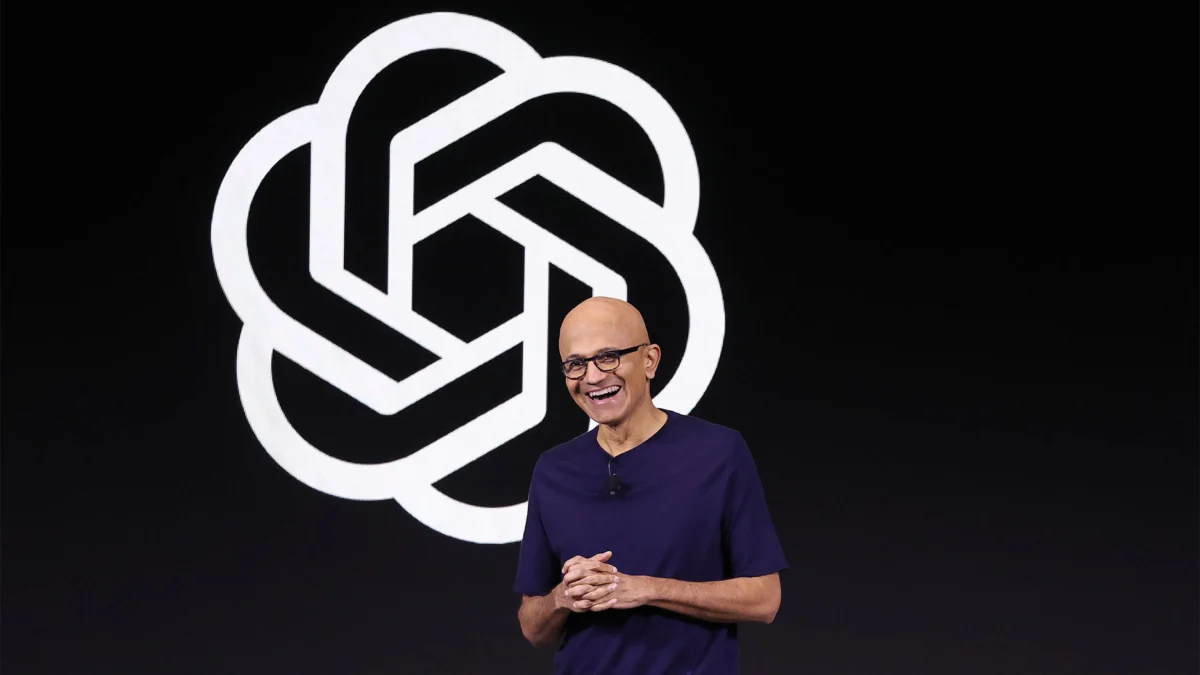
Microsoft CEO Satya Nadella has intensified his earlier warnings, articulating a stark prediction: companies that delegate their entire artificial intelligence needs to proprietary AI labs risk their long-term survival. Speaking on CNN’s "Fareed Zakaria GPS," Nadella elaborated on his concerns, urging businesses to exercise extreme caution regarding the data and intellectual property they share with AI model providers. His message underscores a growing debate within the enterprise AI landscape about control, strategic autonomy, and the potential for dependence on a few dominant players.
The Core of Nadella’s Warning: Retaining Control and Data Sovereignty
Nadella’s central thesis revolves around the critical importance of data ownership and control in the age of AI. He advocates for an architectural approach where companies retain all metadata associated with their AI model interactions. This data, he explains, is crucial for "training perhaps your own weights or your own open model." Weights, in machine learning terminology, refer to the trained parameters of a model – essentially its learned intelligence. By keeping this usage data, companies can cultivate their own AI capabilities, fostering internal expertise and proprietary models.
"Any firm that doesn’t have this control, I will claim will not remain a firm because you’ve essentially outsourced your thinking," Nadella stated emphatically. This assertion highlights his view that unchecked reliance on external AI services constitutes a fundamental abdication of strategic thinking and innovation.
The Microsoft CEO specifically advised against becoming overly dependent on the built-in coding tools, often referred to as "harnesses," offered by AI labs. Examples include Anthropic’s Claude Code and OpenAI’s ChatGPT Codex. These integrated tools, while convenient, can create a tight coupling between a company’s operations and a specific AI provider. Nadella suggests a more modular approach: "By keeping the harness separate from the model and the context and memory separate from the model, you absolutely can use multiple models for what they’re great at. At the same time, any one model can go away, and you can still continue to be in control of your own destiny." This strategy promotes flexibility and resilience, allowing businesses to switch or integrate different AI models without compromising their core operations or data assets.
Background: The Evolving AI Landscape and Microsoft’s Position
Nadella’s pronouncements come at a pivotal moment in the AI industry. The rapid advancement and widespread adoption of large language models (LLMs) and generative AI have created immense opportunities, but also new dependencies. Major AI labs, such as OpenAI and Anthropic, have seen significant investment and are generating substantial revenue, particularly from enterprise clients. Microsoft itself is a major investor in both OpenAI and Anthropic, creating a nuanced dynamic where the company benefits from the success of these labs while simultaneously issuing warnings about over-reliance on them.
This dual role is strategically significant. Microsoft’s cloud computing business, Azure, is actively marketing the very kind of alternative infrastructure that Nadella is recommending. By encouraging enterprises to build their own AI capabilities and adopt more independent infrastructure, Microsoft positions itself as a key enabler of this shift, potentially driving demand for its cloud services and AI development tools.
Chronology of Nadella’s Warnings and Industry Reactions
Nadella’s comments on "Fareed Zakaria GPS" on Sunday, July 28, 2024 (as per the original article’s implied timeline), were a reinforcement and expansion of a warning he first issued earlier in the month. This incremental escalation of his message suggests a deepening conviction about the potential risks faced by businesses.
The broader context of these warnings can be traced to ongoing discussions within the tech industry about the concentration of power in AI development. Venture capitalist Jason Calacanis, for example, echoed a similar "buyer beware" sentiment in May 2024 when OpenAI CEO Sam Altman offered AI credits to Y Combinator startups. Calacanis cautioned founders that accepting these credits could lead to OpenAI studying their operations, copying their ideas, and potentially integrating them into their own free offerings – a classic "platform playbook" strategy. Nadella’s current message to enterprises mirrors this concern, but on a much larger scale, impacting corporate strategy and existential viability.
Supporting Data and Market Trends
The trend towards open-source AI models and the desire for greater control over AI infrastructure are well-documented. Enterprises are increasingly seeking cost-effective AI solutions and greater customization. This has led to a surge in the adoption of "open-weight models" – models whose underlying code is publicly accessible. These models can be fine-tuned and deployed on a company’s own hardware, offering greater control and potentially lower operational costs compared to proprietary API calls.
Data from various industry reports indicates a significant increase in enterprise investment in AI infrastructure and a growing preference for multi-model strategies. A 2024 report by Gartner predicted that by 2026, 80% of enterprises will have used generative AI capabilities, up from less than 40% in 2023, highlighting the rapid adoption curve. However, this growth also necessitates careful consideration of vendor lock-in and data security. The market for AI model management platforms and AI gateways – software that sits between an enterprise and AI models to manage access, security, and cost – is also rapidly expanding, reflecting the demand for the kind of infrastructure Nadella champions.
Analysis of Implications: Strategic Independence vs. Vendor Lock-In
Nadella’s warning is not merely about cost savings, although that is a significant factor. His deeper concern lies in the strategic implications of outsourcing core cognitive functions. When a company relies entirely on a third-party AI model, it relinquishes control over its intellectual property, its innovation pipeline, and potentially its competitive edge.
The risk is amplified by the potential for AI labs to leverage the data and insights gained from their enterprise clients to develop competing products or services. This could lead to a scenario where a company’s AI provider becomes its most formidable competitor, leveraging the very information the company provided to build its own offerings. This dynamic is particularly concerning for startups and smaller enterprises that may lack the resources to develop their own sophisticated AI capabilities from scratch.
Furthermore, the increasing sophistication of AI agents, which are designed to perform complex tasks on behalf of users, means that enterprises are granting these tools access to increasingly sensitive internal data. If these agents are tied to proprietary models, the risk of data exfiltration or misuse by the model provider becomes a tangible threat.
Broader Impact and the Future of Enterprise AI
Nadella’s stance, while potentially self-serving for Microsoft, highlights a critical juncture for enterprise AI adoption. The future of AI in business will likely be shaped by a balance between leveraging powerful, readily available models and maintaining strategic autonomy. Companies that embrace Nadella’s advice may invest in building internal AI expertise, developing hybrid AI architectures, and utilizing open-source models alongside proprietary ones. This approach fosters resilience, allows for greater customization, and mitigates the risk of vendor lock-in.
The call for "AI gateways" and modular AI architectures suggests a future where enterprises orchestrate a diverse ecosystem of AI models, selecting the best tool for each specific task without being beholden to a single provider. This shift could democratize AI innovation, enabling a wider range of companies to harness its power effectively and securely.
A Caveat for Consumers
It is important to note that Nadella’s concerns are primarily directed at businesses. When asked about how individual consumers can protect their data when using AI services, Nadella offered a different perspective. He suggested that for consumers, especially those using free services, data sharing is often an implicit part of the value exchange. "To some degree there’s got to be some value exchange in the consumer space where you’re getting something for free, maybe for your data. That’s sort of how the advertising business model has worked," he explained. This distinction highlights the different expectations and risk tolerances for corporate entities versus individual users in the digital economy. For businesses, the stakes are higher, involving proprietary information, competitive advantage, and long-term strategic survival, whereas for consumers, the trade-off is often between free access to services and the use of personal data for targeted advertising or service improvement.
About the Author





