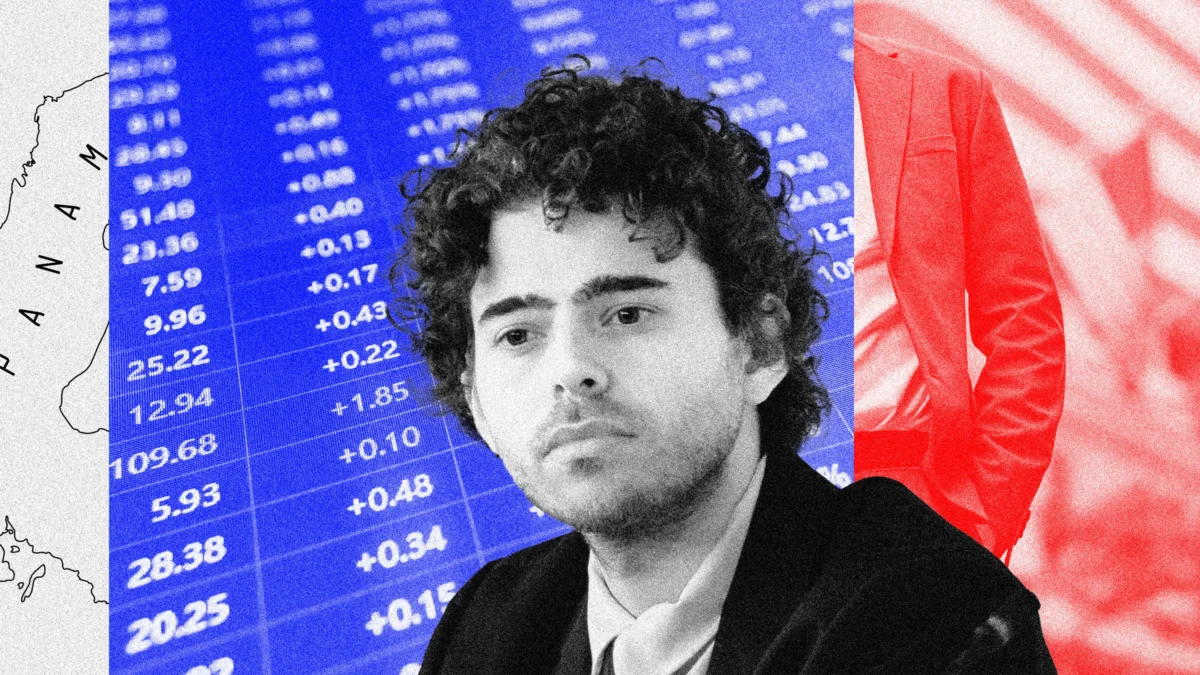
Polymarket, the decentralized prediction market that has become a cornerstone of modern political and economic forecasting, is currently facing a series of escalating challenges that threaten to undermine its operational legitimacy. While the platform has gained global notoriety for its high-stakes betting pools on everything from presidential elections to corporate mergers, a closer examination of its corporate architecture reveals a labyrinthine structure that may have been designed to circumvent United States federal regulations. Central to this controversy is the relationship between the company’s domestic entities and a Panamanian offshoot known as Adventure One QSS, which appears to exist primarily on paper while its actual workforce operates from the heart of Manhattan.
The scrutiny comes at a volatile time for the company. Within the last year, Polymarket has been buffeted by allegations of insider trading, high-profile FBI raids, and a renewed interest from the Commodity Futures Trading Commission (CFTC). The government has alleged that a United States special forces soldier and a veteran Google employee utilized the platform’s unique market structures to amass significant fortunes through the use of non-public information. Furthermore, the company’s CEO, Shayne Coplan, was the subject of a highly publicized law enforcement action in which FBI agents used a battering ram to enter his apartment and seize electronic devices. These incidents, combined with reports of executives paying influencers through personal PayPal accounts to generate artificial hype, paint a picture of a firm operating on the fringes of traditional financial oversight.
The Panama Paradox and the Adventure One Entity
The most significant structural oddity regarding Polymarket involves its 2022 settlement with federal regulators. After the CFTC determined that the platform was operating as an unlicensed derivatives exchange, the company was fined $1.4 million and ordered to "wind down" any markets that violated the Commodity Exchange Act (CEA). As part of this agreement, Polymarket was barred from serving customers based in the United States. To comply with these mandates, the company established Adventure One QSS in Panama. The intended purpose of this offshore entity was to take over the operational responsibilities of Polymarket’s flagship international platform, theoretically placing the core of the business outside the reach of U.S. jurisdiction.
However, investigative reporting has suggested that the "offshore" nature of Adventure One QSS may be an illusion. Former employees have indicated that while the entity is legally registered in Panama City, a significant portion of its staff has remained based in New York. These employees, who were tasked with maintaining the code and managing event contracts for the international platform, reportedly worked from the company’s Manhattan headquarters alongside staff from the U.S.-licensed arm, Blockratize.
Internal accounts describe a workplace where the distinction between the domestic and offshore teams was virtually non-existent. Staff members technically employed by Adventure One QSS reportedly did not travel to Panama, did not report to Panamanian supervisors, and had no interaction with colleagues in Central America. According to these sources, there were no colleagues in Panama to interact with. This aligns with findings from independent investigations which discovered that Adventure One’s listed headquarters in a Panama City skyscraper was entirely vacant.
A Chronology of Regulatory Friction
The tension between Polymarket and federal authorities is not a recent development but rather the result of a multi-year sequence of legal and operational maneuvers.
- 2021: Adventure One QSS is incorporated in Panama, naming local residents as "resident agents" and officers. This included Mario Ernesto García de Paredes, a lawyer, and Diana Munoz, who served as president for a brief two-month window before being replaced by CEO Shayne Coplan.
- January 2022: The CFTC issues a formal order against Blockratize (the parent company of Polymarket), citing violations of the Commodity Exchange Act. The platform is forced to block U.S. IP addresses and pay a seven-figure fine.
- 2024: Allegations of insider trading emerge. Federal investigators begin looking into specific accounts that showed anomalous winning patterns on events with limited public data.
- May 2025: A shift in the regulatory landscape occurs. Following a staff letter from the CFTC regarding cross-border swap rules, the agency appears to soften its stance on foreign futures. Concurrently, President Donald Trump pardons Binance founder Changpeng Zhao, signaling a potentially more lenient era for decentralized finance (DeFi).
- July 2025: The CFTC drops an ongoing investigation into Polymarket without bringing charges, a move seen at the time as a major victory for the platform.
- 2026: The tide turns again. A major investigation by the Wall Street Journal exposes deceptive marketing practices, including the creation of "ghost" websites where influencers could showcase fake winning bets. This triggers a new round of congressional calls for a federal probe and a renewed CFTC investigation.
Supporting Data and Corporate Interests
Despite the legal clouds, Polymarket has continued to attract massive institutional interest. Intercontinental Exchange (ICE), the parent company of the New York Stock Exchange, announced a staggering $2 billion investment into the platform. However, the specifics of this investment highlight the internal divisions of the company. ICE’s capital was reportedly directed solely into Blockratize, the U.S.-facing entity, rather than Adventure One QSS. This suggests that even major institutional investors are wary of the offshore entity’s legal standing and are seeking to ring-fence their capital within the more transparent U.S. corporate structure.
The scale of the platform’s growth is also reflected in its trading volume. During the 2024 election cycle, Polymarket processed billions of dollars in wagers, often outperforming traditional polling in terms of predictive accuracy. This success has made it a darling of the "crypto-elite" and figures like Donald Trump Jr., who has been linked to the platform’s secretive ownership circles. Yet, the data suggests that a significant portion of this volume may be driven by a small number of "whales" or institutional-grade traders, some of whom may be bypassing the U.S. ban through the use of Virtual Private Networks (VPNs).
Comparative Legal Precedents
The CFTC’s interest in the location of Adventure One’s staff is grounded in a long history of enforcement actions against "nominal" offshore companies. In 2021, the agency filed a complaint against WorldWideMarkets, a firm that claimed to be based in the British Virgin Islands but was actually operating out of an office in New Jersey. The agency argued that the physical location of the employees and the "mind and management" of the firm are the true determinants of jurisdiction, regardless of where the incorporation papers are filed.
A more high-profile parallel can be found in the case of Binance. The Department of Justice and the CFTC successfully argued that Binance operated a "shadow" U.S. exchange while publicly claiming to have no U.S. presence. The government’s ability to pierce the corporate veil in the Binance case set a formidable precedent. For Polymarket, the fact that Adventure One QSS employees "touched code" and managed contracts from a New York office could be interpreted as a direct violation of the 2022 cease-and-desist order, which required a legitimate winding down of domestic operations related to unauthorized markets.
Official Responses and Industry Impact
Polymarket has remained largely silent regarding the specific allegations surrounding its Panamanian operations. When reached for comment, the company declined to address the location of Adventure One QSS staff or the nature of its 2022 settlement compliance. The CFTC has similarly declined to comment on the specifics of its ongoing investigation, though sources familiar with the matter suggest the agency is focusing on "intentional misconduct" and the protection of retail traders.
The broader implications for the prediction market industry are profound. If the government determines that Polymarket’s offshore structure was a sham, it could lead to catastrophic fines, the permanent shuttering of its international platform, or criminal charges against its executive leadership. This would likely chill the DeFi sector, as other platforms have attempted to use similar "geofencing" and offshore incorporation strategies to avoid U.S. oversight.
Financial services regulation experts, such as Todd Phillips, have noted that while the setup is "odd," the legality often hinges on the specific wording of the settlement agreements and the current administration’s appetite for enforcement. Under the present leadership, the Enforcement Division has prioritized cases involving deceptive marketing and the exploitation of retail investors. The recent revelations regarding fake influencer bets may provide the leverage regulators need to look more closely at the company’s underlying corporate structure.
As the investigation continues, the focus remains on whether a decentralized platform can truly exist outside the reach of national regulators when its human capital and leadership remain firmly rooted in the world’s most powerful financial hub. For Polymarket, the coming months will determine whether its complex web of Panamanian and American entities is a stroke of legal genius or a house of cards waiting for a final regulatory push.
About the Author