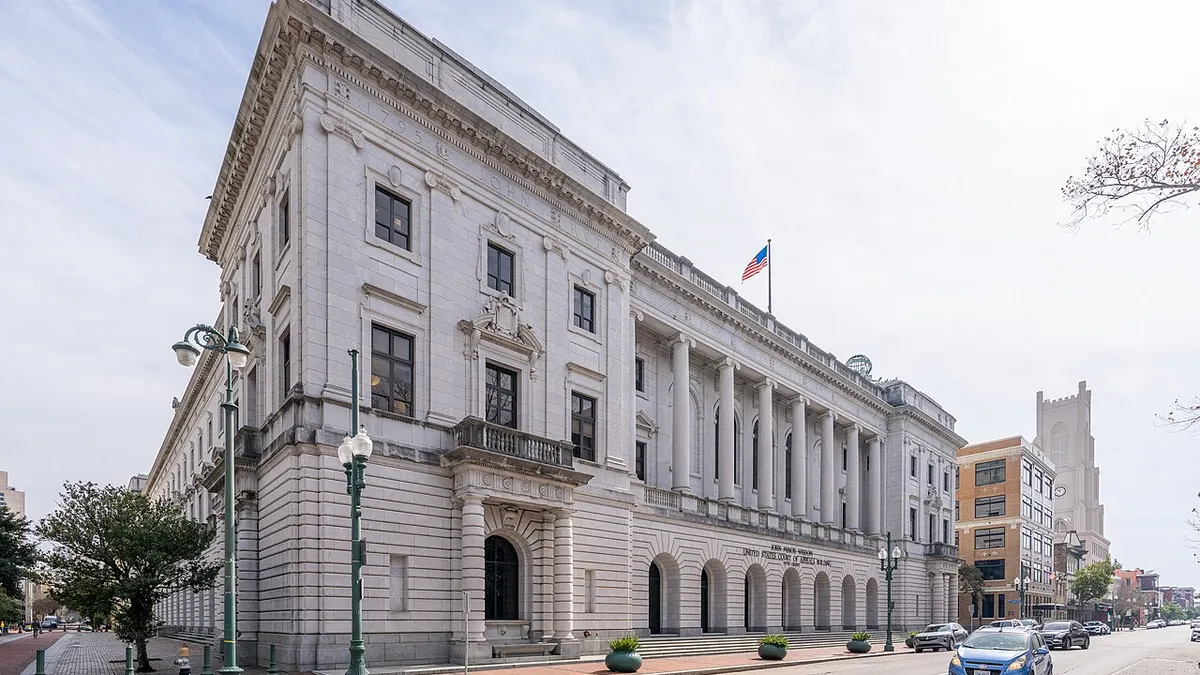
A significant ruling by the 5th U.S. Circuit Court of Appeals has reopened a hostile work environment lawsuit against Corpus Christi Medical Center (CCMC) and Bay Area Healthcare Group, reversing a lower court’s decision to grant summary judgment in favor of the employer. The appellate court found that the plaintiff presented sufficient evidence to suggest that the employer’s investigation into her claims was "insufficiently prompt and thorough," a critical factor in determining employer liability under federal workplace civil rights laws. This decision underscores the importance of robust and timely internal investigations in mitigating potential legal exposure for employers.
The case, brought forth by an unnamed plaintiff, centers on allegations of a pervasive hostile work environment. The plaintiff detailed a pattern of harassing incidents, supported by her own deposition testimony, the testimony of a Black co-worker, and documentary evidence in the form of emails that specifically documented these occurrences. These experiences, according to her account, had a profound psychological impact, causing her to "question how she could function in such an environment and made her feel ‘less than human.’" Further substantiating her claims, the plaintiff provided counseling records that indicated she suffered from distress, trauma, and fear of harm directly attributable to the alleged conduct, which she contended also negatively impacted her work performance.
A key element highlighted by the 5th Circuit’s decision is the concept of "secondhand harassment." The plaintiff also alleged she witnessed her co-worker endure similar mistreatment. The appellate court recognized that this secondhand harassment "weighs in [her] favor when assessing the totality of the circumstances," a stance consistent with prior legal precedent within the circuit. This acknowledges that the impact of a hostile environment can extend beyond direct victims to those who witness such behavior.
The Legal Framework: Employer Liability for Workplace Harassment
Under Title VII of the Civil Rights Act of 1964, employers can be held legally responsible for harassment if they "knew or should have known about the harassment and failed to take prompt corrective action." This standard places a significant onus on employers to not only prevent but also to effectively address instances of workplace misconduct once they are brought to their attention. The effectiveness of an employer’s response, particularly the promptness and thoroughness of its investigation, is therefore paramount in defending against such claims.
In this particular case, CCMC and Bay Area Healthcare Group contended that they had indeed taken appropriate corrective action. Their defense included statements that they had conducted interviews and provided coaching to nurses allegedly involved in the offending conduct. The employer also reportedly offered to transfer the plaintiff, a measure intended to separate her from the alleged source of the harassment.
Scrutiny of the Employer’s Investigation
However, the 5th Circuit found significant shortcomings in the employer’s account and actions. The court noted discrepancies within the testimony of CCMC staff regarding the investigation and interview records. Compounding these issues, the employer failed to produce a dedicated investigation file or any contemporaneous notes during the discovery phase of the litigation. This lack of documentation raised serious questions about the integrity and completeness of their internal inquiry.
Furthermore, the plaintiff presented evidence suggesting a dismissive attitude from management during the investigation. She alleged that the managers conducting the inquiry informed her that "the cliques were not going anywhere," implying a lack of commitment to resolving the underlying issues. Crucially, the plaintiff also claimed that the harassment persisted even after the employer’s investigation was supposedly concluded.

It was these accumulated factors – the alleged discrepancies, the absence of documentation, the perceived managerial indifference, and the continuation of harassment – that led the 5th Circuit to conclude that the plaintiff had indeed "pointed to evidence that CCMC’s investigation was insufficiently prompt and thorough." This finding was instrumental in overturning the district court’s dismissal of the case.
Precedential Context: The Significance of Repeated Epithets and Slurs
The 5th Circuit’s ruling aligns with a broader legal trend of recognizing the cumulative impact of repeated discriminatory language and behavior in establishing a hostile work environment. The use of epithets and slurs has consistently been a key piece of evidence in favor of plaintiffs. For instance, a 2019 decision by the 9th U.S. Circuit Court of Appeals held that a manager’s repeated use of racial slurs over a one-year period was sufficient to demonstrate an abusive work environment. In that case, the sheer frequency and severity of the offensive language created a workplace that no reasonable person would find tolerable.
More recently, the 10th U.S. Circuit Court of Appeals revived a hostile work environment claim against Walmart, acknowledging that a plaintiff facing multiple discriminatory acts had plausibly alleged the existence of such an environment. These cases collectively reinforce the principle that a pattern of offensive conduct, even if seemingly isolated incidents, can create a legally actionable hostile work environment. The plaintiff’s reliance on documented harassing incidents, including potentially racial epithets or slurs (though not explicitly detailed in the provided excerpt, the context of similar cases suggests this possibility), would fall under this category of evidence.
Broader Implications for Employers and Employees
The 5th Circuit’s decision serves as a critical reminder for employers across all sectors about the paramount importance of conducting thorough, prompt, and well-documented investigations into all allegations of workplace harassment. A superficial or delayed response can not only embolden harassers but also significantly weaken an employer’s legal defense, potentially leading to costly litigation and substantial damages.

For employees, this ruling offers a measure of recourse and reinforces the idea that their concerns about workplace misconduct must be taken seriously. The emphasis on the quality of the investigation means that employees can scrutinize not just the alleged harassment itself, but also the employer’s response to it.
The case also highlights the complexities of proving a hostile work environment. It typically requires demonstrating that the conduct was severe or pervasive enough to alter the conditions of employment and create an abusive working environment. Evidence from multiple sources, including the victim, witnesses, and documentation, is crucial. The 5th Circuit’s decision recognizes that the employer’s own actions, or inactions, in investigating such claims are a critical component of this analysis.
The revival of the plaintiff’s claims means the case will now proceed to further stages of litigation, potentially including discovery and a trial, where the full extent of the alleged harassment and the employer’s response will be further examined. The outcome will depend on the evidence presented by both sides and the jury’s or judge’s interpretation of whether the work environment was, in fact, hostile and whether the employer met its legal obligations. The legal proceedings stemming from this case will undoubtedly be closely watched by HR professionals and legal experts alike, serving as a case study on effective and legally sound approaches to workplace harassment claims.
About the Author