The marketing landscape is on the cusp of its most profound transformation in decades, driven by the accelerating integration of artificial intelligence. As predicted by leading AI analyses and reports, 2026 is poised to be a watershed year, fundamentally reshaping how brands connect with consumers. Marketers currently grapple with a complex web of challenges: fragmented customer journeys, diminishing consumer attention spans, escalating customer acquisition costs, and campaigns that often fall short of their objectives. Artificial intelligence, however, offers a powerful solution, promising to redefine brand-consumer interactions through real-time data processing and sophisticated predictive analytics.
The widespread adoption of AI in marketing is no longer a future prospect but a present reality. According to the comprehensive HubSpot 2026 State of Marketing report, a significant majority of organizations, over 64%, are already leveraging AI in their operations. This figure is projected to surge dramatically in the coming year, fueled by the proliferation of AI-driven content creation, the emergence of autonomous AI agents, the rise of hyper-personalized campaigns, and advancements in AI’s analytical capabilities. Consequently, marketing professionals will need to adapt, transitioning towards more strategic and analytical roles, while delegating routine and time-consuming tasks to AI-powered tools. This article delves into the key AI predictions for 2026 and beyond, examining the technological shifts that will redefine marketing strategies and operational frameworks.
The Evolving Role of AI in Marketing: From Assistant to Architect
The trajectory of AI in marketing is marked by a clear evolution from basic automation to sophisticated strategic partnership. Early applications focused on streamlining rudimentary tasks, such as generating content summaries or drafting initial marketing copy. AI’s ability to create single text, image, or video assets based on user prompts also became a valuable tool. In customer segmentation, AI offered basic categorization. Its primary role was to accommodate repetitive jobs, freeing up human resources for more complex endeavors.
However, the anticipated capabilities for 2026 and beyond paint a far more integrated and autonomous picture. AI is expected to power conversational answers within search engines, offering users direct, synthesized information. The capacity to run entire marketing campaigns, including complex agent-to-agent interactions, will become commonplace. AI will move beyond single-asset generation to multi-modal content repurposing, transforming one piece of content into various formats seamlessly. Predictive analytics will enable advanced, individualistic personalization, moving beyond broad segmentation to cater to each consumer’s unique needs and preferences. AI will not just accommodate repetitive jobs but will actively replace them with highly predictable and efficient workflows. Crucially, a significant shift will occur in data privacy, with AI prioritizing first-party and zero-party data, thus enhancing user trust and compliance.
The AI-Driven Search Revolution: Beyond Traditional SEO
A pivotal AI prediction for 2026 is the fundamental shift in how consumers discover information online, leading to the obsolescence of traditional Search Engine Optimization (SEO) in favor of new paradigms: Search Everywhere Optimization (SEvO), Generative Engine Optimization (GEO), and Answer Engine Optimization. The modern search behavior is evolving from a quest for links to a demand for immediate answers. Consumers are increasingly turning to AI-powered search engines and conversational AI platforms like Perplexity, Claude, Gemini, and ChatGPT, bypassing traditional search engines for direct, synthesized responses.
This fragmentation necessitates a broader discoverability strategy for brands. They must be present and optimized not only on established search engines but also within the AI-generated summaries and conversational interfaces that are becoming central to online inquiry. Consequently, brand mentions across trusted sources such as customer reviews, online forums, podcasts, and social media platforms are gaining significant traction, often outweighing the importance of traditional backlinks. AI systems now surface brands based on "AI authority," a measure of how frequently and credibly a brand is referenced. This elevates the importance of online reputation management and the consistent delivery of high-quality, authoritative content.
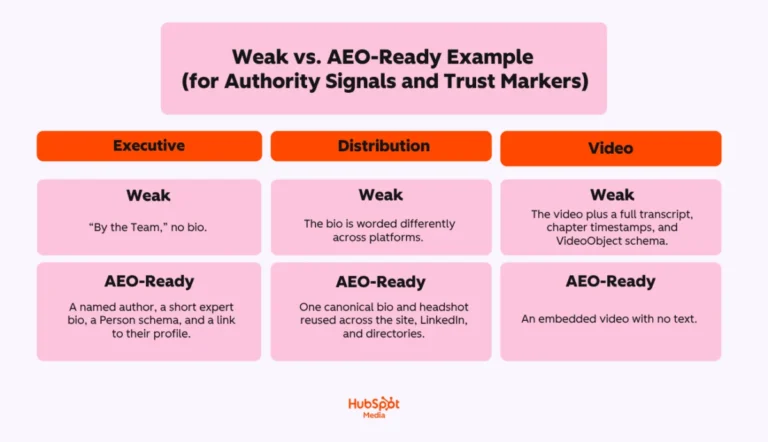
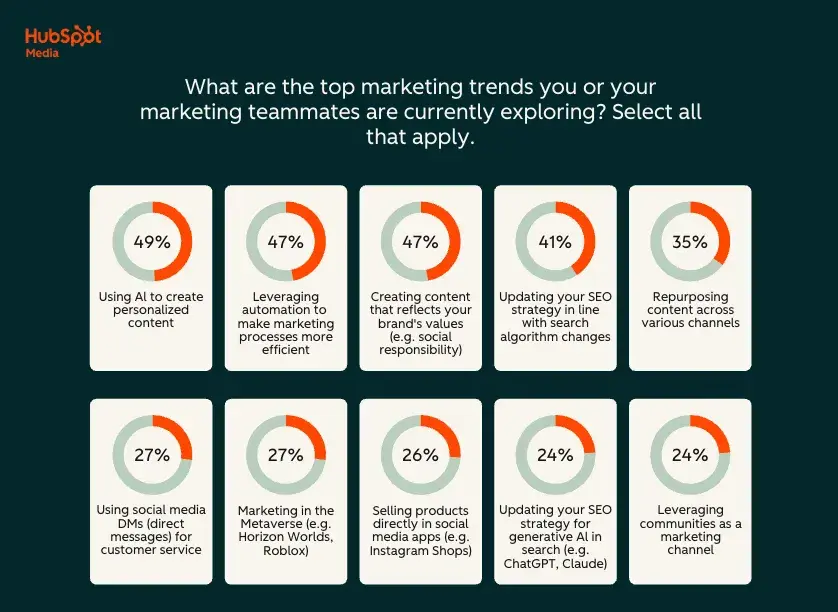
In essence, a brand’s SEO strategy for 2026 must transform into Answer Engine Optimization (AEO). Content must be structured not only for human readability but also for Large Language Models (LLMs) to process and interpret effectively. Companies must learn to communicate in a language that resonates with both AI models and human users to be recognized as a definitive "source of truth." Data from the HubSpot 2026 State of Marketing report underscores this trend, with 40.6% of marketers already revising their SEO strategies to accommodate AI-powered search engines. Furthermore, 48.57% of marketers are actively utilizing AI to generate personalized content, reflecting a proactive adaptation to the changing search landscape.
The implications of this shift are profound. Brands that fail to adapt their content strategies to be AI-interpretable risk becoming invisible in the new search ecosystem. This requires a deep understanding of how LLMs process information and a commitment to creating content that is both informative for humans and structured for AI analysis. The focus will move from keyword stuffing to semantic relevance, natural language understanding, and the establishment of genuine online authority.
The Rise of AI Agents: From Assistants to Autonomous Campaign Managers

Another dominant AI prediction for 2026 is the mainstream integration of AI agents into marketing workflows. These autonomous systems, capable of thinking, acting, and optimizing independently, are set to transition from mere assistants to proactive decision-makers. By the close of 2026, agentic AI systems will possess the capability to plan, execute, and optimize entire marketing campaigns with minimal human oversight. These agents will operate across diverse platforms, manage campaign budgets, conduct A/B testing on creative assets, and refine strategies in real-time, dynamically responding to performance data.
This evolution is also being driven by consumer behavior. As 24% of AI users already employ AI shopping assistants, marketers must optimize their strategies not only for human audiences but also for "agent-to-agent" interactions. This means ensuring product data is structured, accessible via APIs, and easily interpretable by AI systems. The future of commerce and advertising is increasingly mediated by AI. Protocols such as the Agentic Commerce Protocol (ACP) and the Model Context Protocol (MCP) are emerging to enable brands to embed interactive, transactional experiences directly within AI chat interfaces. This allows for seamless transactions, product comparisons, and stock checks, often without the consumer ever needing to visit a brand’s website.
The shift from AI as a content drafting tool in 2025 to AI as a campaign manager in 2026 signifies a dramatic leap in operational efficiency. While one AI agent might await specific human commands, another could be diligently working towards a predefined goal, handling background tasks like lead prospecting and qualification. The HubSpot 2026 State of Marketing report indicates that 19.20% of marketers are already deploying AI agents for end-to-end automation of marketing initiatives, a figure expected to grow substantially.
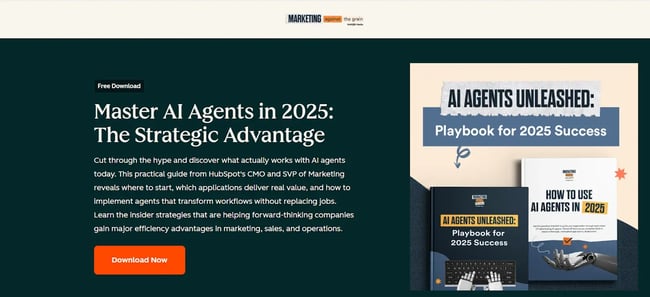
The implications extend to the very structure of marketing teams. The ability of AI agents to handle complex, multi-stage processes frees human marketers to focus on higher-level strategic thinking, creative ideation, and ethical oversight. The automation of lead qualification, for instance, allows sales teams to engage with warmer leads, accelerating the sales cycle and improving conversion rates. The development and adoption of frameworks like the HubSpot AI Agents Playbook are crucial for organizations seeking to effectively integrate these agents into their existing workflows and prepare for this future.
AI Content Generation: From Drafts to Dynamic Campaigns
A primary AI prediction for 2026 is that generative AI will transcend its role as a simple content-drafting tool, evolving into a sophisticated creative co-pilot. Marketers will harness AI to produce multimodal content—text, images, audio, and video—at an unprecedented scale, facilitating rapid localization and hyper-personalization. However, this proliferation of AI-generated content also introduces a new challenge: the potential for a deluge of low-quality, unoriginal material, often termed "AI slop." In this environment, authenticity, human creativity, and emotional resonance will become crucial differentiators for brands seeking to maintain consumer trust.
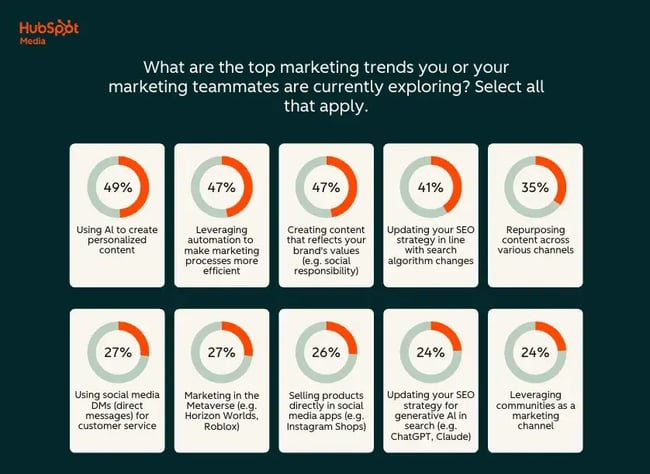
The HubSpot 2026 State of Marketing report highlights that nearly half of surveyed marketers have already utilized AI for personalized content creation, and 35.08% are actively repurposing content across various channels. By 2026, AI will not merely produce content; it will drive "living campaigns"—dynamic entities that self-adjust messaging, formats, visuals, and tones in response to real-time performance signals across multiple platforms. Traditional static advertisements will increasingly be replaced by dynamically evolving creative assets tailored to specific audience segments.
Brands are expected to embrace AI-generated images, videos, and copy as standard practice rather than experimental tools. Marketers will leverage AI to generate thousands of creative variations for rigorous A/B testing, with human oversight shifting towards strategic direction and creative conceptualization rather than granular execution. Consumers increasingly expect fluid content formats, consuming information in the mode that best suits their immediate context. AI tools capable of generating multimodal content, adapting a single asset into audio, visual, and text formats, will become indispensable.
The strategic implication is a move towards a more agile and responsive content ecosystem. Brands that can effectively remix foundational content into diverse formats for various platforms will be better positioned to reach and engage every segment of their audience. This approach not only maximizes content reach but also ensures consistent messaging across touchpoints.
Hyper-Personalization and Predictive Analytics: The Future of Customer Engagement
A significant AI prediction for 2026 is the maturation of AI-driven personalization, moving beyond broad user segmentation to achieve real-time, cross-channel individualization. By analyzing behavioral signals, contextual data, and user intent, AI tools will tailor content, product offers, and entire customer journeys for each individual. This will manifest in dynamically adjusted emails, advertisements, and website experiences that are unique to every user.
Predictive analytics will enable anticipatory marketing, allowing brands to present offers and solutions before consumers consciously recognize their need. Tools like Google Analytics 4’s AI Insights are already predicting churn, purchase likelihood, and optimal next actions, empowering marketers to engage proactively. The HubSpot 2026 State of Marketing report indicates that 32.96% of marketers are extensively using AI for data analysis and automated reporting, while another 33.24% are heavily employing AI for market research and competitor analysis.

The future of AI in marketing is one where marketers deliver true one-to-one personalization, driving higher engagement rates and conversion metrics. Marketing will evolve beyond basic segmentation to create deeply individualized experiences. AI will empower brands to generate unique content, product recommendations, and messaging for each customer in real-time, analyzing behavioral patterns, purchase history, and contextual signals to deliver precisely what resonates with each individual.
The implication for brands is a significant opportunity to deepen customer relationships. By anticipating needs and offering relevant solutions at the opportune moment, brands can foster loyalty and enhance customer lifetime value. This shift requires a robust data infrastructure capable of collecting, processing, and analyzing vast amounts of customer information in real-time, alongside sophisticated AI models that can translate this data into actionable insights.
The Transformation of Marketing Teams and Roles
The AI revolution is fundamentally reshaping the nature of marketing roles. Routine and repetitive tasks are being automated, enabling marketers to redirect their focus towards strategic planning, creative innovation, and ethical oversight. Emerging roles include AI Ethicists, focusing on responsible AI deployment; AI Workflow Designers, specializing in optimizing human-AI collaboration; and Vibe Marketers, who define the strategic direction and emotional tone of campaigns, leaving execution to AI.
Leadership is tasked with fostering AI literacy across teams and implementing "human-in-the-loop" processes to ensure AI augments, rather than replaces, human judgment. The "30% Rule" suggests that AI should automate approximately one-third of the routine workload, freeing up 30% of a marketing team’s time for high-leverage creative endeavors. This strategic reallocation of resources allows junior marketers to execute sophisticated campaigns, provided they possess a strong strategic foundation.
The HubSpot 2026 State of Marketing report highlights that 32.82% of respondents report AI tools saving their marketing teams 10-14 hours per week, with 41.81% experiencing a moderate increase in productivity due to AI. The message is clear: AI is not a transient trend. Marketers must actively upskill and embrace these tools to secure their professional futures and identify "AI-proof" roles that emphasize human ingenuity and strategic thinking.
Privacy-First Data Strategies: The Foundation of Trust
As AI systems become more pervasive, privacy-focused data operations are emerging as a critical imperative. With the phasing out of third-party cookies and the tightening of global privacy regulations, first-party and zero-party data have become foundational. Brands are increasingly shifting towards consent-based data models, directly collecting customer preferences through surveys, loyalty programs, and preference centers.
AI plays a crucial role in extracting value from this limited data by utilizing intent-based signals and contextual targeting, thereby reducing reliance on personal identifiers. The responsible use of AI not only ensures regulatory compliance but also builds essential consumer trust, transforming data strategy into a competitive advantage. As AI adoption accelerates, ethical considerations such as data privacy, bias mitigation, transparent decision-making, and responsible deployment are moving from optional extras to strategic imperatives. Brands that prioritize trustworthy and explainable AI will gain a significant competitive edge.
The HubSpot State of Marketing survey reveals that 40.13% of marketers express concerns about data privacy and security, identifying it as the primary barrier to AI adoption in marketing. This underscores the critical need for AI solutions that offer robust privacy safeguards. The expectation is that AI tools with built-in privacy features will be preferred over those with less transparent data handling practices.
Preparing for the AI-Driven Future
The window of opportunity for marketers to adapt to the impending AI wave is rapidly narrowing. To thrive in this evolving landscape, professionals must proactively embrace change. This involves continuous learning, upskilling in AI tools and methodologies, and cultivating a strategic mindset that leverages AI as a partner. The focus must shift from mastering specific software to understanding customer needs and developing innovative strategies that AI can help execute.
AI Predictions Beyond 2026: A Glimpse into the Future
Looking further ahead, AI marketing predictions by 2030 envision a landscape of intelligent, ethical, immersive, and fundamentally human-first brands, all powered by AI but guided by empathy. By 2050, in the era of Artificial General Intelligence (AGI), marketing will transcend product promotion, evolving into the design of intelligent, symbiotic relationships between humans and the sophisticated systems that serve them.
By 2030, marketing will operate through predictive AI systems that anticipate customer needs before intent is even expressed, replacing reactive campaigns with adaptive, real-time, and deeply human experiences. All marketing endeavors will be AI-powered but empathy-led. This future will see hyper-personalization at the individual identity level, rendering traditional segmentation obsolete. The rise of zero-party data and "trust economics" will become paramount, driven by stricter privacy laws and a cookie-less ecosystem. AI co-marketers will become the norm, with humans focusing on judgment, curation, and strategic oversight, while AI handles execution and optimization. Content will evolve from static formats into immersive experiences, further blurring the lines between information and engagement.
The 2050 vision of marketing in the age of AGI is transformative. Marketing will become a co-evolutionary system where human values, machine intelligence, and consumer intent continuously adapt in real time. The focus will shift from optimization to understanding—asking "why" rather than just "what works." Campaigns will be replaced by "living brands" that continuously adapt and evolve. Human marketers will transition into roles of philosophers, curators, and governors, emphasizing judgment and ethical stewardship. Ultimately, this marks a profound shift from the attention economy to the meaning economy, where authentic connection and value creation take precedence.
Conclusion
The integration of AI into marketing is not merely an incremental update; it represents a fundamental paradigm shift. As the predictions for 2026 and beyond illustrate, AI is poised to redefine every facet of the marketing discipline, from customer engagement and content creation to strategic planning and team structure. Organizations that proactively embrace these changes, foster AI literacy, and adapt their strategies will be best positioned to navigate this transformative era and unlock unprecedented levels of efficiency, personalization, and ultimately, success. The future of marketing is intelligent, and its dawn is upon us.
About the Author