The rapid acceleration of generative artificial intelligence has fundamentally altered the landscape of digital communication, transitioning from a niche technological curiosity to a cornerstone of modern marketing strategy throughout 2022. As businesses grapple with the increasing demand for high-frequency, high-quality digital output, a suite of sophisticated AI content generators has emerged to bridge the gap between human creativity and algorithmic efficiency. These tools, largely powered by large language models (LLMs) such as OpenAI’s GPT-3, have moved beyond simple auto-complete functions to provide comprehensive long-form writing, SEO optimization, and multi-channel marketing copy. This report evaluates the ten most influential platforms defining the sector this year, analyzing their technical capabilities, market positioning, and the broader implications for the global content economy.
The Technological Shift: From Rule-Based Systems to Generative Intelligence
The current state of AI content generation is the result of a decade-long evolution in Natural Language Processing (NLP). Prior to 2020, automated writing tools were largely limited to "spinning" existing content—rearranging words and synonyms in a manner that often resulted in grammatically awkward and semantically shallow text. The release of GPT-3 in June 2020 served as a catalyst for the current boom. By 2022, the commercial application of these models reached a point of maturity, allowing developers to build specialized interfaces tailored to specific business needs, ranging from e-commerce product descriptions to technical blog posts.
Industry data suggests that the global AI in marketing market, valued at approximately $15.84 billion in 2021, is projected to expand at a compound annual growth rate (CAGR) of nearly 30% through 2028. This growth is driven by the demonstrable efficiency gains provided by these tools. Early adopters in the enterprise sector report a reduction in content production time by as much as 60%, allowing human editors to shift their focus from drafting to strategy and fact-checking.
Chronology of Market Maturity: 2020–2022
The trajectory of the AI writing industry can be categorized into three distinct phases. In 2020, the "Proof of Concept" phase saw early developers gaining API access to high-level models. 2021 was characterized by "Explosive Proliferation," where dozens of startups launched basic writing assistants. 2022 has become the year of "Specialization and Rebranding."
A notable event in this chronology occurred in early 2022 when the industry leader, then known as Jarvis, rebranded to Jasper following trademark discussions with Marvel. This shift signaled the transition of AI tools from experimental projects to major corporate entities with global brand recognition. Throughout the year, these platforms have integrated deeper SEO tools, plagiarism checkers, and team collaboration features, moving away from being simple text boxes to becoming holistic content workstations.

Analysis of Leading Industry Platforms
1. Jasper AI: The Enterprise Standard
Formerly known as Jarvis, Jasper has established itself as the premier choice for professional marketers. Utilizing a sophisticated implementation of the GPT-3 architecture, Jasper offers "Boss Mode," a feature that allows users to issue direct commands to the AI, facilitating the creation of 2,000-word articles in a fraction of the time required for manual drafting. Its integration with Surfer SEO provides a data-driven approach to content creation, ensuring that the generated text meets specific search engine requirements. Despite its higher price point, starting at approximately $99 per month for advanced features, its ability to maintain brand voice has made it a staple for large-scale digital agencies.
2. Copy.ai: The Short-Form Specialist
Focusing on the "frictionless" entry point of the market, Copy.ai has gained significant traction among social media managers and small business owners. With over 90 templates, the platform excels in generating "hook" text, Instagram captions, and digital ad copy. Its 2022 updates have focused on expanding its multilingual capabilities, supporting over 25 languages, which addresses the needs of global brands seeking localized content without the immediate overhead of multiple translation teams.
3. Frase: SEO and Content Intelligence
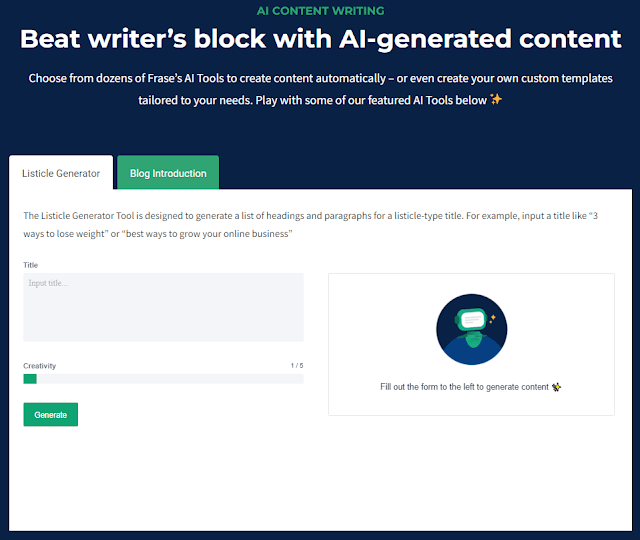
Frase represents the intersection of AI writing and search engine optimization. Unlike tools that focus solely on the act of writing, Frase prioritizes the research phase. It analyzes the top-performing results on Google for any given keyword and generates a content brief. This "intelligence-first" approach ensures that the resulting AI-generated content is not just readable, but competitive within the search landscape. Its pricing structure, ranging from $14.99 to $114.99 per month, targets individual SEO professionals and mid-sized teams.
4. Article Forge: High-Volume Automation
Article Forge distinguishes itself through a "one-click" philosophy. While other tools require iterative prompting, Article Forge generates complete articles based on a single keyword. By utilizing a proprietary deep learning model alongside traditional LLMs, it attempts to mimic the way human journalists research topics. While the output occasionally requires more rigorous fact-checking than its competitors, its ability to pass Copyscape consistently makes it a favorite for high-volume niche site builders.

5. Rytr: Democratizing Access
Rytr has positioned itself as the most accessible entry-point in the market. By offering a robust free tier and a "Saver Plan" at just $9 per month, it has captured the student and solopreneur demographic. Despite its lower cost, it includes a built-in plagiarism checker and a Chrome extension, allowing users to generate AI text directly within email clients and content management systems like WordPress.
6. Writesonic: Versatility and Technical Integration
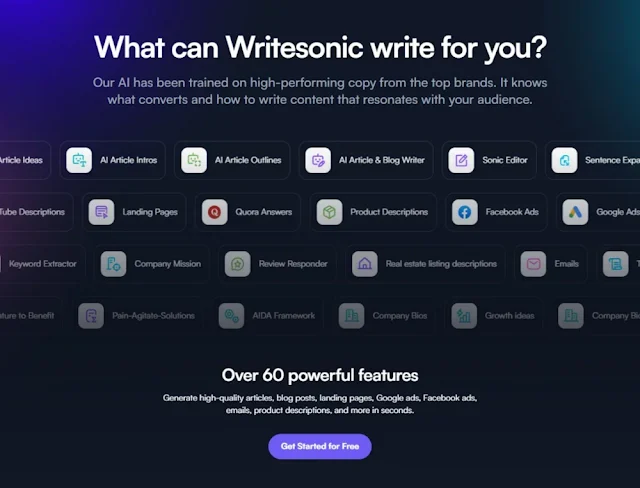
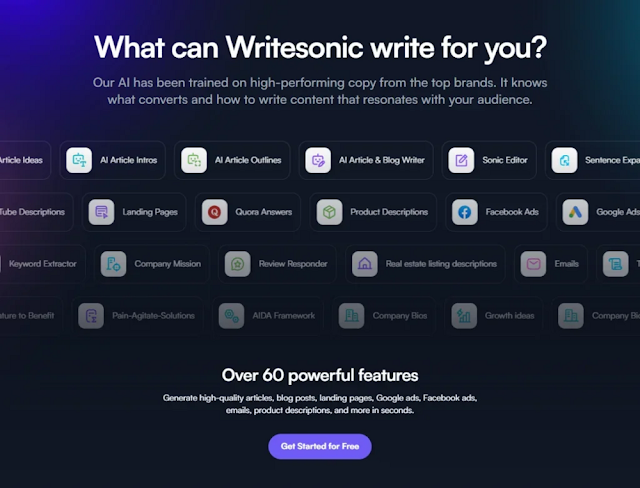
Writesonic has evolved into a multi-faceted platform that includes "Photosonic" (AI image generation) alongside its writing tools. This integration reflects the 2022 trend toward "multimodal" AI, where a single prompt can generate both the text and the accompanying visual assets for a blog post. Its long-form writing assistant is specifically tuned to avoid the "looping" issues often found in earlier iterations of generative models.

7. Copysmith: The E-Commerce Powerhouse
For enterprise-level retail, Copysmith offers unique value through its "Bulk Generation" features. It allows users to upload spreadsheets of product data and generate thousands of unique, SEO-optimized product descriptions simultaneously. This capability addresses a critical pain point for e-commerce managers who previously relied on expensive outsourced copywriting for catalog updates.
8. Hypotenuse.ai: Streamlining the Creative Workflow
Hypotenuse focuses on the synthesis of data into narrative. It is particularly effective at taking raw product specifications and transforming them into persuasive marketing copy. Its "Content Detective" feature helps the AI source factual information from the web, a significant step toward solving the "hallucination" problem—where AI models confidently state incorrect facts.
9. Kafkai: Niche-Specific Training
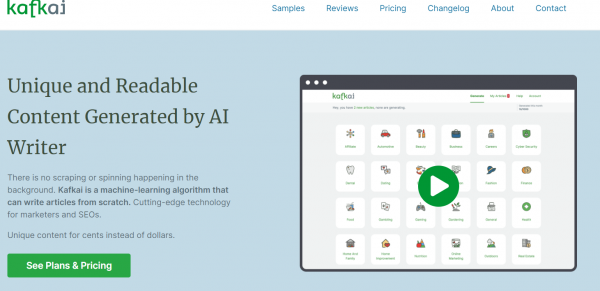
Kafkai operates on a different technical premise than many of its peers. Rather than using a general-purpose model for everything, Kafkai uses models trained on specific niches (e.g., health, finance, or technology). This results in content that uses industry-specific terminology more accurately, though it offers less flexibility for general creative writing.
10. Peppertype.ai: User Experience and Speed
A product of Pepper Content, Peppertype.ai focuses on the "cleanliness" of the user interface. It is designed for speed, allowing users to jump from an idea to a finished social media post in seconds. Its "Team Plan" features are tailored for collaborative environments, providing centralized billing and shared workspaces for content departments.

Market Responses and Ethical Considerations
The rise of these tools has prompted a complex reaction from various stakeholders. Professional writing unions and creative guilds have expressed concern over the potential for wage suppression and the devaluation of human expertise. Conversely, the tech sector argues that AI is an "augmentative" tool that eliminates the "blank page syndrome," allowing writers to act more as creative directors.
Search engines, most notably Google, have clarified their stance throughout 2022. While Google’s algorithms are designed to penalize "low-quality, automated content" that exists solely to manipulate search rankings, the company has indicated that high-quality, helpful content—regardless of how it is produced—will still be rewarded. This has placed the onus on businesses to use AI as a drafting tool rather than a total replacement for human editorial oversight.

Broad Impact and Future Implications
The implications of AI content generation extend beyond marketing departments. We are witnessing a fundamental shift in the "unit cost" of information. As the cost of generating a word of text approaches zero, the value of content is shifting from "production" to "curation" and "verification."
Furthermore, the integration of these tools into the broader SaaS ecosystem suggests a future where AI writing is a standard feature of every digital interface. From "Smart Compose" in Gmail to AI assistants in Microsoft Word, the distinction between "AI-generated" and "human-written" text is becoming increasingly blurred.
In conclusion, the 2022 landscape of AI content generators represents a pivotal moment in the history of communication. Tools like Jasper and Frase are not merely conveniences; they are the precursors to a new era of "collaborative intelligence." While challenges regarding factual accuracy, ethical use, and search engine policy remain, the trajectory is clear: the future of content is automated, optimized, and increasingly intelligent. Businesses that fail to integrate these efficiencies risk obsolescence in an era where the speed of information is the primary competitive advantage.
About the Author