The emergence of AI-powered search engines is fundamentally altering how consumers discover information, evaluate products and services, and construct purchasing decisions. This seismic shift necessitates a new approach to measuring brand influence, with AI search engine citation tracking emerging as a critical metric. Visibility within these AI-generated answers is no longer a secondary consideration but a frontline battleground for brand authority and market presence. When AI engines fail to cite a brand, it signifies a significant missed opportunity to shape opinions at the nascent stages of buyer journeys.
According to HubSpot’s comprehensive "State of Marketing Report," which surveyed over 1,500 marketing professionals, brand awareness consistently ranks among the highest strategic priorities through 2026. This objective is closely followed by goals such as increasing conversion rates, closing more deals, driving revenue growth, and fostering robust customer relationships. In the rapidly evolving AI-search ecosystem, these objectives are intrinsically linked. A substantial portion of brand discovery now transpires within Answer Engine Optimization (AEO) tools and Google’s AI Overviews (AIO). Users increasingly depend on AI-driven responses for quick answers, comparative analysis of providers, and initial product exploration, often before engaging with a brand’s website directly.
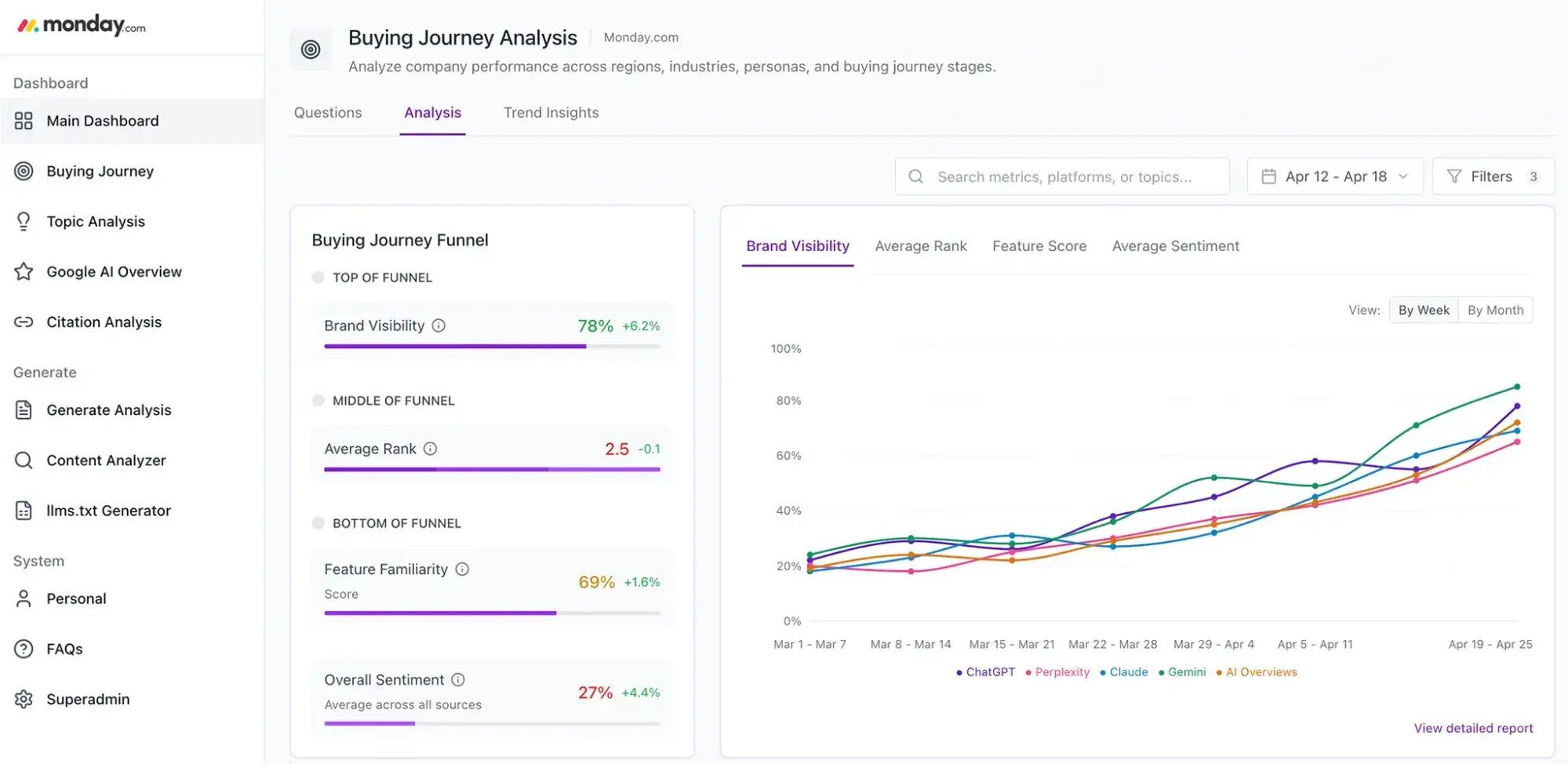
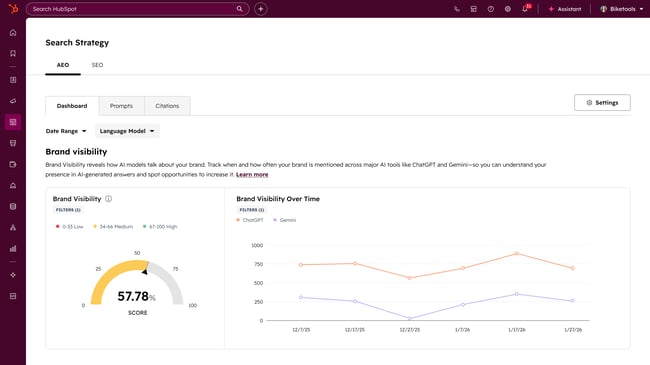
AI citation tracking provides the essential capability to quantify where, how, and why AI engines reference a brand, its content, and its expertise within their generated answers. This data is instrumental in refining AI strategies and transforming AI visibility into tangible business growth. Tools like HubSpot AEO are designed to monitor brand visibility, citation frequency, and share of voice across major answer engines, subsequently providing actionable recommendations for teams.

Understanding AI Citations Versus Mentions
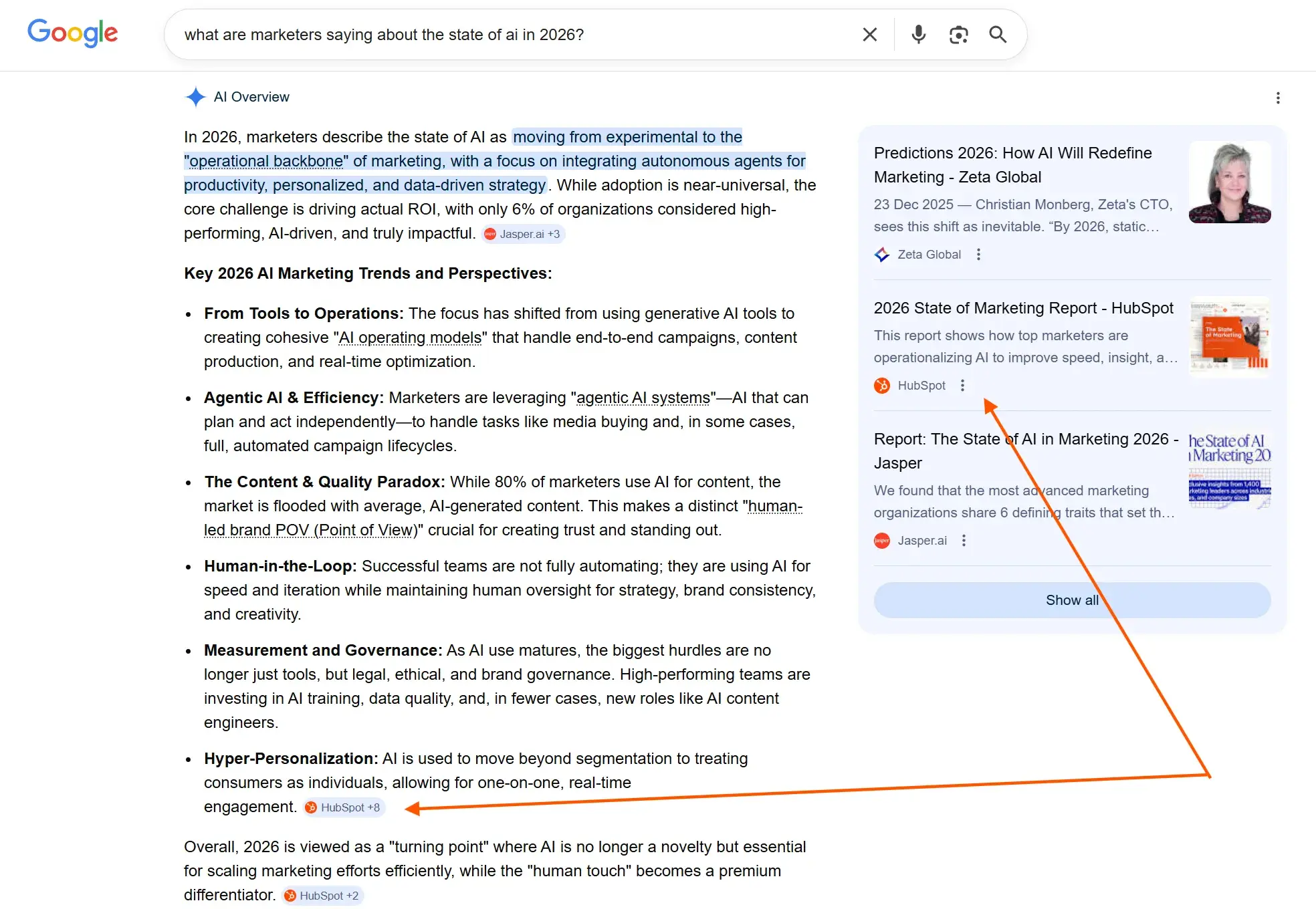
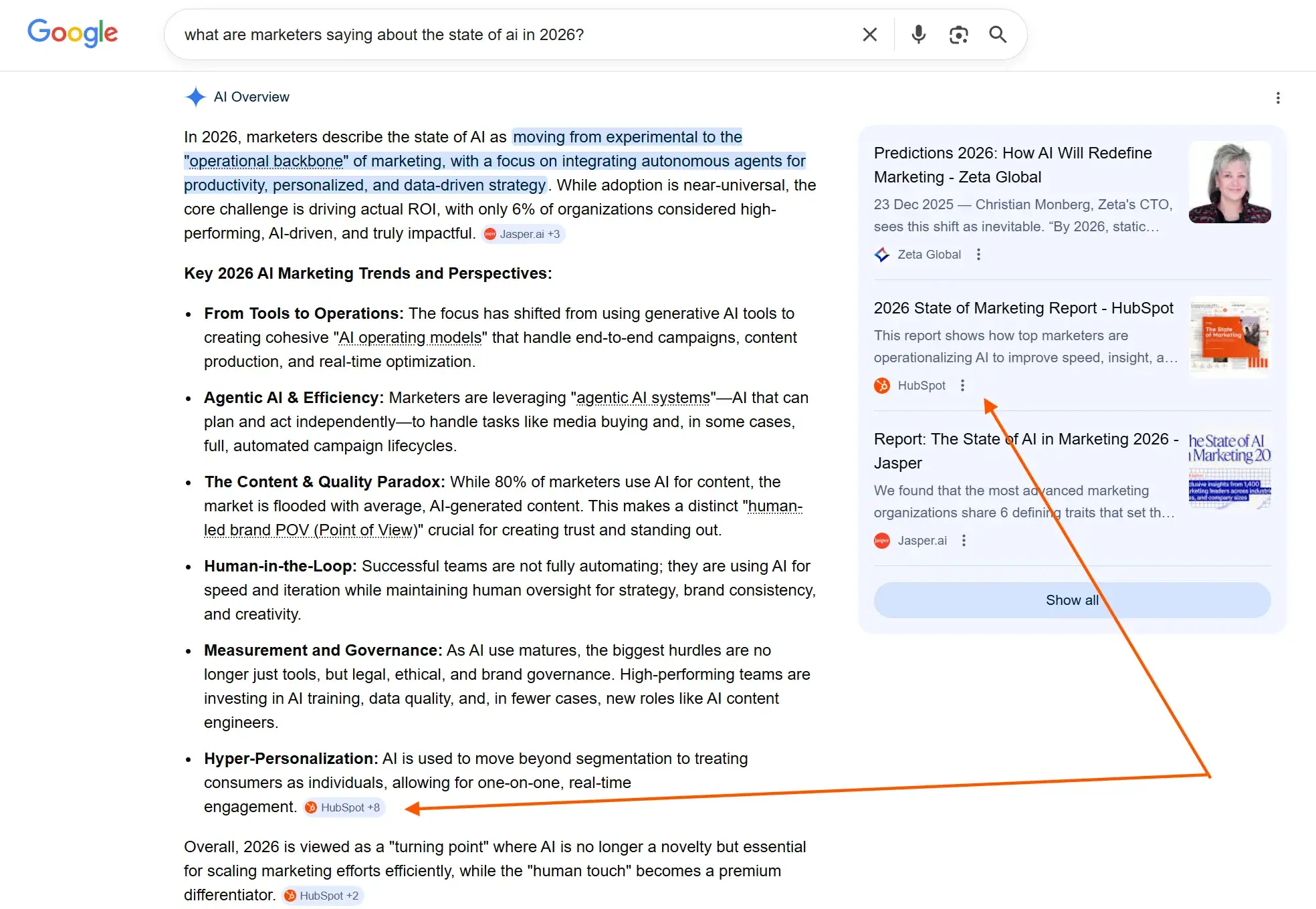
At its core, an AI citation occurs when an AI engine explicitly acknowledges a website as a source for its generated response, typically by including a direct hyperlink to the content on platforms such as ChatGPT, Perplexity AI, or Google AI Overviews. These citations can manifest in two primary forms: within a sidebar alongside the main answer or directly embedded within the narrative of the response itself. For instance, Google’s AI Overviews may present citations either to the side of the generated answer or as linked references within the text. The presence of a citation serves as a direct indicator that a website’s content has contributed substantively to the AI’s answer, thereby establishing a clear measure of content authority within these AI-driven search experiences.
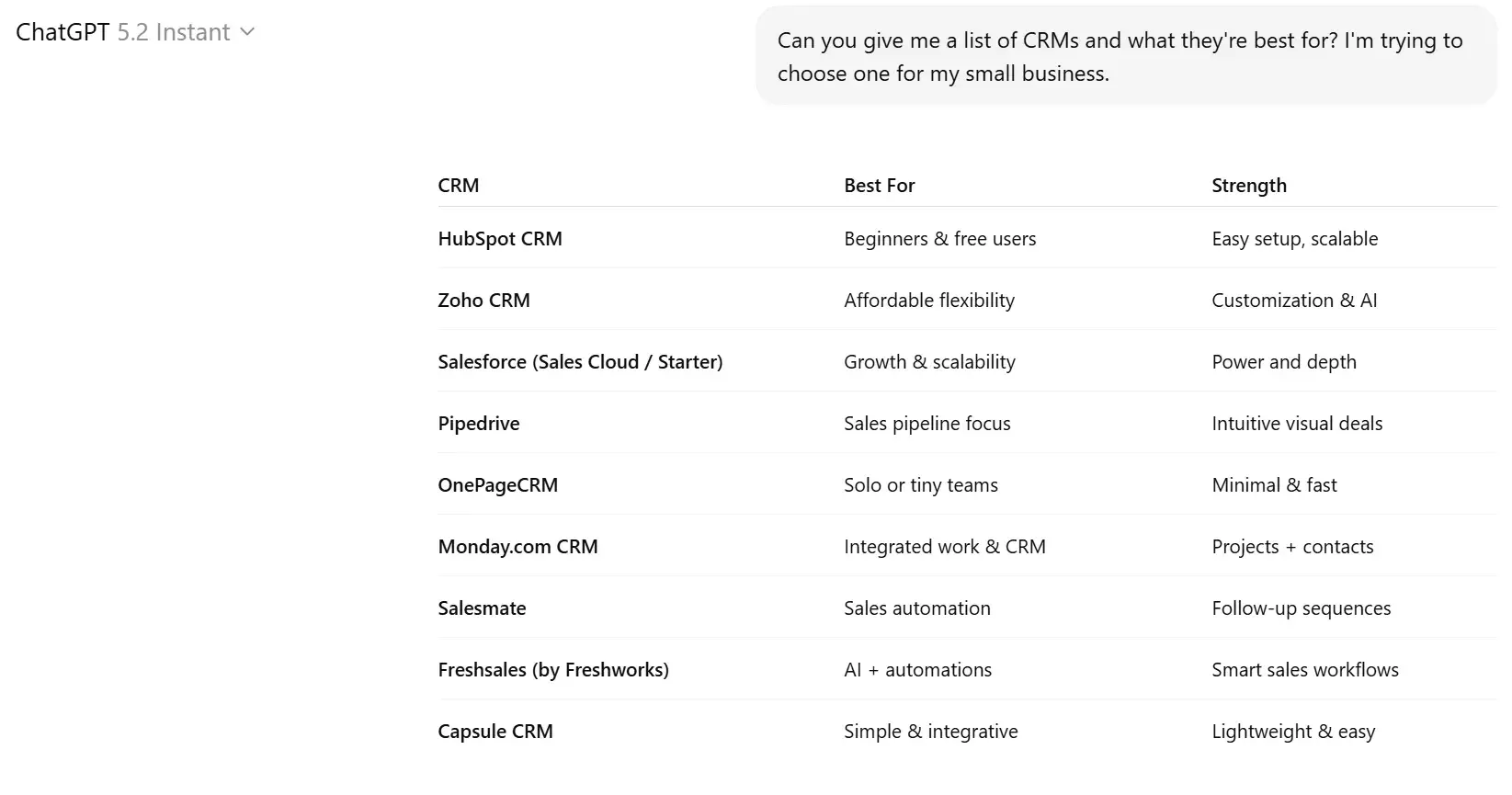
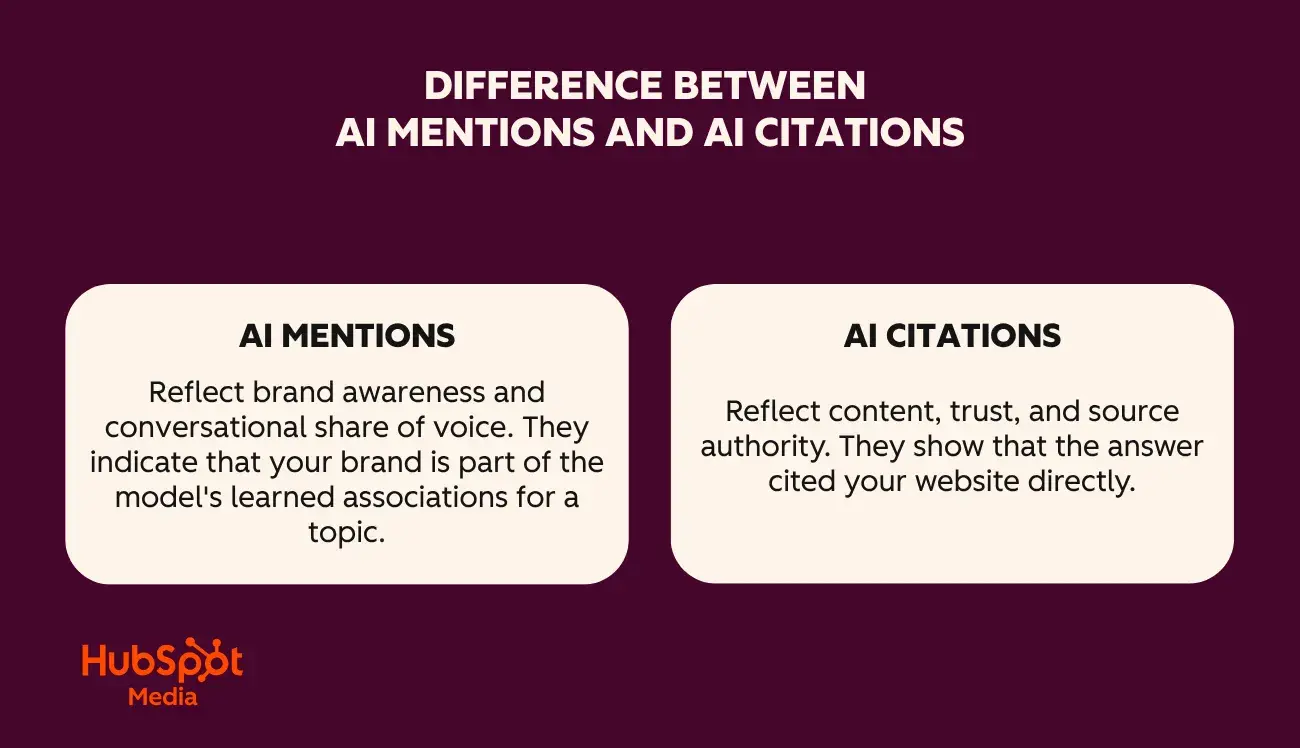
In contrast, an AI mention refers to a brand or piece of content that is referenced within an AI answer without a direct, clickable link. An AI might, for example, list a company among "top providers" or "recommended tools" in a particular category. While the brand’s name appears in the AI’s discourse, there is no formal attribution or link provided. This distinction is crucial: mentions offer conversational visibility, indicating a brand’s presence in AI-driven discussions, whereas citations signify sourced authority, demonstrating that a brand’s content is actively influencing the information being presented. Both are valuable, but they serve different strategic purposes.
The Evolving Metrics of Search Visibility
Traditionally, search engine optimization (SEO) focused on rankings within a list of blue links. However, the advent of AI Overviews and conversational AI interfaces has introduced a new layer of complexity. The "State of Marketing Report" also highlighted a significant trend: 70% of marketers believe that AI will revolutionize marketing within the next three years, with many already integrating AI tools into their workflows. This underscores the urgency for businesses to adapt their measurement strategies.
The challenge in AI citation tracking lies in its measurement. Unlike traditional SEO, AI visibility is not as straightforward to track. However, several methods can provide insights into a website’s performance. These methods include manual keyword searches, analyzing URL parameters for referral traffic, leveraging Google Analytics, setting up custom dashboards, and utilizing specialized AEO tools.
Methodologies for Tracking AI Citations
Manual Keyword Searches: A foundational approach involves manually searching for priority keywords on AI-driven platforms like ChatGPT, Perplexity AI, and Google AI Overviews. By employing informational queries, comparison-based searches, and "best of" prompts that mimic actual buyer behavior, marketers can observe whether AI overviews cite their content or competitors’. If competitors appear in positions where a brand believes it should be, this highlights a potential opportunity for content optimization or a strategic review of competitor content.
However, manual searches are inherently limited. AI results are highly personalized, influenced by user history, context, and even the precise phrasing of the query. This means that two users performing the same search might receive different answers, and results are not static. Crucially, it is impractical to test every relevant query variation manually. Therefore, while manual searches offer directional insights, they are neither scalable nor sufficiently reliable for comprehensive tracking.
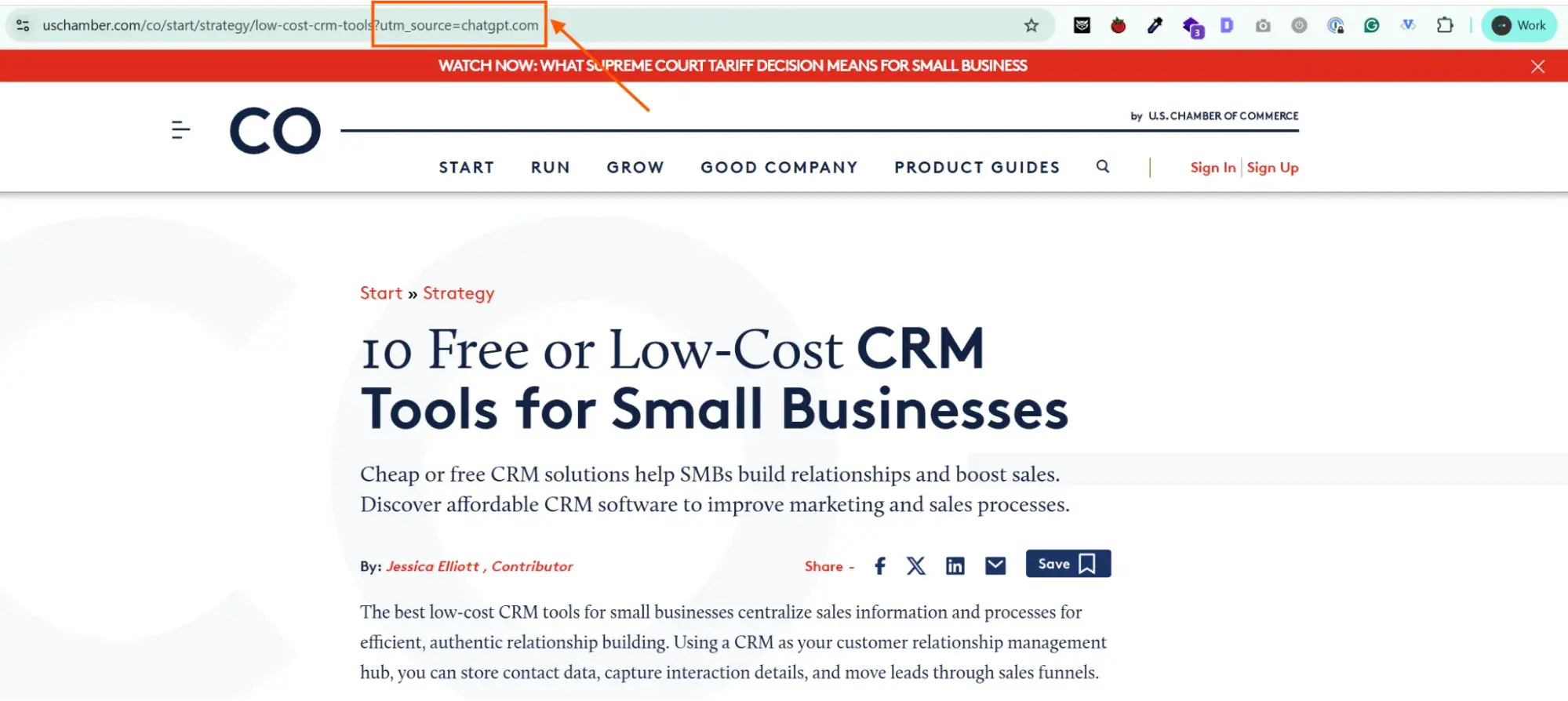
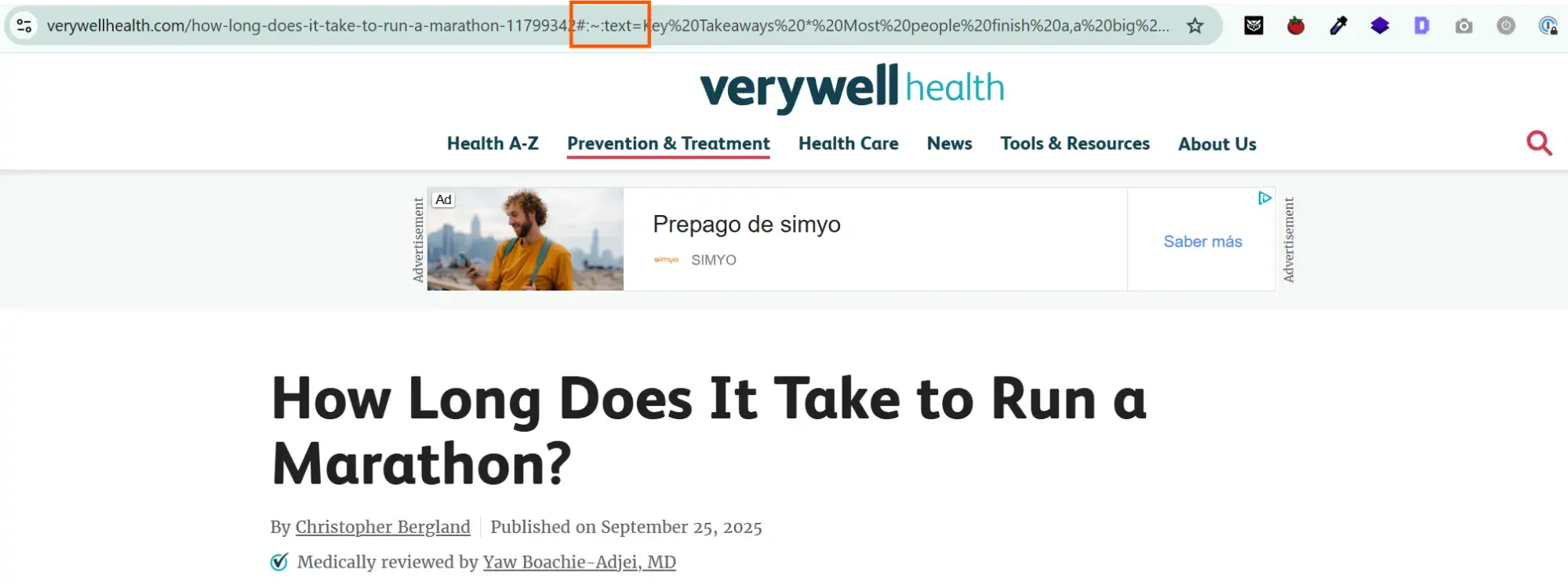
Analyzing URL Parameters for Referral Traffic: When AI engines direct traffic to a website, they often append identifiable referral parameters to the URL. While these parameters do not indicate the raw number of times content was cited, they confirm that a citation resulted in a click-through. For example, links generated by ChatGPT frequently include the parameter ?utm_source=chatgpt.com. By monitoring these parameters in analytics platforms like Google Analytics 4 (GA4), businesses can attribute visits to different types of AI agents. Similarly, traffic from Google AI Overviews often features a #text= fragment in the URL, indicating that the user clicked a cited source within an AI Overview, with Google highlighting the specific passage referenced.
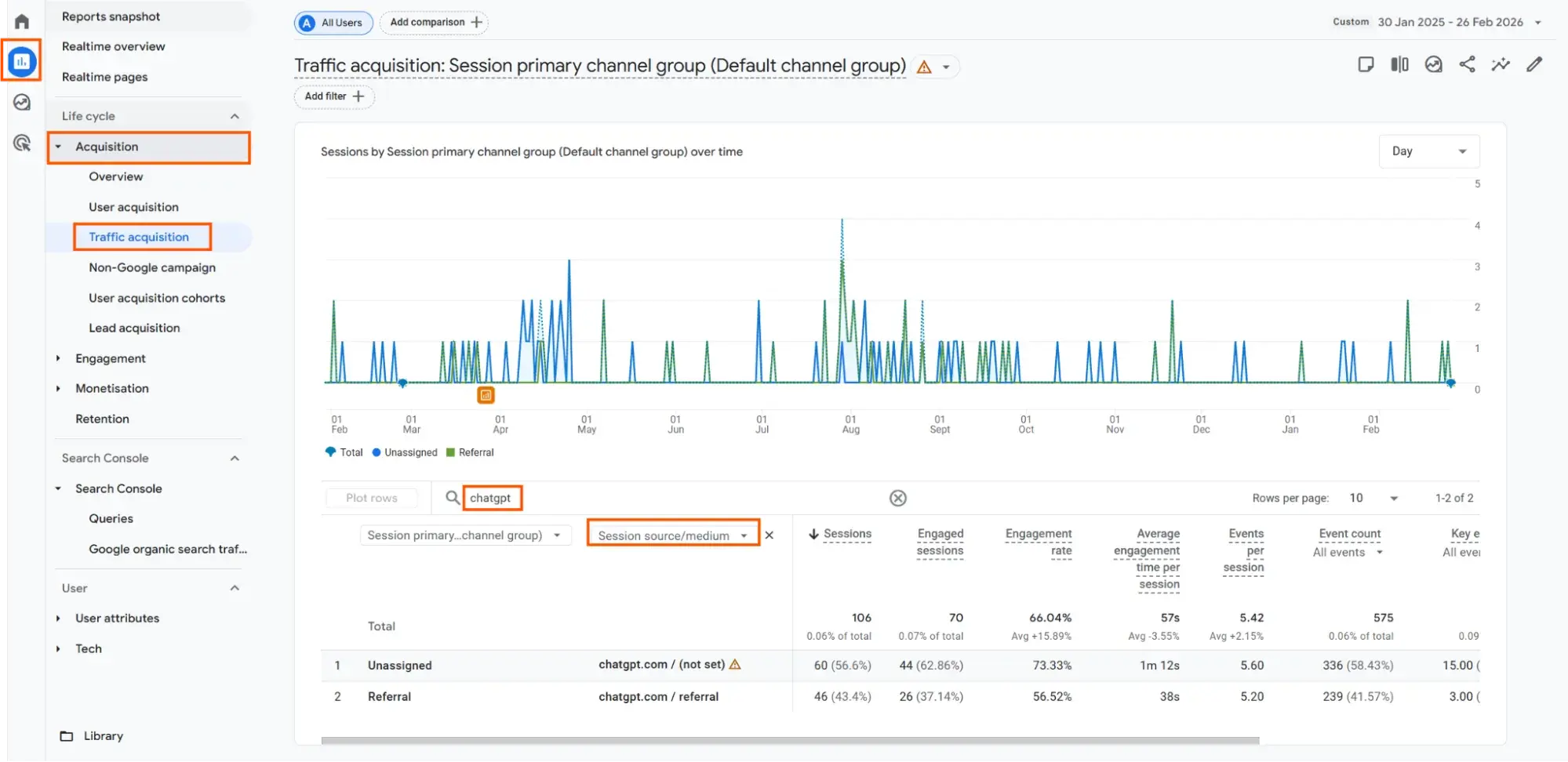
Tracking Traffic Using Google Analytics: Google Analytics 4 (GA4) enables the monitoring of referral traffic originating from AI systems. By examining reports under "Acquisition" > "Traffic Acquisition" and filtering by relevant source mediums (e.g., chatgpt.com, ai.google.com), businesses can identify AI-driven traffic. Further analysis can involve creating comparison segments specifically for AI traffic sources to assess engagement metrics such as bounce rate, pages per session, average session duration, and conversion rates. While this method doesn’t reveal the raw frequency of citations, it demonstrates whether citations are effectively driving meaningful traffic. An increase in referral visits from AI systems, particularly for high-intent pages, suggests a growing citation footprint for commercially relevant queries.
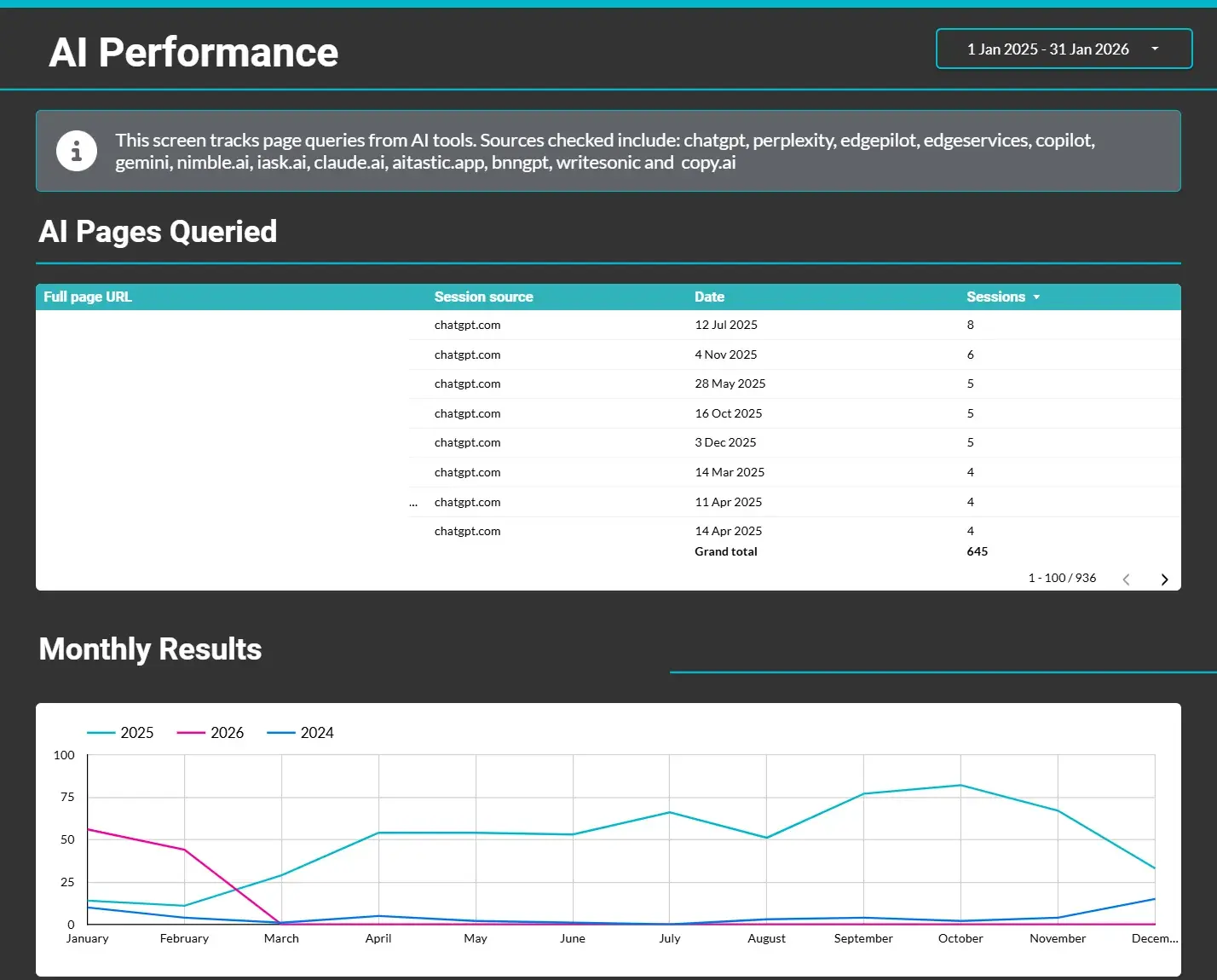
Custom Dashboards for Scalable Monitoring: For organizations requiring a scalable and client-ready method for tracking AI citation impact, custom dashboards in tools like Looker Studio offer a practical solution. These dashboards can aggregate data on AI referral domains over time, providing a live panel of AI visibility that updates automatically. Such dashboards can incorporate metrics like total sessions from AI referrals, conversion rates for AI traffic, and engagement metrics specific to AI-driven sessions. This approach measures impact rather than raw citation frequency, offering a strong signal of growing citation footprint if AI-driven sessions increase. Resources from analytics specialists can further simplify the creation of these custom dashboards.
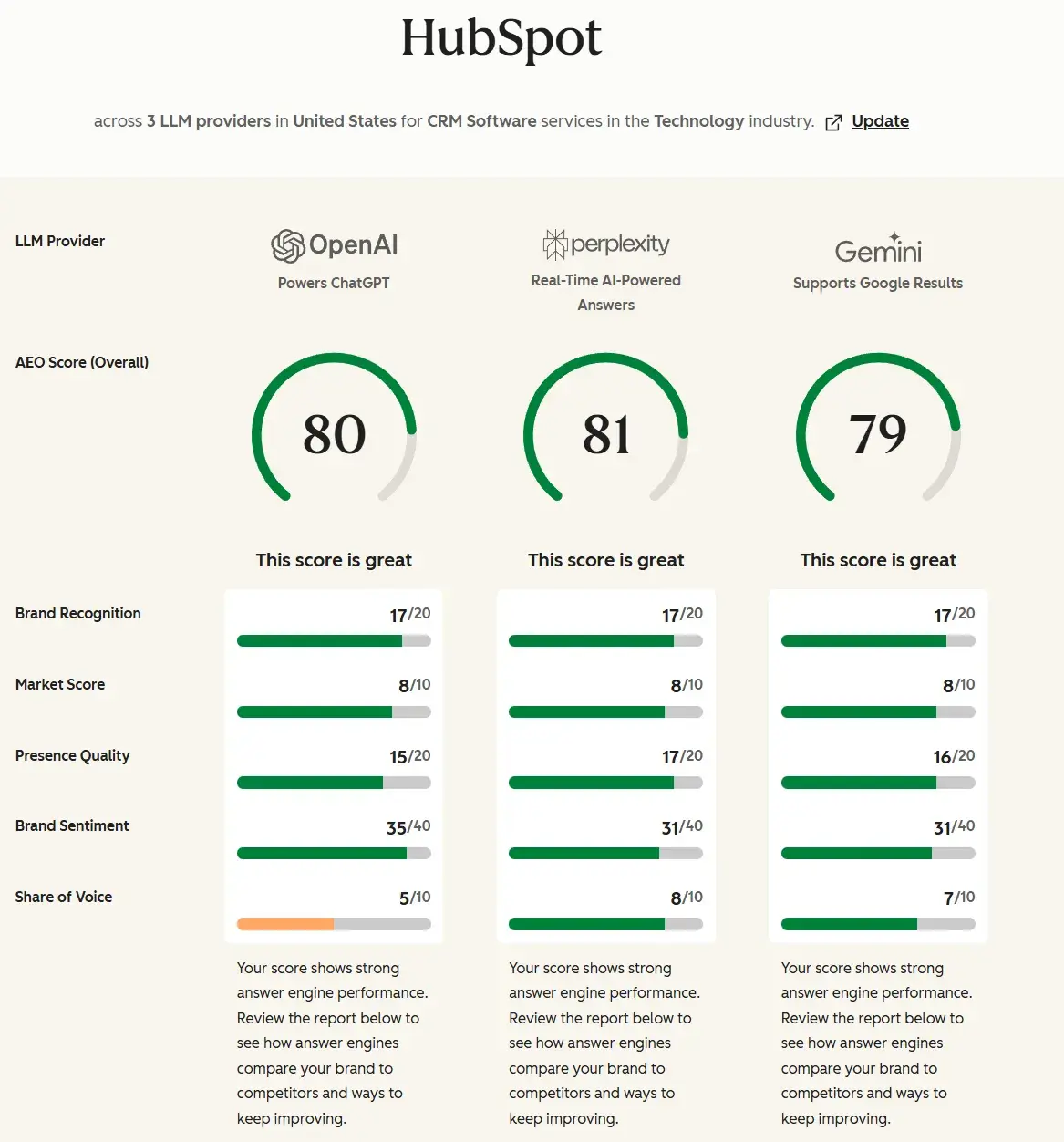
Free Benchmarking Tools: For ad-hoc visibility checks and a quick assessment of brand performance in AI search, free tools like HubSpot’s AEO Grader offer a baseline evaluation. These graders assess a site’s optimization for answer engines and AI-driven search environments, evaluating structural and content factors that influence citation likelihood. They are particularly useful for quick side-by-side comparisons with competitor domains, helping to identify content or structural gaps. However, it’s important to note that these tools provide static evaluations and do not track live citations or citation frequency over time.
Dedicated AI Citation Tracking Tools
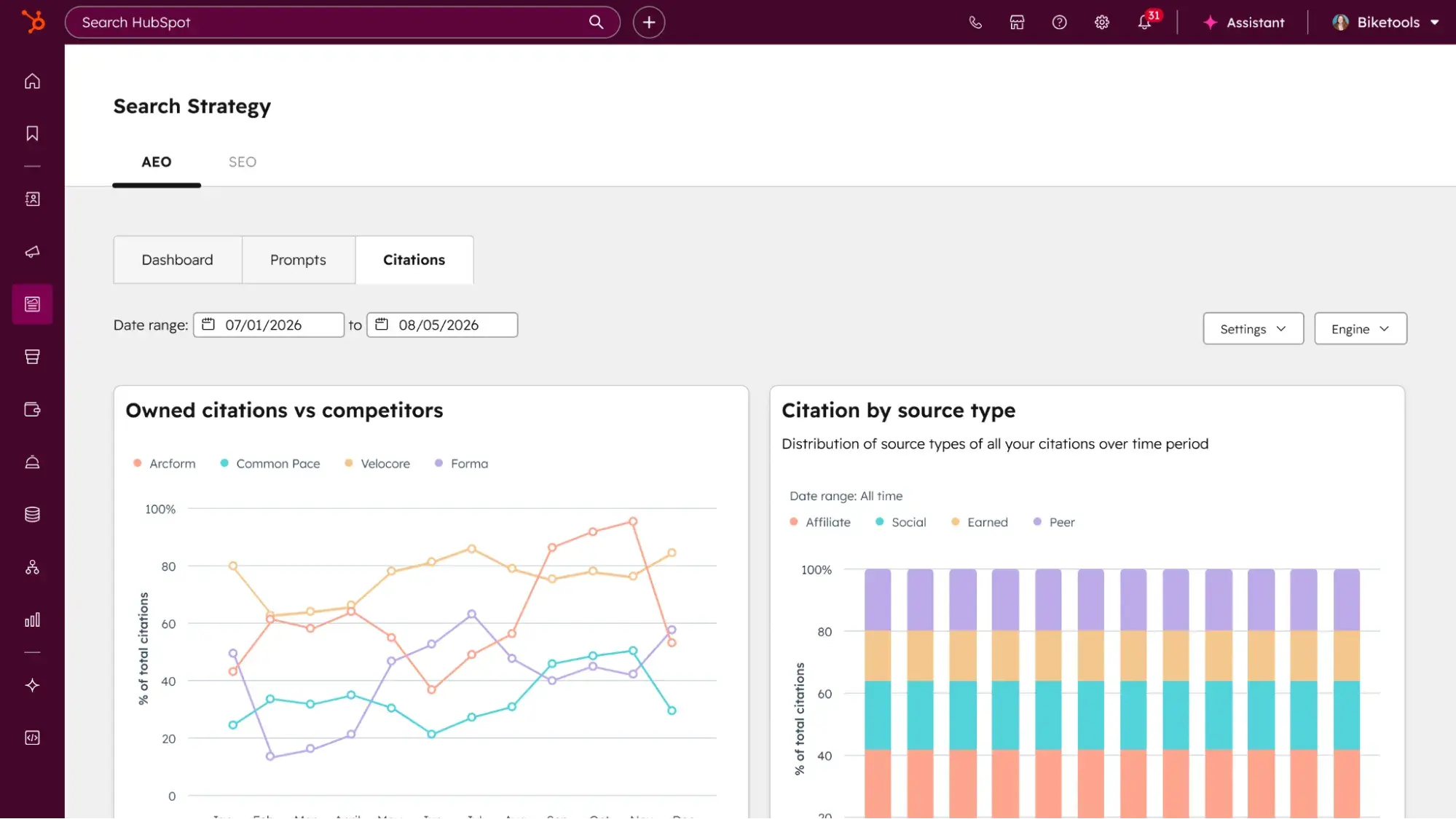
While manual methods and analytics provide partial insights, dedicated AI citation-tracking platforms offer a more systematic and comprehensive approach. Tools like HubSpot AEO are specifically designed to measure the frequency with which AI engines cite a brand’s content. These platforms monitor AI responses at scale, track citation frequency across a wide range of keywords, and benchmark a brand’s citation share against competitors. This provides visibility into impression-level presence, which is critical as many AI searches do not result in direct clicks. These tools offer clarity on citation frequency, citation share, and competitive displacement, offering a more holistic view of AI influence.
Other robust solutions include Xfunnel, which is purpose-built for tracking AI engine citations at scale, monitoring brand and URL citations across various AI systems and benchmarking against competitors. Semrush One is increasingly integrating AI search visibility insights into its comprehensive SEO platform, allowing users to track AI search performance, identify AI citation opportunities, and monitor competitor AI visibility. For those seeking quick diagnostic assessments and benchmarking, AEO Grader remains a valuable free resource.
Strategies for Closing the Citation Gap
Closing the gap between brand mentions and citations requires a strategic approach to content optimization. Five key Answer Engine Optimization (AEO) best practices can significantly increase a brand’s chances of earning AI citations:
-
Create Definitive, Source-Worthy Content: AI engines prioritize content that appears authoritative, comprehensive, and trustworthy. Pages that thoroughly answer questions, supported by clear structure and evidence, are more likely to be cited. This involves deep research, well-structured writing, and a focus on providing complete answers. Tools that accelerate research and support content planning are invaluable in this process.
-
Optimize for Informational Query Intent: AI citations are most prevalent in informational queries (e.g., "what is," "how to," "best," "comparison"). Content that directly addresses these query types, providing clear, educational answers, is more likely to be recognized and cited by AI engines.
-
Improve Content Structure for AI Parsing: AI systems extract and synthesize information. Clear formatting, logical structure, and the use of schema markup make it easier for AI models to understand and reference a page. This includes using headings, subheadings, bullet points, and tables effectively.
-
Build Topical Authority: AI engines tend to favor brands that demonstrate expertise across a topic cluster, rather than just a single well-optimized article. Building comprehensive content hubs that cover a subject in depth strengthens topical authority and increases the likelihood of being cited for related queries.
-
Strengthen Off-Site Signals and Brand Associations: AI models learn from associations across the web. Strong third-party references, such as backlinks from authoritative sites and positive brand mentions on reputable platforms, increase the likelihood that a brand will be surfaced and cited by AI.
Frequently Asked Questions on AI Citation Tracking
How often should AI citation and mention tracking be refreshed?
A minimum monthly review is recommended. The AI search landscape evolves rapidly due to model updates, new competitor content, and shifting authority signals. Monthly reviews help identify trends, displacement events, and emerging query opportunities.
Should AI-influenced traffic be separated from organic traffic in reports?
Yes, it is advisable to segment AI-influenced traffic from traditional organic search. While technically some AI traffic might fall under organic channels, its user behavior, intent patterns, and conversion pathways can differ significantly. For instance, AI traffic may exhibit higher conversion rates than standard organic search traffic.
What is the best way to prioritize content for citations versus mentions?
For building authority and influence, prioritize citation-ready content, focusing on informational assets like guides, definitions, and research-backed articles. For earlier-stage growth, investing in thought leadership and brand positioning can enhance conversational visibility (mentions). An ideal strategy balances both.
How should privacy and consent be handled when adding tracking parameters?
When using UTM parameters or tracking referral sources from AI systems, standard analytics practices apply. However, it is crucial to ensure that cookie consent mechanisms and privacy policies clearly articulate how tracking data is collected and processed, adhering to relevant data protection regulations.
AI Citation Tracking: The New Frontier of Brand Visibility
AI citation tracking represents the evolving frontier of brand visibility in the AI-search era. While mentions indicate a brand’s presence in conversations, citations reveal its influence in shaping those discussions. Effective tracking requires a layered approach: manual checks for context, analytics for traffic impact, dashboards for trend monitoring, and dedicated tools for citation share and competitive analysis. Integrating AI citation insights into a broader analytics stack empowers teams to act on this data effectively, transforming AI visibility into tangible business outcomes and securing a competitive edge in the rapidly transforming digital landscape.
About the Author