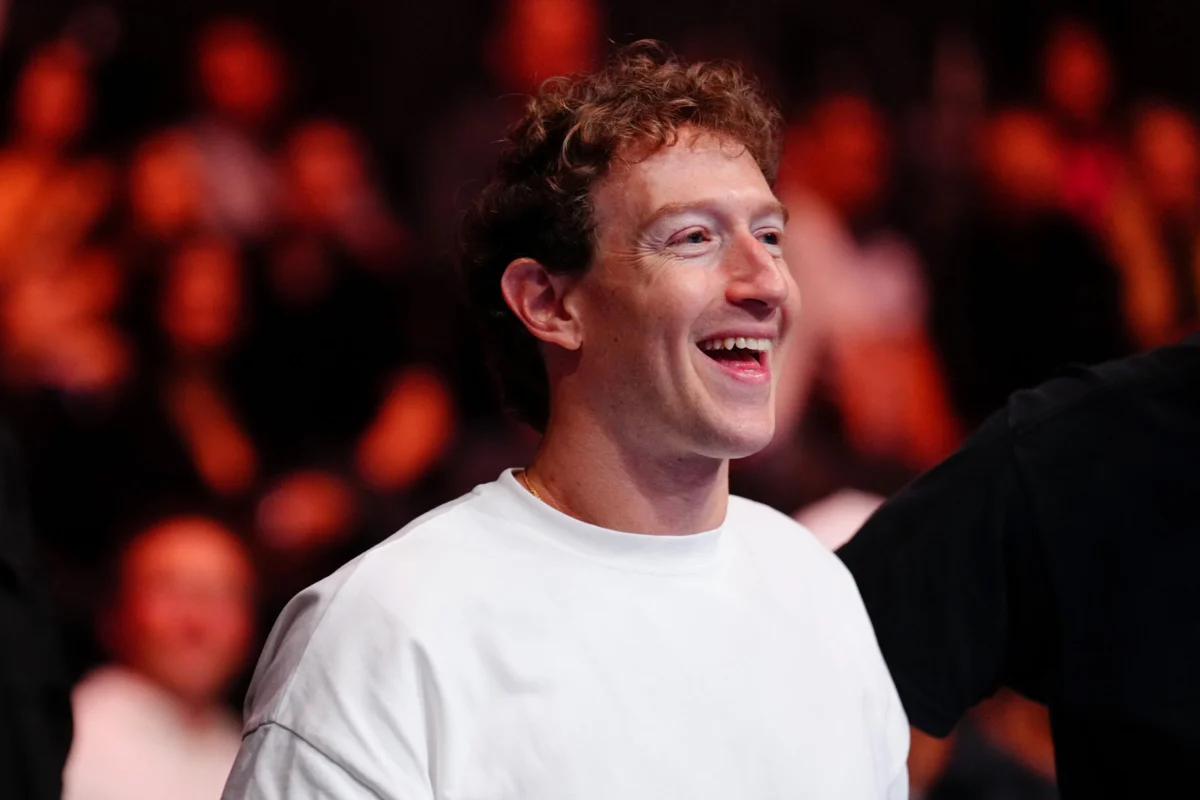
Meta CEO Mark Zuckerberg has unveiled a sweeping vision for an AI-powered future, articulated in a 6,500-word essay titled "The Future is for Everyone." In this expansive document, Zuckerberg paints an optimistic picture of a world where artificial intelligence serves as a ubiquitous and highly capable personal agent, understanding individual goals and catering to personal priorities. This pronouncement, however, has ignited a vigorous debate within the tech community, with many expressing skepticism and questioning the feasibility and desirability of Zuckerberg’s ambitious projections.
On a recent episode of TechCrunch’s "Equity" podcast, hosts Kirsten Korosec and Rebecca Bellan, alongside contributor Anthony Ha, delved into the reception of Zuckerberg’s manifesto. Their discussion highlighted a significant divergence between Meta’s optimistic outlook and the prevailing public sentiment, particularly as articulated by TechCrunch’s own AI editor, Russell Brandom. Brandom, in his analysis, argued that Zuckerberg’s vision inadvertently encapsulates many of the reasons why the public harbors reservations about artificial intelligence.
The podcast discussion drew a parallel between Zuckerberg and Anthropic CEO Dario Amodei. While Amodei has recently been vocal in pushing back against notions of AI doomsaying, Rebecca Bellan characterized Zuckerberg as positioning himself as an "anti-Dario." This distinction, however, is complicated by Meta’s historical performance and its track record in delivering on ambitious promises. Bellan pointed to Meta’s social media origins, recalling Zuckerberg’s initial stated intention to foster connection and provide platforms for communication. The reality, she observed, has devolved into an ecosystem dominated by "ragebaiting and advertisements," rather than genuine human connection. This historical context casts a long shadow over Zuckerberg’s current AI aspirations, leading many to question whether his latest pronouncements will yield a different outcome.
Meta’s Strategic Pivot Towards Personal AI
From a strategic standpoint, Rebecca Bellan posited that Zuckerberg’s essay represents a calculated move by Meta to secure a dominant position in a rapidly evolving AI landscape. Having not fully captured the vanguard of closed-model AI development or carved out a definitive niche in the open-source arena, Meta appears to be redirecting its efforts toward the burgeoning field of personal empowerment through AI. The company’s strategy, as outlined by Zuckerberg, centers on providing the foundational AI models that individuals will utilize for their personal devices and daily lives.
This focus on personal AI agents is not entirely new for Meta. A similar "Futures for Everyone" letter published the previous year hinted at integrating AI capabilities into wearable devices, such as smart glasses. However, the ultimate hardware form factor remains somewhat fluid, with Zuckerberg seemingly deferring to individual user preferences. The core concept revolves around AI models like Meta’s Glimmer, designed to manage schedules, draft communications, organize files, and operate continuously, irrespective of internet connectivity.
Yet, Meta maintains a tiered approach, with models like Muse Spark serving a dual purpose. These more advanced, proprietary models provide Meta with a degree of control over its most capable AI systems and also function as a revenue stream for users and companies requiring scalable compute power for larger projects. This duality suggests a business model that caters to both individual users and enterprise-level AI development.
The Challenge of Perception and Trust
Anthony Ha underscored the context of Meta’s substantial investments in AI research and development. Despite significant financial outlays and efforts to recruit top AI talent, Meta has not consistently been recognized among the leading "frontier labs" in the AI community. Furthermore, in the realm of consumer-facing AI chatbots, Meta’s offerings, while present within platforms like Instagram and Facebook, have not established themselves as go-to personal assistants in the way that competitors have. This perceived gap in consumer adoption is a significant hurdle that Zuckerberg’s manifesto seeks to address, aiming to reposition Meta as a key player in the personal AI space.
Bellan concurred with this assessment, emphasizing that Zuckerberg’s pronouncements should be viewed with a degree of skepticism. She noted Zuckerberg’s penchant for articulating grand visions of technological empowerment, but pointed to the tangible results of Meta’s past endeavors. While acknowledging the technical merits of Meta’s Llama open-source models, she highlighted that on a consumer level, Meta AI has been associated with "creepy-ass chatbots," a sentiment echoed in leaked internal documents detailing past AI rule relaxations that allowed for concerning interactions.
The core of the public’s apprehension, according to Bellan and Brandom, stems from the messenger himself. The stark contrast between Zuckerberg’s idealistic pronouncements about personal empowerment and the realities of Meta’s social media platforms—characterized by divisive content and pervasive advertising over genuine connection—breeds distrust. This historical disconnect is precisely why Zuckerberg’s latest vision for AI is met with such significant resistance.
A Contrasting Vision in the AI Landscape
Kirsten Korosec observed that Zuckerberg’s manifesto failed to resonate with many, precisely because it amplified the very concerns that fuel public animosity towards AI. The perceived "Pollyannish" tone of the essay, coupled with a history of Zuckerberg’s optimistic yet often unfulfilled predictions, paints an unrealistic picture of AI’s future. While AI may indeed be a powerful tool for humanity, the essay glosses over the potential extreme costs and societal disruptions, leading to widespread negative reactions.
Bellan reiterated her "anti-Dario" comparison, highlighting the divergent approaches within the AI industry. Many leading AI labs are publicly engaging in discussions about safety, ethical development, and the need to potentially "slow down" AI advancement, especially in light of recent cybersecurity incidents. In contrast, Zuckerberg’s essay champions relentless progress, framing any slowdown as a concession to geopolitical rivals like China and a disservice to individual empowerment.
However, the practical accessibility of Meta’s AI technology remains a question. Bellan recounted her attempt to download and use Muse Glimmer, only to find that it required specific, not readily available, hardware, rendering it inaccessible to the average consumer. This disconnect between the promised universal empowerment and the actual user experience further fuels skepticism.
The Broader Implications and Public Skepticism
Anthony Ha offered a qualified positive note regarding Zuckerberg’s manifesto, acknowledging a single sentence that challenges AI doomers: "If you are an AI doomer and you believe that that’s the future that AI is going to bring, why are you building this stuff?" While this point is valid, Ha’s takeaway is not an endorsement of the AI future, but rather a reflection on the motivations of those who predict dire outcomes yet continue to develop the technology.
Furthermore, Ha emphasized the significance of the messenger, noting that public suspicion towards Zuckerberg and Meta is a pre-existing condition that could be exacerbated by the upcoming biographical film about Facebook. Beyond the individual messenger, Ha pointed to a broader societal trend: the public’s questioning of the AI futures being promised by tech leaders. Viral online reactions often challenge these futuristic visions, asking, "Who wants this?"
A prominent example cited was Sam Altman’s suggestion of using ChatGPT to create personalized podcasts about children’s interests for car rides. The immediate public response questioned why parents wouldn’t simply engage in direct conversation with their children. This highlights a disconnect between the abstract promises of AI-driven creativity and invention, which often form the bulk of manifestos like Zuckerberg’s, and the concrete, often unappealing or even dystopian, applications that emerge. While the idea of personal AI coaches and assistants holds some appeal, the specifics often fall short of widespread desirability, leading to a persistent sense of skepticism about the true beneficiaries and implications of this rapidly advancing technology.
About the Author