
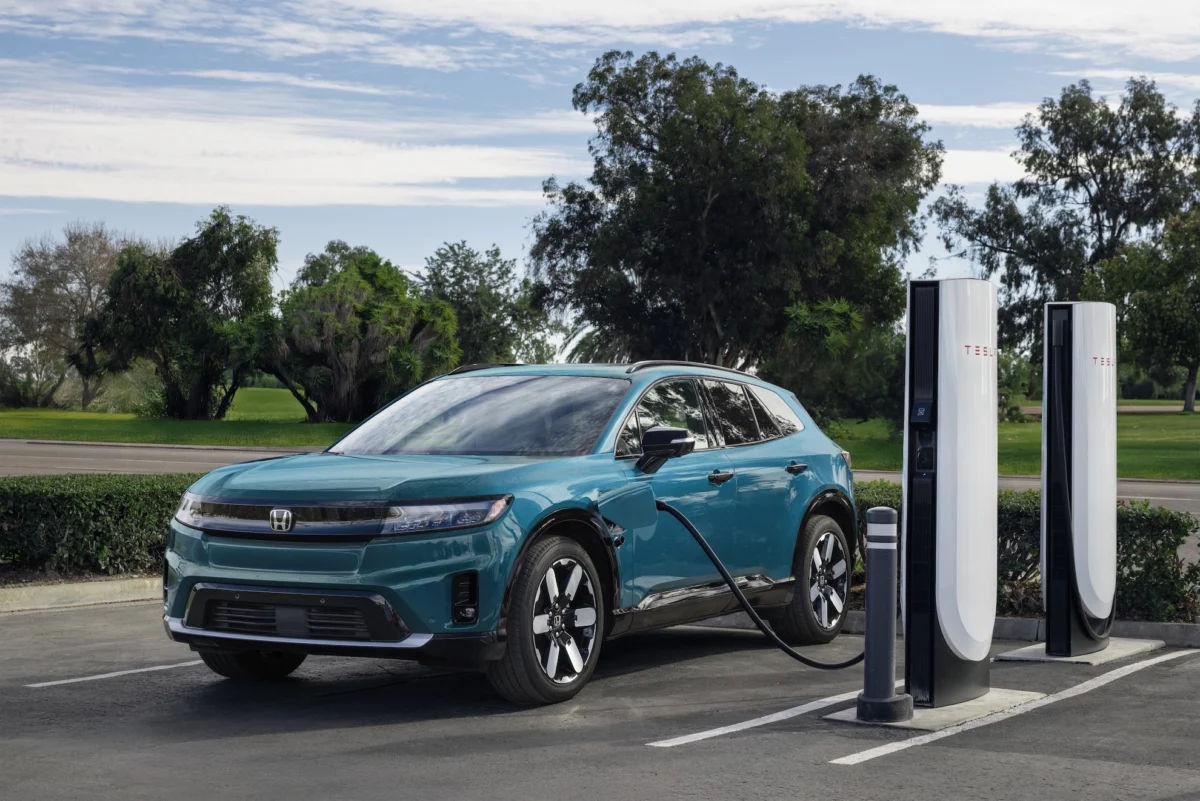
The confirmation of the Honda Prologue’s discontinuation marks a significant shift, effectively removing the last all-electric vehicle from the Japanese automaker’s U.S. lineup. This decision, officially confirmed by Honda to TechCrunch, reverberates beyond a single model’s demise. It serves as a potent symbol of a broader industry-wide recalibration within the electric vehicle sector in the United States, a trend that stands in stark contrast to the global EV landscape.
The departure of the Honda Prologue prompts a critical examination of which electric vehicles have exited the U.S. market and the multifaceted reasons behind these withdrawals. While the expiration of the $7,500 federal tax credit in late 2025 undoubtedly exerted considerable pressure on EV sales, it is not the sole determinant. A confluence of factors, including evolving consumer preferences, rising production costs, shifts in corporate strategic priorities, and the imposition of tariffs, has contributed to a narrowing of available EV options for American consumers.
Data released in July by Kelley Blue Book and Cox Automotive paints a clear picture of the current state of the U.S. EV market. In the second quarter of 2026, 247,226 electric vehicles were sold, representing approximately 5.8% of the total automotive market. While this figure indicates a sequential increase from the first quarter, it still lags behind sales figures from the same period in the previous year, a period that benefited from the now-expired federal tax incentive. For context, fourth-quarter sales in 2025 were 36% lower than the preceding year, a gap that, while narrowing in 2026, still shows a year-over-year decline. Specifically, Q2 2026 sales were 20.5% lower than Q2 2025.

Despite these headwinds, the U.S. market is not entirely devoid of EV activity. New entrants, such as the highly anticipated Rivian R2, are poised to enter the market, and signs of a gradual recovery are emerging. However, the persistent trend of automakers discontinuing EV models underscores a complex and challenging environment for electric mobility in the United States. This article will delve into the specific vehicles that have exited or are exiting the U.S. market in 2026, exploring the underlying causes.
The Curious Case of Afeela: A Vision That Never Materialized
The Afeela, a joint venture between Sony and Honda, represents a unique chapter in the EV narrative, one characterized by high-profile announcements and a surprising lack of tangible product. The concept first emerged as the Vision S prototype, unveiled by Sony at the 2020 Consumer Electronics Show (CES). This early reveal generated considerable buzz, positioning Sony as a potential disruptor in the automotive space. Honda joined the venture in 2022, and the two Japanese powerhouses showcased an Afeela-branded prototype at CES 2023, further fueling anticipation.
Over the subsequent years, the Afeela was a frequent topic of discussion and even made appearances at industry events, including TechCrunch Disrupt. Despite this consistent visibility and a concerted marketing effort, the Afeela never progressed beyond the prototype stage. In March 2026, the Sony Honda Mobility joint venture officially announced the termination of its plans for two Afeela-branded EVs. This decision followed closely on the heels of Honda’s own announcement two weeks prior to cancel three other planned EVs for the U.S. market, underscoring a significant strategic pivot for the automaker.

Honda and Acura: A Strategic Reassessment
Honda’s recent EV endeavors, particularly its ambitious "0 Series" (pronounced "Zero Series"), have encountered significant setbacks in the U.S. market. As recently as CES 2025, Honda showcased a mid-sized SUV prototype from its 0 Series, a concept that had been preceded by the futuristic Saloon and Space-Hub concepts unveiled at CES 2024. The SUV was slated for production at Honda’s dedicated "EV Hub" factory in Ohio, with a North American debut anticipated in the first half of 2026.
However, in a sweeping overhaul of its EV strategy announced in March 2026, Honda halted the development of the Acura RDX, the Honda 0 sedan, and the 0 SUV. The company cited U.S. tariffs and intense competition from Chinese manufacturers as primary drivers for this decision. This strategic reassessment also led to the eventual cancellation of the Honda Prologue. While speculation about the Prologue’s future had been circulating, it was not until July 16, 2026, when CarBuzz first reported the program’s termination, that Honda officially confirmed to TechCrunch that the Prologue was indeed going out of production.
The impact of the 0 Series’ cancellation is largely theoretical, as these vehicles never reached production. The Prologue, in contrast, represented a more pragmatic approach to entering the U.S. EV market. A product of a strategic partnership with General Motors, the Prologue was manufactured at GM’s Ramos Assembly Plant in Mexico and shared its platform with the Chevrolet Blazer EV. It achieved moderate sales success in 2024 and 2025, selling approximately 33,000 and 39,000 units respectively. However, sales experienced a precipitous decline following the discontinuation of the federal tax credit, ultimately contributing to its demise.

Hyundai: Strategic Adjustments Amidst Market Dynamics
Hyundai has demonstrated considerable success in selling EVs to American consumers, evidenced by strong sales of its Ioniq 5 and Ioniq 9 models, which are assembled at the company’s Georgia factory. However, the company has also made strategic adjustments in response to evolving market conditions. In March 2026, Hyundai announced it would cease sales of the Ioniq 6 sedan in the U.S., a decision widely attributed to the impact of tariffs on imported vehicles. The Ioniq 6 is manufactured in South Korea, making it susceptible to import duties. Hyundai intends to continue importing the more specialized, lower-volume N performance variant of the Ioniq 6.
Nissan’s Ariya: A Quiet Departure
Nissan has opted not to produce a 2026 model year for its all-electric Ariya SUV in the U.S. market, and there are no immediate indications of its return. The Ariya, first unveiled in 2020 and slated for sale in Japan the following year, represented Nissan’s first all-electric offering since the pioneering Leaf hatchback a decade prior. The Ariya was positioned as a crucial step in Nissan’s electrification strategy, aiming to capture a significant share of the burgeoning crossover SUV market. However, the decision to discontinue it in the U.S. suggests a strategic realignment or a reassessment of its market viability in the current economic climate.

Polestar: Navigating Geopolitical Headwinds
The Swedish EV manufacturer Polestar, owned by Chinese automotive giant Geely, has faced significant challenges in the U.S. market due to the country’s stance on Chinese-connected vehicle technology. Polestar required specific authorization from the U.S. Department of Commerce to continue importing and selling its vehicles. Without this approval, the company has effectively been barred from the U.S. market. Polestar has stated its intention to continue selling its existing inventory of Polestar 3 and Polestar 4 vehicles in the U.S. and to maintain support for its customers, including access to its service network. The Polestar 3 was notably manufactured in both South Carolina, USA, and Chengdu, China, highlighting the complex global supply chains involved. In contrast, Volvo Cars, Polestar’s sibling company also owned by Geely, did secure the necessary authorization to continue selling its connected cars in the U.S.
Tesla: Shifting Focus to the Future
In a move that signaled a significant strategic shift, Tesla announced in January 2026 its intention to end production of the Model S sedan and Model X SUV. This decision is driven by the company’s vision of the future, which it defines by artificial intelligence, autonomy, and robotics, rather than traditional electric sedans and SUVs. It is worth noting that sales of the Model S and Model X had experienced a steady decline over the years, as consumer preference shifted towards Tesla’s higher-volume and more affordable Model 3 and Model Y. The last Model S and Model X vehicles rolled off the assembly line at Tesla’s Fremont, California factory in the spring of 2026. The production lines for these models have been repurposed to accommodate the manufacturing of Tesla’s Optimus robots, underscoring the company’s bold pivot towards advanced robotics and AI.

Volkswagen: A Pivot Back to Internal Combustion
Volkswagen has scaled back its electric vehicle offerings in the U.S., notably with the ID.4 electric SUV and the ID. Buzz. In April 2026, the company announced it would cease production of the ID.4 at its U.S. factory in Chattanooga, Tennessee. This decision marks a strategic shift back towards high-volume internal combustion engine vehicles, such as its upcoming gas-powered Atlas SUV. Volkswagen stated that U.S. customers would be able to purchase the ID.4 until the existing inventory is depleted, a supply expected to last into 2027.
While the ID. Buzz is reportedly on a hiatus with a planned return in 2027, there is no 2026 model year available. However, autonomous versions of the ID. Buzz are currently undergoing testing in the United States. Volkswagen subsidiary MOIA America, in partnership with Uber, began testing self-driving microbuses in Los Angeles in April 2026. This initiative is in preparation for a robotaxi service scheduled to launch in late 2026. Initially, these services will operate with human safety operators present.
Volvo: Pruning the Lineup for Affordability

Volvo made the decision in March 2026 to withdraw its subcompact EX30 and its EX30 Cross Country variant from the U.S. market. Production for the U.S. was slated to conclude after the summer. The EX30 had initially generated considerable interest and was positioned as Volvo’s more affordable EV option, with a promising reception prior to its official U.S. entry in 2025. Despite this withdrawal, Volvo plans to continue offering its larger, all-electric EX60 and EX90 SUVs in the United States, indicating a strategic focus on its premium and larger SUV segments.
The exodus of these electric vehicles from the U.S. market is a complex phenomenon driven by a confluence of economic, regulatory, and consumer-driven factors. While the termination of federal incentives has undoubtedly played a role, the broader trend suggests a period of recalibration for the EV industry in the United States, with automakers reassessing their strategies in the face of evolving market dynamics and global competition.
About the Author





