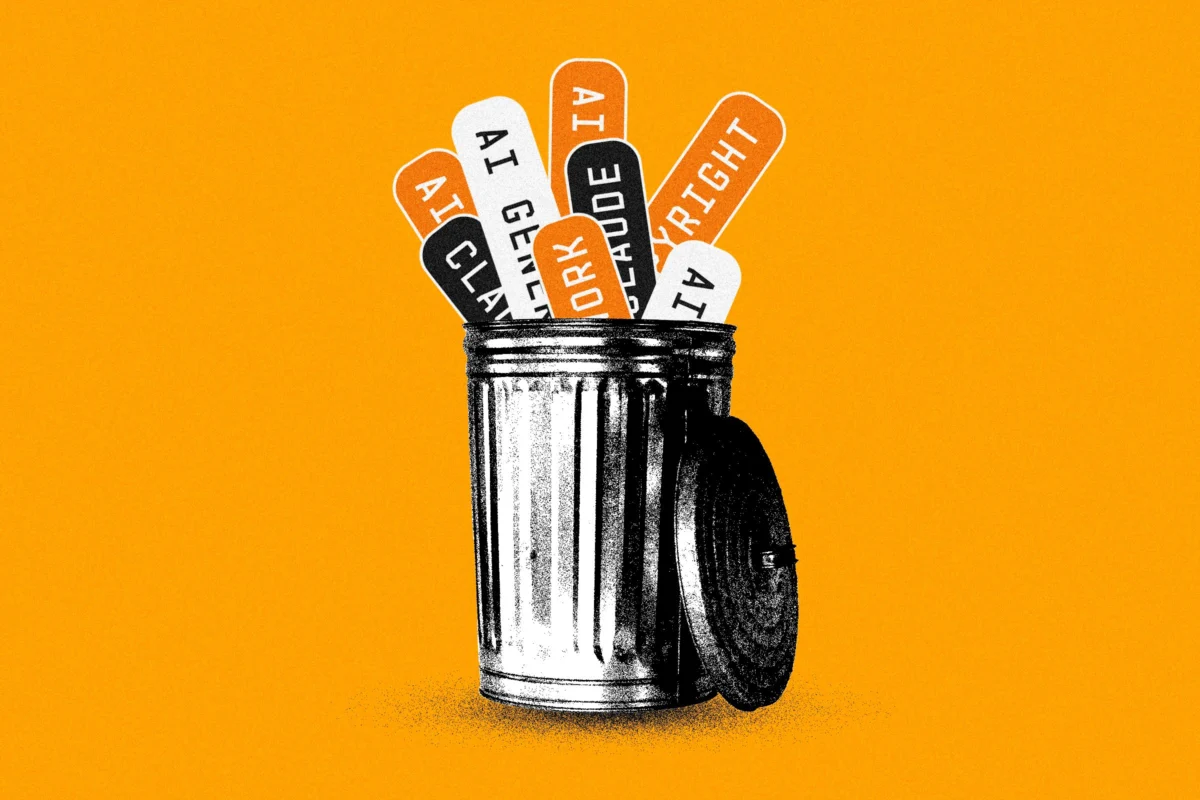
The global landscape of generative artificial intelligence reached a significant regulatory and technical milestone this month as Anthropic, the San Francisco-based AI safety and research company, confirmed the implementation of invisible, machine-readable watermarks across its Claude model lineup. This move, designed to align the company with the stringent requirements of the European Union’s AI Act, was met with an immediate and highly coordinated response from the open-source community. Within four hours of the official announcement, French developer Guillaume Meyer published a functional override on GitHub, effectively rendering the watermark obsolete for users capable of running a basic script. The rapid circumvention highlights a growing tension between international regulators seeking transparency and a developer community that views such measures as technically flawed or restrictive.
The Catalyst: The European Union’s AI Act and Regulatory Compliance
The implementation of watermarking by Anthropic is not merely a design choice but a direct response to the European Union’s AI Act, which officially came into force on August 1, 2024. As the world’s first comprehensive horizontal regulation on artificial intelligence, the Act mandates that providers of general-purpose AI models ensure that synthetic content—including text, audio, images, and video—is identifiable as such.
Under Article 52 of the Act, transparency is a core requirement. Companies like Anthropic, OpenAI, and Meta are now legally obligated to design their systems so that AI-generated outputs are detectable by machines. Failure to comply with these transparency obligations can result in staggering financial penalties, with fines reaching up to €15 million or 3 percent of a company’s total global annual turnover, whichever is higher.
To navigate these requirements, Anthropic joined a coalition of 190 organizations, including industry titans such as Microsoft and Meta, in signing the EU’s voluntary "AI Pact." This commitment involves a pledge to implement transparency measures ahead of the formal legal deadlines. While new models released from August 2024 must include these features immediately, existing models have until December 2024 to be retrofitted with detection capabilities. Anthropic’s move to embed watermarks globally in Claude’s text was a preemptive strike to ensure compliance across all jurisdictions, not just the European market.
Technical Foundations: How Claude’s Invisible Watermarking Works
The technology Anthropic utilizes for text watermarking is based on a method known as SynthID, a protocol originally developed by Google DeepMind. Unlike image watermarking, which might involve altering pixel metadata or adding a subtle "noise" layer, text watermarking is significantly more complex because it must not alter the semantic meaning or the grammatical flow of the prose.
SynthID-text works by subtly influencing the probability of word selection—specifically the "tokens" the model chooses during the generation process. When an LLM generates text, it predicts the next most likely word based on a statistical distribution. A watermarking algorithm like SynthID introduces a specific, non-random pattern into these choices. To a human reader, the text appears natural and indistinguishable from standard AI output. However, a specialized detection tool can analyze the statistical distribution of words in a passage and determine, with a high degree of mathematical probability, whether the text matches the specific "signature" or pattern used by the model.
Despite its sophistication, the method is probabilistic rather than deterministic. Anthropic has acknowledged that its detection tools generate a probability score rather than a definitive "yes" or "no" answer. This inherent uncertainty has become a focal point for critics who argue that the system is prone to errors.
The Great Bypass: Chronology of a Counter-Movement
The timeline of the bypass underscores the velocity of the modern "cat-and-mouse" game between AI labs and independent developers.
August 2024, 10:00 AM: Anthropic officially announces the global rollout of invisible watermarking for all Claude models, including Claude 3.5 Sonnet and Claude 3 Opus.
August 2024, 2:00 PM: Guillaume Meyer, a software developer and AI enthusiast, publishes a repository on GitHub titled "Claude-Watermark-Remover." The code utilizes a "model-swapping" technique to strip the statistical signatures from Claude’s output.
August 2024, Evening: Meyer’s tool goes viral. It is bookmarked over 20,000 times on X (formerly Twitter) and garners over 100 contributors within the first 24 hours. AI specialists on LinkedIn share images of the code alongside memes of "breaking chains," signaling a philosophical resistance to the labeling of synthetic content.
Subsequent Days: Alternative methods emerge. Erik Hughes, a software engineer, develops a lightweight tool in 15 minutes that uses Claude itself to rephrase its own output, effectively "washing" the watermark through synonym replacement and sentence reordering. Leon Chlon, a Visiting Fellow at the University of Oxford, demonstrates that translating Claude’s output into a semantically distant language, such as Arabic, and then back into English, effectively destroys the statistical pattern required for detection.
The Developer’s Dilemma: Motivations for Circumvention
The motivations behind the rapid development of these "unwatermarking" tools are varied, ranging from technical curiosity to deep-seated concerns about the practical implications of AI labeling.
Guillaume Meyer, speaking to industry observers, emphasized that his primary concern is the risk of "false positives" and the unfair treatment of non-native English speakers. Meyer, a native French speaker, noted that he frequently uses Claude and tools like Grammarly to refine his English writing. If a watermark is embedded in text that is 90% human-written but 10% AI-refined, a detector might flag the entire document as AI-generated.
"I’m not against transparency," Meyer stated, "but watermarking is a bad solution because it doesn’t distinguish between light editing and full generation. This could lead to researchers being accused of fraud or job candidates being rejected because a machine gave a 60% probability that they used an AI tool to polish their resume."
Furthermore, some users fear that the watermark influences the quality of the output. While Anthropic maintains that SynthID does not degrade performance, the reality that the model is being forced to choose "less likely" words to maintain a pattern suggests a potential, if marginal, impact on the nuance and creativity of the responses.
Industry Reactions and the "Sovereign AI" Perspective
The pushback is not limited to individual hobbyists. Startups are already integrating bypass technology into their platforms. Wayne Pan, co-founder of Haimaker, a Silicon Valley-based "sovereign AI" startup, has incorporated Meyer’s open-source tool into his company’s infrastructure. Pan argues that users should have the right to own their output without an invisible "tracking tag" attached to it.
"I don’t think you can ever have a watermark that will withstand everything," Pan noted. He suggested that Anthropic’s move was likely a "good faith" effort to satisfy regulators rather than a foolproof technical solution.
The broader industry remains divided. OpenAI, for instance, has long toyed with the idea of watermarking. Scott Aaronson, a prominent computer scientist who worked on AI safety at OpenAI, proposed a similar statistical method years ago. However, internal reports suggest OpenAI hesitated to deploy it, fearing that the knowledge of a "tracked" output would drive professional users toward competitors who offered "clean" text.
Anthropic’s Stance and Future Detection Tools
In response to the surge in circumvention tools, Anthropic has remained steadfast in its commitment to the EU AI Act. A spokesperson for the company told WIRED that the marking of Claude’s output is a necessary step toward a safer AI ecosystem.
"It’s hard to identify AI-generated text, and this gives people better tools for identification," the spokesperson said. "We also plan to ship a text-detection API so users can do more of this themselves."
Anthropic is currently developing an official detection tool that will allow third parties to verify the authenticity of text. However, the company has admitted that heavily edited, paraphrased, or translated content may lose its watermark, confirming the validity of the bypass methods discovered by Meyer and others.
Broader Implications: The Future of Content Authenticity
The battle over Claude’s watermarks is a microcosm of a much larger struggle regarding the future of the internet. As AI-generated content begins to outpace human-generated content in volume, the "provenance" of information becomes a critical issue for democracy, education, and commerce.
- Academic Integrity: Educational institutions are arguably the most affected. If watermarks can be removed in minutes, the reliance on AI detectors for grading and admissions becomes even more precarious.
- The "Dead Internet" Theory: If detection fails, the internet may become flooded with high-quality synthetic content that is indistinguishable from human thought, potentially leading to a "collapse" in the value of digital information.
- Legal Precedents: The EU AI Act prohibits companies from marketing circumvention tools, but it does not currently prohibit individuals from sharing open-source code that achieves the same goal. This legal gray area will likely be the next frontier for regulators.
Conclusion: A Technological Tug-of-War
The events following Anthropic’s watermarking announcement serve as a stark reminder that in the realm of software, for every lock, there is a key. The speed with which the developer community neutralized Claude’s invisible signature suggests that statistical watermarking may never be a silver bullet for AI transparency.
As the December 2024 deadline for the EU AI Act approaches, other major players like Meta and Google will likely face similar challenges. The industry is now entering a perpetual arms race: AI labs will develop more resilient, multi-layered watermarking techniques, while the open-source community will continue to find creative ways to strip them away. For now, the "invisible" watermark remains visible to those with the technical skill to look for it—and the tools to erase it.
About the Author