The landscape of internet discovery is undergoing its most significant transformation since the inception of the modern search engine. For over two decades, digital visibility was synonymous with Search Engine Optimization (SEO), a practice centered on aligning content with the algorithmic preferences of Google’s "ten blue links." However, the emergence of Large Language Models (LLMs) such as OpenAI’s ChatGPT, Anthropic’s Claude, and Perplexity AI has introduced a new paradigm: AI Optimization (AIO). This shift represents a move from keyword-based indexing to semantic synthesis, where AI models act as intermediaries, curating and recommending specific resources directly to users within a conversational interface. As of early 2025, the industry is witnessing a migration of traffic away from traditional search results pages toward AI-generated summaries, forcing content creators and businesses to recalibrate their digital strategies to remain visible in an era of synthesized information.
The Evolution of Search: A Chronology of Disruption
The transition to AI-driven discovery did not occur overnight but followed a rapid trajectory of technological milestones. Between 1998 and 2022, Google maintained a near-monopoly on global search intent, refining its PageRank algorithm to prioritize authority and relevance through backlinks and technical performance. The introduction of the "Featured Snippet" in 2014 was the first hint of a "zero-click" future, where Google began providing direct answers at the top of the page.
The timeline accelerated sharply in November 2022 with the public release of ChatGPT. Within two months, the platform reached 100 million monthly active users, becoming the fastest-growing consumer application in history. By mid-2023, Microsoft integrated GPT-4 into Bing, and Google announced its Search Generative Experience (SGE). In 2024, Perplexity AI emerged as a dedicated "answer engine," raising the stakes by citing real-time web sources in a conversational format. By the first quarter of 2025, Google’s "AI Mode" reached full global availability in over 180 countries, fundamentally altering the user interface for billions of searchers. This chronology marks the end of the "Link Era" and the beginning of the "Synthesis Era," where the value of a website is determined by its ability to be cited as a primary source by a generative model.
Market Data and the Economic Impact of AI Integration
The financial motivation behind this shift is reflected in the earnings reports of major technology firms. In Q1 2025, Alphabet (Google’s parent company) reported a 10% increase in search revenue, totaling $50.7 billion. Analysts attribute a significant portion of this growth to the successful integration of AI features, which have increased user engagement and ad performance within AI-generated summaries. Concurrently, data from OpenAI indicates that ChatGPT’s web-browsing feature now processes over 10 million queries daily, many of which would have previously been directed to traditional search engines.
User behavior metrics further substantiate this shift. Recent industry studies suggest that for informational queries—such as "How to build a SaaS with WordPress"—users are 40% more likely to trust a synthesized answer from an AI than to click through multiple individual links. This preference for efficiency has created a "visibility gap" for organizations that rank on the first page of Google but fail to appear in AI citations. For these entities, traditional SEO success no longer guarantees traffic, as the AI model acts as a gatekeeper, selecting only the most authoritative and well-structured content to present to the user.
Strategic Framework: The Seven Pillars of AI Optimization
To capture traffic in this new environment, digital practitioners are adopting a set of specialized tactics known as AIO. Unlike traditional SEO, which often rewards keyword density and backlink volume, AIO prioritizes the semantic clarity and factual density that LLMs require to generate accurate responses.
1. Data-Centricity and Verifiable Proof
Language models demonstrate a measurable preference for content that contains specific statistics, figures, and verifiable data. In a comparative analysis, a model is more likely to cite a source that states "our platform has 150,000 active users and a 94% retention rate" over one that uses vague descriptors like "widely used" or "highly successful." Precision signals credibility to the model’s retrieval systems, positioning the content as a factual anchor for the generated response.
2. Community Signal and Social Validation
LLMs are trained on massive datasets that include community-driven platforms like Reddit and Quora. Strategic engagement on these forums has become a primary AIO tactic. When a brand or resource is discussed naturally within human-centric conversations, it creates a "reputation signal" that the AI recognizes. Authentic mentions in these spaces serve as a form of social proof that influences the model’s selection process during real-time web searches.
3. Natural Language and Semantic Alignment
Traditional search queries were often fragmented (e.g., "best laptop 2025"). AI queries are conversational and question-based (e.g., "Which laptop should I buy for video editing under $2,000?"). AIO requires content to be structured around these natural language questions. Using FAQ formats and conversational subheadings allows the AI to easily map a user’s prompt to a specific section of a webpage.
4. Structural Parsing and Comparison Frameworks
AI models excel at extracting information from structured formats such as tables and bulleted lists. Content that presents information in comparison tables—detailing pricing, features, and specifications—is significantly more likely to be cited in "best of" or "how-to" AI responses. This structural clarity reduces the computational effort required for the model to synthesize an answer.
5. Multi-Platform Authority and Consistency
AIO relies on the consistency of information across the digital ecosystem. If a website, a LinkedIn profile, and a YouTube description all provide a unified perspective on a topic, the AI views that information as more reliable. Discrepancies across platforms can lead to a "hallucination" or the exclusion of the source from the AI’s final output.
6. Temporal Relevance and Freshness Signals
With the advent of real-time web browsing in AI models, "freshness" has become a critical ranking factor. Explicit signals, such as "Last Updated" timestamps and references to current year events, inform the AI that the information is contemporary. This is particularly vital in fast-moving industries like technology and finance, where dated information can be actively harmful to the user.
7. Technical Schema and JSON-LD Implementation
While AI models are increasingly capable of reading natural language, technical structured data (JSON-LD) remains a vital "handshake" between the website and the AI. Implementing Schema.org markup for articles, products, and FAQs provides a machine-readable layer that ensures the AI correctly categorizes the content’s intent and authorship.
Measurement and the Analytics Challenge
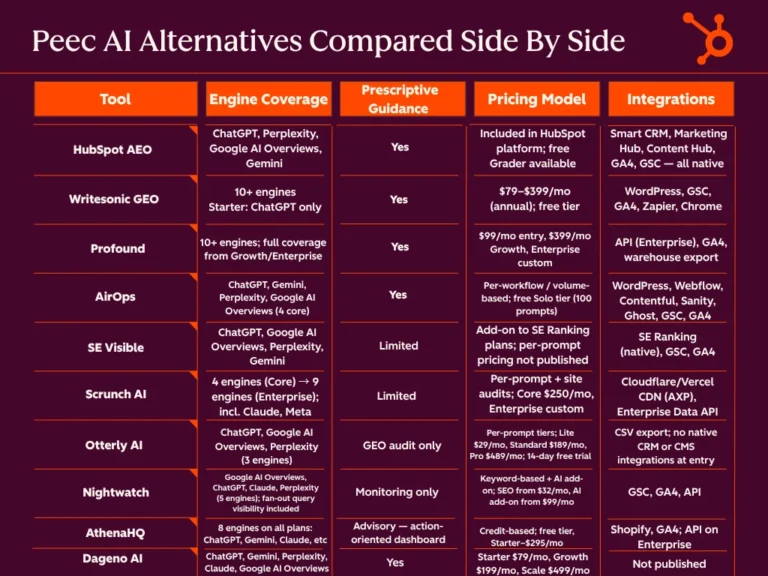
A primary obstacle in the adoption of AIO is the lack of transparent analytics. Unlike Google Search Console, which provides granular data on impressions and clicks, platforms like OpenAI and Anthropic do not currently offer a public dashboard for website owners to track their AI visibility. This has led to the rise of third-party monitoring tools. Commercial services such as Ahrefs and SE Ranking have begun offering AI tracking features at price points ranging from $95 to $300 per month.
For smaller creators, the use of no-code automation platforms like Make.com has emerged as a viable alternative. These systems allow users to programmatically query AI models and log when their brand or content is cited, creating a historical record of performance. This data-driven approach is essential for refining AIO strategies, as it allows creators to see which content updates correlate with increased citations.
Industry Responses and the Future of the Open Web
The rise of AI search has sparked a complex reaction from the global publishing community. While some creators view AIO as a new frontier for organic growth, others express concern over the potential for "content cannibalization." If an AI provides a complete answer based on a website’s content without requiring the user to click, the website loses the opportunity for ad revenue or lead generation.
In response, some publishers have begun blocking AI crawlers using robots.txt files, while others have entered into multi-million dollar licensing agreements with AI developers. For example, major media conglomerates have signed deals with OpenAI to ensure their content is used for training and cited in responses, creating a "walled garden" effect where only authorized sources are prioritized.
However, for the vast majority of independent creators and businesses, AIO remains the only path toward maintaining a presence in the evolving search funnel. The "qualification" of traffic is a notable benefit; users who do click through from an AI citation are often better informed and further along in the decision-making process, leading to higher engagement metrics once they arrive on the site.
Broader Implications for Digital Strategy
As AI search becomes the default behavior for younger demographics and professional researchers, the importance of AIO will only intensify. The shift from "ranking" to "being cited" requires a fundamental change in mindset—from producing content for algorithms to producing authoritative knowledge for synthesis.
The future trajectory of this technology suggests a more personalized search experience. AI models will soon factor in individual user history and preferences to deliver even more tailored recommendations. For content creators, this means that building a distinct brand voice and a reputation for accuracy will be more valuable than any technical "hack." Those who adopt AIO principles today are not merely chasing a trend; they are securing their place in a digital ecosystem where the answer, not the link, is the ultimate destination. The window for early adoption is closing as the landscape becomes more competitive, making the implementation of AIO strategies a critical priority for 2025 and beyond.
About the Author