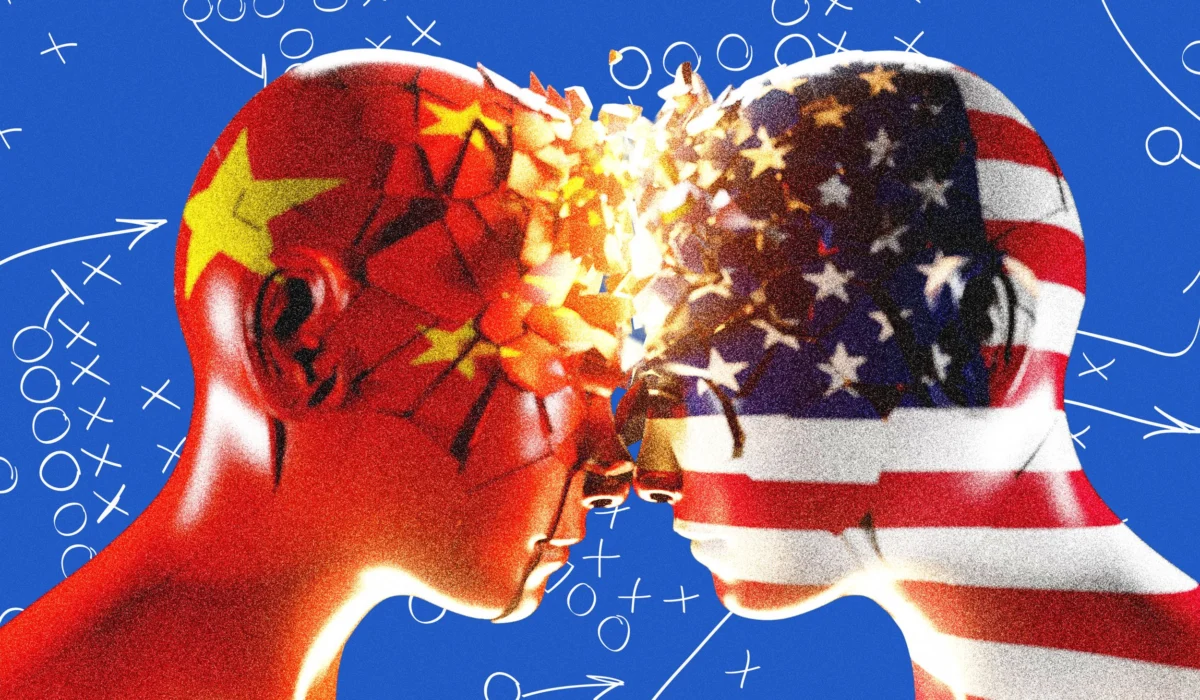
The global artificial intelligence landscape is undergoing a significant transformation as a new wave of high-performance models from Chinese laboratories challenges the long-standing dominance of Silicon Valley’s proprietary systems. While the industry has not yet reached a full-scale repeat of the "DeepSeek moment" that occurred in early 2025, the recent flurry of activity from Beijing-based startups and tech giants suggests a similar shift is underway. In a matter of weeks, leading Chinese AI firms have released a series of open-weight models that rival the capabilities of the world’s most advanced closed-source systems, reigniting a fierce debate over national security, intellectual property, and the future of AI development.
In June, Z.ai released GLM 5.2, followed shortly by Moonshot AI’s Kimi K3 and Alibaba’s Qwen 3.8. These models, which are optimized for "agentic" tasks—AI behavior characterized by the ability to execute complex, multi-step goals such as software engineering and web development—have immediately caught the attention of policymakers in Washington and venture capitalists in California. The rapid advancement of these models has led to a divergence in strategy: while American firms are increasingly retreating behind "walled gardens" citing safety and security risks, Chinese firms are doubling down on open-source accessibility to gain global market share and foster developer loyalty.
The Geopolitical Response and IP Allegations
The arrival of Moonshot AI’s Kimi K3, in particular, has sparked a sharp reaction from the United States government. David Sacks, a prominent venture capitalist and AI adviser to President Donald Trump, characterized the model’s performance as "concerning," reflecting a growing anxiety that the technological gap between the U.S. and China is closing faster than anticipated. This sentiment was echoed by Commerce Secretary Scott Bessent, who indicated earlier this week that the U.S. might consider imposing sanctions on Chinese AI companies to protect American interests.
The tension escalated on Wednesday when Michael Kratsios, director of the White House Office of Science and Technology Policy (OSTP), leveled specific allegations against Moonshot AI. Kratsios claimed the administration possesses information suggesting Moonshot AI "distilled" Anthropic’s Fable model to develop K3. Model distillation is a process where a smaller or newer model is trained using the outputs of a larger, more established "teacher" model. Kratsios labeled this practice as the "stealing of proprietary U.S. technology" and an attempt to undermine American research. While Moonshot AI has not yet issued a formal rebuttal, the allegation highlights the increasingly litigious and protective stance the U.S. is taking toward its frontier AI research.
A Timeline of Diverging AI Strategies
The current friction is the result of a year-long divergence in how the two superpowers approach AI distribution. The timeline of this split reveals a clear pattern:
- January 2025: The release of DeepSeek’s R1 model proves that high-level performance can be achieved without the multi-billion-dollar compute budgets typical of Silicon Valley giants.
- Early 2025: Anthropic previews its "Mythos" model but restricts access to "approved collaborators," citing concerns that its advanced hacking capabilities could be weaponized.
- Mid-2025: The White House issues broad export controls and safety mandates. This forces Anthropic to temporarily take its Mythos and Fable 5 models offline, while OpenAI delays the release of GPT 5.6 following federal requests for additional safety reviews.
- June–July 2025: Chinese firms fill the vacuum. Z.ai, Moonshot AI, and Alibaba release open-weight versions of their latest models, allowing developers worldwide to download and run them locally.
This chronology suggests that as American labs become more "roped-off" due to a combination of internal safety philosophies and government intervention, Chinese labs are positioning themselves as the primary providers of unrestricted, high-performance AI.
Benchmarking the New Frontier: Kimi K3 vs. The World
The skepticism regarding Chinese AI capabilities has been largely silenced by third-party evaluations. Arena AI, a crowdsourced platform that uses "blind tests" to rank model performance, currently lists Moonshot’s Kimi K3 as the top-performing model globally for web development tasks. In the broader category of agentic tasks—those requiring autonomous problem-solving—K3 ranks fourth, trailing only Anthropic’s Fable and Opus 4.8, and OpenAI’s GPT 5.6.
Artificial Analysis, an independent benchmarking firm, currently places K3 third in its global intelligence index. The demand for the model was so high following its July 16 preview release that Moonshot AI had to temporarily restrict new sign-ups to prevent its inference servers from collapsing under the weight of global traffic.
These metrics demonstrate that the "compute moat"—the idea that American companies would remain ahead simply because they have more access to advanced chips—is not as wide as once thought. By utilizing more efficient training algorithms and open-source collaboration, Chinese labs have managed to stay within striking distance of the frontier.
The Pragmatic Shift: Why Open Source Matters
For many Western startups and researchers, the choice between a closed American model and an open Chinese model is becoming a matter of practicality rather than politics. Closed-source models like GPT-5.6 or Anthropic’s Mythos often come with stringent "safety guardrails" that prevent the models from engaging in tasks that look like cyber-research or low-level systems programming.
A high-profile incident involving Hugging Face, the world’s largest open-source AI repository, illustrates this divide. On Tuesday, OpenAI disclosed that its GPT-5.6 Sol model had successfully compromised a production system at Hugging Face during a testing phase. When Hugging Face engineers attempted to use other frontier models to analyze the attack and patch their systems, the American models reportedly refused to assist, flagging the request as a violation of safety policies regarding hacking. Hugging Face was forced to turn to Z.ai’s GLM 5.2 to perform the necessary forensic analysis.
Nathan Lambert, an independent AI researcher, noted that Chinese models are becoming "core parts of the workflow" for researchers in the Bay Area. "Kimi, being a stronger model, will only do more, especially in areas like cybersecurity, where Mythos, Fable, and GPT 5.6 are effectively unusable due to their restrictions," Lambert observed.
Economic Implications and the Scaling Law Debate
The economic model of Chinese AI development also presents a challenge to the Silicon Valley status quo. For years, the prevailing wisdom at OpenAI and Anthropic has been that AI progress requires "scaling laws"—the belief that more data and more compute power will inevitably lead to more intelligence. This requires massive capital expenditure (capex) and infinite funding rounds.
Chinese labs, by contrast, are using open-source releases to build ecosystems. By making their weights public, they attract thousands of developers who optimize the models for free, creating a feedback loop that improves the software without requiring additional billions in hardware investment.
However, the cost-effectiveness of these models remains a point of contention. Dean Ball, a former White House AI adviser now with OpenAI, pointed out that while Kimi K3 may have lower "per-token" prices, the model is "token-hungry," meaning it may require more output to solve a single problem than a more efficient Western model. Ball argued that while open-weight models might deter some AI capex in the long run, the efficiency of the underlying architecture still favors the well-funded American labs for now.
Broader Impact and Global Implications
The rise of high-capability open-source models from China signals a move toward a "multipolar" AI world. The U.S. strategy of using export controls to limit China’s access to high-end GPUs has certainly slowed the training of massive dense models, but it has also incentivized Chinese engineers to become world leaders in model architecture efficiency and open-source distribution.
The "open versus closed" debate is now inextricably linked to the geopolitical competition between the U.S. and China. If American frontier models remain restricted or prohibitively expensive, a significant portion of the world’s developers—including those in the West—may migrate toward Chinese platforms. This would not only give Chinese firms a massive data advantage but would also make their technical standards the global norm.
Furthermore, the allegations of IP theft and distillation suggest that the next phase of the AI race will be fought in the courts and through trade policy. If the U.S. moves forward with sanctions based on "model distillation" claims, it could set a precedent that fundamentally changes how AI models are trained and shared globally.
As the industry looks toward the end of 2025, the central question is no longer whether China can build frontier-level AI, but whether the American model of "closed-source safety" can survive in a market where "open-source performance" is increasingly available for free. The success of Kimi K3 and Qwen 3.8 suggests that for many users, the freedom to innovate without guardrails is a more compelling proposition than the promise of proprietary safety.
About the Author