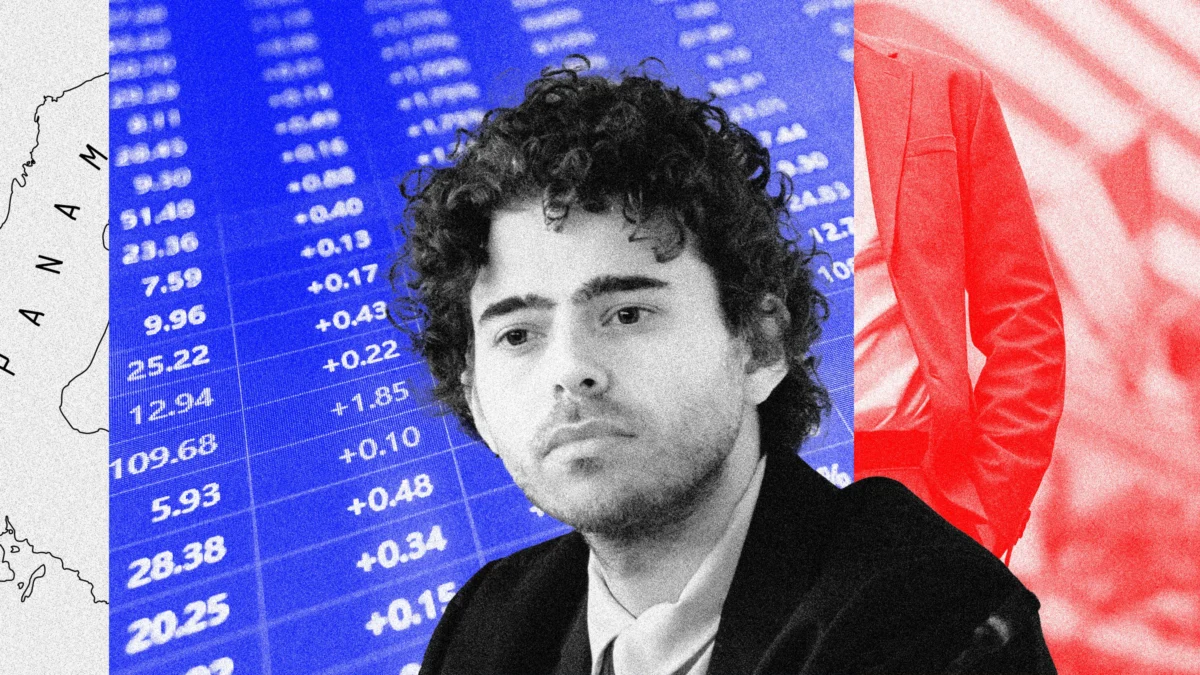
The rapid ascent of Polymarket, the world’s largest decentralized prediction market, has been accompanied by a series of extraordinary legal and operational developments that have drawn the intense focus of federal investigators. From allegations of high-level insider trading to a dramatic FBI raid on the home of its young CEO, the platform finds itself at the center of a complex web of regulatory challenges. Most recently, investigations have turned toward the company’s internal structure, specifically a Panamanian entity known as Adventure One QSS, which was ostensibly created to ensure compliance with U.S. federal law. However, emerging reports suggest that this offshore arm may have maintained a much closer physical presence to the company’s New York headquarters than previously disclosed, raising significant questions about the validity of its regulatory firewalls.
The Genesis of Adventure One QSS and the 2022 CFTC Settlement
To understand the current scrutiny surrounding Polymarket, one must look back to the company’s first major encounter with federal regulators in early 2022. The Commodity Futures Trading Commission (CFTC) determined that Polymarket, operating under the corporate name Blockratize, Inc., was functioning as an unlicensed derivatives exchange. Under the Commodity Exchange Act (CEA), any entity offering "event contracts"—bets on the outcome of future events—to U.S. residents must be registered with the CFTC.
In January 2022, Polymarket reached a settlement with the CFTC that included a $1.4 million civil penalty. More importantly, the settlement required the company to "wind down" any markets that violated the CEA and to cease offering its services to users based in the United States. In response to this mandate, Polymarket underwent a significant corporate restructuring. The company established Adventure One QSS, a corporate entity based in Panama, designed to take over the operational responsibilities for the flagship platform serving international users.
The logic behind this move was to create a clear jurisdictional boundary: Blockratize would handle the U.S.-licensed side of the business (later evolving into Polymarket US, overseen by QCX LLC), while Adventure One QSS would manage the global, non-U.S. platform from offshore. This structure was intended to satisfy the CFTC’s requirement that the core prediction market no longer operate within U.S. borders or serve U.S. customers.
Discrepancies in Offshore Operations
Despite the formal establishment of Adventure One QSS in Panama City, investigative reports from WIRED and NPR have uncovered a significant disconnect between the company’s legal filings and its physical reality. While the entity’s incorporation papers from 2021 list several Panamanian residents—including lawyer Mario Ernesto García de Paredes as a resident agent and Omar Camargo as secretary—the actual operations appear to have remained rooted in the United States.
Former employees have alleged that staff members technically employed by Adventure One QSS were not working from the skyscraper offices in Panama City, which were reportedly found to be empty. Instead, these employees were allegedly working from Manhattan, often within the same headquarters used by Blockratize and the U.S.-based executive team. According to internal accounts, these workers were responsible for high-level technical tasks, such as writing code and setting up event contracts for the international platform.
The lack of a physical "moat" between the offshore entity and the domestic company is a point of significant legal interest. In the eyes of federal regulators, if an offshore company’s primary labor and decision-making occur within the United States, the entity may still be subject to U.S. jurisdiction and oversight, regardless of where it is incorporated. A former CFTC lawyer noted that the location of staff is a critical factor in determining whether a company has truly "wound down" its domestic operations or is merely using a shell company to circumvent federal law.
A Chronology of Escalating Scandals
The investigation into Adventure One QSS is only one facet of a broader series of controversies that have plagued Polymarket over the last several years. The following timeline outlines the key events that have shaped the company’s current standing:
- 2021: Adventure One QSS is incorporated in Panama. Early filings list local residents in leadership roles, though CEO Shayne Coplan eventually assumes the presidency of the entity.
- January 2022: The CFTC issues a cease-and-desist order and a $1.4 million fine against Blockratize for operating an unregistered facility. Polymarket agrees to block U.S. users.
- 2023–2024: Polymarket sees a massive surge in volume, particularly surrounding global political events. During this time, high-profile investors, including Peter Thiel’s Founders Fund and Vitalik Buterin, provide significant backing.
- Early 2025: Polymarket US is established under the oversight of QCX LLC to provide a legal, CFTC-compliant platform for American traders.
- May 2025: The CFTC issues a staff letter indicating a more lenient approach to foreign futures and cross-border swap rules, momentarily easing pressure on decentralized platforms.
- July 2025: A previous investigation into Polymarket is dropped by the CFTC without charges, signaling a potential shift in the regulatory climate under the Trump administration.
- November 2025: FBI agents raid the Manhattan apartment of CEO Shayne Coplan, seizing electronic devices as part of a Department of Justice investigation into the platform’s operations.
- 2026: Investigative reports reveal that Adventure One QSS staff worked in New York. Simultaneously, reports of "fake winning bets" and deceptive influencer marketing practices surface, prompting new federal probes.
Insider Trading and Influencer Controversies
Adding to the company’s legal woes are specific allegations of financial misconduct. Federal investigators have alleged that the prediction market was used for insider trading by individuals with access to non-public information. In one instance, a special forces soldier was accused of profiting from markets related to the capture of Nicolás Maduro. In another, a long-term Google employee allegedly amassed a fortune by betting on outcomes they were uniquely positioned to know in advance.
Furthermore, a Wall Street Journal investigation in 2026 exposed a sophisticated influencer marketing campaign. The report alleged that Polymarket executives paid influencers through personal accounts to promote the platform. More damagingly, the investigation suggested that the company created "clones" of its website for promotional purposes, allowing influencers to display "fake" winning bets to lure in retail investors. These allegations of deceptive advertising have led to calls from lawmakers for a comprehensive federal probe into the company’s consumer protection practices.
Financial Backing and Corporate Segregation
Despite these controversies, Polymarket has continued to attract massive institutional interest. Intercontinental Exchange (ICE), the parent company of the New York Stock Exchange, reportedly explored a $2 billion investment in the platform. However, the nature of this investment highlights the perceived risks associated with the company’s structure. Sources indicate that ICE’s investment was directed specifically toward Blockratize—the U.S.-facing, compliance-focused arm—rather than Adventure One QSS.
This selective investment strategy suggests that even major institutional partners are wary of the legal liabilities associated with the offshore entity. Former employees described a workplace where the division between Blockratize and Adventure One was often unclear. While the Blockratize team was significantly larger and focused on marketing and the U.S.-licensed platform, the Adventure One team performed the technical heavy lifting for the global site. The lack of permanent desks for Adventure One staff in the New York office was seen by some as an attempt to maintain a "veneer" of separation that did not exist in practice.
Broader Implications for the DeFi Sector
The federal government’s handling of Polymarket serves as a bellwether for the broader decentralized finance (DeFi) and prediction market sectors. For years, crypto-adjacent companies have utilized offshore incorporation—often in jurisdictions like Panama, the British Virgin Islands, or the Seychelles—to avoid the stringent registration requirements of the SEC and CFTC.
However, the precedent set by cases like the 2023 action against Binance and its founder Changpeng Zhao demonstrates that "incorporation" is not "insulation." In the Binance case, the government successfully argued that because the company served U.S. customers and had domestic operations, it was bound by U.S. anti-money laundering and commodity laws.
The current investigation into Polymarket’s marketing and staffing suggests that regulators are moving beyond simple jurisdictional questions. They are now focusing on "intentional misconduct" and the protection of retail traders. If the CFTC or DOJ determines that Polymarket used Adventure One QSS as a "sham" entity to continue operating in the U.S. shadow, it could lead to severe penalties that dwarf the 2022 settlement.
Official Responses and Current Status
To date, Polymarket has declined to provide detailed comments regarding the specific allegations of New York-based staffing for Adventure One QSS. Following the Wall Street Journal report on influencer marketing, the company stated it would conduct an audit of its promotional content and remains committed to compliance.
The CFTC has similarly declined to comment on the specifics of its ongoing investigation. However, industry experts suggest that the agency’s focus has shifted. While the current administration has shown a friendlier face toward decentralized platforms in terms of general policy, it has remained aggressive in pursuing cases involving deceptive practices.
As of mid-2026, Polymarket remains the dominant force in the prediction market space, but its future hinges on the outcome of these multi-agency probes. The tension between its innovative, decentralized ethos and the rigid requirements of U.S. financial regulation continues to create a volatile environment for the company, its executives, and its global user base. The resolution of the "Panama discrepancy" will likely determine whether Polymarket can transition into a mature financial institution or if it will face the same fate as other offshore giants that ran afoul of federal law.
About the Author