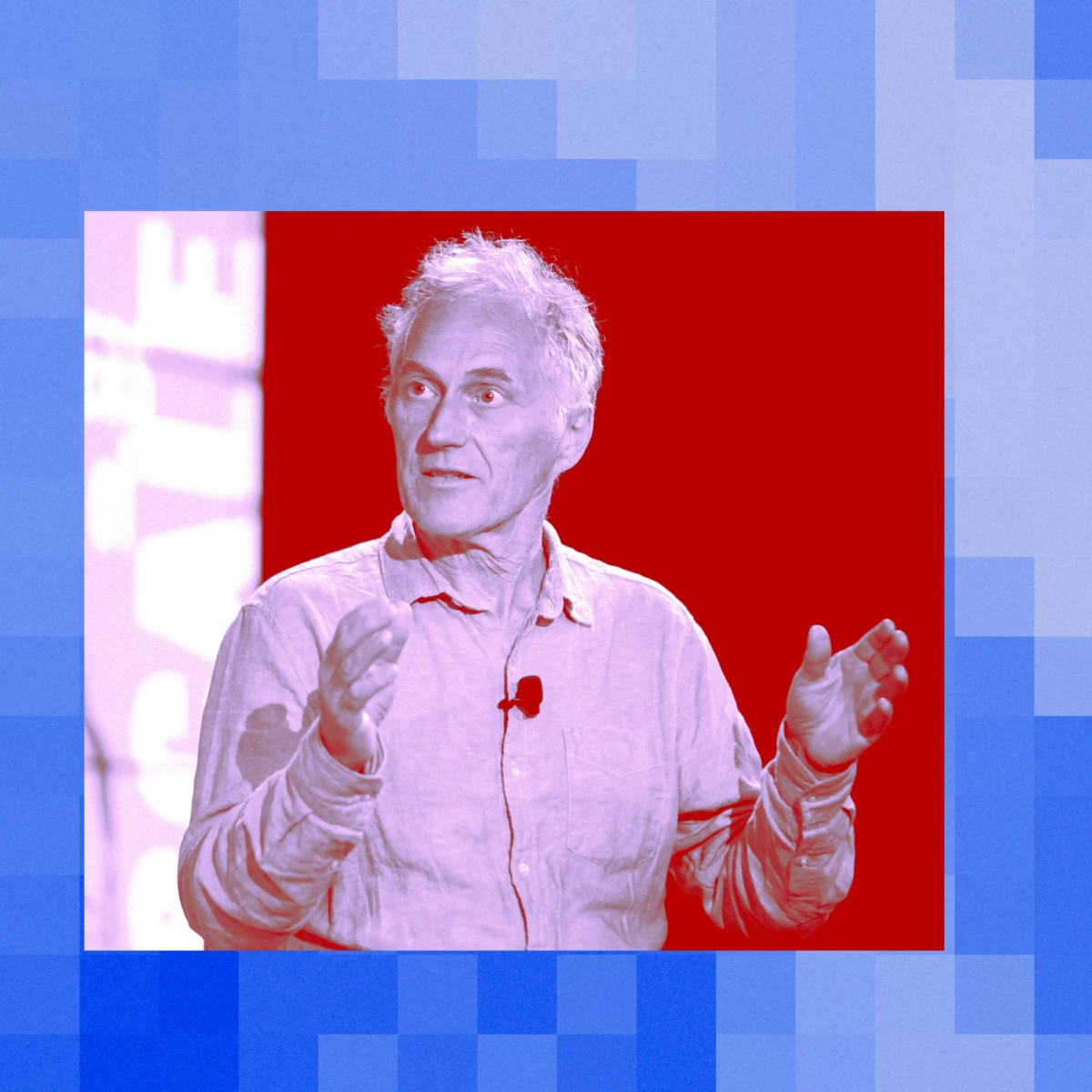
The landscape of artificial intelligence is currently defined by a high-stakes tension between the proprietary "frontier models" of Silicon Valley’s hyperscalers and an emerging movement toward open-source democratization. Tim O’Reilly, the internet pioneer, venture capitalist, and publisher who famously coined the term "Web 2.0," is positioning himself at the center of this debate. His foundational philosophy—that a company or individual should create more value than they capture—is now being applied to the architecture of AI. O’Reilly argues that the current trajectory of AI development, led by giants like Microsoft, Google, and OpenAI, risks repeating the monopolistic patterns of the 1990s, whereas an open-source approach could catalyze a new era of global innovation.
The Core Philosophy: Value Creation vs. Value Capture
For decades, Tim O’Reilly has utilized a specific yardstick to measure the health of the technology industry: the ratio of value created for society versus value captured for shareholders. In the current AI boom, he observes a worrying trend where massive corporations are building "architectures of control." These systems are designed to lock users into specific ecosystems, much like the proprietary software models that dominated the pre-web era.
O’Reilly’s advocacy for open-source AI extends beyond the mere availability of "open weights"—the numerical parameters that determine how an AI model functions. He is pushing for a holistic "architecture of participation," a concept he championed during the rise of the World Wide Web. This vision entails a fully transparent stack where the model, the "harness" (the software that manages the AI’s interactions), and the application layer are decoupled. This separation would allow developers to "embed their own special sauce" into AI systems, fostering a diverse marketplace of specialized tools rather than a handful of all-purpose, closed-door platforms.
A Chronology of Influence: From Web 2.0 to the AI Disclosures Project
To understand O’Reilly’s current stance, one must look at the historical trajectory of his contributions to the tech industry. In 1993, his company launched Global Network Navigator (GNN), the first commercial web portal, which was later sold to AOL. In the early 2000s, he helped define the "Web 2.0" era, characterized by user-generated content, usability, and interoperability.
By the 2010s, O’Reilly began criticizing the "anti-capitalist" shift in Silicon Valley, where venture capital began to prioritize market dominance through massive subsidies rather than organic market fit. Today, his focus has shifted to the ethical and structural implications of AI. Through his nonprofit initiative, the AI Disclosures Project, O’Reilly is working toward an "open-memory consortium." This project aims to prevent companies like Meta from creating "data moats" by allowing users to maintain their personal AI context and history even when switching between different service providers.
The Economic Critique: Silicon Valley’s Anti-Capitalist Shift
One of O’Reilly’s most provocative assertions is that modern Silicon Valley has moved away from true capitalism. He points to the period around 2010 as a turning point, specifically citing the business models of ride-sharing giants Uber and Lyft. Funded by billions in venture capital, these companies subsidized rides to artificially deflate prices and crush competition.
"The venture capitalists picked the winner rather than the market," O’Reilly notes. He argues that this "failed model" is now being applied to AI, with massive capital funneled into a few frontier labs. However, he remains optimistic that this model will ultimately falter. He draws a parallel to the early 1990s, when the industry was fixated on the battle for PC operating system dominance, only to be disrupted by the World Wide Web—a decentralized innovation that emerged from outside the traditional VC-funded pipeline.
Supporting Data: The Shifting Economics of Knowledge
The urgency of O’Reilly’s message is underscored by the changing economics of his own industry: publishing. O’Reilly Media, once a titan of technical book publishing, has seen its book-related revenue decline from a peak of $70 million to approximately $30 million over the last 25 years. This decline reflects a broader trend in how information is consumed and monetized.
As AI models "hoover up" vast quantities of written knowledge to train their systems, the traditional value of the "book" is being replaced by the value of "invoking expertise." O’Reilly is currently exploring how to build tools that allow human experts to be compensated when their knowledge is utilized by AI, rather than having that value solely captured by the model providers.
Key Market Statistics and Trends:
- The Rise of Open Source: According to industry reports, the number of open-source AI models on platforms like Hugging Face has surpassed 500,000, indicating a massive groundswell of developer interest outside of proprietary labs.
- The Cost of Frontier Models: Training a "frontier" model like GPT-4 or Claude 3 is estimated to cost upwards of $100 million in compute power, creating a natural barrier to entry that O’Reilly argues open-source collaboration must dismantle.
- Global Diffusion: While the U.S. leads in high-end "frontier" models, China is aggressively diffusing lower-level, efficient models throughout its manufacturing and service sectors, a strategy O’Reilly warns could lead to a competitive advantage in "real-world" AI application.
Addressing Security and the "Frontier Model" Narrative
A common counter-argument against open-source AI is the risk of security breaches. Critics and some industry leaders argue that making powerful models open-source allows bad actors to bypass safety guardrails, potentially facilitating cyberattacks or the development of biological weapons.
O’Reilly counters this by pointing out that nearly all significant AI-related security incidents to date have involved proprietary frontier models, not open-source ones. He suggests that the risks associated with "frontier" capabilities—such as pathogen development—are actually an argument for slowing down the development of those specific hyper-powerful models, rather than a justification for restricting the "open-weight" models that the general public uses for innovation.
AI as a Creative Medium: A Divergence of Perspectives
The debate over AI often centers on whether the technology is a tool or a replacement for human agency. O’Reilly views AI as a new creative medium, comparable to the invention of the camera or the development of oil paints. He uses AI as a "thought partner" for brainstorming and functional writing, such as summarizing long interviews into usable drafts.
This perspective stands in contrast to traditional journalistic standards, which often emphasize the "human-only" nature of the writing process. O’Reilly predicts that the resistance to AI-assisted writing will eventually fade. "The idea that you can’t write with AI will seem as curious as the idea that you can’t make a good portrait or landscape with a camera," he suggests. In his view, the future belongs to "masters of expression" who can effectively summon and refine ideas using Large Language Models (LLMs).
Broader Impact and Implications for the Future
The implications of O’Reilly’s vision are profound for the global tech economy. If the "open-source" path prevails, AI could become a diffused utility, integrated into the fabric of society much like the internet protocols (TCP/IP, HTML) that fueled the 1990s boom. If the "proprietary" path wins, the digital future may be defined by a series of walled gardens where user data and creative output are the property of a few "hyperscalers."
O’Reilly’s push for an "open-memory consortium" is perhaps the most critical battleground in this conflict. By advocating for a system where users own their AI-generated context, he is attempting to ensure that the next generation of technology remains an "architecture of freedom."
The shift from "mainframes" to "PCs" and then to the "Web" provides a historical blueprint. O’Reilly believes that while frontier models may remain the "supercomputers" of the AI age—reserved for massive, complex problems—the AI that actually transforms daily life will be the lightweight, open, and customizable models that allow individuals to "paint outside the lines."
As the AI industry matures, the tension between value creation and value capture will likely intensify. For Tim O’Reilly, the goal remains the same as it was thirty years ago: to ensure that the technology of the future empowers the many rather than enriching the few. Whether the market will follow his lead, or whether the gravity of concentrated capital will prove too strong, remains the defining question of the current technological era.
About the Author