A white police officer who was denied a promotion in favor of an Arab Muslim colleague will have his discrimination claims heard in court, following a significant ruling by the 3rd U.S. Circuit Court of Appeals. The appeals court, in a decision issued Friday, March 6, 2026, found that New Jersey’s long-standing "background circumstances rule" is no longer a permissible barrier to discrimination lawsuits, citing a pivotal 2025 U.S. Supreme Court decision. This ruling marks one of the earliest applications of the Supreme Court’s directive in Ames v. Ohio Department of Youth Services, signaling a potential shift in how reverse discrimination claims are litigated across the nation.
The case, Christopher Massey v. Borough of Bergenfield, et al., centers on the promotion process for the chief of police in Bergenfield, New Jersey, in August 2019. Christopher Massey, a white officer with eight additional years of experience within the department, contended that he was unfairly passed over for the position due to racial and religious discrimination. At the time of the interviews, Massey was serving as "officer in charge," a role that required him to manage a substantial portion of the department’s daily operations, an estimated 75 to 90 percent. His competing candidate, an Arab Muslim officer who joined the department in 2003, had received multiple promotions but had also been the subject of several internal complaints and one suspension, according to court documents.
Massey filed a lawsuit against the Borough of Bergenfield and five members of the hiring committee, asserting violations of the New Jersey Law Against Discrimination (NJLAD) and the Civil Rights Act of 1866. The core of his claim was that his non-selection was a result of unlawful bias. However, a district court had previously granted summary judgment in favor of the defendants, determining that Massey had failed to meet the stringent requirements of New Jersey’s "background circumstances rule." This rule, as interpreted by state courts, typically mandates that a non-minority plaintiff must demonstrate they have been victimized by an "unusual employer who discriminates against the majority."
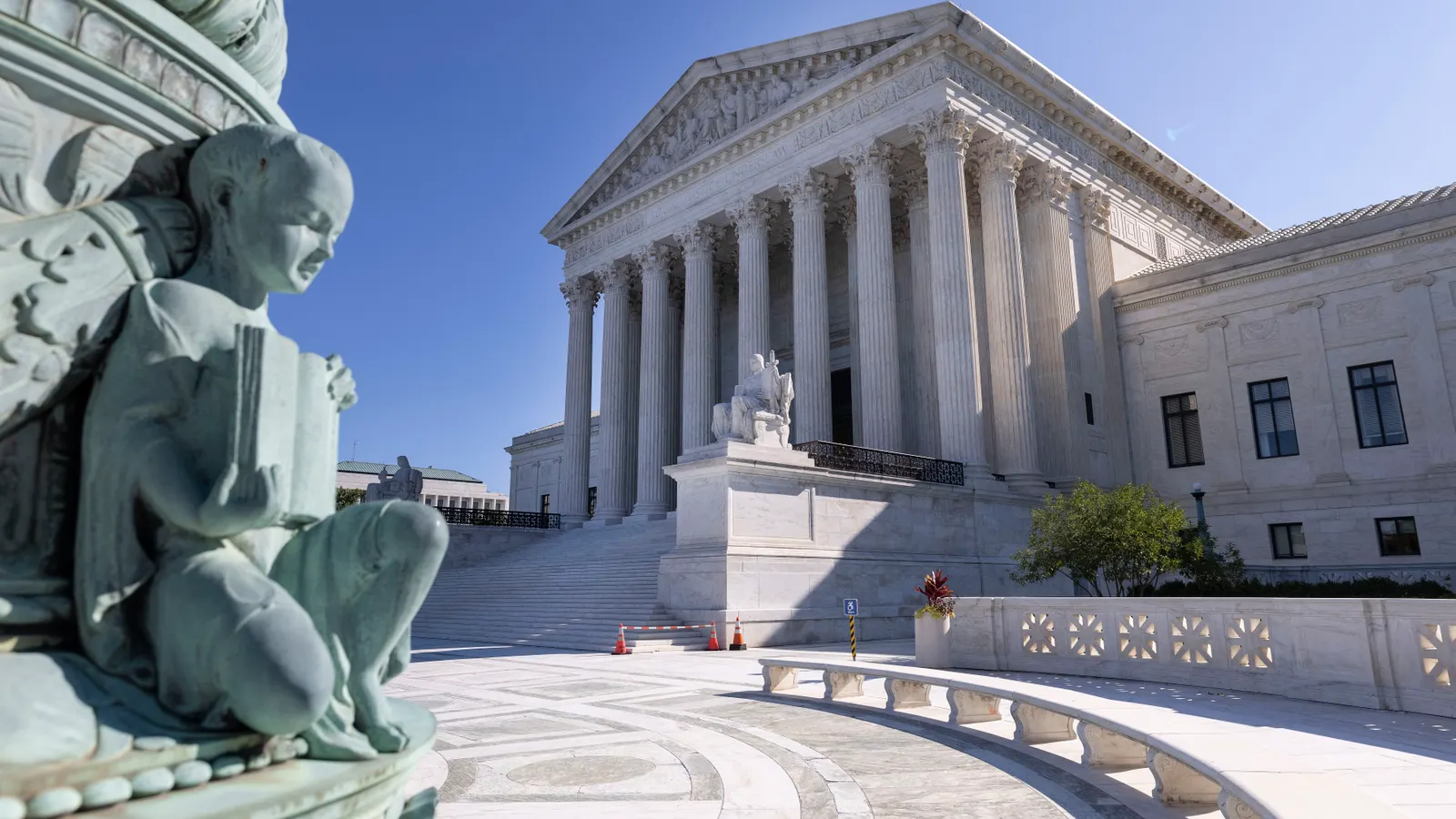
The Third Circuit’s decision hinges on its interpretation of the U.S. Supreme Court’s unanimous ruling in Ames v. Ohio Department of Youth Services, decided in 2025. The Supreme Court in Ames held that the "background circumstances" standard previously applied by the 6th U.S. Circuit Court of Appeals was inconsistent with Title VII of the Civil Rights Act of 1964. Title VII prohibits employment discrimination based on race, color, religion, sex, and national origin, and the Supreme Court’s decision emphasized that the focus should be on whether discriminatory animus played a role, rather than on a plaintiff’s ability to prove an "unusual" employer dynamic.
The Impact of Ames v. Ohio Department of Youth Services
The Third Circuit explicitly acknowledged the post-dating of the Ames decision relative to the district court’s initial ruling. In its opinion, the appellate court stated, "Although the Supreme Court of New Jersey has not yet had occasion to address Ames, we predict that the court would rely on Ames to conclude that the State’s Background Circumstances Rule no longer has a permissible role to play in litigation under New Jersey’s Law Against Discrimination." This prediction is a powerful indicator of how state courts are expected to align with federal appellate interpretations of federal anti-discrimination law.
The implications of this ruling are far-reaching. By effectively dismantling the "background circumstances rule" as a prerequisite for non-minority plaintiffs, the Third Circuit has opened the door for individuals who believe they have been subjected to discrimination based on their race or other protected characteristics to pursue their claims without facing such a high initial hurdle. This could lead to an increase in litigation concerning alleged "reverse discrimination," a term often used to describe discrimination against members of a majority group.
Evidence of Potential Bias
The Third Circuit’s decision was not merely a legal interpretation; it also highlighted specific pieces of evidence presented by Massey that it deemed sufficient to convince a jury of potential discrimination. These included:

- A statement from a panel member: One member of the hiring committee allegedly expressed a preference for the winning candidate by stating, "he’s a minority." This direct remark suggests that the candidate’s minority status was a significant factor in the decision-making process, potentially overshadowing other qualifications.
- Comments from the Borough Administrator: The Borough Administrator reportedly told Massey that the decision was "all about race." Such a statement, if proven, could directly indicate that race was a determinative factor in the promotion, rather than merit or qualifications.
- Perceived appearance mismatch: Another panel member allegedly told Massey that he did not "look like the people in the town." This comment, while potentially nuanced, could be interpreted as a suggestion that Massey did not fit a perceived demographic profile desired for the leadership role, implying bias based on his race or background.
These pieces of evidence, when viewed collectively and in light of the invalidation of the "background circumstances rule," provide a strong basis for Massey’s claims to proceed to trial. The Third Circuit’s opinion suggests that the district court had erred in dismissing these allegations without allowing a jury to weigh their significance.
Legal Representation and Future Outlook
Dylan Hastings, an attorney representing Christopher Massey, expressed confidence in the ruling and its implications for his client and others facing similar situations. "The Third Circuit’s decision confirms that anti-race discrimination statutes, including the New Jersey Law Against Discrimination, apply to everyone equally, regardless of race," Hastings told HR Dive. "As can be gleaned from the decision, there is significant evidence that the promotional decision was indeed influenced by race, and we look forward to proving that at trial."
Attorneys for the Borough of Bergenfield did not respond to requests for comment by the time of publication. Their response, or lack thereof, could indicate their strategy moving forward, whether it involves an appeal or preparation for a trial.
The Massey case is significant not only for its direct impact on the plaintiff and the Borough of Bergenfield but also as an early indicator of the litigation landscape following the Supreme Court’s Ames decision. Legal experts have predicted that "reverse discrimination" will be a highly active area for legal challenges in 2026 and beyond. While some anticipated that much of this activity would stem from investigations and enforcement actions by the U.S. Equal Employment Opportunity Commission (EEOC), the Massey ruling suggests that judicial pathways for such claims are also becoming more accessible.

Background Context and Timeline
- August 2019: Christopher Massey and an Arab Muslim colleague are interviewed for the position of Chief of Police in Bergenfield, New Jersey. Massey is ultimately not selected for the promotion.
- Post-August 2019: Massey files a lawsuit against the Borough of Bergenfield and members of the hiring committee, alleging racial and religious discrimination under state and federal law.
- Date of District Court Ruling (Presumed 2024 or early 2025): The district court grants summary judgment for the defendants, relying on New Jersey’s "background circumstances rule."
- June 26, 2025: The U.S. Supreme Court issues its unanimous decision in Ames v. Ohio Department of Youth Services, finding that the 6th Circuit’s "background circumstances" rule is inconsistent with Title VII.
- March 6, 2026: The 3rd U.S. Circuit Court of Appeals reverses the district court’s decision in Massey v. Borough of Bergenfield, et al., holding that the "background circumstances rule" is no longer permissible and remanding the case for further proceedings.
The Massey decision serves as a crucial legal precedent, reinforcing the principle that anti-discrimination laws are intended to protect all individuals from unfair treatment in the workplace, regardless of their demographic group. As litigation in this area evolves, the full impact of the Supreme Court’s Ames ruling will continue to unfold, potentially reshaping the landscape of employment discrimination law. The case highlights the critical role of appellate courts in interpreting and applying high court decisions to lower court proceedings, ensuring consistency and fairness in the legal system.
About the Author