Josh Mackanic, a former engineer with a decade of experience at Pacific Gas and Electric (PG&E), embarked on a mission to address a pervasive and costly blind spot within the utility industry: the critical lack of comprehensive knowledge regarding what lies beneath the ground. His innovative solution, CivilGrid, recently announced a significant milestone, closing a $26 million Series A funding round led by Spark Capital, with additional investments from Afore, A*, Ford Street Ventures, SNR, and Energy Impact Partners. This substantial capital infusion is poised to propel CivilGrid’s vision of transforming how governments, civil engineering firms, and utility companies navigate, plan, and build the nation’s essential subterranean infrastructure.
The impetus for CivilGrid stemmed directly from Mackanic’s firsthand experiences, which underscored the profound inefficiencies and inherent dangers posed by incomplete underground data. He recounts a particular incident where a construction project faced an abrupt halt due to the unexpected discovery of an unmarked pipe within the excavation zone. "I had a job that got shut down because a pipe was in the excavation [that] we didn’t know about. Fortunately, we saw it before we impacted it," Mackanic shared in an interview with TechCrunch. What followed was a laborious three-day inquiry to identify the pipe’s ownership, its contents, and whether it could be safely disturbed. This delay, a common occurrence in infrastructure projects, translated into a tangible cost of $60,000 for that single incident, highlighting the vast financial drain caused by such information gaps across the industry.
The Invisible Labyrinth: A Persistent National Challenge
The challenge Mackanic observed at PG&E, one of the largest utility providers in the United States, is not unique to California or even to large corporations. It is a systemic issue affecting virtually every entity involved in ground disturbance activities nationwide. While utilities meticulously map their own assets—such as electric and gas lines—the subterranean landscape is a complex tapestry of infrastructure owned by myriad entities. Pipes carrying water belong to municipal water departments, sewage lines to sanitation districts, and fiber optic cables to telecommunications companies. Each entity typically maintains its own records, often in disparate formats, ranging from outdated paper maps to various digital Geographic Information System (GIS) files, creating a fragmented and incomplete picture for any single stakeholder.
This informational silo contributes significantly to the alarming statistic of approximately 200,000 "utility strikes" occurring annually across the United States. A utility strike, also known as a dig-in, refers to any contact with an underground utility line during excavation. These incidents are not merely inconveniences; they carry severe consequences. According to data from the Common Ground Alliance (CGA), a national non-profit organization dedicated to protecting underground utility lines, utility strikes result in billions of dollars in damages each year, service disruptions impacting millions of consumers, and tragically, hundreds of injuries and even fatalities. The economic repercussions extend beyond immediate repair costs, encompassing project delays, legal disputes, environmental contamination from ruptured pipelines, and increased operational expenses for utilities, which are often passed on to consumers.
A Deep Dive into the Roots of the Problem
The fragmented nature of subterranean infrastructure data has historical roots. Much of America’s foundational infrastructure was laid decades, if not a century, ago, long before the advent of sophisticated digital mapping technologies. Records were often kept on paper, sometimes with hand-drawn annotations, and stored in various municipal or utility archives. As cities grew and new infrastructure was added, these records often failed to be integrated or updated uniformly.
Even with the widespread adoption of GIS technology, the problem persists due to a lack of interoperability and standardized data sharing protocols among different utility and municipal entities. While "Call Before You Dig" initiatives, epitomized by the 811 national hotline, have been instrumental in reducing strikes by requiring excavators to request utility mark-outs, these systems are inherently reactive. They rely on individual utilities responding to specific requests, providing approximate locations, and often marking them with paint or flags on the ground. This process does not provide a holistic, pre-emptive, digital overview of all buried assets, nor does it typically offer detailed information about pipe depth, material, or capacity—critical data points for complex engineering projects.
Furthermore, the sheer volume and density of underground infrastructure in urban areas exacerbate the challenge. As new developments arise, existing utilities become more intertwined, making any excavation a high-stakes endeavor. Traditional methods of subsurface exploration, such such as ground-penetrating radar (GPR) or electromagnetic detection, are often costly, time-consuming, and provide localized rather than comprehensive insights, making them impractical for large-scale planning.
CivilGrid’s Transformative Solution: The "Google Maps for What’s Underground"
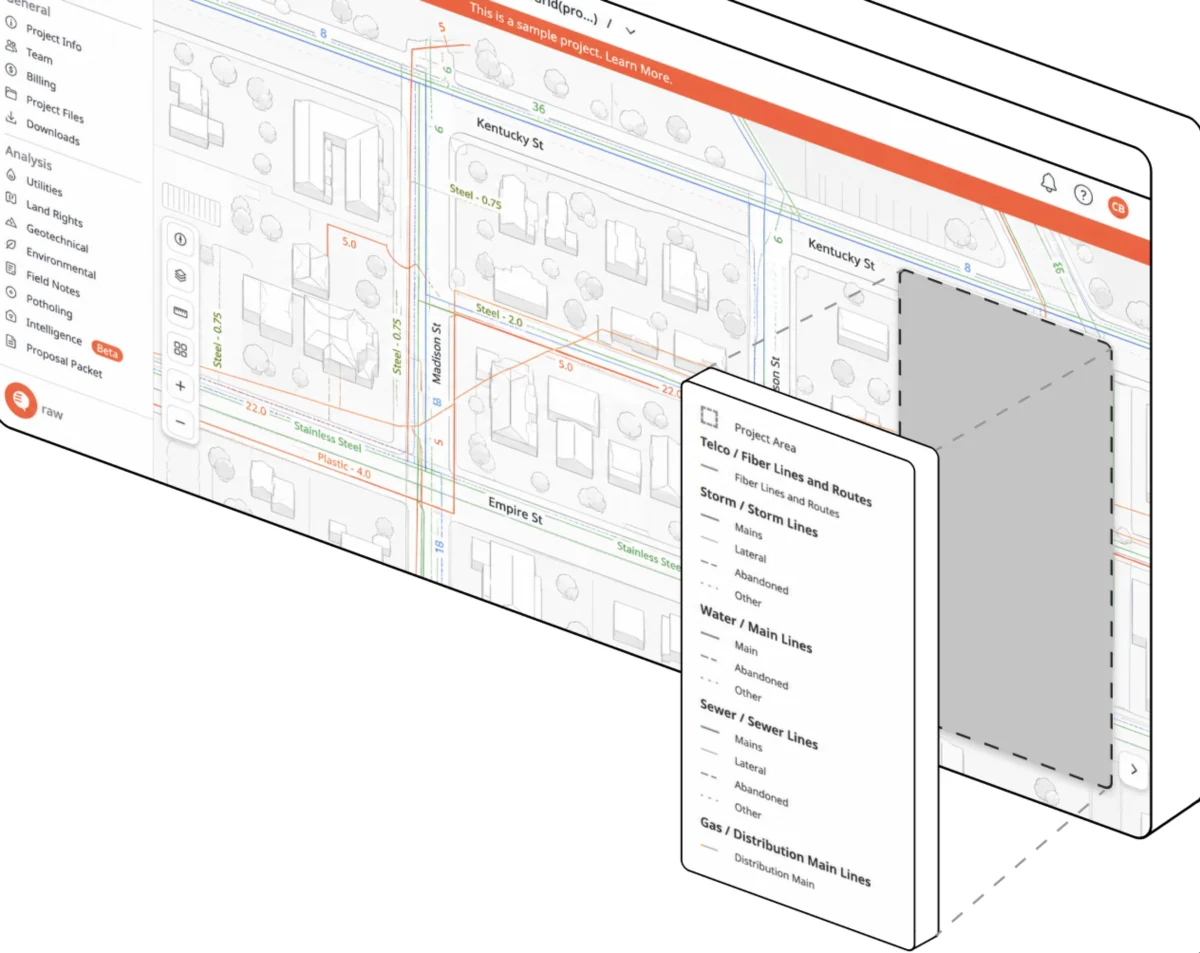
Recognizing these profound systemic issues, Mackanic founded CivilGrid in 2020 with a clear vision: to create a centralized, intelligent platform that aggregates, normalizes, and visualizes all available data pertaining to underground infrastructure. He cheekily refers to CivilGrid as "Google Maps for what’s underground," a simple analogy that belies the complex technological undertaking behind it.
CivilGrid’s core innovation lies in its ability to ingest and synthesize vast amounts of disparate data. This includes public records, proprietary utility asset maps, property ownership information, environmental regulations, topographical data, and potentially even historical construction blueprints. The platform employs advanced data processing techniques, likely involving machine learning and artificial intelligence, to clean, standardize, and integrate this information into a cohesive, interactive digital map. This unified dataset provides engineers, project managers, and urban planners with an unprecedented level of visibility into the subterranean world.
The value proposition of CivilGrid is multi-faceted, addressing critical needs across several sectors:
- For Utilities: The platform offers enhanced asset management, improved maintenance planning, and significant cost reductions by minimizing unexpected encounters with other utilities. It enables better risk assessment and compliance with safety regulations.
- For Civil Engineering Firms: CivilGrid empowers engineers with comprehensive data early in the design phase, allowing for optimized routing of new infrastructure, more accurate cost estimations, and reduced project timelines. It helps mitigate the risk of costly redesigns and construction delays.
- For Governments and Municipalities: The platform facilitates smarter urban planning, more efficient public works projects, and better coordination among different departments and external contractors. It contributes to public safety by preventing utility strikes and ensuring the resilience of critical urban systems.
CivilGrid’s ability to sell access to its platform to its former employer, PG&E, serves as a powerful testament to its efficacy and the industry’s recognition of its value.
A $26 Million Vote of Confidence: Fueling Growth and Expansion
The recent $26 million Series A funding round underscores investor confidence in CivilGrid’s disruptive potential and its ability to address a critical market need. Spark Capital, known for backing transformative technology companies, led the round, signaling a belief in CivilGrid’s long-term growth trajectory. The participation of early-stage funds like Afore, A*, Ford Street Ventures, and SNR further validates the startup’s innovative approach.
Perhaps most strategically significant is the investment from Energy Impact Partners (EIP). EIP is a unique fund that invests in innovative companies transforming the energy industry, often with leading utility companies serving as its limited partners (LPs). Mackanic specifically highlighted EIP’s involvement as "another vote of confidence from the industry," indicating that major utility players are not just observing CivilGrid from the sidelines but are actively supporting its development, viewing it as a crucial tool for their own operational improvements and strategic objectives.
This substantial capital infusion will enable CivilGrid to accelerate its growth on several fronts. The company plans to expand its operational footprint, scale its data collection and integration capabilities, and invest heavily in research and development to enhance its platform’s features and analytical power. A key focus will be on hiring top talent in engineering, data science, and business development to meet the increasing demand for its services and to penetrate new markets. The funding will also support CivilGrid’s ambition to bring on more customers across the U.S., broadening its impact beyond its initial client base.
Tangible Impact: PG&E’s $60 Million Savings and Broader Implications
The practical benefits of CivilGrid are already being demonstrated through concrete results. A case study conducted by PG&E, for instance, revealed staggering potential savings. By leveraging CivilGrid’s platform, PG&E identified an estimated $60 million in avoidable paving costs across 1,600 planned gas distribution projects. This monumental saving was achieved by enabling engineers to optimize the placement of new gas lines, strategically avoiding existing underground infrastructure and thereby minimizing the need for extensive and costly excavation and subsequent repaving.
Christine Cowsert, senior vice president of enterprise business and technology modernization at PG&E, articulated the utility’s perspective on this partnership: "California’s energy needs are growing rapidly, and our customers expect us to deliver the infrastructure they need safely, reliably, and affordably. That means planning smarter from the start with tools like CivilGrid, which help our teams identify risks earlier, build more efficiently, and avoid unnecessary costs while keeping safety front and center." Her statement highlights the multi-faceted value CivilGrid brings: improved safety, enhanced reliability, greater efficiency, and cost reduction—all critical pillars for modern utility operations.
The implications of such savings extend far beyond the balance sheets of utility companies. Reduced project costs can translate into more stable or even lower rates for consumers. Faster project completion means less disruption to communities and quicker delivery of essential services. More accurate planning leads to safer working conditions for construction crews and a reduced risk of environmental incidents. Ultimately, CivilGrid’s technology contributes to building more resilient, efficient, and safer critical infrastructure for the nation.
Beyond Mapping: CivilGrid’s Vision for Automated Infrastructure Development
Josh Mackanic’s ambition for CivilGrid extends far beyond merely providing better maps. He envisions a future where the platform automates many of the "red-tape problems" that currently plague infrastructure development in the U.S. "Right now, we’re providing engineers the data to be able to make a decision" about where to place infrastructure, he told TechCrunch. But, he added, "once I’ve given them the constraints, it’s not too hard for me to say, ‘Well, I would recommend that you put the pipe down right here, and oh, by the way, here are the permits you need in order to move to construction on this pipe. Would you like me to file those permits? Okay, let me file those permits.’"
This vision suggests a progression towards a more integrated project lifecycle management platform. By understanding all the constraints—geographical, regulatory, environmental, and infrastructural—CivilGrid could evolve into an intelligent assistant that not only recommends optimal placement but also proactively identifies and even initiates the necessary permitting processes. This level of automation could drastically cut down the time and administrative burden associated with infrastructure projects, which are often delayed for months or even years due to complex and fragmented regulatory hurdles.
Mackanic believes there’s "a lot more" CivilGrid could automate "now that we have built this dataset and kind of captured the core user who’s at the very early stages of making decisions about what’s going to be built." This long-term roadmap hints at CivilGrid becoming a comprehensive "digital twin" of the underground, enabling predictive analytics for maintenance, scenario planning for urban development, and a more streamlined approach to infrastructure investment and construction.
The Unsung Heroes and the Future of Infrastructure
Mackanic acknowledges that the idea of improving subterranean visibility isn’t novel. The challenge has always been the practical execution: collecting, sorting, securing, and effectively monetizing such complex data while building trust and relationships with diverse stakeholders. His decision to leave PG&E to found CivilGrid was driven by a conviction that this problem was "going to be better solved from the outside in than the inside out." He noted that utilities, operating under tight financial constraints and public scrutiny over billing, often "run relatively lean," making it difficult for them to invest in speculative, large-scale internal data integration projects.
Interestingly, Mackanic’s career trajectory wasn’t initially aimed at utility infrastructure. Like many children, he dreamed of space exploration, studying mechanical engineering with aspirations of rockets. He confessed to once thinking utility companies were "boring." However, his tenure at PG&E revealed the profound complexity and criticality of utility work. The daily reliability of electricity, gas, and water—the ability to "turn on their lights or start a pot of coffee every day without worrying that those things will work"—is a testament to the continuous, high-stakes efforts of utility workers and engineers.
He lamented that society often "do[es] ourselves a disservice in not championing the extent to which they work wonders every day." CivilGrid, in essence, is a technological champion for these unsung heroes, providing them with the tools to perform their vital work more safely, efficiently, and effectively.
In an era of increasing demand for sustainable urban development, resilient infrastructure, and smart cities, CivilGrid stands at the forefront of a crucial technological transformation. By bringing clarity to the unseen world beneath our feet, CivilGrid is not just preventing utility strikes; it is paving the way for a more intelligent, efficient, and secure future for America’s vital infrastructure. The $26 million investment is not just in a startup, but in the modernization of the foundational systems that underpin modern life.
About the Author