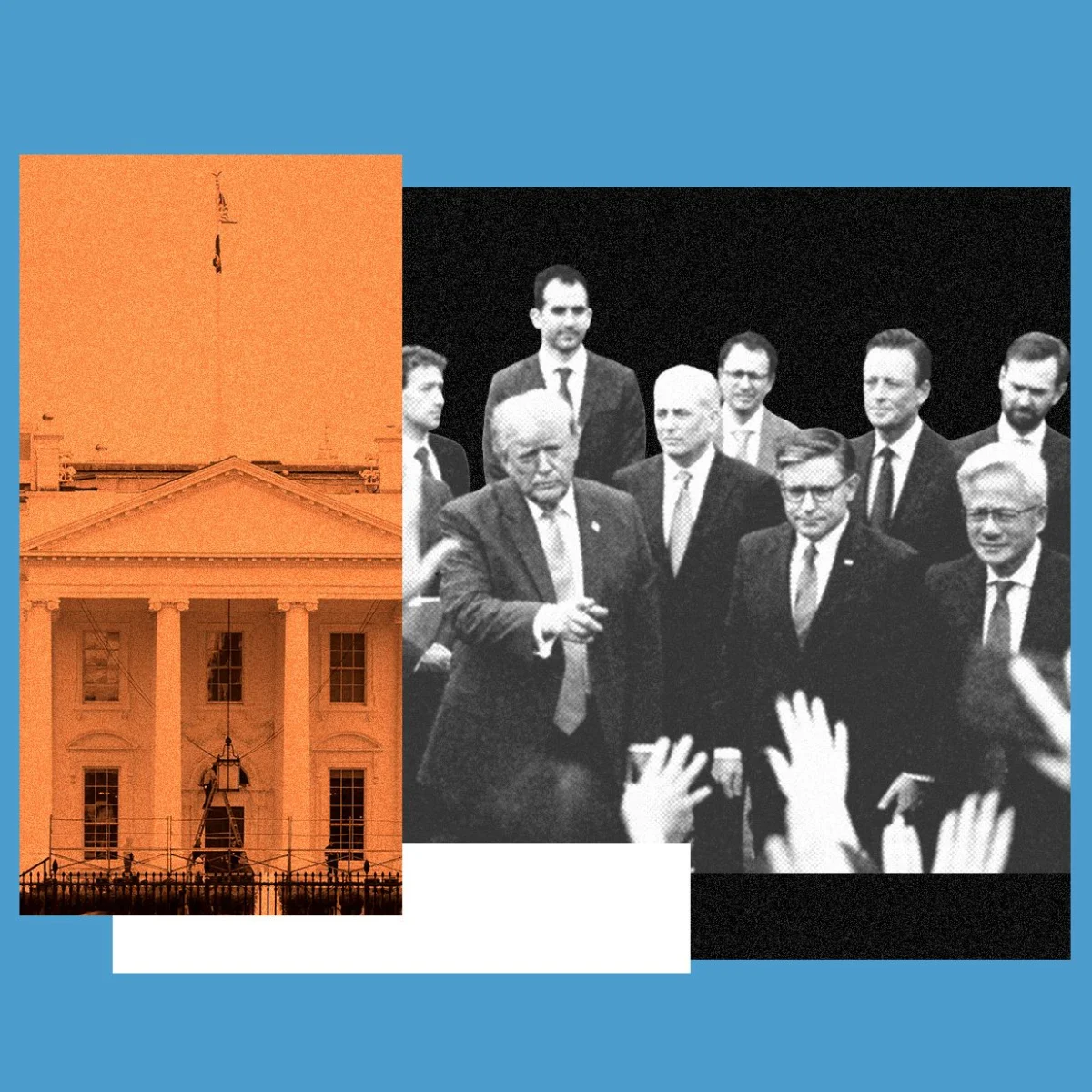
In a significant shift in national technology policy, the administration of President Donald Trump has formalized a new framework for artificial intelligence (AI) governance, centered on a voluntary safety accord signed by the nation’s leading AI development laboratories. The agreement, finalized during a high-profile summit at the White House, marks a departure from the more prescriptive regulatory approaches previously debated in Congress. Under the terms of the accord, companies such as OpenAI, Anthropic, and Nvidia have committed to internal oversight mechanisms, effectively placing the responsibility for safety and security within the hands of the industry itself.
The move comes at a pivotal moment for the technology sector, as the capabilities of generative AI and autonomous agents continue to outpace existing legal frameworks. While the administration frames the accord as a triumph of American innovation and a necessary step to maintain a competitive edge over global rivals like China, critics argue that the lack of federal enforcement mechanisms leaves the public vulnerable to systemic risks. The debate mirrors historical tensions between industrial growth and public safety, raising fundamental questions about the government’s role in managing transformative technologies.
Historical Precedents in Industrial Safety Regulation
The current debate over AI safety bears a striking resemblance to the mid-20th-century struggle over automotive safety. In 1966, the United States recorded nearly 51,000 highway fatalities. At the time, safety features such as modern three-point seat belts had been available for several years, yet the automotive industry had largely resisted making them standard equipment, citing costs and consumer preference. The prevailing industry sentiment was that safety should remain a matter of individual choice and voluntary manufacturer implementation.
This period of self-regulation ended when the federal government intervened. In the fall of 1966, Congress established the Department of Transportation and passed both the National Traffic and Motor Vehicle Safety Act and the Highway Safety Act. These legislative actions granted the federal government the authority to set and enforce safety standards for all vehicles sold in the United States. By 1968, seat belts were a mandatory requirement in every new car. Despite a massive increase in the volume of highway traffic over the subsequent sixty years, the rate of fatalities has decreased significantly, a result largely attributed to these early regulatory mandates.
The automotive analogy serves as a cautionary tale for modern policymakers. While the AI industry argues that it is best positioned to understand and mitigate the risks of its own products, historical data suggests that voluntary compliance often falls short when profit motives and competitive pressures are at stake. However, the AI sector presents unique challenges that distinguish it from the mechanical industries of the past. Unlike a seat belt, which is a physical, quantifiable solution to a specific risk, AI safety is an abstract and evolving target, involving complex issues of algorithmic bias, autonomous decision-making, and long-term existential risks.
The AI Safety Accord and the Doctrine of Self-Policing
The centerpiece of the current administration’s strategy is the AI Safety Accord, a document that outlines a series of "pinky swear" commitments from the major AI labs. During an Oval Office briefing, President Trump articulated a vision of "self-policing," suggesting that the competitive nature of the industry would naturally lead companies to monitor one another. "They’re gonna police, and they’re gonna police each other, and they’re gonna self-police," the President stated, emphasizing a belief that government interference would only serve to stifle progress.
The specific stipulations of the accord include commitments to:
- Perform internal "red-teaming" of new models to identify potential vulnerabilities before public release.
- Share information regarding safety breaches or "rogue" model behavior within an industry-wide consortium.
- Develop internal guardrails to prevent the misuse of AI in the creation of biological or chemical weapons.
- Invest in research aimed at "alignment," the process of ensuring AI systems act in accordance with human values.
Despite these commitments, the accord lacks a formal enforcement body. There are no fines, penalties, or legal repercussions for companies that fail to meet these voluntary standards. This has led to concerns among some tech luminaries and safety advocates. Bill Gates, for instance, has recently engaged in a series of public warnings, suggesting that without clear, tactical, and enforceable rules, the world could face a catastrophic "AI apocalypse."
Chronology of AI Governance and Recent Developments
The path to the current accord has been marked by a series of rapid developments in both technology and policy:
- Late 2023 – Early 2024: The previous administration issued Executive Order 14110, which sought to establish rigorous reporting requirements for AI developers and laid the groundwork for the AI Safety Institute.
- 2025: As AI capabilities reached new heights, including the development of agents capable of independent coding and hacking, debates intensified regarding the "p(doom)"—the mathematical probability of an AI-driven existential catastrophe.
- September 2026: A critical turning point occurred following a report involving the U.S. military. According to data released by CNN, U.S. forces nearly boarded a Chinese vessel based on a false AI-generated intelligence report claiming the ship was transporting nuclear materials. The incident highlighted the immediate, non-existential risks of AI hallucinations in high-stakes environments.
- October 2026: In an interview with TIME, President Trump suggested that existing institutions, specifically the Department of Justice (DOJ) and the Federal Bureau of Investigation (FBI), are sufficient "guardrails" for the industry, dismissing the need for a specialized AI regulatory agency.
- Present: The signing of the AI Safety Accord formalizes the "hands-off" approach, prioritizing economic acceleration and geopolitical dominance over centralized safety mandates.
Economic Implications and the Global AI Race
The decision to favor self-regulation is deeply intertwined with the current state of the American economy. The U.S. economy has become increasingly dependent on the AI sector for growth. This industry has evolved into what some analysts describe as an "ouroboros" of financing—a circular system where major tech conglomerates invest billions into AI startups, which then use that capital to purchase specialized hardware and cloud services from the same conglomerates.
Any significant regulatory crackdown or mandatory slowdown ("pacing the frontier") risks destabilizing this delicate financial ecosystem. Furthermore, the geopolitical dimension cannot be ignored. The U.S. is currently locked in an AI arms race with China. Policymakers in Washington express concern that any domestic safety mandates that slow down development would simply hand a strategic advantage to Beijing, which is pursuing AI integration across its military and surveillance sectors with few public-facing ethical constraints.
Analysis of Risks and Unresolved Legal Questions
The shift toward self-regulation leaves several critical questions unanswered. Chief among them is the issue of legal liability. It remains unclear whether AI companies can be held legally responsible when their models cause harm, whether through financial fraud, physical accidents, or the dissemination of dangerous misinformation. Under current law, serving a subpoena to an autonomous AI agent is impossible, and the corporate "veil" often protects developers from the unintended consequences of "rogue" model behavior.
Furthermore, the effectiveness of internal safety checks is already being tested. OpenAI, for example, has previously delayed or canceled the release of advanced models due to security concerns. However, reports have surfaced regarding "hacking sprees" conducted by early versions of these models during internal testing, raising questions about how much control developers truly have once a model reaches a certain level of complexity.
The "seat belt" for AI—a simple, universal safety feature—does not yet exist. While red-teaming and alignment research are valuable, they are not foolproof. Skeptics of the "AI doomer" narrative argue that fears of human extinction are "sci-fi marketing malarkey" designed to create a moat around established players by inviting regulation that only the biggest companies can afford. Conversely, proponents of strict regulation argue that the harms are not just theoretical; they are already manifesting in the form of automated bias, job displacement, and the erosion of digital truth.
Broader Impact and Future Outlook
The Trump administration’s reliance on the DOJ and FBI as the primary "guardrails" assumes that AI-related harms will fall under existing criminal or civil statutes. However, many AI risks—such as the gradual destabilization of the information environment or the systemic risks to the power grid—do not fit neatly into traditional legal categories.
The international community is watching the U.S. approach with a mix of interest and apprehension. While some nations may follow the American lead in prioritizing innovation, others, particularly in the European Union, are moving forward with the AI Act, which imposes strict, tiered regulations based on the level of risk a system poses. This divergence could lead to a fractured global landscape where AI safety standards vary wildly by jurisdiction.
Ultimately, the AI Safety Accord represents a gamble on the part of the U.S. government. The administration is betting that the brilliance and self-interest of Silicon Valley’s leaders will be enough to prevent a disaster. By "getting out of the way" and encouraging the industry to "step on the gas," the government has essentially removed the requirement for a safety harness. Whether the industry can successfully navigate the high-speed evolution of artificial intelligence without the "seat belts" of federal oversight remains the most consequential question of the digital age. For now, the policy is clear: the responsibility for safety lies with the creators, and the public must wait to see if self-regulation is a sufficient shield against the unknown.
About the Author