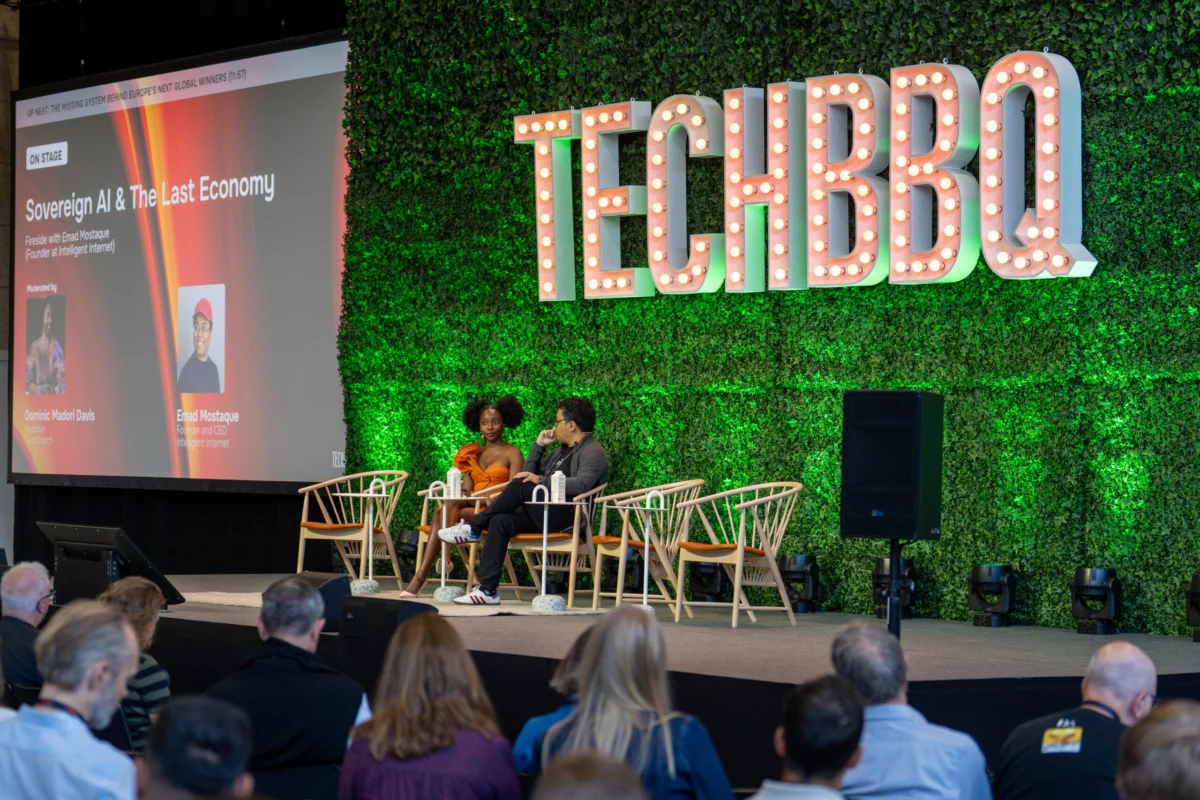
The air at TechBBQ in Copenhagen, Europe’s premier gathering of investors, founders, and operators, was thick with more than just the late August humidity. While the usual buzz about innovation and future technologies permeated the conference halls, a more profound and urgent conversation echoed through every panel, every networking event, and every late-night discussion: who should control the artificial intelligence that is rapidly reshaping our world? From the main stages to the exclusive after-parties, the dominant theme wasn’t merely about what to build with AI, but rather, how Europe can assert and maintain its agency in the face of overwhelming influence from global tech giants, particularly those in the United States and China.
This pressing question of technological sovereignty, aptly mirrored by TechBBQ’s 2024 theme, "Emerging from Agency," gained significant momentum earlier this year. The abrupt unavailability of Anthropic’s advanced AI models, Mythos and Fable, to users outside of Europe sent a clear signal. This incident, which disrupted operations for numerous European businesses reliant on these powerful tools, underscored a palpable vulnerability. It forced a collective introspection within the European tech ecosystem about the implications of "renting" AI capabilities rather than owning the underlying models and critical infrastructure. While some industry executives acknowledged the potential long-term risks of depending on geopolitical rivals for foundational AI technology, others expressed a more pragmatic, albeit cautious, view, suggesting that for the immediate future, the status quo remained largely manageable.
Ellen de Brever, an angel investor and head of partnerships at the Novo Nordisk Foundation Cellerator, articulated the sentiment felt by many. "TechBBQ’s theme of agency felt particularly timely this year as the conversation shifted from what AI can do to what we’re actually willing to let it do," she stated. The conference, which concluded on August 27th, featured a diverse array of discussions. Topics ranged from the future of women’s health and collaborative innovation between Nordic and African tech ecosystems to strategies for attracting growth capital to Europe. Beneath these varied agendas, however, AI remained an omnipresent undercurrent. Yet, as de Brever observed, the debates weren’t focused on the abstract intelligence of machines, but on the more fundamental human element: "human judgment and who gets to stay in the driver’s seat." She further elaborated, "The age of AI agents isn’t really a story about machines gaining agency; it’s a story about humans deciding what to give up." This perspective positions the current AI revolution not as a simple technological leap, but as a profound societal negotiation about control and autonomy.
The Echoes of Data and Control: Privacy Advocates Sound the Alarm
A particularly resonant session at TechBBQ featured Meredith Whittaker, President of Signal, in a panel discussion moderated by this publication, which delved into the precarious coexistence of privacy and AI. Whittaker did not shy away from her critical stance, expressing strong opposition to the integration of AI assistants and agents into operating systems, a trend exemplified by ChatGPT’s advancements in platforms like iMessage. She characterized the current AI era as the creation of a "massive data collection apparatus," arguing that AI labs are employing sophisticated marketing tactics to obscure the "collateral consequences" of amassing vast amounts of user data.
Whittaker’s impassioned plea for privacy resonated with attendees grappling with the implications of widespread AI deployment. "There is still a huge market need for privacy," she asserted. "And particularly with the sovereignty concerns, we will have customers here." This statement highlights a growing market opportunity for privacy-centric AI solutions, potentially offering European companies an alternative to data-intensive models developed elsewhere. The growing awareness of data as a strategic asset, and the potential for its misuse, positions privacy not merely as a consumer right but as a crucial component of national and economic security.
The Economic and Societal Implications of AI Agency
Adding another critical dimension to the sovereignty debate was Emad Mostaque, co-founder of Stability AI and Intelligent Internet. Speaking on a panel alongside this reporter, Mostaque explored the economic ramifications of an agentic workforce and its impact on personal sovereignty. He defined sovereignty as "the ability to resist power being exerted over you," a concept he directly linked to the concentration of power within a few dominant AI laboratories. Mostaque’s stark warning was unequivocal: "Inevitably, every country will be run by AI, and the person that controls the AI controls the country." This prediction, while alarmist to some, underscores the profound geopolitical implications of AI development and deployment, suggesting that AI control could become the ultimate arbiter of national power.
Mia Negru, the advocacy and engagement director for the nonprofit Life With Artificials, shared her reflections following Mostaque’s panel. Her message to this publication conveyed a sense of impending societal transformation: "If intelligent agents perform cognitive work and robots increasingly perform physical work, we may be approaching something much bigger than another technological revolution. We may have to rethink ownership, work, democracy, economic participation, and eventually even who gets to participate in society." This sentiment points to a potential paradigm shift, where the very foundations of our societal structures – from employment and wealth distribution to democratic participation – may need re-evaluation in light of pervasive AI integration.
Beyond the Debates: The Enduring Power of Human Connection
While the intellectual and often intense debates about AI sovereignty and control dominated the formal programming, TechBBQ also provided ample opportunities for informal networking and relationship building. The conference was punctuated by a series of well-attended social events, including a rooftop barbecue hosted by Lovable, Nvidia, OpenAI, AWS Startups, and HSBC, where conversations flowed freely about Denmark’s burgeoning tech hubs.
London-based Ada Ventures hosted a gathering at the Bird cocktail bar, facilitating discussions between attendees, including a health tech founder who shared insights on the surge of innovation in women’s brain health. A more exclusive affair was the speakers’ dinner held on a picturesque island in Copenhagen’s harbor, where international press observed mesmerizing fire dancers. The ensuing after-party, filled with the tempting allure of "just one more drink," underscored the vibrant social fabric that underpins the tech industry.
Reflecting on the conference’s atmosphere, Ellen de Brever offered a poignant observation that seemed to encapsulate the experience for many. "In a room full of conversations about machines, the most memorable moments still come from the simplest thing," she remarked. "Human connection, face-to-face, building relationships, sharing ideas, and reminding each other of what technology can never quite replace." This sentiment serves as a crucial reminder that even as we navigate the complex challenges of AI governance and control, the fundamental human element remains indispensable, fostering the collaboration and understanding necessary to shape a future where technology serves humanity, rather than the other way around.
Europe’s Strategic Imperative: Building a Foundation for AI Autonomy
The discussions at TechBBQ highlight a growing consensus within the European tech community: a strategic imperative to cultivate greater autonomy in AI development and deployment. This is not a call for isolationism, but rather a pragmatic recognition that true agency requires building indigenous capabilities. The "Mythos and Fable" incident serves as a stark historical marker, underscoring the risks associated with an over-reliance on external technological infrastructure.
Supporting Data and Context:
- Global AI Market Dominance: The global AI market is projected to reach $1.8 trillion by 2030, with significant contributions from North America and Asia. Europe, while a growing player, currently lags behind in terms of foundational model development and large-scale AI infrastructure investment.
- Venture Capital Trends: While European VC funding has seen growth, it remains considerably lower than in the U.S. In Q1 2024, European tech startups raised $13.9 billion, compared to $34.7 billion in North America. The allocation of this capital towards AI infrastructure and foundational research is crucial for long-term sovereignty.
- Regulatory Landscape: The European Union’s AI Act, a landmark piece of legislation, aims to establish a comprehensive regulatory framework for AI. While lauded for its focus on safety and fundamental rights, its implementation and impact on fostering European AI innovation are still unfolding. Critics argue that overly stringent regulations could stifle growth, while proponents believe it provides a necessary ethical compass.
Broader Impact and Implications:
The quest for AI sovereignty has profound implications that extend beyond the tech industry:
- Economic Competitiveness: Countries and regions that control their AI infrastructure and foundational models will be better positioned to drive economic growth, create high-value jobs, and foster innovation across sectors. A lack of control risks Europe becoming a consumer of AI technology, rather than a creator and exporter.
- Geopolitical Influence: AI is increasingly viewed as a strategic asset with significant geopolitical implications. Nations that lead in AI development and deployment are likely to wield greater influence on the global stage, impacting everything from defense capabilities to economic policy.
- Societal Values: The development of AI is intrinsically linked to the values embedded within its design and application. By controlling its own AI development, Europe has the opportunity to ensure that its technologies align with its fundamental principles of privacy, democracy, and human rights.
The conversations at TechBBQ 2024 were a clear indication that the European tech landscape is at a critical juncture. The desire for agency in the AI era is palpable, driven by both pragmatic business needs and a deeper concern for preserving autonomy. The challenge ahead lies in translating these discussions into concrete actions, fostering investment in foundational AI research and infrastructure, and building a robust ecosystem that can compete on the global stage, all while upholding the ethical and societal values that define Europe. The path to true AI sovereignty will undoubtedly be complex, but the conversations in Copenhagen have set a clear direction for the continent’s future in the age of intelligent machines.
About the Author