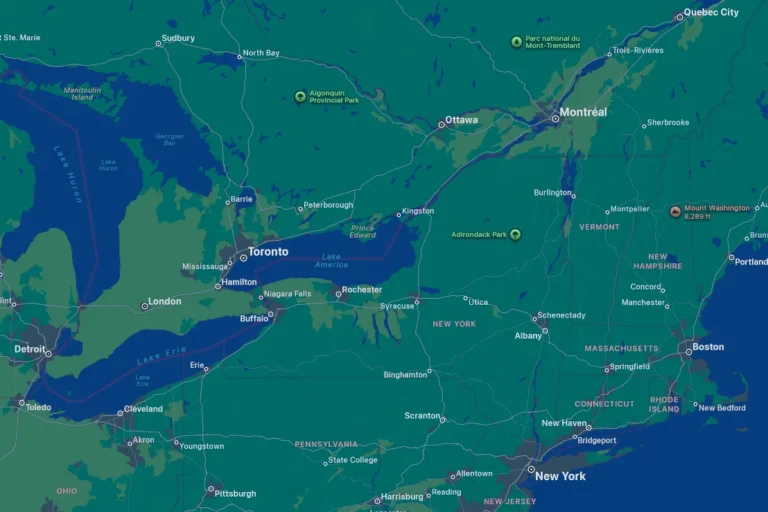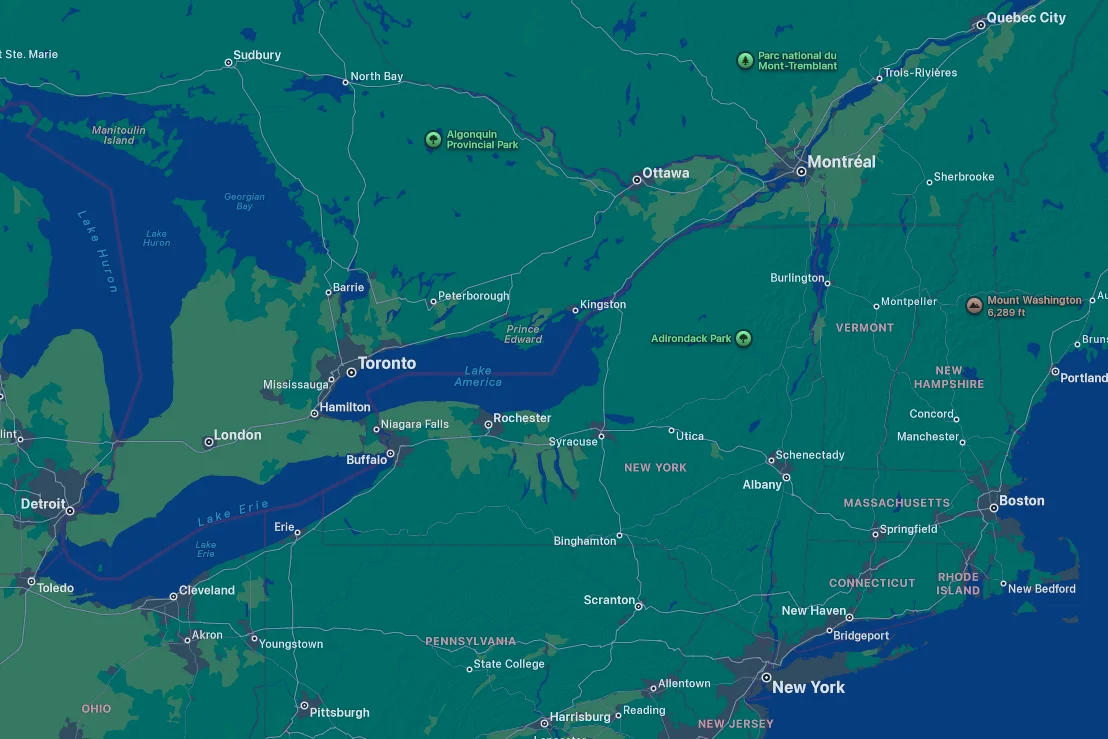
Apple has officially updated its Apple Maps service to reflect the renaming of Lake Ontario to "Lake America," a decision mandated by a recent executive order from President Trump. This move by the tech giant follows a similar change implemented by Google Maps less than a week prior, signaling a significant technological capitulation to executive directives that is already sparking international debate and impacting consumer choices in navigation applications.
The alteration means that users accessing Apple Maps within the United States will now see "Lake America" displayed on their screens, replacing the long-standing geographical designation of Lake Ontario. This change, however, is geographically targeted. Apple Maps users in Canada will continue to see the traditional name, Lake Ontario, preserving its historical and cultural significance for that nation. Users located outside of both the United States and Canada will reportedly see both names, acknowledging the dual designation and the ongoing international nuances of the situation.
A Presidential Directive and its Digital Echo
The impetus for this widespread digital renaming originated from an executive order signed by President Trump on August 27, titled "Honoring the American History of the Great Lakes and Renaming Lake Ontario as Lake America." The order specifically directed the Department of the Interior to initiate the process of updating the lake’s name within the U.S. geographic naming service and all other relevant federal databases within a 30-day period.
The executive order explicitly stated the rationale behind the directive: "In recognition of this flourishing economic resource and its critical importance to our Nation’s economy and its people, I am directing that the Lake officially be renamed as Lake America." This justification highlights a perceived economic and national significance attributed to the lake, framing the renaming as a move to bolster national identity and economic recognition.
The Geopolitical Ripple Effect
The swift compliance of major technology firms like Apple and Google with this executive order has amplified existing strains in the relationship between the United States and Canada. The move comes at a particularly sensitive time, following a breakdown in trade negotiations between the two neighboring countries. The renaming, therefore, is not merely a digital cartographical adjustment but has become a point of contention in the broader diplomatic landscape, raising questions about the influence of political directives on global digital infrastructure and international relations.
While Apple has not issued a public statement regarding its decision, Google Maps provided a rationale for its own adaptation. A spokesperson for Google indicated that the company regularly updates its map data to align with changes in official government sources, citing the U.S. Geological Survey’s Geographic Names Information System (GNIS) as a key reference point. This suggests a policy of adherence to governmental updates, even when those updates are politically driven and potentially controversial.
Divergent Approaches and Consumer Backlash
Not all mapping services have adopted the same approach. MapQuest, a long-standing player in the digital mapping arena, has publicly stated its refusal to alter the name of Lake Ontario on its platform. The company’s stance prioritizes user familiarity and historical accuracy over compliance with the executive order. This decision is further underscored by MapQuest’s similar refusal last year to rename the Gulf of Mexico to "Gulf of America" following a comparable presidential directive.
MapQuest’s principled stand has resonated strongly with a segment of the user base, leading to a significant surge in its app downloads. In the wake of Apple’s and Google’s name changes, MapQuest has experienced a dramatic increase in user engagement, propelling its iOS application to the number one position in the U.S. App Store’s Top Charts. This success has even seen MapQuest surpass perennial chart-topper ChatGPT in popularity, indicating a powerful consumer sentiment favoring a more traditional and less politically influenced approach to mapping services.
Furthermore, MapQuest’s reach has extended to Google’s Play Store, where it secured the sixth position overall across both apps and games. The company’s commitment to its established naming conventions is evident in its social media presence. A recent post on X (formerly Twitter) featured a GIF of an apple with the caption "Them Too," a subtle yet pointed jab at Apple’s compliance. Another post showcasing MapQuest’s top ranking in app downloads declared, "The people have spoken. We are working." This assertive communication suggests MapQuest views its stance as a response to public will and a commitment to user-centric navigation.
Precedent and the Evolving Role of Tech in Governance
This is not the first instance of major technology companies aligning their mapping services with presidential directives regarding geographical names. Last year, both Apple Maps and Google Maps similarly altered the name of the Gulf of Mexico to "Gulf of America" in response to another executive order issued by President Trump. These recurring instances highlight a developing precedent where presidential administrations can leverage the vast reach and influence of digital mapping platforms to assert national narratives or promote specific governmental agendas.
The implications of this trend are multifaceted. On one hand, it demonstrates the power of technology companies to rapidly disseminate and solidify official designations, influencing how millions of users perceive geographical locations. On the other hand, it raises critical questions about the independence of these platforms, the potential for political manipulation of geographical data, and the impact on international perceptions of U.S. policy.
The Great Lakes: A Deeper Context
Lake Ontario, now designated "Lake America" for U.S. users, is one of the five Great Lakes of North America, a system of freshwater lakes located in North America, straddling the Canada–United States border. These lakes—Superior, Michigan, Huron, Erie, and Ontario—form the largest group of freshwater lakes on Earth by total area, and the second-largest by total volume, containing 21% of the world’s surface fresh water by volume. Their economic and ecological importance is immense, supporting diverse industries, providing drinking water for millions, and serving as vital transportation routes.
The renaming of Lake Ontario, and the subsequent reactions, brings into sharp focus the historical and cultural significance of these bodies of water. For centuries, they have been integral to the development and identity of both the United States and Canada, shaping trade, settlement patterns, and indigenous cultures. The decision to rename one of these iconic lakes, even if primarily within U.S. digital interfaces, touches upon this shared heritage and prompts reflection on how national identity and historical narratives are constructed and represented in the digital age.
Analysis of Implications
The decision by Apple and Google to comply with the executive order has several key implications. Firstly, it underscores the significant power these tech giants wield in shaping public perception and information dissemination. Their maps are often the primary interface through which millions interact with geographical information, making their naming conventions highly influential.
Secondly, the divergence in approach between Apple/Google and MapQuest highlights a growing tension between technological compliance with governmental directives and the preservation of historical or user-driven naming conventions. This situation could lead to a bifurcation in the digital mapping landscape, with some platforms aligning with official government data and others prioritizing established geographical nomenclature.
Thirdly, the geopolitical dimension cannot be overstated. The renaming has the potential to further complicate U.S.-Canada relations, particularly in the context of ongoing trade discussions. It raises questions about how such digital decisions, even if domestically focused, can have international repercussions and influence bilateral trust.
Finally, the consumer response, as evidenced by MapQuest’s surge in popularity, suggests a significant segment of the public values accuracy and historical continuity over politically motivated alterations. This sentiment could influence future strategies of mapping service providers, potentially leading to a greater emphasis on user feedback and a more cautious approach to implementing politically charged changes. The long-term impact on how geographical information is presented and perceived in the digital realm remains to be seen, but the events surrounding "Lake America" serve as a potent case study in the intersection of technology, governance, and public opinion.
About the Author