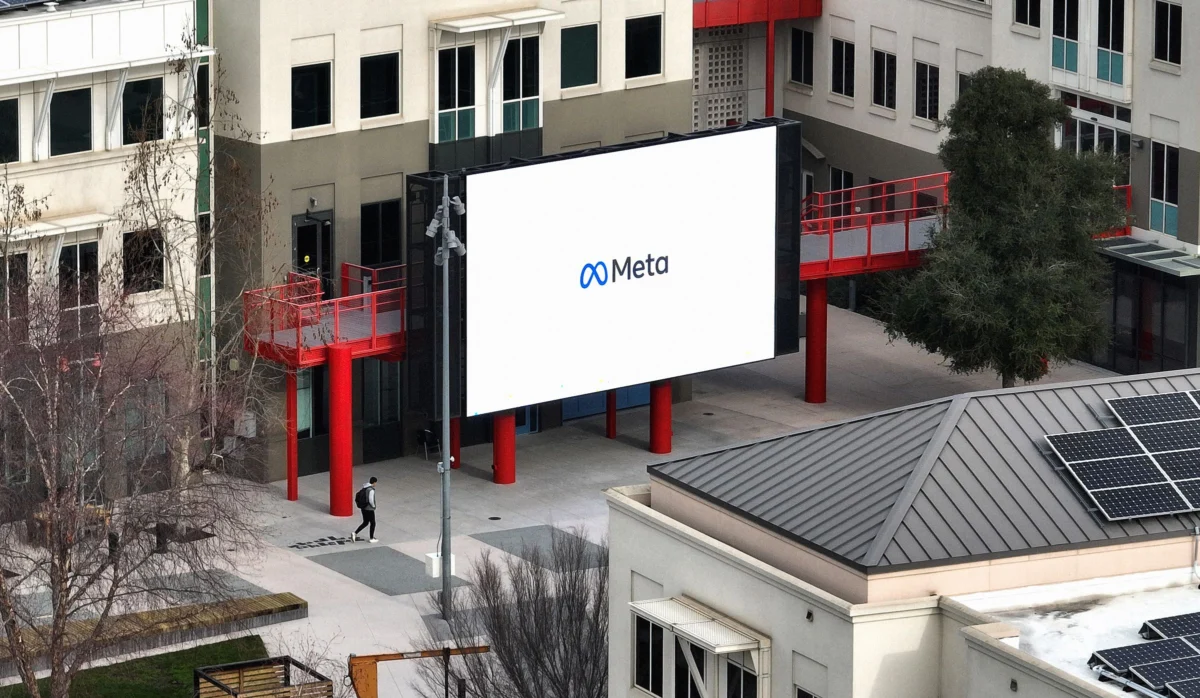
In a significant shift of internal corporate policy, Meta Platforms Inc. has officially concluded an experimental incentive program that linked employee performance evaluations to the volume of artificial intelligence tools they utilized in their daily workflows. The move, communicated via internal announcements this week, marks the end of what employees colloquially termed the "tokenmaxxing" era—a period characterized by workers attempting to maximize their AI interaction metrics to secure favorable reviews. While the social media giant is distancing itself from rigid usage quotas, it is simultaneously ramping up internal testing for a sophisticated new agentic AI tool known as "Hatch," which is designed to perform complex, autonomous tasks across a user’s digital environment.
The policy change, confirmed by several employees and internal communications, replaces specific requirements for "AI-driven impact" with more generalized language. Previously, Meta workers were evaluated on their "usage of AI" and could earn designations such as "AI Native," "AI First," or "AI Enabled." The new guidance clarifies that while Meta still encourages the use of advanced technology to drive results, performance will be graded on the ultimate impact of an employee’s work, regardless of whether that impact was achieved through AI or traditional methods.
The Rise and Fall of Tokenmaxxing
The term "tokenmaxxing" emerged within Meta’s ranks as a response to a performance review overhaul implemented roughly a year ago. Under that system, engineers and non-technical staff alike felt immense pressure to demonstrate high levels of engagement with internal LLMs (Large Language Models) and coding assistants. Because AI usage is often measured in "tokens"—the basic units of text or code processed by a model—employees began finding ways to inflate these numbers.
The culture of usage-tracking reached a peak when an internal leaderboard was created to rank employees by their token consumption. Top users were awarded titles such as "Token Legend," a gamification strategy that critics argue led to frivolous and inefficient use of expensive computing resources. Reports indicate that some employees would prompt AI tools repeatedly for tasks that could be performed more quickly manually, simply to ensure their "AI Native" status remained secure.
By April, the internal dashboard was taken down following public scrutiny and internal pushback. By mid-year, Meta began implementing measures to ration AI usage as the costs associated with running massive clusters of H100 GPUs and other hardware began to mount. The latest announcement formalizes this retreat, with Meta spokesperson Tracy Clayton emphasizing that the company’s primary focus has always been on tangible contributions rather than specific tool adoption.
Chronology of Meta’s AI Labor Integration
The transition in Meta’s internal AI strategy has been marked by several key milestones over the past 18 months:
- Late 2023: Meta introduces "AI-driven impact" as a core pillar of performance reviews, encouraging all staff to integrate LLMs into their daily routines.
- May 2024: Meta executes a significant round of layoffs, cutting approximately 8,000 positions.
- July 2024: A lawsuit is filed by approximately two dozen former employees. The plaintiffs allege that the "AI Native" metrics were discriminatory, particularly against those on health or family leave who were unable to accumulate usage data, leading to their selection for layoffs.
- August 2024: Meta begins internal testing of "Hatch," an agentic AI tool capable of browsing the web and operating applications autonomously.
- Late 2024: Internal memos circulate announcing the end of token-based evaluations, shifting the focus back to generalized "impact."
Legal Challenges and Employee Morale
The shift in policy comes as Meta navigates the legal fallout of its aggressive AI push. The lawsuit filed in July remains a point of contention, with former employees arguing that the company’s reliance on algorithmic usage data created an inequitable workplace. Meta has denied these allegations in court, maintaining that layoffs were based on broader business needs and individual performance rather than a single metric.
However, current employees suggest that the removal of AI usage quotas has already begun to improve morale. The "tokenmaxxing" pressure was described by some as a distraction from meaningful work, forcing engineers to spend time managing their "AI persona" rather than solving complex software problems. By decoupling reviews from usage dashboards, Meta appears to be attempting to rebuild trust with a workforce that has been unsettled by multiple rounds of restructuring and the "Year of Efficiency" mandates.
Hatch: The Next Frontier of Agentic AI
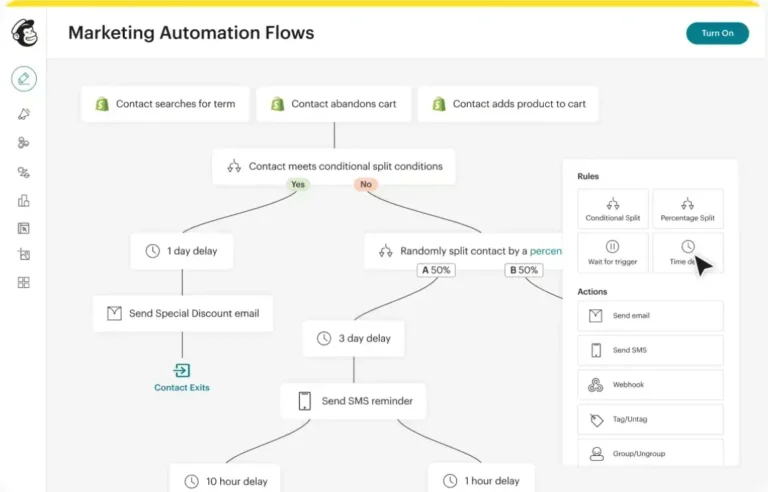
As Meta moves away from tracking how much AI is used, it is focusing more intensely on what the AI can do. The newest tool, Hatch, represents a step beyond simple chatbots. Hatch is classified as "agentic" AI, meaning it can take initiative to complete multi-step tasks. While standard AI might draft an email, an agentic tool like Hatch can theoretically check a user’s calendar, find an open slot, coordinate with a third party’s availability via the web, and book a meeting without human intervention.
Currently being tested on corporate devices, Hatch is similar in functionality to emerging industry tools like OpenClaw. It has the capability to browse the internet and interact with non-Meta applications. While some employees have praised its efficiency for personal task management—such as organizing travel or booking appointments—others remain wary.
Privacy concerns are at the forefront of the internal debate over Hatch. To function at its full potential, the tool requires access to personal data, including emails and calendars. Two current employees noted that many workers are hesitant to link their personal accounts to the tool, citing a previous Meta project that tracked keystrokes and system activity to gather training data. That project was eventually paused following an internal security breach, but the memory of it continues to influence how staff perceive new internal AI experiments.
The Economic and Environmental Cost of AI Adoption
Meta’s pivot also reflects the broader economic realities of the AI industry. The cost of processing tokens is not negligible. As Meta scales its Llama models and integrates agentic tools like Hatch, the demand for compute power increases exponentially. Agentic tools are particularly resource-intensive because they often require "chain-of-thought" processing—running multiple internal queries before delivering a final action.
Data from the energy sector indicates that the surge in AI development is driving a massive expansion in gas-powered and renewable energy demand for data centers. By ending the "tokenmaxxing" incentives, Meta may also be seeking to curb unnecessary compute costs. Frivolous AI usage, driven by performance review fears, represents a drain on resources that does not contribute to the company’s bottom line or its environmental sustainability goals.
The Productivity Paradox and Future Layoffs
A lingering concern among the Meta workforce is the relationship between AI-driven productivity and job security. If agentic tools like Hatch successfully automate large portions of administrative or coding tasks, the fear is that fewer human employees will be required.
Recent reports suggested that Meta had considered further layoffs this year—potentially cutting teams by as much as 60% in certain "AI-native" transitions. However, those plans were reportedly shelved or delayed. Critics of the "AI-native" push point to an increase in software bugs and slower development cycles when AI is relied upon too heavily for complex engineering. CEO Mark Zuckerberg has stated that mass layoffs are not expected for the remainder of the current year, but the long-term impact of agentic AI on headcounts remains a subject of intense internal speculation.
Analysis: A Strategic Realignment
Meta’s decision to move away from token-based metrics is a pragmatic recognition that quantity does not equal quality in the realm of artificial intelligence. By focusing on "impact," the company is signaling that AI should be a tool for enhancement rather than a box to be checked.
This realignment suggests that Meta is maturing in its approach to AI integration. The initial "gold rush" phase, characterized by forced adoption and metric-tracking, is being replaced by a more nuanced phase where the value of the technology is measured by its ability to solve actual business problems. However, the introduction of Hatch shows that Meta has no intention of slowing its technological ambitions. The challenge for the company moving forward will be balancing the drive for autonomous efficiency with the need to maintain a motivated, trusting, and human workforce.
As Hatch moves closer to a potential public release, the internal feedback from Meta’s own engineers will be the first true test of whether agentic AI can deliver on its promise of productivity without compromising the privacy and stability of the digital workplace. For now, the end of the "Token Legend" era marks a return to traditional corporate values, even as the tools used to uphold those values become increasingly futuristic.
About the Author