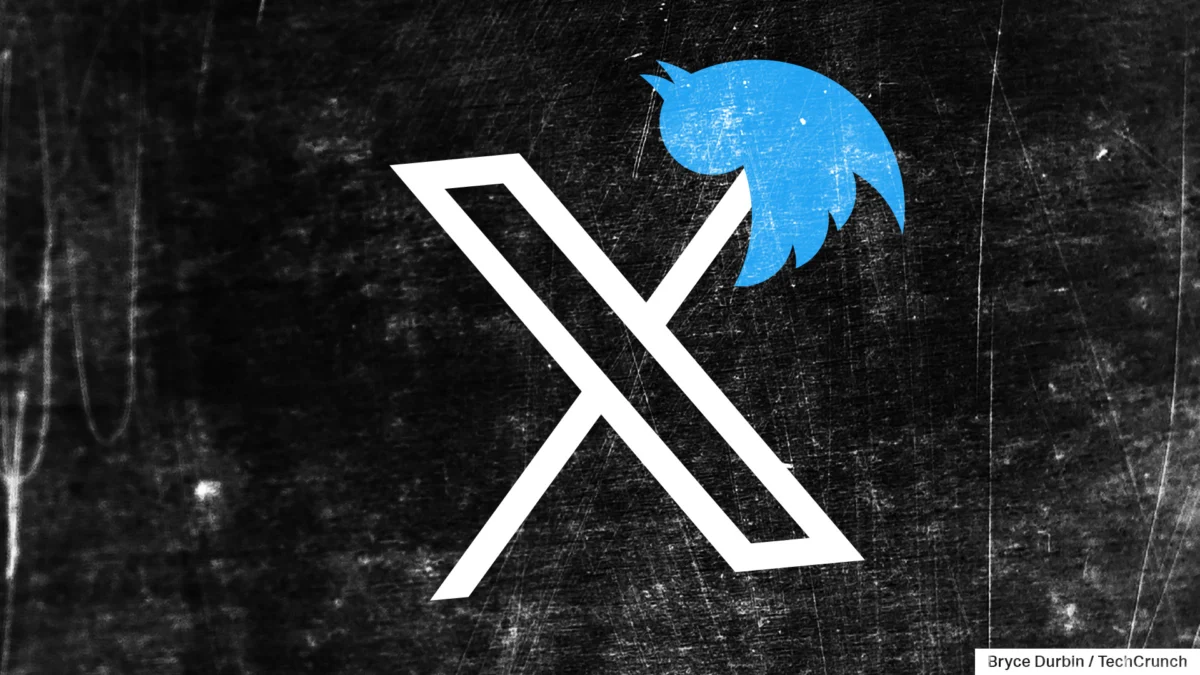
A significant legal battle over intellectual property rights stemming from Elon Musk’s acquisition and rebranding of Twitter has reached a pivotal moment in a Delaware federal court. The court has issued a preliminary ruling in a trademark dispute between Musk’s company, X Corp., and a startup initially known as Operation Bluebird, which has since rebranded to Tweet.app. While X Corp. has successfully blocked the startup from using the core "Twitter" name, the court found that X Corp. has likely abandoned its rights to the iconic "tweet" wordmark and the distinctive Twitter bird logo, making them available for the burgeoning social network.
This decision marks a critical development in the ongoing saga of Twitter’s transformation into X. It signifies a partial victory for Operation Bluebird, now operating as Tweet.app, which has strategically positioned itself to reclaim valuable intellectual property that X Corp. appears to have neglected following its sweeping rebranding efforts. The startup’s explicit mission, as stated on its homepage, is to "go back and pick up what Elon Musk dropped when he renamed the town square as X, and threw the bird away on his way out."
The legal proceedings were initiated by X Corp. to prevent Operation Bluebird from utilizing a suite of trademarks associated with the former Twitter platform. However, U.S. District Court Judge Colm F. Connolly delivered a bifurcated ruling. He granted X Corp.’s request for a preliminary injunction concerning eight Twitter-related marks, effectively barring the startup from using them. Crucially, however, the injunction was denied for the "tweet" wordmark and the Twitter bird logo.
The Genesis of the Dispute: A Quest for Abandoned Trademarks
The story of Operation Bluebird, a Virginia-based startup, is less about pioneering a novel social media concept and more about a calculated strategy to acquire potentially valuable, yet seemingly abandoned, trademarks. The founders, identified as Michael Peroff, based in Illinois, and Stephen Coates, formerly a trademark lawyer at Twitter, appear to have leveraged their legal expertise to identify and pursue these intellectual assets. Their stated interest in building a new social network, while perhaps a long-term goal, is overshadowed by the immediate objective of securing these prominent brand identifiers.
The decision to target these specific trademarks is rooted in the legal principle of trademark abandonment. For a trademark to remain valid, its owner must demonstrate continuous and bona fide use in commerce. When a company ceases to use a mark or uses it inconsistently, especially during a significant rebranding, it opens the door for others to claim abandonment and seek to acquire those rights. X Corp.’s transition from Twitter to X, a swift and comprehensive overhaul, appears to have inadvertently created such an opportunity.
A Divided Court: The Fate of the Twitter Trademarks
Judge Connolly’s ruling articulated a clear distinction between the core "Twitter" brand and its associated elements. In his opinion, the judge stated that Operation Bluebird was "likely to succeed in proving both that X Corp. discontinued the bona fide use of the Tweet mark and Bird logo and that it intends not to resume the use of the marks." This finding is a strong indicator that the court perceives X Corp. as having relinquished its active control and commercial use of these specific trademarks.
The implication of this ruling is that the "tweet" wordmark and the Twitter bird logo are no longer exclusively the property of X Corp. in the eyes of the court, at least for the purposes of a preliminary injunction. This has allowed Operation Bluebird to swiftly pivot its strategy. The company has now rebranded its website to Tweet.app, explicitly utilizing the "tweet" name that the court has deemed likely abandoned.
The Startup’s Strategy and User Engagement
Tweet.app’s strategy appears to be two-fold: to capitalize on the legal vacuum created by X Corp.’s rebranding and to leverage the residual goodwill associated with the Twitter brand. The company’s leadership has openly acknowledged their intention to reclaim what they perceive as "dropped" assets. Stephen Coates, president of Operation Bluebird, articulated this sentiment in a recent announcement: "They kept the word. They let go of the bird, and they let go of the tweet. A tweet was never a corporation. It’s one person saying something. That word survived three years of a company trying to replace it, because the public declined to stop using it. We think that tells you who it belongs to."
This perspective highlights a sentiment that resonates with many former Twitter users, who often associate the term "tweet" with the act of communication itself, rather than solely with a corporate entity. The public’s continued use of the term, even after the platform’s rebranding, suggests a deep-seated connection to the language and culture that Twitter fostered.
The appeal of the Tweet.app platform is further evidenced by user interest. The company reported that over 172,000 individuals requested a handle on the site prior to its public launch. This strong demand underscores the enduring affection many users still hold for the Twitter brand and its associated terminology, even as the platform itself has undergone a radical transformation.
Tweet.app has also implemented a $20 fee for users to reserve their handles and join the nascent social network. This pricing strategy likely serves a dual purpose: it helps to recoup the substantial legal expenses incurred in the trademark dispute and acts as a form of commitment from early adopters, signaling their genuine interest in the platform.
Timeline of Events and Legal Precedents
The legal battle traces its roots back to Elon Musk’s acquisition of Twitter in October 2022. Following the acquisition, Musk initiated a swift and aggressive rebranding campaign, culminating in the platform’s renaming to X and a significant overhaul of its visual identity. This rebranding, while intended to signify a new era for the company, also triggered a period of uncertainty regarding its intellectual property.
- October 2022: Elon Musk acquires Twitter.
- Early 2023: Musk announces plans to rebrand Twitter as X.
- Mid-2023: The platform is officially rebranded to X. Operation Bluebird, initially operating under the name Twitter.now, begins its pursuit of abandoned Twitter trademarks.
- Late 2023/Early 2024: X Corp. files a lawsuit against Operation Bluebird to prevent the use of Twitter-related trademarks.
- Early 2024: The Delaware federal court issues a preliminary ruling.
The court’s decision on preliminary injunctions in trademark disputes often hinges on the likelihood of success on the merits of the case. By finding that Operation Bluebird was "likely to succeed" in proving abandonment of the "tweet" and bird logo marks, Judge Connolly has set a precedent that X Corp. may face an uphill battle in retaining exclusive rights to these assets. The broader legal implications of this case could influence how companies approach rebranding and the management of their intellectual property portfolios in the future.
Broader Implications and Future Outlook
The court’s ruling has significant implications for both X Corp. and the broader landscape of digital communication. For X Corp., the loss of exclusive rights to "tweet" and the bird logo represents a setback, potentially diluting the distinctiveness of its historical brand identity. While the company now operates under the X moniker, the legacy of Twitter and its associated terminology remains potent.
For Tweet.app, this ruling is a substantial victory, providing a foundation for its ambitious plans. The ability to operate under the "tweet" name, imbued with years of public association, offers a powerful marketing advantage. The startup’s success in navigating this legal challenge also highlights the growing trend of companies specializing in the acquisition of dormant or neglected trademarks, a practice that can lead to both innovation and controversy.
The case is far from over. The current ruling is on a preliminary injunction, meaning the court has made an initial assessment based on the evidence presented. The ultimate determination of whether X Corp. has definitively lost its rights to these trademarks will likely be decided in subsequent legal proceedings. The core question remains whether X Corp. can demonstrate renewed or continuous use of these marks to counteract the claims of abandonment. Given the company’s public shift to "X" and the apparent de-emphasis on the "tweet" nomenclature, this will be a challenging argument to make.
The future of Tweet.app and its ability to establish itself as a viable social network will depend not only on its legal victories but also on its capacity to build a compelling user experience that can attract and retain a critical mass of users. However, the legal foundation provided by the Delaware court’s preliminary decision offers a significant tailwind for the startup’s ambitions. The ongoing legal saga surrounding the remnants of the Twitter brand serves as a compelling case study in intellectual property law and the dynamic evolution of the digital media landscape.
About the Author