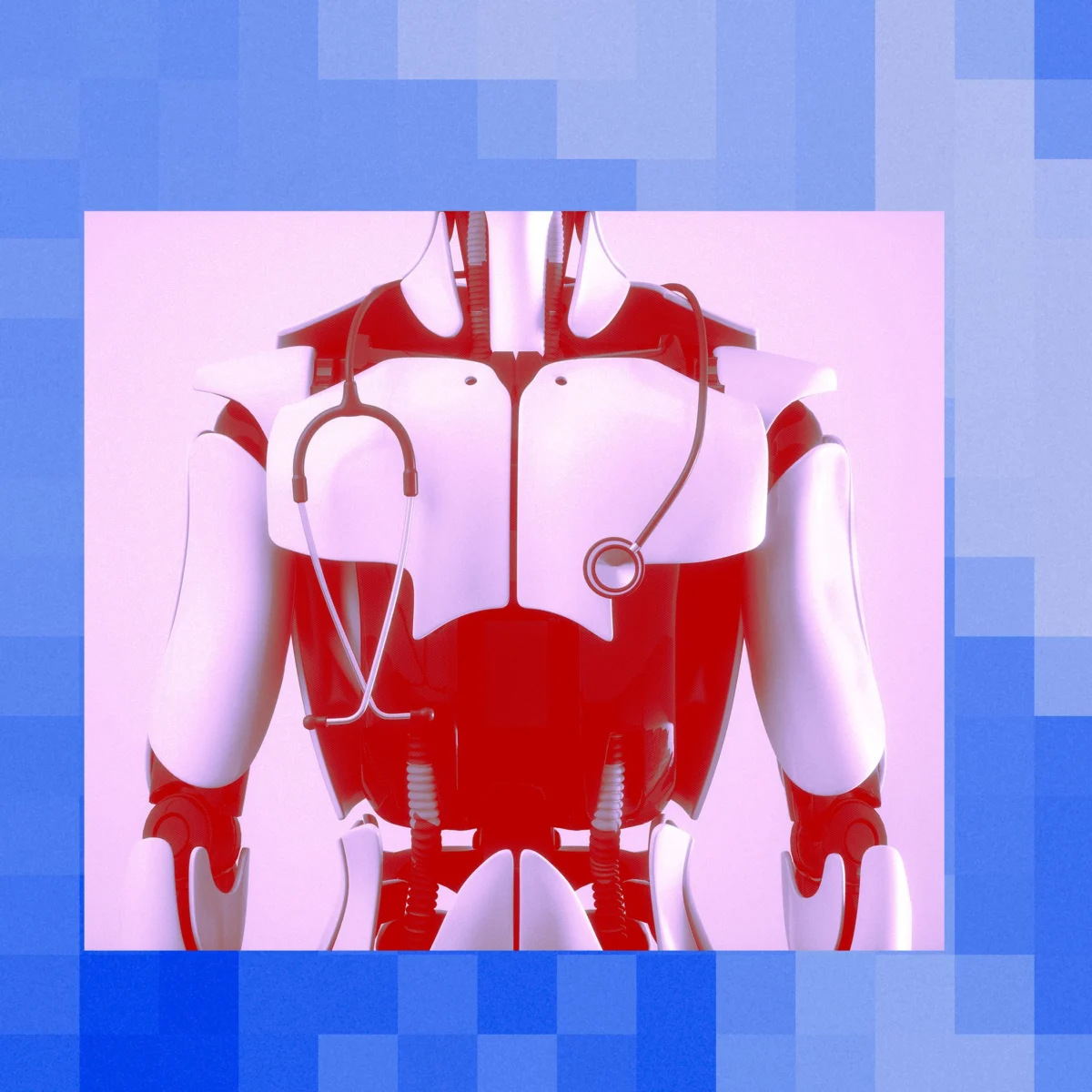
This thesis represents a radical departure from the prevailing "augmented intelligence" consensus, which suggests that AI should serve as a sophisticated tool under the direct supervision of a licensed clinician. Instead, Emanuel and his colleagues argue that "humans in the loop" may actually degrade the performance of advanced AI systems. They suggest that the era of the autonomous digital doctor is no longer a matter of science fiction, but a looming reality supported by an accelerating body of empirical evidence.
The Shift from Skepticism to Advocacy
The ideological journey behind this JAMA article reflects a broader shift within the medical establishment. For over a decade, Vinod Khosla, the founder of Khosla Ventures and a co-founder of Sun Microsystems, has been a vocal proponent of the idea that algorithms would eventually replace the majority of physician tasks. In 2012, Khosla published a controversial piece in TechCrunch titled "Do We Need Doctors or Algorithms?" where he predicted that AI would eventually perform 80 percent of a doctor’s workload. At the time, his views were largely dismissed by the medical community as the overzealous projections of a Silicon Valley outsider.
Among the skeptics was Ezekiel Emanuel, the chair of the Department of Medical Ethics and Health Policy at the University of Pennsylvania and a key architect of the Affordable Care Act. Emanuel initially viewed the complexity of clinical judgment as a barrier that machines could not overcome. However, the rapid advancement of Large Language Models (LLMs) and the publication of recent clinical studies have prompted a reversal in his stance. The collaboration between Emanuel and the Khosla family—including Neal Khosla, CEO of Curai Health—marks a significant alliance between traditional medical authority and tech-driven disruption.
A Chronology of the AI Medical Revolution
The path toward autonomous AI in medicine has been defined by several key milestones over the last fifteen years:
- 2012: Vinod Khosla introduces the concept of the "algorithm as doctor," sparking initial backlash from professional medical associations.
- 2016: Khosla publishes a 101-page treatise detailing how machine learning would democratize healthcare by reducing reliance on human labor.
- November 2022: The public release of ChatGPT demonstrates the potential for generative AI to process and synthesize vast amounts of medical literature.
- 2023: Various studies show AI models passing the United States Medical Licensing Examination (USMLE) with scores exceeding the average human applicant.
- January 2024 – Present: A comprehensive review of medical AI literature indicates that AI systems are beginning to outperform clinicians in diagnostic accuracy and empathetic communication in simulated environments.
- February 2026 (Projected/Referenced Study): Research published in Nature explores the limitations of patient-AI interaction, highlighting the remaining hurdles in real-world implementation.
The Five Fundamental Tasks of Autonomy
The JAMA article identifies five specific pillars of "doctoring" where autonomous AI is expected to achieve superiority within the next six years. These tasks form the backbone of primary and specialty care:
1. Medical History Acquisition
AI systems are becoming increasingly adept at conducting patient intake. Unlike human doctors, who may be constrained by time or cognitive bias, an AI can ask an exhaustive series of questions, cross-reference responses with historical electronic health records (EHR), and identify subtle patterns in a patient’s narrative that might otherwise be overlooked.
2. Clinical Diagnosis
Diagnosis is essentially a pattern-recognition challenge. AI models trained on millions of case files, imaging data, and genomic sequences can process information at a scale impossible for the human brain. The authors argue that AI’s ability to remain objective and up-to-date with the latest medical literature gives it a significant edge in identifying rare or complex conditions.
3. Identification of Necessary Testing
Over-testing and under-testing are perennial issues in healthcare that drive up costs and risk patient safety. Autonomous AI can utilize Bayesian logic to determine the precise sequence of tests required to confirm a diagnosis, minimizing "defensive medicine" and optimizing resource allocation.
4. Treatment Prescription
With the integration of real-time data on drug interactions, patient allergies, and the latest clinical guidelines, AI systems can tailor treatment plans with high precision. The authors anticipate a regulatory shift that will eventually allow AI to prescribe medications autonomously, particularly for routine conditions.
5. Chronic Disease Management
Managing conditions like diabetes, hypertension, and heart disease requires constant monitoring and incremental adjustments. AI-driven platforms can provide 24/7 oversight, analyzing data from wearable devices and providing instant feedback to patients, a level of continuity that human-led clinics cannot match.
Data and Performance Benchmarks
The argument for AI superiority is rooted in recent performance data. In several head-to-head comparisons, AI models have demonstrated a lower "error rate" in diagnostic tasks compared to human physicians. For instance, in radiology and pathology, AI algorithms have consistently shown higher sensitivity in detecting early-stage malignancies.
Furthermore, the JAMA paper cites the "degradation" of performance when humans intervene. This phenomenon occurs when a physician, influenced by intuition or fatigue, overrides a correct AI recommendation with an incorrect human judgment. The authors suggest that as AI models become more refined, the "human in the loop" becomes a source of noise rather than a safeguard.
Reactions from the Medical Establishment
The prospect of autonomous AI has met with significant resistance from professional bodies, most notably the American Medical Association (AMA). John Whyte, CEO of the AMA, has raised concerns regarding the methodology of the studies supporting AI autonomy. He notes that many of these successes occur in simulated environments or "silico" trials, which do not account for the messy, unpredictable nature of real-life clinical encounters.
The AMA maintains that AI should be viewed as an "augmented" tool. "The potential is vast, but these tools must be utilized within a care plan governed by a physician," Whyte stated. The primary concern is that removing the human element could lead to a loss of accountability and a failure to address the holistic needs of the patient.
Dr. Robert Wachter, Chair of the Department of Medicine at UCSF, offers a more nuanced view. While he acknowledges the technical prowess of AI, he warns of the "doorman fallacy"—the idea that because a task can be automated, the human performing it is no longer needed. Wachter argues that physicians provide "white-glove" services, such as delivering terminal diagnoses or navigating complex ethical dilemmas, which AI may never truly master.
Broader Implications and the "De-skilling" Crisis
The shift toward autonomous AI carries profound implications for the future of medical education. If AI handles the core tasks of history-taking and diagnosis, there is a significant risk of "de-skilling" among the next generation of doctors. If residents and medical students rely on AI to provide answers, they may fail to develop the foundational clinical judgment necessary to intervene when technology fails.
Medical schools are currently grappling with how to integrate these tools into their curricula. The debate centers on whether to treat AI as a "calculator" for medicine—a tool that handles the math while the human focuses on the logic—or as a replacement for certain cognitive processes.
From an economic perspective, the rise of autonomous AI could lead to a two-tier healthcare system. As outlined in Wachter’s book A Giant Leap, there is a risk that "first-class" medicine will involve human-AI collaboration for the wealthy, while "economy-class" medicine relies solely on autonomous bots for the masses. However, proponents argue that this "economy-class" AI would still provide a higher standard of care than what is currently available to underserved populations globally.
Ethical and Regulatory Frontiers
The transition to autonomous AI medicine will require a complete overhaul of current regulatory frameworks. The Food and Drug Administration (FDA) has already begun approving AI-based "Software as a Medical Device" (SaMD), but most of these require a human clinician to "sign off" on the output. Moving to a truly autonomous model would require a new legal definition of "malpractice" and a clear determination of liability when an algorithm errs.
There is also the question of "human-reserved" tasks. Some experts, including Bill Gates, have suggested that society may need to designate certain roles as exclusively human to maintain social cohesion and provide meaningful employment. In medicine, this might mean that while the AI handles the "science" of healing, the human doctor is reserved for the "art" of counseling and empathy.
As 2030 approaches, the medical profession finds itself at a crossroads. The JAMA article serves as a stark reminder that the technological trajectory is moving toward independence rather than just assistance. Whether the "autonomous AI physician" becomes a trusted provider or a source of systemic risk will depend on how the medical community, regulators, and patients navigate the tension between algorithmic efficiency and human intuition.
About the Author