Less than three months after its official emergence from stealth mode, XDOF, an innovative startup dedicated to collecting real-world teleoperation data for the training of general-purpose robots, is reportedly in late-stage discussions to secure a Series B funding round. This new investment is anticipated to value the company at approximately $1.2 billion, with prominent venture capital firm 8VC poised to lead the round, according to multiple sources familiar with the ongoing negotiations. This rapid ascent underscores a critical demand within the burgeoning robotics and artificial intelligence sectors for specialized data infrastructure.
A Meteoric Rise: From Stealth to Unicorn Status in Months
The potential Series B round marks an extraordinarily swift financial trajectory for XDOF. The company, co-founded in 2024 by UC Berkeley researchers Philipp Wu (CEO) and Fred Shentu (CTO), only recently made headlines in June when TechCrunch reported on its substantial $70 million Series A funding round. That initial investment saw participation from a consortium of high-profile venture capitalists, including Thrive Capital, Andreessen Horowitz, Lux, and Spark Capital. At the time, XDOF had no immediate plans to pursue further funding, having just completed a significant raise. However, the company’s unprecedented growth and market traction have fundamentally altered its fundraising timeline. Sources indicate that XDOF’s annualized revenue is now approaching an impressive $50 million, a figure that has prompted numerous venture capital firms to proactively approach the startup, culminating in the current Series B discussions. While the precise total capital being sought in this round and whether the stated valuation includes the new funding remain undisclosed, the ongoing negotiations signal a profound level of investor confidence in XDOF’s strategic position within the AI ecosystem. It is important to note that the terms of the deal are not yet finalized and could still be subject to change. XDOF and 8VC have not yet responded to requests for comment regarding these developments.
Addressing the Data Chasm: The Core of XDOF’s Innovation
At its heart, XDOF is tackling one of the most significant bottlenecks impeding the advancement of general-purpose robotics: the scarcity of high-quality, diverse, and large-scale real-world training data. The startup’s mission is to construct the essential data pipelines, collection tools, and sophisticated annotation systems that frontier AI labs and established robotics companies often find challenging and resource-intensive to develop internally. Essentially, XDOF positions itself as an outsourced, end-to-end data-supply chain for the rapidly expanding robotics industry. This strategic focus draws parallels to the foundational role played by data-labeling giants such as Scale AI and Mercor, which were instrumental in fueling the broader AI boom by providing critical data infrastructure for large language models (LLMs) and other AI applications. However, the data requirements for physical robots present a unique set of challenges that diverge significantly from those of LLMs. While LLMs initially benefited from the vast, readily available textual data of the internet, physical robots lack an equivalent, comprehensive real-world dataset to learn from. This fundamental difference makes the collection, curation, and annotation of real-world interaction data an absolute prerequisite for building truly general-purpose, adaptable machines that can operate effectively in unstructured environments.
The Genesis of a Robotics Data Powerhouse: From Academia to Industry
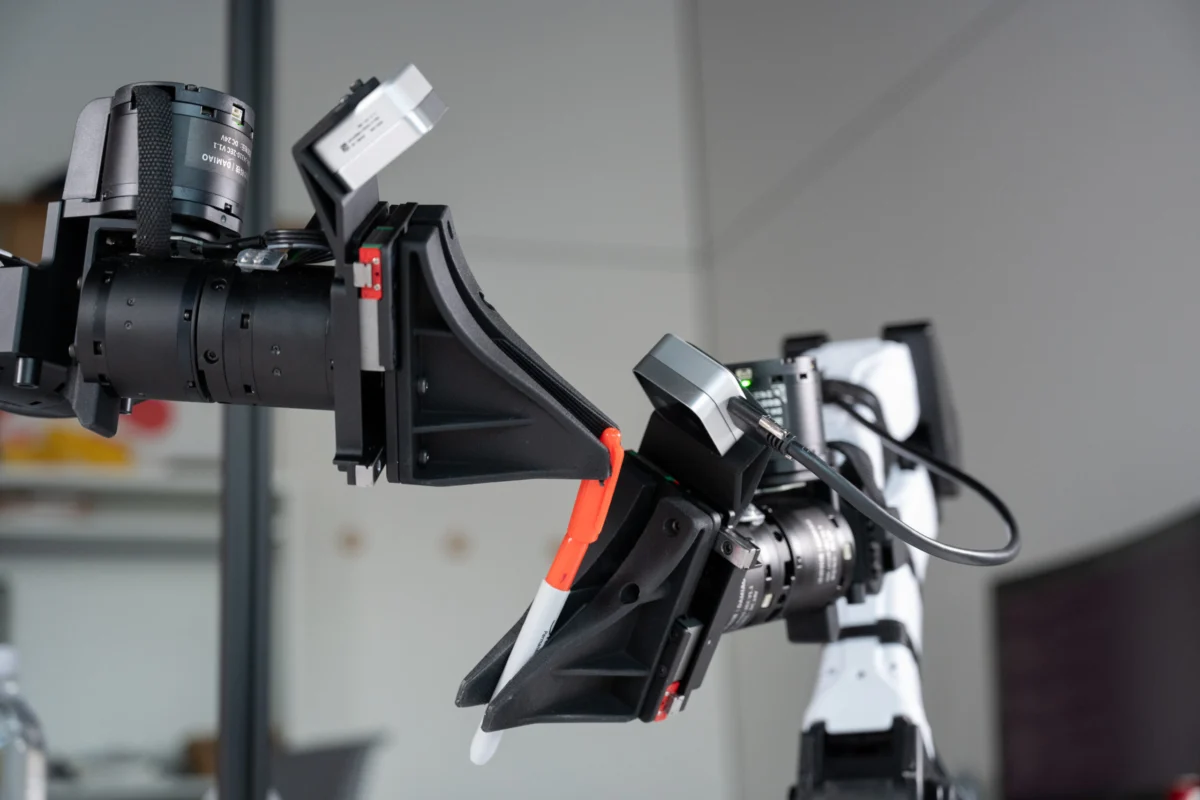
XDOF’s origins are deeply rooted in academic research. Co-founder and CEO Philipp Wu, during his tenure as a PhD student at UC Berkeley, focused his studies on how robots could learn effectively from large datasets. A persistent and critical impediment to his groundbreaking research was the pervasive "lack of large-scale data to work with," as he articulated in an interview with TechCrunch in June. Recognizing this systemic limitation, Wu collaborated with Fred Shentu to embark on a pioneering project named GELLO. GELLO was conceived as a low-cost teleoperation system designed to enable a human operator to remotely control a robotic arm, thereby generating invaluable training data through direct human interaction and guidance. The innovative work behind GELLO culminated in the publication of an influential paper in the field of robotics, laying a robust theoretical and practical foundation. This seminal research subsequently formed the intellectual and technological bedrock upon which XDOF was built, transforming an academic necessity into a commercial imperative. Investors now frequently describe XDOF as the "Scale AI or Mercor for physical robotics," highlighting its potential to become an indispensable infrastructure provider for the next generation of intelligent machines.
Building the Bedrock for General-Purpose Robotics: XDOF’s Methodology
XDOF employs a sophisticated, multi-pronged approach to capture the nuanced data required for advanced robotic training. A cornerstone of its strategy involves combining remote robot teleoperation with human collectors who are equipped with specialized sensors to record everyday tasks. This hybrid methodology ensures both precision control and the capture of authentic human motion and interaction. The company is actively collaborating with UC Berkeley’s esteemed AI Research lab to release what it believes will be the largest collection of high-quality robot training data ever assembled, a monumental dataset aptly named ABC. This initiative underscores XDOF’s commitment not only to commercial success but also to advancing the broader scientific community’s understanding and capabilities in robotics. To further scale its data collection efforts, XDOF plans significant global expansion, intending to hire and rigorously train diverse teams of data collectors worldwide. These teams will include specialized teleoperators, who remotely steer robots to perform complex tasks, and egocentric operators, who wear body sensors to capture human movement data from a first-person perspective as they execute various actions, such as folding clothes or flattening boxes. This comprehensive data capture strategy is designed to provide robots with the diverse, granular, and contextual understanding necessary to operate autonomously in dynamic real-world environments. XDOF previously disclosed to TechCrunch that it is already serving approximately 20 customers, a list that includes several of the most innovative frontier AI labs, further validating its solution in the market.
The Economic Imperative: Market Demand and Investor Confidence
The valuation of XDOF at $1.2 billion in such a short timeframe is a clear indicator of the intense market demand for specialized robotics data infrastructure and the high level of investor confidence in the company’s ability to meet this need. The global robotics market itself is experiencing explosive growth, projected by various industry reports to reach hundreds of billions of dollars within the next decade, driven by advancements in automation, AI, and declining hardware costs. A critical component of this growth hinges on the ability of robots to learn and adapt, which is directly tied to the availability of high-quality training data. The annualized revenue approaching $50 million, achieved within months of emerging from stealth, is an exceptional performance metric for any startup, particularly in a capital-intensive sector like robotics. This revenue trajectory suggests that XDOF has identified and successfully capitalized on a deeply felt pain point for major players in the AI and robotics space.
Leading this investment round, 8VC’s involvement is particularly telling. 8VC has a well-established reputation for identifying and backing foundational technology companies that provide critical infrastructure, often in nascent but rapidly growing sectors. Their investment philosophy aligns perfectly with XDOF’s role as a provider of essential data pipelines for the future of physical AI. For venture capitalists, XDOF represents an opportunity to invest in a company that is not just building an application but is laying the groundwork for an entire industry, much like cloud computing infrastructure did for software. The competitive landscape for robotics data collection is also heating up, with other startups like Mecka AI vying for market share. Moreover, established human-data platforms, such as Scale AI and Micro1, are increasingly expanding their services beyond LLMs to encompass physical robotics data, signaling a broader industry recognition of this burgeoning niche. XDOF’s early traction and significant valuation position it as a formidable leader in this evolving segment.
Strategic Implications for the Future of Robotics and AI
XDOF’s rapid rise and substantial funding have profound implications for the future trajectory of robotics and artificial intelligence. By systematically addressing the data bottleneck, XDOF has the potential to dramatically accelerate the development and widespread deployment of general-purpose robots across various industries, from manufacturing and logistics to healthcare and domestic assistance. The availability of robust, diverse, and ethically sourced real-world data is a non-negotiable prerequisite for achieving truly advanced physical artificial general intelligence (AGI), enabling robots to understand, interact with, and navigate complex human environments with unprecedented autonomy and adaptability.
The company’s strategic plans to hire and train global teams of data collectors, including both teleoperators and egocentric operators, also points to the emergence of a new specialized workforce. This creates economic opportunities in an evolving labor market, where human intelligence and dexterity are leveraged to train machines, rather than being replaced by them. Furthermore, the partnership with UC Berkeley’s AI Research lab and the release of the ABC dataset underscore a commitment to open science and collaboration, which can benefit the entire research community and foster further innovation. As robots become more integrated into daily life, the ethical considerations surrounding data collection—including privacy, bias, and security—will become increasingly critical. XDOF’s emphasis on "high-quality" data suggests an awareness of these challenges, though continuous vigilance and transparent practices will be paramount as the field matures.
Statements and Industry Outlook: Validating a Critical Niche
While XDOF and 8VC have not yet commented on the ongoing Series B discussions, the industry sentiment surrounding such a development would likely be overwhelmingly positive. An investor from 8VC might express enthusiasm for XDOF’s role in building "foundational infrastructure for the next wave of AI," emphasizing how the company is "solving a critical bottleneck" that has previously hindered the progress of robotics. Industry analysts would undoubtedly highlight that "this round underscores the immense value placed on the physical AI data layer," characterizing XDOF’s "rapid traction as a testament to an acute market need." From an academic perspective, UC Berkeley would likely express pride in seeing its research translate into such significant real-world impact, potentially reaffirming its commitment to ongoing collaborations like the ABC dataset project. These inferred reactions underscore a broad consensus that XDOF is operating at the nexus of a truly transformative technological shift.
Looking Ahead: XDOF’s Trajectory in a Rapidly Evolving Field
As XDOF moves closer to finalizing its Series B funding, the company is poised for an era of significant expansion and technological advancement. The influx of capital will undoubtedly be channeled into scaling its data collection operations globally, investing in further research and development for its data pipelines and annotation systems, and expanding its customer base beyond the current 20 frontier AI labs. The competitive landscape will continue to evolve, with established players and new entrants vying for a share of the burgeoning robotics data market. However, XDOF’s early lead, substantial financial backing, and deep academic roots position it strongly to maintain its pioneering role. The success of XDOF could serve as a blueprint for how specialized data infrastructure providers can unlock unprecedented capabilities in the physical world, ultimately accelerating humanity’s journey towards a future enhanced by truly intelligent and versatile robots. The next few years will be critical in demonstrating how XDOF leverages this significant investment to solidify its position as an indispensable partner in the global robotics revolution.
About the Author