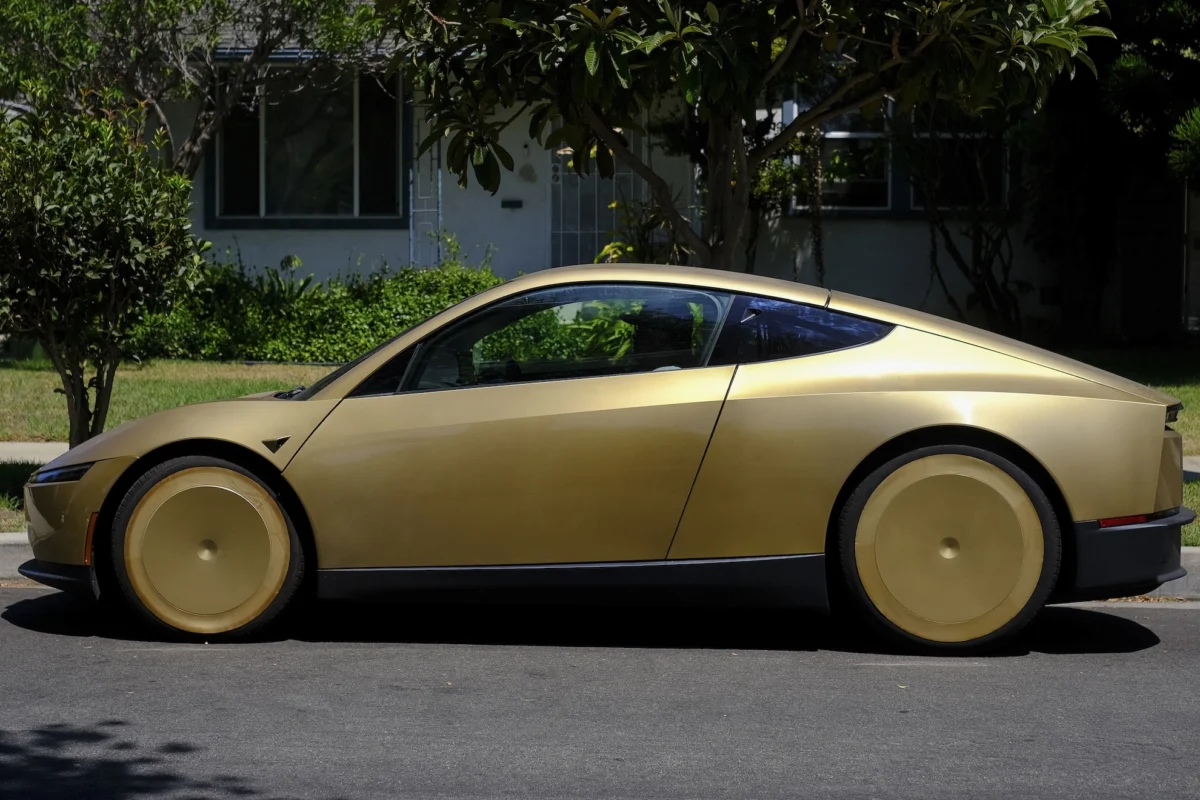
The much-anticipated unveiling of Tesla’s Cybercab robotaxi has ignited a polarized debate across the technology and automotive sectors. While proponents herald it as a decisive leap toward a future of autonomous urban mobility, critics point to a subdued launch event, a notable absence of CEO Elon Musk, and immediate regulatory scrutiny, questioning the substance behind the spectacle. The event, held in Austin, Texas, lacked the usual fanfare associated with Tesla’s product launches, leading to Wall Street’s lukewarm reception. This divergence of opinion underscores the critical juncture at which Tesla finds itself: poised to redefine transportation or, as some suggest, merely an automaker grappling with the complexities of autonomous technology.
The Cybercab’s Genesis and Market Positioning
Tesla’s ambition to dominate the robotaxi market has been a recurring theme for years, with Elon Musk consistently linking the company’s future valuation to its advancements in robotics and artificial intelligence. The Cybercab represents the culmination of these efforts, a vehicle designed from the ground up for autonomous operation, notably devoid of traditional controls like steering wheels and pedals. This radical design choice places Tesla at the forefront of a paradigm shift in vehicle architecture, prioritizing AI-driven navigation over human intervention.
Senior reporter Sean O’Kane’s pre-event assessment aptly captured the stakes: "The Cybercab is Tesla’s fork in the road. This is either the moment the company begins to transform urban transportation as we know it, or the moment that reveals that, despite its many efforts, Tesla really is just an automaker after all." The muted reception of the launch event, however, did little to assuage investor concerns, suggesting that the market is more interested in tangible progress than promotional displays.
The true test for the Cybercab, as acknowledged by industry observers, lies not in its unveiling but in its ability to launch a safe and scalable robotaxi service. As of the latest available data, Tesla has registered a modest fleet of 45 Cybercabs in Texas, a figure that pales in comparison to the operational scale of established autonomous vehicle companies like Waymo. This limited deployment raises questions about Tesla’s readiness to compete in a market where seasoned players are already navigating complex operational landscapes and regulatory frameworks.
Regulatory Hurdles Emerge Amidst Deployment
The launch of the Cybercab onto Austin’s streets was immediately met with significant regulatory headwinds. The National Highway Traffic Safety Administration (NHTSA) initiated an investigation into Tesla’s robotaxi just hours after the vehicles began operating. This probe centers on a critical aspect of the Cybercab’s design: the absence of manual controls. Federal vehicle safety regulations traditionally mandate the inclusion of features like brake pedals for human operation. However, recent proposals from the Department of Transportation suggest a potential relaxation of these requirements for vehicles designed exclusively for autonomous driving.
Tesla’s decision to self-certify the Cybercab, a standard practice for traditional human-driven vehicles, has drawn the NHTSA’s attention. Self-certification implies that Tesla has affirmed its belief that the vehicle meets all applicable safety standards. The NHTSA’s investigation aims to validate this assertion, particularly concerning the safety implications of operating vehicles without conventional manual controls. While Tesla may opt to continue its operations during the investigation, the NHTSA’s involvement signals a heightened level of scrutiny. This regulatory action is not unprecedented; similar investigations have been launched into other companies developing advanced driver-assistance systems and autonomous vehicle technologies. The outcome of this investigation could significantly influence the regulatory pathway for future driverless vehicles.

Key Details Emerge from Tesla’s Documentation
In the wake of the launch, Tesla has released several guides offering deeper insights into the Cybercab’s operational parameters and target audience. Notably, one of the revealed details is that the Cybercab is not intended for young children, suggesting specific safety protocols or design considerations that preclude their use. This restriction, while seemingly minor, highlights the meticulous planning required for deploying autonomous vehicles in public spaces and the potential need for age-specific passenger guidelines.
Furthermore, Tesla has been exploring the possibility of selling its autonomous vehicles to fleet operators, indicating a potential dual strategy of operating its own robotaxi service while also enabling third-party adoption. This approach could accelerate the widespread deployment of Tesla’s autonomous technology and diversify its revenue streams. The company’s interest in fleet sales suggests an understanding that the robotaxi ecosystem will likely involve a mix of proprietary services and third-party operators leveraging autonomous platforms.
Industry Deals and Funding Rounds
The broader automotive and technology landscape continues to buzz with significant corporate activity. In the insurance sector, German giant Allianz is reportedly in discussions regarding a potential acquisition of U.K.-based roadside assistance provider AA for an estimated £5 billion ($6.77 billion), signaling consolidation and strategic expansion within the automotive services industry.
In the burgeoning field of advanced aerial mobility, Indian startup Alteon has secured $2.5 million in pre-seed funding, backed by prominent investor Lachy Groom. Alteon’s focus on dynamic soaring-inspired autonomous aircraft points to innovation in the next generation of flight technologies.
Delivery Hero’s board has given its approval to Uber’s $15 billion takeover offer, a move that, if finalized, would represent a significant consolidation in the global delivery and logistics sector, with potential implications for autonomous delivery services.
In the drone technology space, Easy Aerial has successfully raised $20 million in a Series B funding round. The company specializes in autonomous tethered drone systems for aerial surveillance, indicating continued investment in advanced monitoring and security solutions.
Magna International is deepening its commitment to electric vehicle infrastructure in India by investing an additional $35 million in Yuma Energy, a firm operating a battery-swapping network for electric two- and three-wheelers. This investment underscores the growing importance of efficient charging and battery management solutions for the burgeoning EV market.

Newlight, a Bay Area startup focused on improving cargo ship efficiency through hydrogen injection systems, has closed a $9 million seed round. The investment, which includes participation from the venture arm of Lomar Shipping and a joint venture between the U.S. Department of Energy and the Israel Ministry of Energy, highlights the push for sustainable solutions in maritime transportation.
Notable Industry Developments and Tidbits
The pervasive use of surveillance technology is drawing increased scrutiny. Flock, a company providing license plate readers, is facing backlash over privacy concerns. Both Florida and Texas have announced their intention to cease using Flock’s technology, reflecting growing public and governmental apprehension regarding data privacy and the potential misuse of surveillance tools.
In the realm of personal aviation, Ken Karklin, the CEO of Larry Page-backed flying car company Pivotal, has departed the company. Mike Ross, a board member with extensive aviation experience, has been appointed interim CEO, signaling a transition period for the firm.
Spanish microcar startup Liux is aiming to carve out a niche in the competitive electric vehicle market with a focus on sustainability. Their strategy centers on developing small, eco-friendly electric vehicles designed to challenge established players.
May Mobility, an autonomous vehicle technology startup, is collaborating with NTT Mobility to deploy Toyota’s e-Palette vehicles on public roads in Japan. This partnership will integrate May Mobility’s self-driving system into the e-Palette, marking a step towards wider autonomous mobility solutions in the Japanese market.
In a significant restructuring effort, Uber is implementing layoffs affecting approximately 3,300 employees, representing about 10% of its global workforce. This move involves consolidating engineering, science, and delivery divisions, alongside a reduction in management roles, indicating a strategic realignment of the ride-sharing giant.
Waymo, a key player in the robotaxi space, has adopted an assertive stance ahead of Tesla’s Cybercab launch. The company argues that fully autonomous vehicles necessitate a diverse sensor suite, cautioning against the safety of purely end-to-end AI systems. Concurrently, Waymo is accelerating its robotaxi expansion, launching its public service in Denver, San Diego, and Tampa.

Amazon’s autonomous vehicle subsidiary, Zoox, has expanded its commercial robotaxi service in Las Vegas, now offering rides to and from Harry Reid International Airport. This expansion signifies a growing operational footprint and a move towards more comprehensive urban mobility solutions.
A Look at the 2027 Kia Telluride Hybrid
Shifting gears from the future of autonomous transport, the automotive industry continues to innovate in more traditional segments. A recent test drive of the 2027 Kia Telluride hybrid X-Line SX-Prestige trim provided an in-depth look at advancements in hybrid powertrain technology. Priced at $61,180 for a fully loaded model, this second-generation Telluride features a turbocharged 2.5-liter inline-four hybrid engine.
The new powertrain generates 329 horsepower and 339 pound-feet of torque, surpassing its non-hybrid predecessor in both metrics. Crucially, this enhancement is coupled with an improved fuel economy, achieving 31 miles per gallon in the combined cycle. Kia has subtly revised the Telluride’s design, giving it a visual kinship with the Kia EV9, though distinct enough to maintain its own identity.
Positive impressions from the test drive include a more spacious interior compared to the previous model and a notably quiet ride. While some critics have expressed concerns that the transition from a V6 to a four-cylinder engine might compromise performance, the hybrid variant was found to be sufficiently zippy for a vehicle of its size.
The interior design, while not the most favored by the reviewer, incorporates user-friendly elements, such as a row of easily accessible controls below the touchscreen. However, a peculiar design choice, the placement of the gear shifter on a stalk to the right of the steering column, was noted as a point of potential user disorientation, requiring an adjustment period. This detailed review highlights the ongoing evolution of internal combustion engine vehicles, even as the industry pivots towards electrification.
About the Author