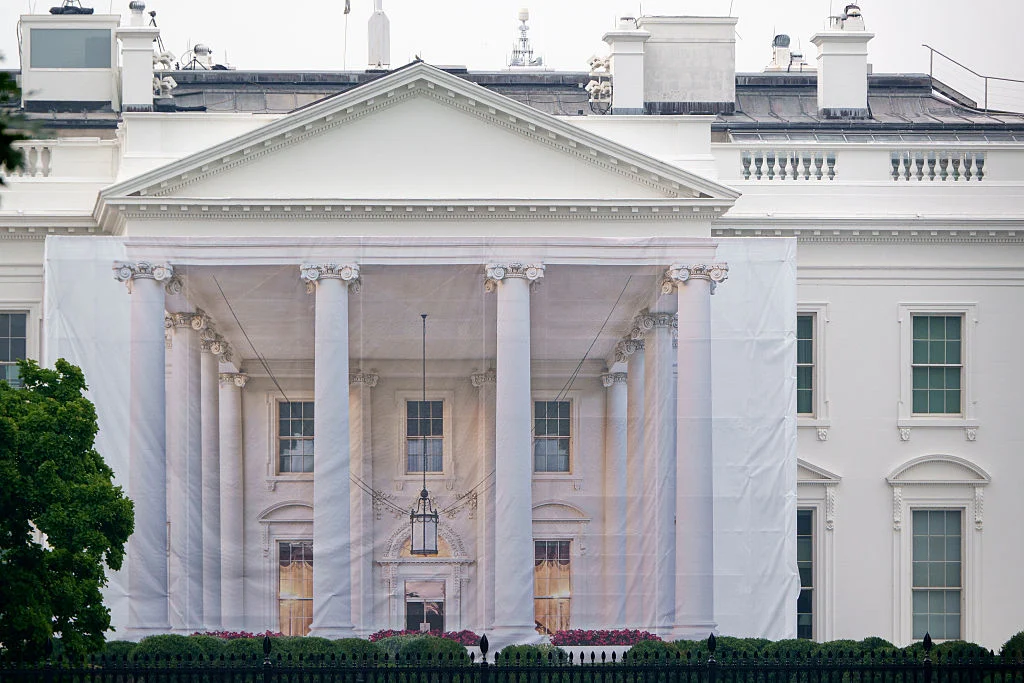
The Trump administration has removed a controversial video game titled "Build the Wall" from its official website following a complaint from The Tetris Company. The game, which closely resembled the iconic puzzle game Tetris, tasked players with stacking blocks to construct a wall, a metaphor widely interpreted as a reference to former President Donald Trump’s signature policy initiative. The game was part of a collection of arcade-style games that were launched on the White House website, a move that garnered significant public attention and criticism.
The "Build the Wall" game was reportedly designed to simulate the process of constructing a physical barrier along the U.S. southern border. Players were presented with falling blocks of various shapes and sizes, mirroring the core gameplay mechanic of Tetris. The objective was to strategically place these blocks to build a wall, with the stated in-game narrative involving the defense against a "zombie border siege." This thematic element, coupled with the game’s central mechanic, drew immediate accusations of being racially insensitive and a thinly veiled political endorsement.
The controversy escalated when The Tetris Company, the intellectual property holder for the globally recognized Tetris game, issued a public statement disassociating itself from the White House’s offering. In an Instagram post, the company clearly stated, "The Tetris Company was not involved in the creation of ‘Build the Wall.’" The statement further emphasized the company’s commitment to intellectual property rights, asserting, "We take copyright infringement very seriously." This direct intervention from the rights holder served as a crucial turning point, prompting swift action from the administration.
Prior to its removal, "Build the Wall" was accessible through a dedicated section on the White House website, which featured a curated selection of online games. This unusual decision to host video games on a presidential platform was itself a point of discussion. While the administration presented these games as lighthearted diversions, critics argued that they blurred the lines between official government communication and partisan political messaging.
The removal of "Build the Wall" was first reported by the gaming news outlet Kotaku, which noted that the game’s page now returned a 404 error, indicating that the content had been deleted or moved. TechCrunch reached out to the Trump administration for comment regarding the game’s removal and the reasons behind its initial inclusion. As of the time of this report, no further official statement beyond the implicit action of removal has been provided by the administration.

Chronology of Events
The emergence of the "Build the Wall" game on the White House website marks a peculiar moment in the intersection of digital entertainment and presidential politics. While the exact date of the game’s initial upload to the White House arcade remains unconfirmed, its public visibility and subsequent removal occurred within a compressed timeframe.
- Initial Launch: The White House website launched a collection of arcade-style video games, including "Build the Wall." The specific date of this launch has not been widely publicized, but the game gained public attention in the days leading up to its removal.
- Public Scrutiny and Criticism: Following its discovery, the "Build the Wall" game faced widespread condemnation. Critics labeled it as a politically charged and racially insensitive offering, inappropriate for an official government platform.
- Tetris Company Intervention: The Tetris Company issued a public statement on Instagram, clarifying its non-involvement and expressing concern over potential copyright infringement.
- Game Removal: Shortly after The Tetris Company’s statement and likely in response to the copyright concerns and public backlash, the "Build the Wall" game was removed from the White House website. Its URL now redirects to a 404 error page.
- Reporting and Follow-up: Gaming news outlets, including Kotaku and TechCrunch, reported on the game’s removal, prompting further media attention and scrutiny of the administration’s digital content strategy.
Broader Context: The White House Arcade and Gaming on Government Platforms
The inclusion of video games on the White House website is an unconventional approach to presidential engagement. While previous administrations have utilized digital platforms for public outreach, the hosting of arcade-style games represents a novel, and in this case, controversial, strategy.
The White House arcade, as it was presented, included several other games alongside "Build the Wall." Among these was "Rio Run," another game that drew criticism. In "Rio Run," players control a white male character with the objective of deporting as many immigrant characters as possible. This game, which remains accessible on the website, has also been met with accusations of promoting xenophobia and discriminatory policies. The juxtaposition of these two games – one focused on border construction and the other on deportation – underscores a consistent thematic emphasis on immigration policy within the administration’s digital offerings.
The decision to host such games raises questions about the purpose and appropriateness of using government websites for entertainment with clear political undertones. While proponents might argue for innovative ways to engage the public, critics contend that such actions risk trivializing serious policy issues and could be seen as leveraging official platforms for partisan propaganda.
Analysis of Implications
The removal of "Build the Wall" game has several significant implications:
- Intellectual Property Enforcement: The swift action taken by The Tetris Company highlights the robust nature of copyright law and the willingness of rights holders to defend their intellectual property, even against governmental entities. This serves as a reminder to all organizations, including governments, to respect existing copyrights.
- Political Messaging and Government Platforms: The incident underscores the delicate balance between using digital platforms for public engagement and avoiding partisan political messaging on official government websites. The use of games with overtly political themes, especially those that touch upon sensitive issues like immigration, can lead to accusations of impropriety and misuse of public resources.
- Public Perception and Scrutiny: The rapid spread of information through online news outlets and social media means that such initiatives are subject to immediate and intense public scrutiny. The administration’s decision to host these games, and the subsequent backlash, demonstrates the power of digital journalism and public opinion in shaping governmental actions.
- Ethical Considerations in Game Design: The controversy surrounding "Build the Wall" and "Rio Run" brings to the forefront ethical considerations in game design, particularly when such games are associated with governmental entities. Games that appear to promote or trivialize controversial policies can have a significant impact on public discourse and perception.
The White House arcade, particularly with the presence of games like "Build the Wall" and "Rio Run," represents an unusual chapter in the history of government digital outreach. The subsequent removal of "Build the Wall" following a copyright complaint underscores the complexities and potential pitfalls of blending political messaging with interactive entertainment on official government platforms. The ongoing presence of "Rio Run" continues to fuel debate about the appropriateness of such content.
About the Author