A prolonged disruption to the international fertilizer and energy markets caused by the closure or significant restriction of the Strait of Hormuz could trigger a catastrophic spike in global cereal prices, potentially leading to a massive public health crisis and widespread food insecurity. According to new sophisticated economic and agricultural modelling commissioned by the International Chamber of Commerce (ICC), the repercussions of such a geopolitical event would extend far beyond the immediate region, impacting the most vulnerable populations across the globe. The study warns that in the most severe scenario, global cereal prices could soar by as much as 81% above 2020 levels, creating a ripple effect that threatens to destabilize entire economies and lead to a significant loss of life due to malnutrition and related health complications.
The research, conducted by a multidisciplinary team from the University of Edinburgh, the University of Aberdeen, and Scotland’s Rural College, highlights the intricate and fragile connections within the global food system. The modelling illustrates a direct chain reaction: a closure of the Strait of Hormuz would immediately throttle the supply of energy and agricultural inputs, specifically nitrogen-based fertilizers. This shortage would drive up production costs so significantly that nitrogen fertilizer use is projected to drop by approximately 37%. Consequently, global cereal productivity could fall by up to 10%, a reduction that would tighten global supply and send consumer prices into a vertical ascent.
The Strategic Importance of the Strait of Hormuz
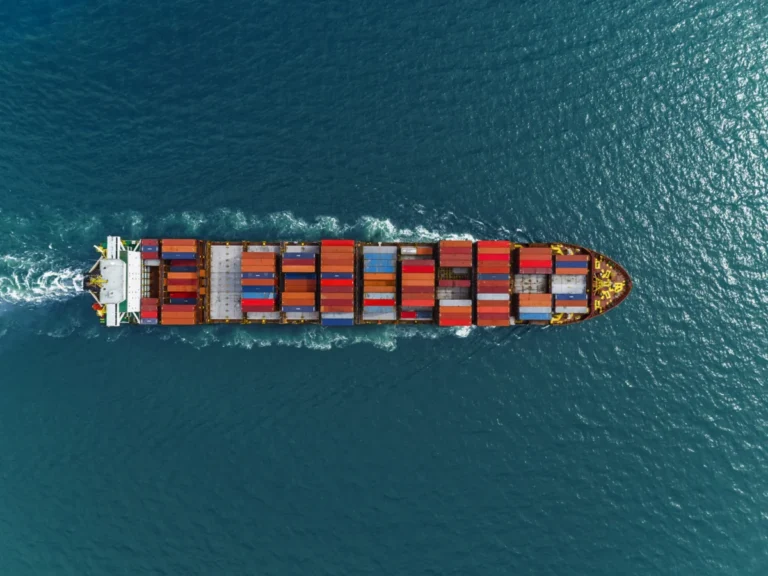
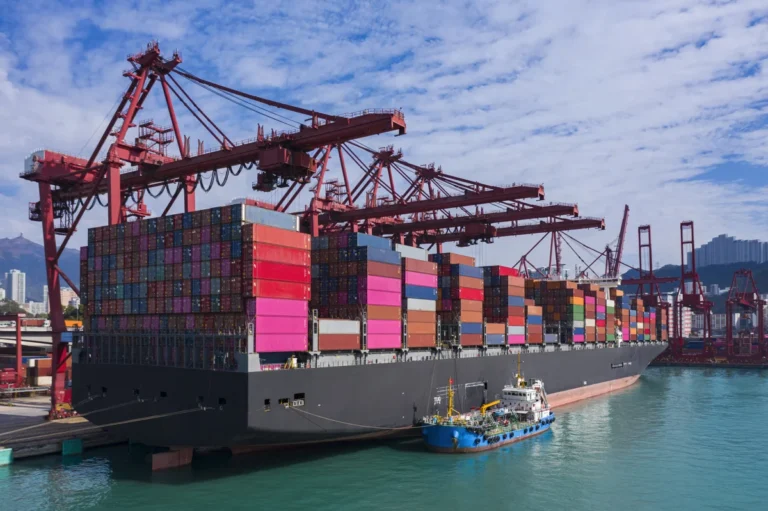
The Strait of Hormuz is widely regarded as the world’s most important oil transit chokepoint. Located between Oman and Iran, it connects the Persian Gulf with the Gulf of Oman and the Arabian Sea. While its role in the global oil trade is well-documented, its critical function in the global agricultural supply chain is often overlooked. Prior to the disruptions analyzed in the study, Persian Gulf producers reliant on this narrow waterway accounted for approximately 40% of the global urea trade—a vital component of nitrogen fertilizer. Furthermore, the route facilitates nearly 20% of global oil supply and more than 20% of global liquefied natural gas (LNG) trade.
Because natural gas is the primary feedstock for the production of ammonia and nitrogen fertilizers, any spike in LNG prices or restriction in its movement directly correlates to fertilizer affordability. The ICC study emphasizes that the Strait is not merely a corridor for fuel, but a fundamental pillar of the global "calories-to-market" pipeline. If this pillar is removed or damaged, the resulting scarcity of inputs makes it impossible for farmers in distant regions—such as Sub-Saharan Africa or Southeast Asia—to maintain the yields necessary to feed growing populations.
Chronology of Market Instability and Demand Destruction
The current alarm raised by the ICC comes at a time when market observers might be tempted to view recent price fluctuations as a sign of stabilization. However, the report cautions against such optimism. Between April and June of the current year, industry estimates indicate that 3.7 million tonnes of urea demand was "destroyed" or deferred. This represents a staggering 27% year-on-year decline.
This reduction in demand is not a result of a decrease in the global need for food, but rather a "buyer’s strike" caused by prohibitive costs. Farmers, particularly those in developing nations, have been forced to step back from the market, unable to afford the inputs required for the next planting season. The ICC warns that as the next critical planting windows approach, the return of this suppressed demand to the market—against a backdrop of continued supply uncertainty—could trigger a secondary and even more aggressive price spike. The chronology of the crisis suggests that the world is currently in a "false calm" phase, where the lack of current transactions masks a deep-seated and unresolved supply deficit.
Regional Vulnerabilities and the Human Toll
The modelling suggests that the burden of a Strait of Hormuz closure would fall overwhelmingly on lower-income regions. While higher-income nations possess the fiscal capacity and social safety nets to absorb price shocks, households in East Asia, the Pacific, and Sub-Saharan Africa would see consumer food prices rise nearly 70% above the 2020 baseline. For these populations, food is not a discretionary expense; it often accounts for more than half of total household income.
The human consequences of these economic shifts are stark. The study projects that under a severe and sustained disruption scenario, the global food system shock could contribute to approximately one million additional dietary health-related deaths by the year 2030. Furthermore, an estimated 67 million more people could be left underweight. The geographic distribution of this suffering is highly concentrated: South Asia, Sub-Saharan Africa, and the East Asia and Pacific regions are expected to account for 80% of the additional mortality and more than 90% of the additional underweight burden.
In contrast, the health outcomes in wealthier regions are expected to remain largely unchanged. In some overconsuming nations, higher prices might even lead to a slight reduction in excessive calorie intake, but researchers emphasize that this is a marginal and unintended "benefit" that does nothing to offset the humanitarian disaster unfolding elsewhere.
Expert Analysis and Official Responses
John W.H. Denton AO, the Secretary General of the ICC, has been vocal about the need for immediate international intervention. "The new research exposes the extraordinary risk that continued disruption in the Strait of Hormuz poses to global food systems," Denton stated. He argued that the recent dip in urea prices is a deceptive indicator, masking the fact that millions of tonnes of demand have been deferred rather than met. "As demand returns ahead of forthcoming planting seasons, there is a real risk that prices could spike again. Restoring commercial shipments of fertilizers and related inputs through Hormuz must be understood as a global humanitarian imperative."
Dr. Jay Burns, the lead author of the study from the University of Edinburgh, echoed these concerns, framing the issue within the context of "planetary health." According to Dr. Burns, the crisis creates a chain reaction that begins with a localized geopolitical conflict and ends with a global public health emergency. "Our research highlights how those with the least capacity to absorb the resulting price shocks are likely to feel them most severely," Burns noted. He pointed out that for the world’s poorest households, even modest price increases mean compounding reductions in both total calorie intake and dietary diversity, leading to long-term developmental and health issues.
Long-Term Implications and the Path Forward
The ICC study does not stop at the immediate shock; it also models the long-term recovery process. The findings suggest that even if trade flows are restored, the damage to the global food system would have a long tail. In scenarios where it takes five years for prices to return to pre-crisis levels, between 7 and 16 million people would still be suffering from the effects of being underweight as late as 2030. This is due to the disruption of planting cycles, the depletion of global grain inventories, and the erosion of market confidence, all of which take years to rebuild.
To mitigate these risks, the ICC has proposed several practical arrangements. These include:
- Humanitarian Corridors: The establishment of temporary mechanisms to facilitate the safe and predictable movement of essential agricultural nutrients through the Strait of Hormuz, regardless of the prevailing geopolitical tensions.
- Coordinated Financial Support: Implementation of financial aid packages specifically targeted at vulnerable, import-dependent economies to help them maintain food subsidies and support local farmers.
- Market Transparency: Enhanced monitoring of fertilizer inventories and trade flows to prevent panic-buying and market manipulation during periods of high volatility.
The report concludes that the stability of the Strait of Hormuz is no longer just a concern for energy security or regional politics; it is a central pillar of global humanitarian stability. The potential for a "nitrogen shock" to translate into a "hunger shock" necessitates a shift in how international bodies view maritime security in the Persian Gulf. In the absence of a durable agreement to keep the Strait open to commercial traffic, the world faces a future where geopolitical friction in one corner of the globe can directly result in the loss of a million lives thousands of miles away. The urgency of the situation is compounded by the ticking clock of agricultural seasons; once a planting window is missed due to lack of fertilizer, the resulting harvest deficit is locked in, regardless of how quickly the markets recover later.
About the Author