The marketing technology landscape is undergoing a seismic shift, driven by the rapid integration of artificial intelligence into consumer search behavior. As buyers increasingly turn to AI-powered platforms like ChatGPT, Perplexity, and Gemini for product discovery and decision-making, traditional search engine optimization (SEO) strategies are proving insufficient. In this new paradigm, AI visibility platforms have emerged as critical tools, offering marketers a means to monitor and influence how their brands appear in AI-generated responses. While Peec AI has established itself as a player in this nascent field, a closer examination reveals a competitive market of alternatives, each offering distinct advantages and addressing specific pain points for marketing teams aiming to translate AI presence into tangible business outcomes.
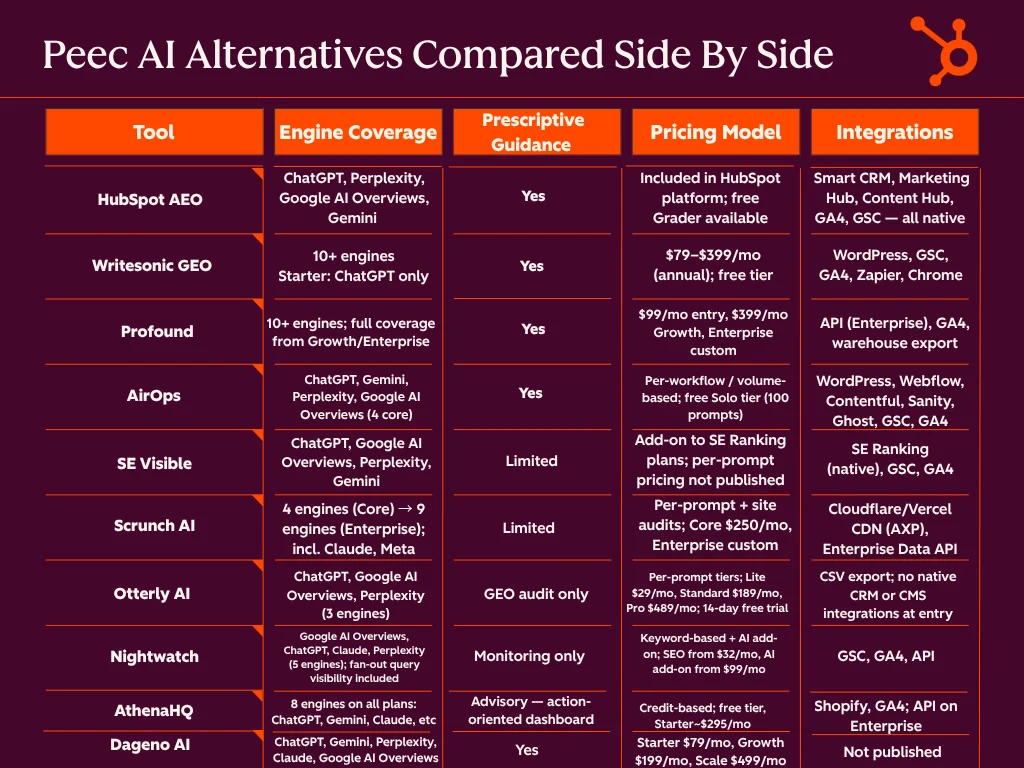
This analysis delves into the top AI visibility platforms for 2026, evaluating their capabilities beyond simple monitoring. The focus is on tools that enable marketing teams to close citation gaps, seamlessly connect AI search data to CRM attribution, and manage complex, multi-regional programs with integrated content workflows. The emerging leaders in this space include HubSpot AEO, lauded for its native CRM integration; Writesonic GEO, offering end-to-end optimization; Profound, a robust solution for enterprise analytics; and AirOps, tailored for agency workflows.
The Genesis of AI Visibility Monitoring
The necessity for AI visibility monitoring stems from a fundamental change in how consumers initiate their purchasing journeys. Historically, search engines like Google served as the primary gateway for product research, with SEO professionals optimizing for keyword rankings, organic traffic, and click-through rates. However, the advent of sophisticated AI language models has introduced a new layer of interaction. Instead of typing discrete keywords into a search bar, users are now engaging in conversational queries, seeking synthesized recommendations and direct answers. For instance, a potential customer might ask, "Which CRM should I evaluate for my mid-market B2B team?" or "What are the top AI tools for content creation?" The responses to these prompts, often curated by AI, are becoming the new frontier of brand discovery.
AI visibility monitoring, also termed AI brand monitoring, quantifies a brand’s presence and sentiment within these AI-generated answers. Platforms like Peec AI track how frequently a brand is mentioned, its position within an AI response, and whether the context is favorable, neutral, or negative. This capability extends across multiple AI models, providing a comprehensive overview of a brand’s AI footprint.
AI Visibility vs. Classic Rank Tracking: A Crucial Distinction
Understanding the difference between AI visibility monitoring and traditional rank tracking is paramount for an effective measurement strategy. Classic rank tracking focuses on a webpage’s position on a search engine results page (SERP) for specific keywords. In contrast, AI visibility monitoring assesses whether an AI system has incorporated a brand into its synthesized answer, identifying the sources the AI cited and how competitors are positioned within the same response.
The underlying mechanics differ significantly. Rank trackers crawl SERPs, whereas AI visibility tools employ structured prompts designed to simulate real buyer intent across various AI platforms. The output is not a ranking position but a measure of "share of voice" within AI-generated answers. This nuanced difference means that evaluating AI visibility alternatives requires a different lens than simply swapping one rank tracker for another.
Citation Analysis: The Strategic Pivot Point
A key strategic advantage of AI visibility monitoring lies in citation analysis. When an AI recommends a competitor over a brand in response to a specific query, marketers can reverse-engineer the reasoning. By examining the sources the AI cited – be it third-party reviews, comparison pages, or documentation – content and SEO teams gain actionable insights into areas requiring investment. Peec AI’s Source Identification feature, for example, highlights these citations, providing a prioritized roadmap for content optimization.
This approach fundamentally differs from traditional link analysis. AI search engines are reshaping the concept of authority, moving beyond mere traffic metrics to emphasize the credibility and relevance of cited sources. Understanding this citation layer is the first step toward connecting AI visibility directly to revenue generation.
Key Buyer Criteria for AI Visibility Platforms
-1.png)
When evaluating Peec AI alternatives, several criteria emerge as critical for long-term utility and strategic impact:
- Actionability Beyond Monitoring: The platform should not only identify visibility gaps but also provide tools or workflows to address them. This includes features like content brief generation, copy drafting assistance, or automated publishing capabilities.
- CRM and Attribution Integration: Seamless connection of AI visibility data to CRM systems is essential for attributing leads, deals, and revenue to AI-driven marketing efforts. This eliminates manual data exports and complex attribution modeling.
- Scalability and Multi-Regional Support: For global brands or agencies managing multiple clients, the platform must offer robust reporting and program management across different regions and languages.
- Content Workflow Integration: The ability to integrate with or provide content creation and publishing tools streamlines the process of acting on visibility insights.
- Engine Coverage and Prompt Methodology: The platform should cover a broad spectrum of relevant AI answer engines and ideally utilize methodologies that reflect real user prompts for accurate insights.
- Historical Data and Benchmarking: Access to historical data allows for trend analysis and performance benchmarking against past AI visibility efforts.
HubSpot AEO: Native CRM Attribution for AI Visibility
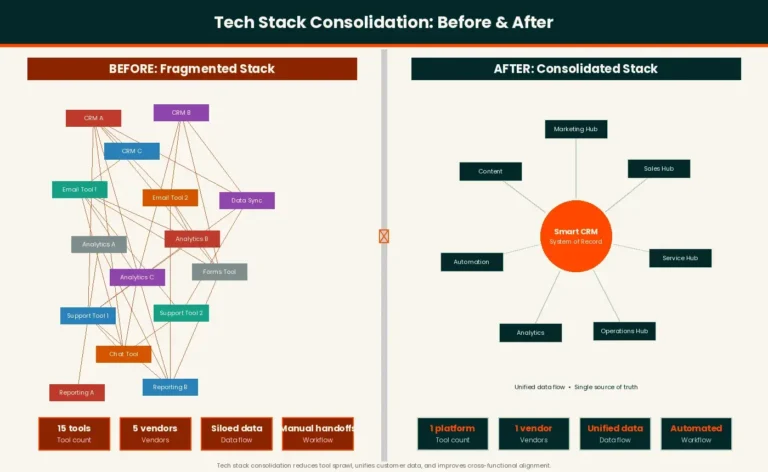
HubSpot AEO stands out as a leading contender in 2026, particularly for B2B marketing and RevOps teams that require AI visibility data to be intrinsically linked to their CRM, contacts, and sales pipeline. As the only platform in this category built natively within a CRM, it tracks brand mentions, citation rates, prompt share of voice, and competitive benchmarks across major AI answer engines. Crucially, this data is surfaced directly alongside HubSpot’s Smart CRM records, deal stages, and campaign performance metrics.
For organizations struggling to answer the question, "Is our AI visibility program generating revenue?", HubSpot AEO closes this loop without the need for custom integrations or complex workarounds. Sales representatives gain immediate context, such as a prospect’s journey originating from a ChatGPT citation prior to the initial sales touchpoint. This level of insight—including the triggering prompt, referring answer engine, and competitive landscape—is available natively within the familiar CRM interface.
Key Advantages of HubSpot AEO:
- Native Attribution: Every AI-sourced visit, contact, and deal is automatically linked to CRM data in real-time.
- Contextual Insights: Sales teams can access AI-driven referral context directly within prospect records.
- Reduced Operational Overhead: Eliminates the need for CSV exports, Zapier maintenance, or siloed dashboards.
Limitations: While robust, HubSpot AEO might be less suited for teams requiring extremely deep prompt dataset analytics, advanced AI crawler diagnostics, or extensive multi-engine coverage beyond the most prominent platforms.
Pricing: HubSpot AEO is available as a standalone tool for $50/month (or $45/month annually) and is also included in Marketing Hub Professional and Enterprise plans. A free AI Search Grader is also accessible without an account.
Writesonic GEO: End-to-End Optimization for Content Teams
For marketing teams whose primary bottleneck is executing on identified visibility gaps, Writesonic GEO presents a compelling end-to-end solution. It combines AI visibility monitoring with content creation capabilities, allowing teams to not only identify citation gaps but also to address them immediately within the same platform.
Key Advantages of Writesonic GEO:
- Integrated Monitoring and Creation: The seamless integration between visibility data and content generation is a significant advantage. When a citation gap is detected, teams can initiate content creation or briefing without switching to a separate tool.
- Compounding Advantage: This unified workflow creates a compounding advantage over time for teams with active content operations.
Limitations: The monitoring layer is newer compared to dedicated tracking tools. Engine coverage may be narrower on entry-level plans.
Pricing: Writesonic GEO starts at $79/month, offering a cost-effective option that bundles both writing and monitoring functionalities.
Profound: Enterprise-Grade Analytics and Scalability

Profound is positioned for enterprise marketing teams, large agencies, and organizations where AI recommendations directly influence revenue. It offers a comprehensive feature set, including tracking brand mentions, citations, sentiment, and prompt volume across more than ten AI platforms. Its "Agents" feature enables the creation of AEO-optimized content at scale, with human oversight.
Key Advantages of Profound:
- Extensive Prompt Datasets: Boasts over 1.5 billion real user prompts in its Prompt Research Reports and 400 million anonymized conversations in Prompt Volumes, providing deep insights into user behavior.
- Credibility and Execution: The combination of real user prompt data and content generation capabilities makes it a powerful single platform for measurement and execution.
- Enterprise Security: Features robust security protocols such as Single Sign-On (SSO) and role-based access, aligning with stringent enterprise compliance requirements.
Limitations: The platform’s Growth plan, priced at $399/month, is where its full functionality becomes accessible, making it a significant investment and potentially overkill for smaller teams or nascent AEO programs.
AirOps: Streamlining Agency and Multi-Site Workflows
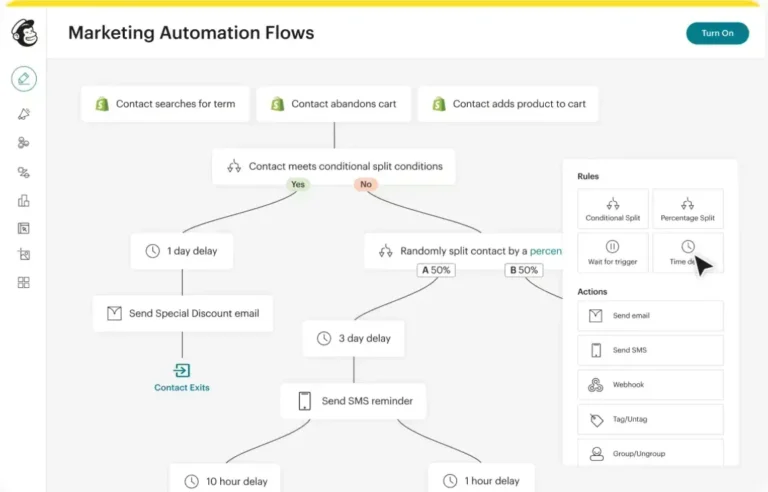
AirOps is a content operations platform that integrates AEO research and visibility analysis. Its "AirOps Insights" module tracks citation and mention rates, along with sentiment, across popular answer engines. "Page360" links this visibility data to Google Search Console and GA4. The "Quill" feature, within its Playbooks, facilitates the research, drafting, and direct publishing of content to various Content Management Systems (CMS) like Webflow, WordPress, Contentful, Sanity, and Ghost.
Key Advantages of AirOps:
- Agency Workflow Design: Templated Playbooks can be reused across multiple clients, offering significant operational leverage for agencies.
- CMS Integration: The ability to publish directly from insights to a CMS is a key differentiator for teams managing multiple websites or large content libraries.
Limitations: Its core AI visibility tracking capabilities are newer than dedicated monitoring tools. Teams focused primarily on measurement rather than production might find they are paying for underutilized features.
Pricing: AirOps offers a free entry-tier option, with paid plans scaling based on volume and workflow complexity.
The Competitive Landscape: Other Notable Alternatives
Beyond the top-tier solutions, several other platforms offer valuable capabilities for AI visibility management:
- SE Visible (by SE Ranking): Integrates AI overview tracking into the existing SE Ranking ecosystem, providing unified SEO and AEO insights. Its unlimited seats across all plans make it accessible for entire marketing teams.
- Scrunch AI: Targets the enterprise segment with AI crawler analytics, providing insights into how AI bots interact with a website. Its Agent Experience Platform (AXP) automatically serves AI-optimized content to AI agents.
- Otterly AI: Offers a low-cost entry point, starting at $29/month, making it accessible for startups and SMBs. It includes a GEO audit feature with fix-it checklists.
- Nightwatch: Focuses on understanding the AI reasoning process by providing fan-out query visibility, revealing the real-time web searches AI systems conduct before composing answers.
- AthenaHQ: Provides a free entry point, ideal for early-stage programs or teams needing to build a business case for AEO investment.
- Dageno AI: A newer entrant with an ambitious scope, aiming to cover the entire workflow from monitoring to attribution within a single platform at a competitive price point.
Choosing the Right Platform: A Decision Framework
The selection of an AI visibility platform hinges on an organization’s specific needs and current limitations.
- For CRM-Native Attribution: HubSpot AEO is the clear choice, offering seamless integration without custom work.
- For Content Production Bottlenecks: Writesonic GEO or AirOps provide integrated content creation and publishing workflows.
- For Enterprise Needs: Profound offers robust security, compliance, and advanced analytics.
- For Existing SE Ranking Users: SE Visible provides a unified SEO and AEO view.
- For Agencies and Multi-Brand Management: AirOps excels in content operations scale, while Scrunch AI is suitable for technical AEO needs.
- For Budget Constraints: Otterly AI or AthenaHQ offer accessible starting points for measurement.
- For Diagnostic Depth: Nightwatch provides unique insights into AI reasoning and citation pathways.
Connecting AI Visibility to Revenue: The Attribution Imperative
.png?width=650&height=488&name=White%20Simple%20Comparison%20Graph%20(2).png)
Ultimately, the value of AI visibility platforms is realized when their data is integrated into the broader attribution model. This involves:
- Tagging AI-Sourced Traffic: Implementing dedicated UTM parameters and channel groupings in analytics platforms like GA4 and HubSpot to accurately capture sessions originating from AI answer engines.
- Standardizing Tracking: Ensuring consistent UTM taxonomy across AEO workflows to create a clear line from visibility gaps to pipeline influence.
- CRM Integration: Utilizing custom contact and deal properties within CRM systems to tag leads and deals influenced by AI visibility initiatives.
Building a Scaled AEO Workflow
Effective AI visibility management extends beyond tool selection to encompass robust content and workflow strategies. A typical AEO playbook involves:
- Prompt Set Design: Developing comprehensive prompt sets that reflect diverse buyer personas and intents.
- Gap Identification: Utilizing AI visibility tools to pinpoint areas where the brand is underrepresented or unfavorably positioned.
- Content Briefing: Creating detailed briefs based on identified gaps, outlining content requirements and citation opportunities.
- Content Creation and Optimization: Generating content specifically designed to address AI citation needs.
- Publishing and Promotion: Deploying optimized content across relevant channels.
- Performance Measurement: Continuously monitoring AI visibility metrics and campaign performance.
Activation Plan: From Selection to Strategic Impact
A structured 90-day activation plan is crucial for maximizing the ROI of any selected AEO tool:
- Days 1-30: Tracking and Baselines: Establish tracking mechanisms and gather initial AI visibility data to set performance benchmarks.
- Days 31-60: Prioritization and Production: Identify key citation gaps and initiate content production to address them.
- Days 61-90: Measurement and Expansion: Evaluate the impact of initial efforts, iterate on strategies, and expand the scope of the AEO program.
Pricing Models and Value Considerations
Pricing for AI visibility platforms varies significantly, often based on prompt volume, the number of AI engines covered, and seat licensing. Understanding these models is key to effective budgeting and negotiation. Annual billing typically offers discounts. When negotiating, teams should push for unlimited seats, transparent prompt volume metrics, and comprehensive engine coverage.
Best Practices for Maximizing Tool ROI
Beyond tool selection, consistent application of best practices is vital:
- Audience-First Prompt Design: Segment prompts by buyer persona to ensure comprehensive representation.
- Competitive Citation Auditing: Analyze competitor citation strategies to inform content development.
- Entity and Schema Hygiene: Ensure clear and consistent definition of brand entities and structured data.
- Brand Descriptor Consistency: Use specific and unambiguous language to describe the brand and its offerings.
- Answer-First Content Standards: Prioritize delivering value upfront in content to align with AI response structures.
- Cross-Channel Validation: Corroborate AI visibility data with traditional analytics for accuracy.
- Citation Retention: Implement a regular refresh cadence for prioritized cited pages to maintain visibility.
Conclusion
The rise of AI-driven search has irrevocably altered the marketing landscape, necessitating a strategic evolution in how brands establish and maintain their online presence. AI visibility platforms are no longer a niche consideration but a critical component of a modern marketing stack. While Peec AI has paved the way, the market now offers a diverse array of sophisticated alternatives, each addressing unique challenges. From the native CRM integration of HubSpot AEO to the end-to-end optimization of Writesonic GEO, and the enterprise-grade analytics of Profound, marketers have an unprecedented range of options to choose from. The key to success lies not just in selecting the right tool, but in strategically integrating its insights into actionable content, robust workflows, and a comprehensive attribution model that clearly demonstrates AI visibility’s contribution to the bottom line. As AI continues to shape consumer behavior, mastering this new frontier will be paramount for sustained business growth.
About the Author