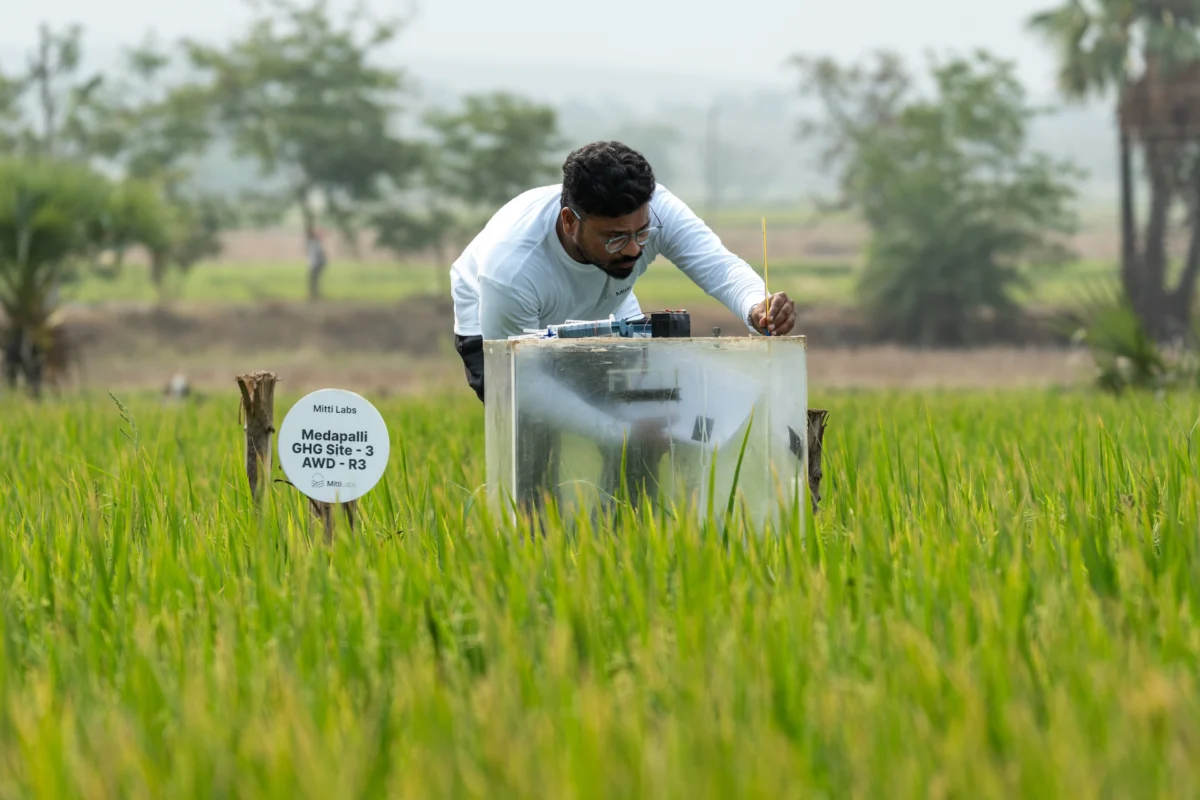
Google has solidified its commitment to ambitious climate goals by announcing a significant agreement to purchase one million carbon credits from the Indian climate-tech startup Mitti Labs through 2030. This landmark deal, publicly recognized as the largest to date for credits derived from methane emission reductions in rice farming, underscores a growing corporate focus on agricultural sustainability and verifiable climate solutions. The partnership aims to revolutionize rice cultivation across key Indian states, promoting practices that not only curb potent greenhouse gas emissions but also conserve vital water resources, all while supporting smallholder farmers.
The comprehensive four-year agreement is set to span rice farms across the Indian states of Karnataka, Andhra Pradesh, and Telangana. Mitti Labs co-founder Xavier Laguarta confirmed that the initiative is projected to encompass approximately 100,000 hectares at its peak delivery capacity. While the financial specifics of this substantial deal were not disclosed, its scale and strategic implications for both parties and the broader voluntary carbon market are considerable.
Pioneering Sustainable Rice Cultivation
At the heart of this innovative project is a methodology designed to incentivize farmers to adopt practices that significantly reduce the duration rice fields remain flooded. Traditional flooded paddy cultivation, while effective for rice growth, creates anaerobic conditions in the soil, leading to the proliferation of methanogenic bacteria. These bacteria produce methane (CH₄), a potent greenhouse gas with a global warming potential approximately 28 to 34 times greater than carbon dioxide (CO₂) over a 100-year period, and even more impactful over a 20-year horizon. By reducing the time fields are submerged, the project aims to curtail these anaerobic conditions, thereby drastically cutting methane emissions.
Mitti Labs asserts that the implementation of these techniques can achieve a reduction of roughly 50% in methane emissions. Crucially, these practices also yield significant water savings, estimated at about 40% of irrigation water use, without compromising crop yields. This dual benefit addresses two critical environmental challenges simultaneously: climate change mitigation through greenhouse gas reduction and water scarcity, a pressing issue in many agricultural regions, particularly in India. Farmers participating in the program will receive payments for adopting these sustainable methods, providing a direct financial incentive for environmental stewardship.
Google’s Net-Zero Imperative and the AI Challenge
This agreement arrives at a pivotal moment for Google as the tech giant navigates the complexities of achieving its ambitious goal of reaching net-zero emissions by 2030. The company’s rapid expansion, particularly its substantial investments in artificial intelligence (AI) infrastructure, has presented considerable sustainability challenges. According to its environmental report released in June, Google’s greenhouse gas emissions in 2025 surged by 18% year-over-year, reaching approximately 14.5 million metric tons of carbon dioxide equivalent. The energy demands of large-scale AI models and data centers contribute significantly to this carbon footprint, necessitating a multi-faceted approach to emissions reduction and offset.
Google’s carbon credit strategy involves a blend of direct emission reductions, renewable energy procurement, and high-quality carbon removal and reduction credits. The decision to integrate methane-reduction projects, especially from a sector as critical as agriculture, into its carbon-credit portfolio reflects a sophisticated understanding of diverse emission sources. Xavier Laguarta, Mitti Labs’ co-founder, revealed that discussions with Google commenced approximately a year ago. Google was reportedly attracted not only by the project’s methane reduction potential but also by the significant water savings and Mitti Labs’ demonstrated capability to operate at scale across numerous smallholder farms.
Mitti Labs: Leveraging GeoAI for Scalable Impact
Founded in 2023, Mitti Labs, with operations spanning New York and Bengaluru, has rapidly established itself as a leader in climate-tech innovation. The startup has developed a proprietary GeoAI platform that integrates high-resolution satellite radar imagery with granular field measurements. This sophisticated technology enables remote, precise tracking of critical agricultural parameters such as crop growth, soil moisture levels, and flooding patterns across vast networks of smallholder farms.
The platform utilizes synthetic aperture radar (SAR) imagery, sourced from both commercial and public satellites, offering resolutions ranging from 50 centimeters to 10 meters. SAR technology is particularly valuable in agricultural monitoring as it can penetrate cloud cover and operate day or night, providing consistent data regardless of weather conditions – a significant advantage in monsoon-affected regions like India. Mitti Labs also incorporates its own proprietary field-collected data to rigorously train and refine its AI models, ensuring accuracy and reliability in its measurements and projections. This robust technological foundation was a key factor in Google’s extensive due diligence process, which included detailed scrutiny of Mitti Labs’ monitoring technology and on-site visits to farms before the final agreement was signed.

The impact of Mitti Labs’ work extends beyond carbon credits. The company proudly reports having saved over 500 billion liters of water across its projects over the past two years. This substantial figure highlights the dual environmental benefits of their approach and underscores the potential for widespread ecological restoration. Laguarta emphasized that the Google deal is a transformative moment for Mitti Labs, providing the necessary scale and validation to expand its operations significantly and attract further large corporate buyers. "Having Google, one of the most sophisticated buyers in the market with rigorous due diligence processes, is obviously a good signal for us," Laguarta stated, highlighting the credibility and market confidence such a partnership instills.
Ensuring Integrity in the Voluntary Carbon Market
The carbon credits acquired by Google through this partnership can be issued under either the Gold Standard or Isometric, two highly respected carbon-credit certification bodies. Laguarta confirmed that all projects undergo stringent independent third-party verification as an integral part of the certification process before any credits are issued. This commitment to robust verification and adherence to internationally recognized standards is critical for maintaining integrity and trust within the voluntary carbon market (VCM). In an era where the quality and additionality of carbon credits are under increasing scrutiny, partnerships like this, backed by rigorous scientific and technological validation, are vital for demonstrating the efficacy of market-based climate solutions.
Beyond Google, Mitti Labs collaborates with a diverse array of clients, including the carbon marketplace Cool Effect, the global rice producer Ebro Foods, and the agricultural giant Syngenta. Laguarta confirmed that the agreement with Google represents Mitti Labs’ largest offtake deal to date, signaling a significant milestone in its growth trajectory.
Broader Implications for Agriculture and Global Climate Action
The deal holds profound implications not only for the parties involved but also for the broader landscape of sustainable agriculture and global climate action. Rice cultivation, a staple crop for billions, is a major contributor to global anthropogenic methane emissions. According to the Food and Agriculture Organization of the United Nations (FAO), rice paddies contribute approximately 10-12% of global agricultural greenhouse gas emissions. Addressing these emissions through scalable, verifiable methods is therefore crucial for achieving global climate targets.
Mitti Labs currently engages with over 100,000 farmers and harbors ambitious plans to expand its reach to millions of farmers by 2030. The Google deal is expected to be a significant catalyst in achieving this goal, providing the financial and strategic impetus needed for rapid expansion. A majority of the revenue generated from Mitti Labs’ projects is directed back to the farming communities, ensuring that the economic benefits of sustainable practices are shared equitably. While specific figures for farmer compensation under the Google project were not disclosed, this revenue-sharing model is a key component of the project’s social sustainability.
The geographic scope of the Google project is currently limited to India, a country where rice is a primary food source and agricultural practices significantly influence national emissions and water usage. However, Mitti Labs has clear international expansion plans, intending to launch operations in the Philippines later this year, followed by Indonesia and other key Southeast Asian markets in 2027. This strategic expansion targets regions with high rice production and similar environmental challenges, underscoring the replicability and global applicability of Mitti Labs’ model. Laguarta sees immense potential for market growth as more corporations seek agricultural projects to address methane emissions. He points to the vast market opportunity, noting that approximately 150 million farmers cultivate rice across India, Southeast Asia, and China.
Google’s Expanding Climate Portfolio in India
The partnership with Mitti Labs is not Google’s inaugural carbon-removal or climate investment in India, signifying the country’s growing importance in the tech giant’s global sustainability strategy. In January 2025, Google partnered with Gurugram-based Varaha, a climate-tech startup focused on biochar, to purchase 100,000 tons of carbon credits. This marked Google’s first large-scale acquisition of carbon removal credits in India and was notably the largest deal globally involving biomass-produced biochar. While the Varaha deal focused on carbon removal through biochar, the Mitti Labs deal emphasizes methane reduction, illustrating Google’s diversified approach to tackling different greenhouse gases and engaging with various nature-based solutions.
Beyond carbon credits, Google is also actively investing in clean energy projects in India to address its supply-chain emissions. The company has forged an agreement linked to a 150-megawatt solar project in Rajasthan, elevating its total contracted solar capacity with ReNew in the state to an impressive 300 megawatts. These multifaceted investments in both carbon credits and renewable energy highlight Google’s holistic and strategic engagement with India’s climate mitigation efforts, positioning the country as a crucial partner in its global journey towards net-zero emissions.
In conclusion, the partnership between Google and Mitti Labs represents a pivotal step forward in corporate climate action, demonstrating the potential of innovative climate-tech solutions to address complex environmental challenges within the agricultural sector. By investing in verifiable methane reductions and water conservation on Indian rice farms, Google is not only advancing its own sustainability goals but also validating a scalable model for sustainable agriculture that can yield significant environmental and socio-economic benefits globally. This deal signals a maturing voluntary carbon market, emphasizing the demand for high-quality, impactful projects that can withstand rigorous scrutiny and deliver tangible climate benefits.
About the Author