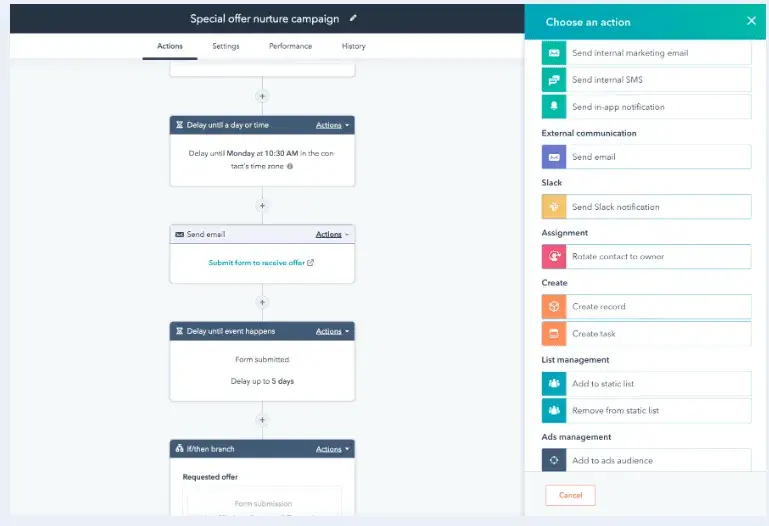
The insurance industry, fundamentally built on trust and enduring relationships, is undergoing a significant digital evolution. At the core of this transformation lies the Customer Relationship Management (CRM) system, a vital tool empowering insurance agencies to navigate the complexities of policy lifecycles, from initial lead nurturing and sales to dedicated customer service and crucial renewal management. In an era where client expectations are continuously rising and response times are paramount, a robust CRM is no longer a luxury but a strategic imperative for agencies aiming to thrive in 2026 and beyond.
The critical importance of swift engagement in the insurance sector cannot be overstated. Research indicates that leads contacted within the first hour are a remarkable 60 times more likely to convert into qualified prospects compared to those contacted after a full day has elapsed. This urgency highlights the necessity for automated outreach and streamlined processes, capabilities that are central to the functionality of a CRM system. By automating routine tasks, optimizing lead management, and fostering consistent client engagement, CRMs enable agencies to not only win new business but also to secure and retain valuable policy renewals, which form the bedrock of sustained agency revenue.
Understanding the Insurance Technology Ecosystem: CRM vs. AMS vs. Agent Portal
To fully grasp the role of a CRM, it’s essential to differentiate it from other key software solutions prevalent in the insurance industry: the Agency Management System (AMS) and the Agent Portal. While each serves a distinct purpose, their integration and effective utilization are key to operational efficiency.
-
Customer Relationship Management (CRM): Primarily utilized by sales and marketing teams, the CRM’s main objective is to manage client relationships and sales pipelines. Its core functions include lead tracking, email automation, sales forecasting, and customer segmentation. It focuses on the front-end of the customer journey, aiming to acquire and nurture leads into loyal customers.
-
Agency Management System (AMS): This system is the operational backbone of an insurance agency, serving service staff and operations personnel. Its primary role is policy administration, encompassing critical functions such as maintaining policy records, managing commissions, handling accounting, and facilitating data downloads from carriers. The AMS is focused on the back-end processes that manage policies post-sale.
-
Agent Portal: Designed for producers and agents, the agent portal’s main purpose is to facilitate the quoting and binding of policies. Its key functions include rate comparison across various carriers, application submission processes, and policy issuance. It streamlines the immediate transactional aspects of selling insurance.
A modern insurance CRM often integrates with these systems, creating a unified workflow where agents can manage client interactions and data within a single interface, minimizing the need to toggle between disparate platforms. This integration is crucial for a holistic view of the client and efficient operations.
The Multifaceted Value Proposition of an Insurance CRM
The unique operational dynamics of insurance agencies necessitate specialized CRM capabilities that extend beyond generic business solutions. The benefits of an insurance-centric CRM are far-reaching:
Elevating Client Retention Rates
Client retention is a cornerstone of profitability in the insurance industry. Lapses in renewals represent a direct loss of revenue and can indicate underlying issues in client satisfaction or engagement. A sophisticated insurance CRM incorporates automated renewal workflows that proactively alert agents well in advance of policy expiration dates. For instance, triggers set for 60 to 90 days prior to renewal allow ample time for personalized outreach, addressing any concerns, and securing a client’s continued business.
A compelling case in point is the insurtech company YuLife, which leveraged HubSpot’s CRM capabilities to implement a system for flagging upcoming renewals. This triggered personalized outreach sequences, contributing to an exceptional customer retention rate of 98%. This figure significantly surpasses the industry average, demonstrating the tangible impact of a well-implemented CRM on client loyalty.
Amplifying Cross-selling and Upselling Opportunities
A key differentiator for insurance agencies is their ability to offer a comprehensive suite of products. An insurance CRM actively supports cross-selling and upselling initiatives by intelligently identifying opportunities based on a client’s existing policy portfolio and demographic data. For example, if a client currently holds only an auto insurance policy, the CRM can automatically flag them for a home or umbrella policy quote. This is achieved by analyzing existing data without requiring a laborious manual review of every individual account, thereby increasing the potential for revenue generation per client.
Empowering Agents with Mobile Accessibility
The nature of insurance sales often requires agents to be mobile, attending client meetings, industry events, and networking functions. Traditional methods of managing contacts, such as collecting business cards or entering data retrospectively, are inefficient and prone to error. Mobile CRM access ensures that agents can update client information, log interactions, and schedule follow-up tasks in real-time, directly after a conversation. This immediate data capture maintains accuracy and allows for timely follow-through, enhancing both agent productivity and client experience. Furthermore, the ability to access policy documents and communicate with clients via text messaging on the go adds another layer of operational flexibility.
Cultivating a Unified Client Perspective Across the Agency
A significant challenge in larger agencies can be information silos, where different departments or individuals possess fragmented knowledge about a client. A strong insurance CRM establishes a unified view of each contact and their associated policies. This means a customer service representative answering an inquiry has access to the same historical context as the producer who initially sold the policy. This shared understanding significantly reduces the need for clients to repeat information, leading to a more efficient and less frustrating customer experience. As CJ Hutsenpillar of Hutsenpillar Insurance noted, "We used to have frustrated employees and frustrated customers because they were having to chase information, which was extremely inefficient." He further highlighted that HubSpot’s activity timeline provides a comprehensive view of all interactions, resolving a critical problem of data visibility.

Essential Features for an Insurance-Specific CRM
Not all CRM systems are created equal, especially when catering to the nuanced needs of the insurance sector. A truly effective insurance CRM transcends basic contact management and is equipped with features tailored to the industry’s unique workflows and data structures.
Insurance-Native Data Fields
A cornerstone of an effective insurance CRM is its ability to natively understand and manage insurance-specific data. This includes pre-configured fields for policy numbers, coverage types, deductibles, carrier information, policyholders, and beneficiaries. Generic CRMs often require extensive customization to accommodate this specialized data, leading to increased complexity and cost. Insurance-native systems simplify this by providing a unified view of contacts and their associated policies out-of-the-box.
Seamless Integrations with AMS, PAS, and Carrier Tools
The efficacy of an insurance CRM is significantly amplified by its ability to integrate with existing Agency Management Systems (AMS), Policy Administration Systems (PAS), carrier systems, and essential third-party tools like rating platforms and e-signature solutions. Robust integrations ensure that data flows seamlessly between systems, preventing data duplication and providing a single source of truth. When evaluating CRMs, agencies should inquire about the vendor’s integration ecosystem and confirm compatibility with their current AMS, preferred carriers, and critical communication tools.
Centralized Contact Management and Communication Hub
A CRM should serve as a master database for all customer contact information and interaction history. The most advanced platforms offer a centralized inbox that consolidates communications from multiple channels – including email, SMS, phone calls, and social media. All incoming and outgoing messages are automatically logged within the contact’s history, providing a comprehensive and easily accessible record of all client engagements.
Advanced Lead Capture, Enrichment, and Routing
In today’s multi-channel environment, leads can originate from various sources, including website forms, social media, referrals, and direct inquiries. A CRM system is instrumental in capturing every lead efficiently. Beyond simply creating a new contact record, a sophisticated CRM can:
- Send immediate, personalized responses to new inquiries.
- Automatically route leads to the most appropriate agent based on pre-defined criteria (e.g., territory, specialty, workload).
- Enrich lead data by automatically gathering additional information from public sources, providing sales teams with a more complete prospect profile.
Automated Lead Routing and Assignment
The speed at which a new lead is assigned to the right agent directly impacts conversion rates. Manual lead sorting is time-consuming and can lead to delays, allowing competitors to engage prospects first. Automated lead routing ensures that inquiries from any channel are immediately directed to the most suitable producer, optimizing the sales process and maximizing the chances of closing new business.
Strategic Automated Follow-up Sequences
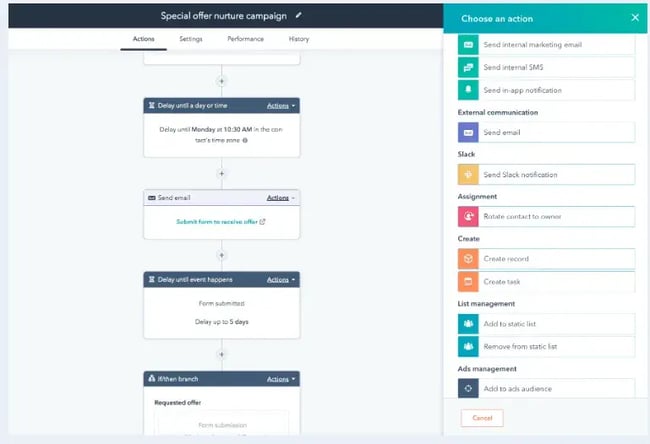
Insurance sales cycles often require multiple touchpoints over an extended period. Industry data suggests that at least seven interactions are typically needed to convert a lead. Many agents, due to time constraints or a lack of organized systems, may abandon follow-up efforts after only one or two attempts. CRM automation addresses this by enabling the creation of scheduled communication sequences and task reminders. These automated sequences ensure that prospects remain engaged without requiring constant manual intervention from the sales team. For example, a system can be configured to send a quote follow-up three days after delivery, schedule a reminder for a follow-up call two weeks later, and send a final nurturing email after 30 days.
Efficient Renewal Workflow Management
Renewals are the lifeblood of insurance agency revenue, and maintaining high retention rates is paramount. The average insurance retention rate hovers around 84%, with top-performing agencies achieving over 90%. CRMs are critical in managing this process. By tracking policy expiration dates, CRMs can automatically trigger renewal campaigns. A typical workflow might commence 90 days before expiration with a proactive retention call, followed by a re-engagement check-in at 60 days, and culminating in final paperwork management at 30 days. This systematic approach minimizes the risk of lost renewals.
Comprehensive Reporting and Pipeline Visibility
Agency owners and managers require clear visibility into their sales pipeline and overall business performance. Reporting dashboards within a CRM provide real-time insights into key metrics, including lead sources, conversion rates, agent performance, and pipeline health. This data empowers management to identify areas for improvement, provide targeted support to underperforming agents, and recognize top performers. AI-powered analytics can further enhance this by offering predictive scoring for leads, allowing agents to prioritize their efforts more effectively and improve revenue forecasting accuracy.
AI-Powered Outreach and Efficiency
Artificial intelligence (AI) is increasingly integrated into CRM systems, offering powerful tools to enhance agent efficiency. AI can automate tasks such as summarizing client conversations, drafting personalized outreach messages, and generating automated sequences for renewals or identified cross-sell opportunities. This allows agents to focus on building relationships and closing deals, rather than being bogged down by administrative tasks.
Leading CRMs for Insurance Companies in 2026: A Comparative Overview
The selection of the right CRM is a strategic decision that can significantly impact an agency’s growth and profitability. Based on industry reviews, feature sets, and pricing models, several platforms stand out for their suitability for insurance agencies.
| CRM | G2 Rating (Approx.) | Key Features | Starting Price (Approx.) | Best For |
|---|---|---|---|---|
| HubSpot CRM | 4.4/5 (35,739 reviews) | Unified customer records & inbox, Lead management & routing, Pipeline management, Reporting dashboards, AI-powered automation. | Free tier available; paid tiers from $20/month | Growing agencies seeking an all-in-one platform. |
| Agentforce Financial Services (formerly Salesforce FSC) | 4.3/5 (226 reviews) | Insurance-specific data models, AI-powered automation, 360-degree client view (policies, claims, interactions), Carrier system integration via APIs. | $325/user/month | Large enterprises with complex requirements. |
| Applied Epic | 4.4/5 (1,571 reviews) | Workflow automation, Combined AMS & CRM, Carrier connectivity, Mobile access, Integrated accounting & commission management. | Custom Quote | P&C and benefits agencies needing integrated AMS + CRM. |
| EZLynx | 4.4/5 (716 reviews) | Policy management with daily carrier downloads, Automation for renewals & remarketing, Document management, Communication center, AI note-taking. | Custom Quote | Independent P&C agencies needing rating integrated with CRM. |
| Vertafore AMS360 | 4.3/5 (949 reviews) | Built-in AMS & QQCatalyst, Real-time personal lines quotes, Compliance tools & carrier connectivity, Document management, AI-powered workflows. | Custom Quote | Established agencies requiring comprehensive AMS capabilities. |
In-Depth Look at Leading Platforms:
1. HubSpot CRM
HubSpot CRM offers a unified, AI-powered customer data layer that connects marketing, sales, and service teams around a single customer record. Its scalability, from a robust free CRM to comprehensive paid suites (Marketing Hub, Sales Hub, Service Hub), makes it an attractive option for agencies of all sizes. HubSpot’s extensive integration marketplace further enhances its utility by connecting with numerous third-party insurance tools. Agencies can begin with the free CRM to test its functionality before investing in advanced features. User testimonials frequently praise its user-friendly interface, email tracking, and workflow automation capabilities, which streamline sales and marketing efforts and foster better team alignment.
2. Agentforce Financial Services (formerly Salesforce Financial Services Cloud)
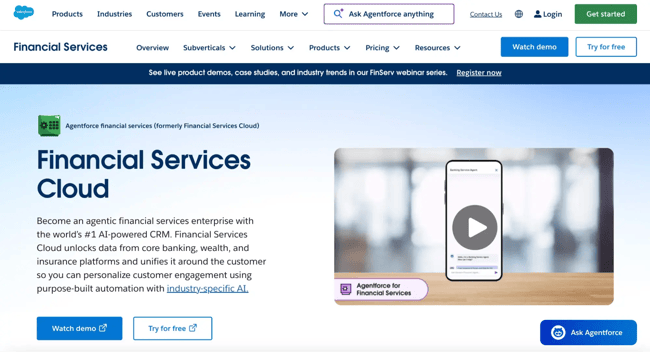
Salesforce’s Agentforce Financial Services is engineered for financial institutions, including banks, wealth managers, and insurance companies. It provides industry-specific CRM functionalities, deep customization options, unified data management, and AI-driven workflows. Its strength lies in its ability to handle complex client relationships, policy data, and intricate commission structures, making it suitable for large enterprises with substantial IT resources and implementation budgets. The platform’s pre-built financial data model significantly reduces setup time for core insurance-related data structures.
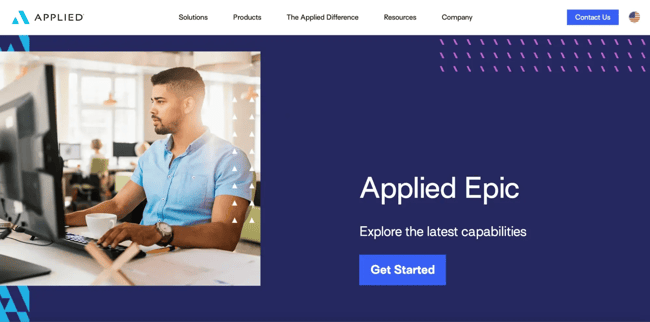
3. Applied Epic
Applied Epic stands out as a comprehensive agency management system that seamlessly integrates CRM capabilities, making it ideal for mid-size to large agencies. It is particularly well-suited for brokerages managing complex commercial lines and employee benefits. Applied Epic’s strength lies in its all-in-one approach, combining policy administration, client management, and financial tracking within a single platform. While implementation can have a learning curve, users consistently rate it highly for its efficiency, data management, and organizational features.
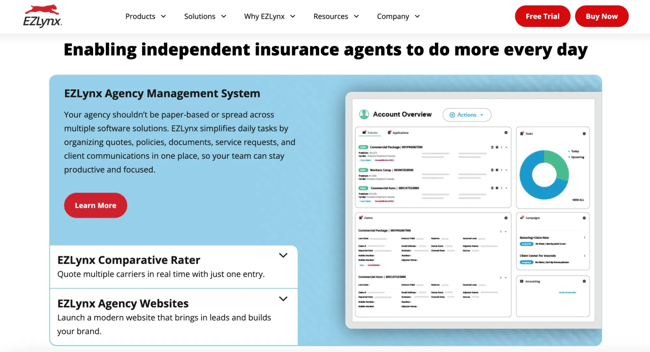
4. EZLynx
EZLynx offers a cloud-based platform that uniquely combines a CRM, a comparative rater, and an agency management system. This integrated approach is a significant advantage for independent agencies, especially those focused on personal lines insurance. Its intuitive interface and rapid implementation are frequently cited as key benefits. The platform also provides essential automation tools for renewals and remarketing, along with a robust communication center for email and SMS interactions. AI-assisted note-taking further streamlines agent workflows.
5. Vertafore AMS360
Vertafore’s AMS360 is a powerful agency management system with embedded CRM functionalities, designed for established insurance agencies. It is particularly beneficial for agencies already invested in the broader Vertafore ecosystem. A standout feature of AMS360 is its AI-powered email agent, which can summarize incoming emails and trigger appropriate workflows. Its reconciliation agent automates the matching of carrier statements to transactions, streamlining commission and revenue processing.
Navigating the Selection Process: Choosing the Right Insurance CRM
Selecting a CRM is a critical strategic decision, and the wrong choice can lead to significant financial and operational setbacks. A structured approach is essential for making an informed decision.
1. Define Your Agency’s Specific Needs
The first step involves a thorough assessment of your agency’s primary pain points. Is the issue disorganized lead management, a leaky sales pipeline, or inefficient renewal processes? Clearly articulating these challenges will help set specific goals, such as increasing renewal rates by a certain percentage, improving the quote-to-cash cycle, or boosting overall sales volume. Concurrently, establish a realistic budget, considering not only the software cost but also potential savings from consolidating existing tools and the anticipated revenue uplift.
2. Solicit Feedback from All Stakeholders
Involve all potential users in the evaluation process. This includes agents, brokers, customer service representatives, and administrative staff. Understanding their daily workflows, challenges, and desired functionalities will ensure the chosen CRM meets the practical needs of those who will use it most. Sales agents, for instance, might prioritize features like easy quote tracking and follow-up reminders, while managers will focus on pipeline visibility and performance dashboards.
3. Compile a Comprehensive Feature Wishlist
Based on the identified needs and user feedback, create a detailed list of required CRM features. This list should encompass industry-specific functionalities such as:
- Insurance-specific data fields (policy details, coverage types, etc.)
- Seamless integration with AMS, carrier rating tools, and e-signature platforms.
- Robust lead management and automated routing capabilities.
- Automated follow-up sequences and renewal management workflows.
- Mobile accessibility for agents in the field.
- Detailed reporting and analytics dashboards.
- Centralized contact management and communication tracking.
4. Compare CRM Vendors and Evaluate Total Cost of Ownership
Conduct in-depth research into potential CRM providers. Beyond the advertised monthly price, calculate the total cost of ownership, which may include onboarding fees, per-module pricing, implementation services, and potential add-ons. Engage with peer agencies that have similar operational profiles to gain insights into their experiences with different vendors. Inquire about implementation timelines and expected return on investment (ROI), and request customer references to validate vendor claims.
5. Request Tailored Demos with Real Agency Data
Once a shortlist of two to three platforms is established, request personalized demonstrations. Crucially, ask vendors to showcase workflows using scenarios relevant to your agency’s operations, such as the quote-to-bind process, renewal campaign management, and cross-selling strategies. This hands-on demonstration using your own data or realistic agency scenarios will provide a much clearer picture of how the CRM will function in practice.
6. Plan for Implementation and User Adoption
Upon selecting a CRM, develop a comprehensive implementation plan. This includes setting up user accounts, providing thorough onboarding and training, and guiding users through their initial workflows. Designate a "CRM champion" within the agency who can serve as a point of contact for questions and encourage consistent system usage. Remember, the success of any CRM hinges on consistent and accurate user input, making user adoption a critical factor for long-term success.
The Synergistic Role of HubSpot CRM for Insurance Teams
For insurance agencies, integrating HubSpot CRM alongside an existing Agency Management System (AMS) offers a powerful dual-pronged approach. The AMS continues to manage the intricacies of policy administration, commissions, and official record-keeping, while HubSpot excels in driving new business growth through its robust front-office capabilities in sales, marketing, and customer service. This combination ensures that agencies are equipped to manage the entire client lifecycle effectively, from initial lead acquisition to sustained long-term retention.
Insurance teams leverage HubSpot to:
- Streamline Lead Generation and Nurturing: Capture leads from multiple online and offline channels and implement automated nurturing campaigns.
- Enhance Sales Productivity: Automate follow-ups, manage pipelines, and gain insights into sales performance.
- Improve Customer Service: Provide a unified view of customer interactions and resolve inquiries efficiently.
- Drive Targeted Marketing Campaigns: Segment audiences and deliver personalized messaging to prospects and existing clients.
- Facilitate Cross-selling and Upselling: Identify opportunities based on customer data and policy context.
A strategic tip for agencies is to begin with the free HubSpot CRM. This allows for hands-on experience with contact importing, email integration, and deal tracking for approximately 30 days. This trial period provides valuable insights into the platform’s fit and functionality before committing to paid features.
Frequently Asked Questions About Insurance CRMs
Do Agencies Still Need an AMS When Using a CRM?
In most cases, yes. A CRM is designed to manage the sales process from lead generation through to the close of a policy. An AMS, on the other hand, handles the post-sale administration, including policy management, commission tracking, and regulatory compliance. While very small agencies might initially operate with a CRM-only approach, relying on carrier portals for administration, growing agencies with increasing policy volumes and compliance needs typically require both systems.
Can a CRM Integrate with Existing Policy Administration Systems and Carrier Rating Tools?
Modern insurance CRM platforms are increasingly designed for interoperability. Leading CRMs, such as HubSpot, offer extensive integration capabilities through marketplaces, connecting with hundreds of popular AMS platforms, PAS systems, and carrier tools. It is crucial for agencies to verify that a prospective CRM supports their current AMS, preferred carriers, and essential third-party applications like e-signature and document management solutions.
How Long Does CRM Implementation Typically Take for Insurance Teams?
Implementation timelines can vary based on the complexity of the CRM platform, the size of the agency, and the extent of customization and integration required. Basic setups involving contact data import and initial configuration might take two to four weeks. More complex implementations, including custom fields, advanced workflows, and integrations with multiple systems, can extend to six months or longer. HubSpot, for example, often allows for basic setups to go live within two to four weeks, with the flexibility to add advanced features incrementally.
What is the Best Approach for Data Migration into a CRM?
A successful data migration begins with meticulous data cleaning. Before importing, agencies should identify and remove duplicate or outdated contact records. Mapping out essential fields (e.g., policy numbers, renewal dates, lead sources) and conducting a pilot migration with a small dataset can prevent unforeseen issues. A well-planned migration process minimizes surprises and ensures data integrity within the new CRM system.
Is CRM Beneficial for Solo Agents and Small Agencies?
Absolutely. Solo agents and small agencies stand to gain significantly from CRM adoption. The automation features handle routine tasks like follow-up emails and renewal reminders, which can be challenging to manage consistently amidst other responsibilities. The ROI for smaller operations comes from increased deal closure rates, improved client retention, and substantial time savings on manual administrative tasks. Many CRMs, including HubSpot, offer free tiers that provide essential functionalities, making them accessible even for businesses with limited budgets.
CRMs as the Engine of Relationship-Based Businesses
In a business fundamentally driven by relationships, the quality and accessibility of customer data are paramount. As industry observers like CJ Hutsenpillar have noted, agencies that remain reliant on outdated legacy systems risk falling behind more technologically adept competitors. Furthermore, disorganized data can negatively impact an agency’s valuation should it ever consider a sale. A CRM system for insurance companies is not merely a tool; it is an investment in managing the entire customer journey, from the initial inquiry to the long-term renewal of policies. The longer an agency delays in adopting a robust CRM solution, the more challenging it becomes to bridge the technological gap and compete effectively in the evolving insurance landscape.
About the Author