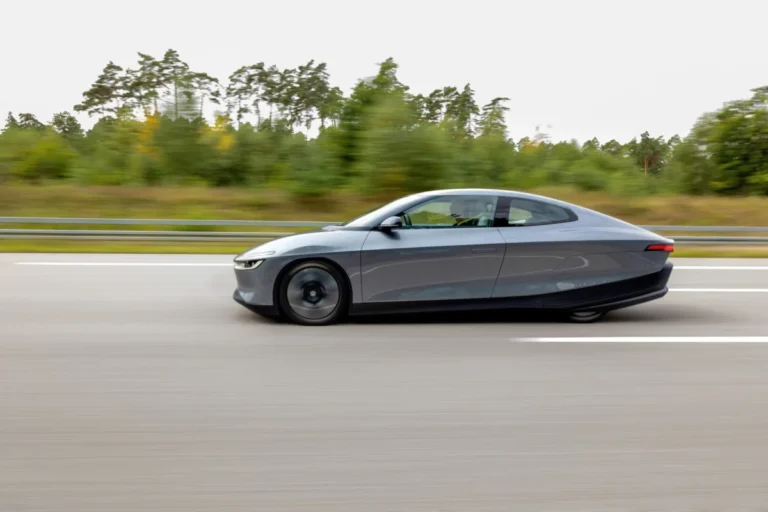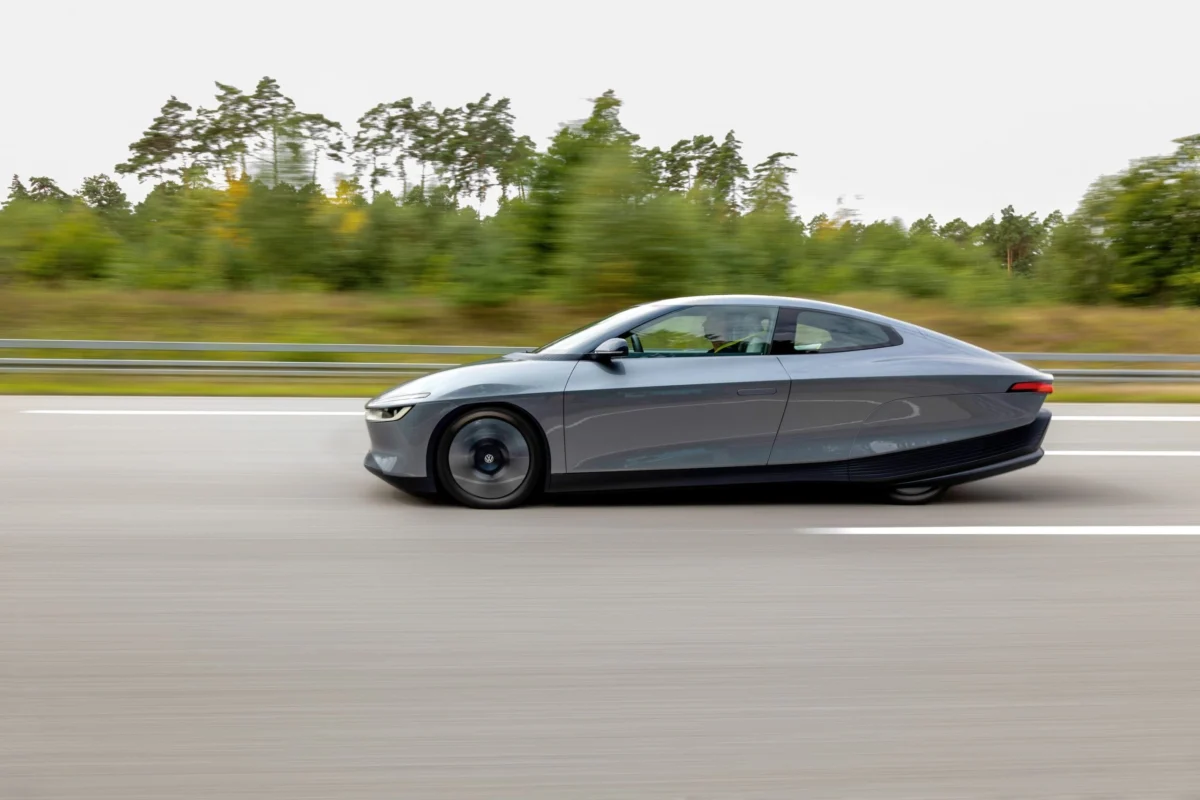
Volkswagen has unveiled a groundbreaking prototype electric vehicle, the Mission Efficiency, which has demonstrated an astonishing equivalent of 323 miles per gallon under ideal conditions. This remarkable achievement positions the vehicle as one of the most energy-efficient cars ever conceived, setting a new benchmark for sustainable transportation. The German automaker not only showcased the concept but also validated its capabilities through a demanding 794-mile (1,278-kilometer) journey from its headquarters in Wolfsburg, Germany, to Vienna. During this extensive road test, the Mission Efficiency prototype required only a single charge, arriving at its destination with a remaining range of 104 miles (168 kilometers). This real-world performance translates to an exceptional energy consumption rate of 7.51 kilowatt-hours per 100 miles, or approximately 279 MPGe (Miles Per Gallon equivalent), a figure that significantly surpasses current production electric vehicles.
A Bold Statement of Efficiency: The Mission Efficiency Prototype
The Mission Efficiency is not merely a theoretical exercise; it is a tangible demonstration of Volkswagen’s commitment to pushing the envelope of automotive efficiency. While concept cars often feature ambitious claims, Volkswagen has taken its innovation a step further by building and rigorously testing this prototype. The vehicle’s design is characterized by its striking teardrop shape, a deliberate choice to optimize aerodynamics. Underpinning its performance are the electric motor and battery sourced from the ID. Polo, components that Volkswagen states bring the Mission Efficiency to "near production" status, hinting at the potential for these advanced efficiency technologies to be integrated into future production models.

Setting a New Standard: Comparing to Industry Leaders
The efficiency metrics achieved by the Mission Efficiency are particularly noteworthy when compared to existing benchmarks in the automotive industry. For context, the Lucid Air Pure, currently recognized as the most efficient production car in the world, achieves an EPA-estimated range of up to 516 miles with its Grand Touring model. While the Mission Efficiency’s 323 MPG equivalent is a theoretical maximum, its demonstrated 279 MPGe in real-world conditions is nearly double the efficiency of leading production electric vehicles.
To further illustrate its potential, back-of-the-envelope calculations suggest that the Mission Efficiency could achieve over 400 miles of range from a relatively modest 54.9-kilowatt-hour battery. This contrasts with the Lucid Air Pure, which requires an 84-kilowatt-hour battery to achieve an EPA-rated 420 miles of range. While the Lucid Air is a larger, more luxurious, and practical vehicle, the Mission Efficiency’s performance highlights the dramatic gains possible through radical design and engineering focused solely on energy conservation.
Engineering for Efficiency: Design Compromises and Innovations
Achieving such remarkable efficiency necessitated significant design compromises, each meticulously engineered to minimize energy expenditure. The most visually striking of these is the vehicle’s roofline, which tapers sharply after its peak above the driver’s head. This "Kammback" profile is a well-established principle in aerodynamics, known for its ability to reduce drag. Volkswagen’s engineers were able to achieve an exceptionally low coefficient of drag, reportedly 0.158, while also maintaining a small frontal area of just 2.08 square meters, further contributing to its slipperiness through the air.

The 2+2 Configuration: Balancing Space and Aerodynamics
The aerodynamic demands of the Mission Efficiency have led to a practical limitation: its passenger capacity. The vehicle is classified as a 2+2, meaning its rear seating is significantly constrained. Volkswagen indicates that the rear seats are designed for individuals shorter than 5 feet 3 inches (approximately 1.6 meters), a specification that suggests suitability primarily for children or very compact adults. While Volkswagen has suggested the prototype could theoretically accommodate a "young family of four," the reality of the cramped rear space would likely challenge even the most accommodating passengers. This design choice underscores the prioritization of aerodynamic efficiency over conventional passenger comfort and space.
Wheel Arch Design: A Subtle but Significant Factor
Another area where efficiency dictated design was the relationship between the wheels and the bodywork. Wheels and tires are significant contributors to aerodynamic drag, accounting for an estimated quarter to a third of a vehicle’s total drag. To mitigate this, the designers have tightened the clearance between the wheel arches and the front tires. While this measure demonstrably enhances aerodynamic performance, it likely comes at the expense of ride quality, as the wheels require adequate space to move within the wheel wells for the suspension system to effectively absorb road imperfections.
Mirror Dilemma: Tradition Versus Aerodynamics
In its pursuit of minimal drag, Volkswagen faced a common challenge in automotive design: sideview mirrors. These elements, by their very nature, create aerodynamic disturbances. While the integration of cameras instead of traditional mirrors could have yielded further drag reduction, Volkswagen opted to retain physical mirrors. The company cited the importance of maintaining the sense of depth and spatial awareness that conventional mirrors provide, suggesting that while cameras offer aerodynamic benefits, they may not fully replicate the driver’s intuitive understanding of their surroundings. This decision reflects a balance between achieving peak aerodynamic performance and ensuring practical usability and driver confidence.

Integrated Solar Power: A Supplementary Efficiency Boost
Adding another layer to the Mission Efficiency’s advanced features, Volkswagen has incorporated solar cells onto the roof and the trunk lid. While these solar panels are unlikely to be a primary source of power for a vehicle of this nature, they represent a thoughtful addition aimed at supplementary energy generation. According to Volkswagen, under ideal conditions—specifically, perfectly flat, sunny routes driven at a constant speed of 42.25 mph (68 kph)—these solar cells can contribute an additional 18 miles (30 kilometers) of range. This feature, while modest in its overall impact on the vehicle’s extensive range, adds to the holistic approach to energy conservation and offers a glimpse into potential future integration of renewable energy sources in automotive design.
Interior Design: Minimalism and Portability
The interior of the Mission Efficiency reflects its stripped-down, efficiency-focused ethos. The seats are constructed using lightweight materials and minimalist designs, further reducing the vehicle’s overall weight. In a move reminiscent of EV startup Slate Auto’s approach with its pickup truck, the Mission Efficiency eschews a traditional built-in infotainment system and integrated speakers. Instead, it offers a portable Bluetooth speaker and relies on the driver to provide their own personal devices for audio and connectivity. This minimalist approach not only saves weight and complexity but also aligns with a philosophy of delivering core functionality without unnecessary additions.
Production Prospects: A Glimpse into the Future
While Volkswagen has consistently referred to the Mission Efficiency as a "near production" vehicle, the company has not yet committed to a specific production timeline or confirmation. However, history suggests that Volkswagen is not averse to producing highly efficient, niche vehicles. A decade ago, the automaker produced 250 units of the XL1, another halo car designed with extreme efficiency as its primary objective. The XL1, launched in 2013, carried a premium price tag, starting at €110,000, indicating that such highly specialized vehicles are typically positioned as aspirational products rather than mass-market offerings. The Mission Efficiency, therefore, may serve as a technological showcase and a precursor to more efficiency-focused technologies that could eventually trickle down into more mainstream Volkswagen models. The successful real-world demonstration of its capabilities, particularly the remarkable energy consumption and extended range, provides compelling evidence for the viability of such advanced efficiency measures in future electric vehicle development. The automotive industry is closely watching to see if Volkswagen will translate these impressive laboratory and road-test results into a production reality, further accelerating the transition to sustainable mobility.
About the Author