In a significant move to address growing concerns over mass surveillance and the potential for law enforcement misconduct, a bipartisan coalition in the United States House of Representatives has introduced legislation designed to strictly regulate the use of automated license plate readers (ALPRs). Known as the No FLOCK Act—an acronym for Federal License-Plate Observation and Camera Keeping—the bill seeks to impose federal oversight on a technology that has proliferated across American municipalities with little to no uniform regulation. Sponsored by Representatives Raja Krishnamoorthi (D-IL) and Michael Cloud (R-TX), the legislation proposes a powerful financial deterrent: withholding 10 percent of federal highway, road, and bridge funding from states that fail to implement specific restrictions on the use of these surveillance devices.
The target of the legislation is the rapid and often unchecked deployment of ALPR systems, most notably those manufactured by the Atlanta-based tech firm Flock Safety. These devices, which utilize high-speed cameras and optical character recognition (OCR) software to capture and store the location, time, and plate numbers of passing vehicles, have become a staple for police departments seeking to track suspects and recover stolen property. However, the lack of a federal framework has led to what critics describe as a "surveillance dragnet," susceptible to misuse for personal, political, or unauthorized purposes.
The Legislative Mechanism and Federal Leverage
The No FLOCK Act utilizes a legislative tactic frequently employed by Congress to influence state-level policy: the "power of the purse." By directing the U.S. Secretary of Transportation to withhold 10 percent of annual surface transportation funds, the bill places substantial financial pressure on state governments. These funds, which often total hundreds of millions of dollars per state, are essential for the maintenance and expansion of infrastructure.
This strategy mirrors historical precedents such as the National Minimum Drinking Age Act of 1984, which successfully pressured states to raise the legal drinking age to 21 by threatening highway funding cuts. Similar tactics were used to establish national standards for blood-alcohol concentration (BAC) limits for driving under the influence and to regulate commercial billboards along interstate highways. If the No FLOCK Act passes, states would have until October 2028 to bring their regulations into compliance or face significant budgetary shortfalls.
The Department of Transportation calculates these funds based on a variety of metrics, including total roadway mileage and traffic volume. For large states like Texas or Illinois, a 10 percent reduction could result in the loss of nearly $100 million in a single fiscal year, making the cost of non-compliance potentially prohibitive.
Defining Permissible and Prohibited Use Cases
At the heart of the legislation is a strict limitation on how ALPR data can be utilized. The bill identifies five specific scenarios where the use of Flock cameras and similar technology would remain legal under federal guidelines:
- Enforcing established toll systems.
- Identifying and recovering stolen vehicles.
- Locating missing or endangered persons (such as in Amber or Silver Alert scenarios).
- Identifying vehicles registered to individuals with active warrants for felony offenses.
- Investigating specific vehicles known to be involved in a felony offense.
Notably, the bill explicitly excludes several common uses currently practiced by various jurisdictions. Under the proposed law, states would be prohibited from using ALPR systems for traffic studies, enforcing parking regulations, issuing speeding tickets, or investigating minor drug offenses and misdemeanors. By narrowing the scope to serious criminal activity and public safety emergencies, Krishnamoorthi and Cloud aim to prevent the technology from becoming a tool for "general-purpose" surveillance or revenue generation through minor infractions.
Background: The Rise of Flock Safety and Surveillance Concerns
Flock Safety has grown from a startup to a dominant player in the public safety technology sector in less than a decade. The company’s cameras are currently operational in thousands of cities across the United States, used by both law enforcement agencies and private entities such as homeowners’ associations (HOAs) and business complexes. The systems are designed to be "always on," creating a searchable database of vehicle movements that can be accessed by police departments across jurisdictional lines.
The rapid expansion of this network has triggered a "tech backlash" among privacy advocates and civil liberties groups. Organizations like the American Civil Liberties Union (ACLU) and the Electronic Frontier Foundation (EFF) have long warned that ALPRs allow for the retrospective tracking of any individual’s movements, potentially revealing sensitive information about their medical visits, religious affiliations, or political activities.
The push for the No FLOCK Act follows an investigation led by Representative Krishnamoorthi’s office, which highlighted significant gaps in oversight. "Our investigation into Flock exposed serious gaps in oversight, and this bipartisan bill would put clear limits in place to prevent abuse while preserving legitimate public safety uses," Krishnamoorthi stated. The investigation pointed to the "sharing economy" of surveillance data, where local police departments can share their plate-tracking data with thousands of other organizations, including federal immigration authorities, often without clear policies or public disclosure.
Documented Misuse and the Human Element
The legislative push is driven not only by theoretical privacy concerns but also by documented instances of police misconduct. A report recently analyzed by lawmakers found at least 100 alleged instances of ALPR abuse over the past eight years. These cases often involve officers using the surveillance network for personal reasons rather than official investigations.
One high-profile case involved a Georgia police officer who allegedly used the Flock system to track his former romantic partner, her friend, and two other fellow officers. Such instances of "high-tech stalking" have fueled the argument that without strict federal guardrails and audit requirements, the technology is too ripe for exploitation.
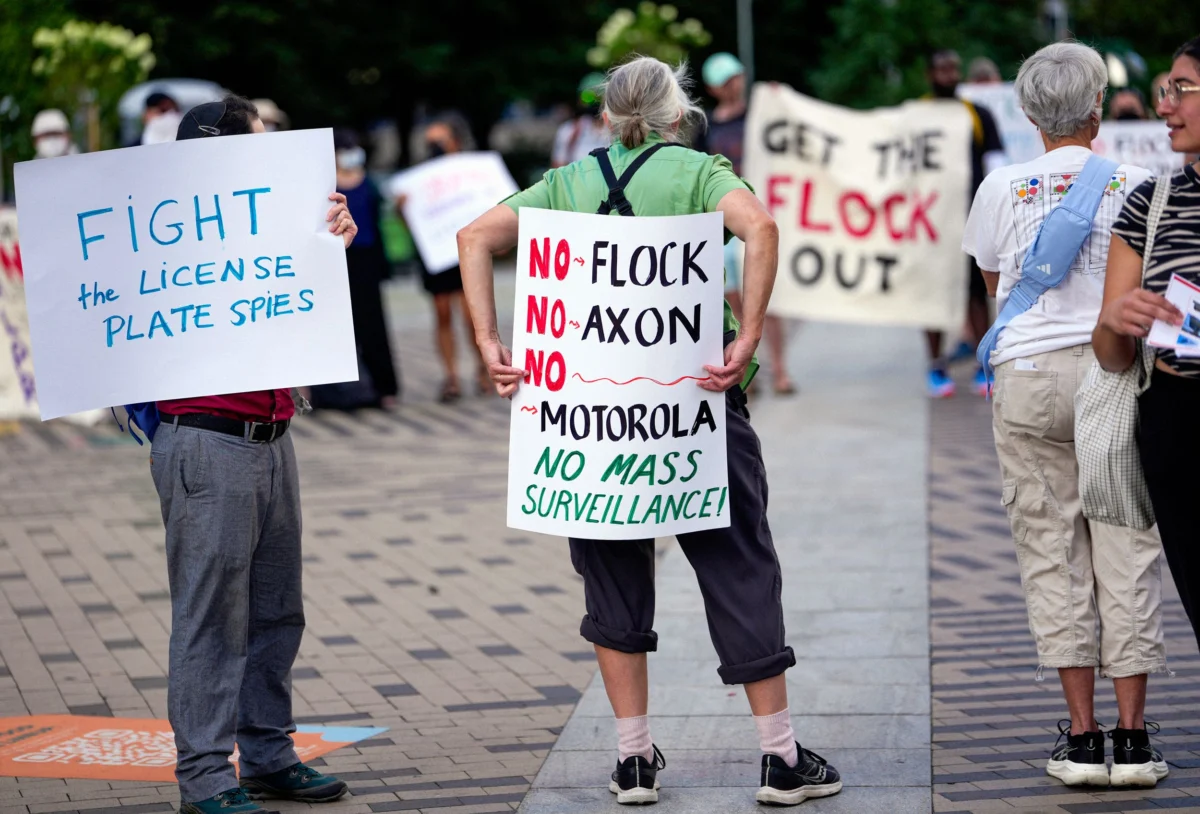
The "global protest movement" mentioned by activists has also gained traction, with protesters demanding more than just restrictions. Some groups have called for a total ban on private surveillance networks that feed into police databases. While the No FLOCK Act does not go as far as a total ban, it represents the most significant federal attempt to date to curb the technology’s reach.
Chronology of the ALPR Debate and Legislative Milestones
The path to the No FLOCK Act has been marked by several key developments in the surveillance and political landscape:
- 2017–2021: Flock Safety experiences exponential growth, securing hundreds of millions in venture capital and expanding into nearly every state.
- 2022–2023: Reports of data misuse and lack of transparency begin to surface in mainstream media, leading to local-level bans in some progressive municipalities.
- Early 2024: A separate bipartisan bill is introduced by Representative Thomas Massie (R-KY) to ban the use of direct federal grants for the purchase of Flock cameras.
- Mid-2024: Flock Safety increases its lobbying efforts in Washington, D.C., hiring its fifth lobbying firm to manage congressional relations as scrutiny intensifies.
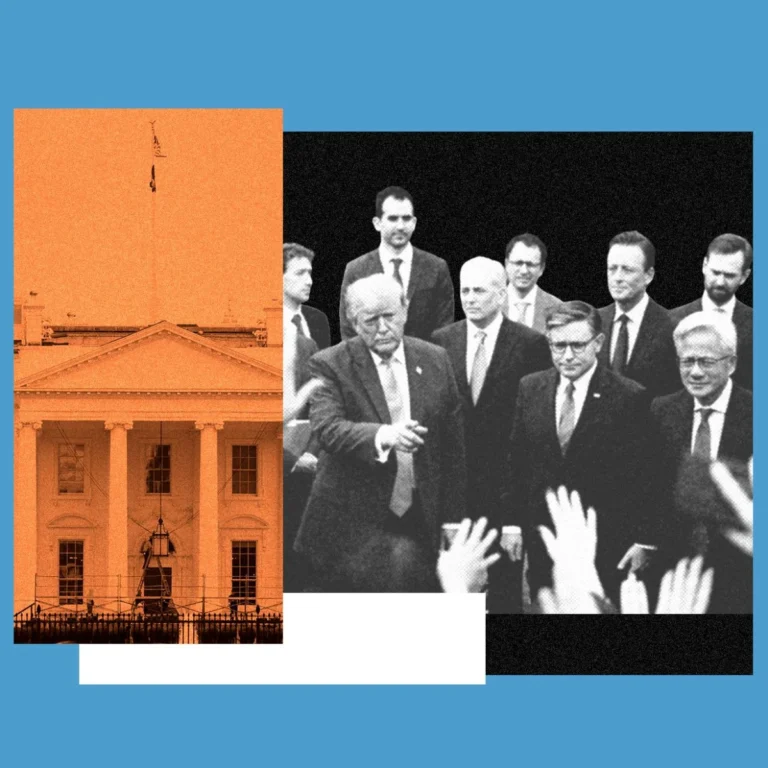
- September 2024: President Donald Trump expresses support for Flock cameras during a press briefing, citing their utility in law enforcement and crime reduction.
- Late September 2024: Representatives Krishnamoorthi and Cloud introduce the No FLOCK Act, marking a shift from targeting "purchase" to targeting "state-wide policy" via highway funds.
Political Implications and the 2024 Election Cycle
The introduction of the No FLOCK Act comes at a volatile time in American politics, with the midterm elections less than two months away. Technology policy—ranging from AI regulation to data privacy—has emerged as a surprisingly prominent campaign issue.
The bill’s bipartisan nature is a rarity in a polarized Congress, suggesting that concerns over government overreach and personal privacy resonate across the political spectrum. Representative Cloud’s involvement reflects a "libertarian-leaning" Republican skepticism of mass surveillance, while Krishnamoorthi represents a Democratic focus on civil rights and oversight.
However, the bill faces an uphill battle. President Donald Trump’s recent public endorsement of Flock cameras suggests that the executive branch may be hesitant to support legislation that law enforcement groups claim could "handcuff" their ability to solve crimes. Police unions and the National Association of Chiefs of Police have frequently argued that ALPRs are a "force multiplier" essential for modern policing, especially in departments facing staffing shortages.
Impact and Future Outlook
If the No FLOCK Act becomes law, it will force a fundamental restructuring of how states approach public surveillance. States would be required to implement robust auditing systems to ensure that every search of an ALPR database is tied to one of the five permitted use cases. Furthermore, it could lead to a wave of litigation as states and tech companies challenge the federal government’s authority to dictate local policing methods through infrastructure funding.
For the technology industry, the bill serves as a warning that the "move fast and break things" era of surveillance tech may be coming to an end. Flock Safety and its competitors—including Motorola Solutions and Vigilant Solutions—may be forced to alter their software to include hard-coded restrictions on data usage to help their clients remain compliant with federal law.
As the debate moves to the House Transportation and Infrastructure Committee, the focus will likely remain on the balance between public safety and the Fourth Amendment’s protections against unreasonable searches. Whether the threat of losing highway funds is enough to bridge the gap between surveillance advocates and privacy defenders remains to be seen, but the No FLOCK Act has officially elevated the conversation from local town halls to the floor of the U.S. Capitol.
About the Author